Practice division Addition & Subtraction Worksheets
3 filtered results
-
From - To
Welcome to our "Practice Division Addition & Subtraction Worksheets" page, designed to make math fun and engaging for early learners! Here, you'll find a variety of printable worksheets that focus on enhancing your child's division, addition, and subtraction skills. These activities help reinforce foundational math concepts while encouraging independent practice and critical thinking. Each worksheet contains colorful illustrations and age-appropriate problems, making math enjoyable. Perfect for teachers, parents, or homeschooling, our resources are easy to use and can be incorporated into any lesson plan. Dive into the world of numbers and help your child build confidence in their mathematical abilities today!
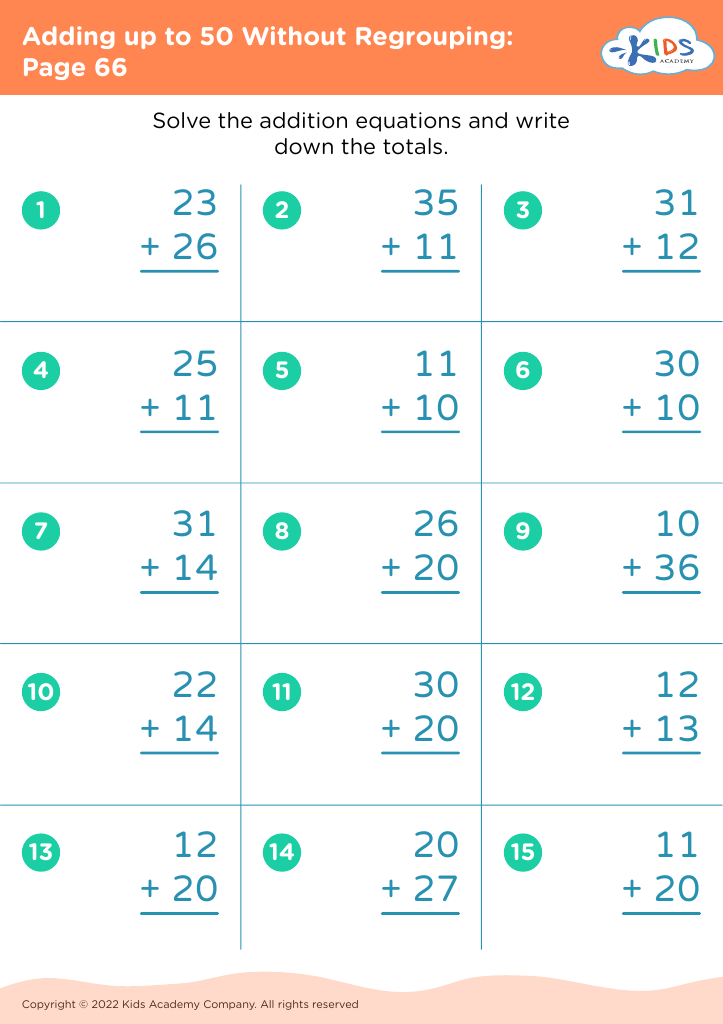
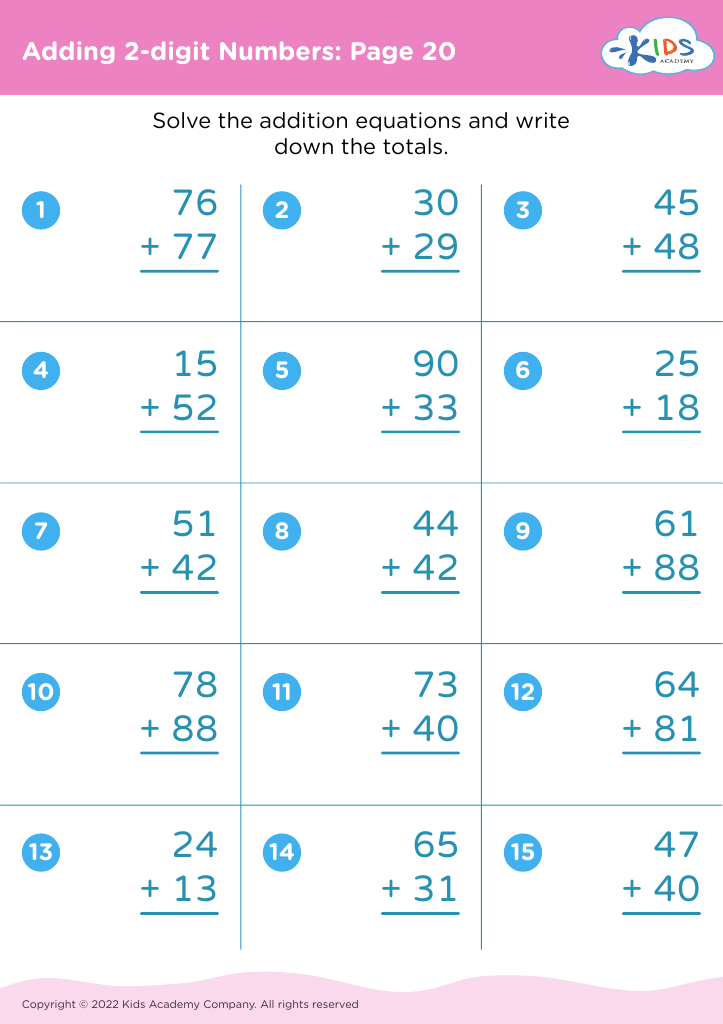
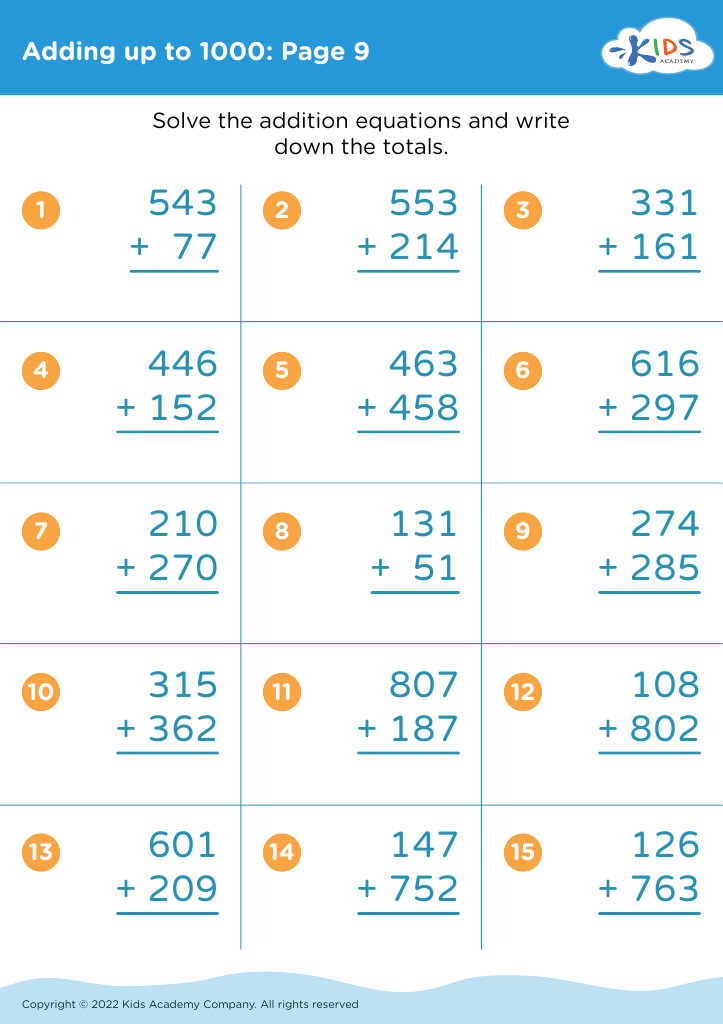








Parents and teachers should prioritize practice in division, addition, and subtraction because these foundational skills are crucial for a child's overall mathematical development. Mastery of these concepts fosters critical thinking and problem-solving abilities, which are essential in everyday life. When children excel in these areas, they build confidence that encourages them to tackle more complex mathematical concepts later on.
Daily applications of addition, subtraction, and division can be seen in various real-world scenarios—like budgeting, measuring, and time management—making understanding these operations vital for practical life skills. Additionally, persistent practice helps reinforce memory retention, ensuring that children can apply these skills intuitively and without hesitation.
Moreover, regular practice enhances cognitive development by improving concentration and attention to detail. It lays a strong groundwork for future academic success, as proficient mathematical skills are often linked to better performance in subjects like science and technology.
Ultimately, involvement from parents and teachers can create a supportive learning environment, making mathematics enjoyable and engaging. When adults actively participate in reinforcing these skills, they demonstrate their importance, encouraging children to develop a positive attitude towards learning.








