
Sequencing Skills Addition & Subtraction Worksheets
3 filtered results
Difficulty Level
Grade
Age
-
From - To
Subject
Activity
Standards
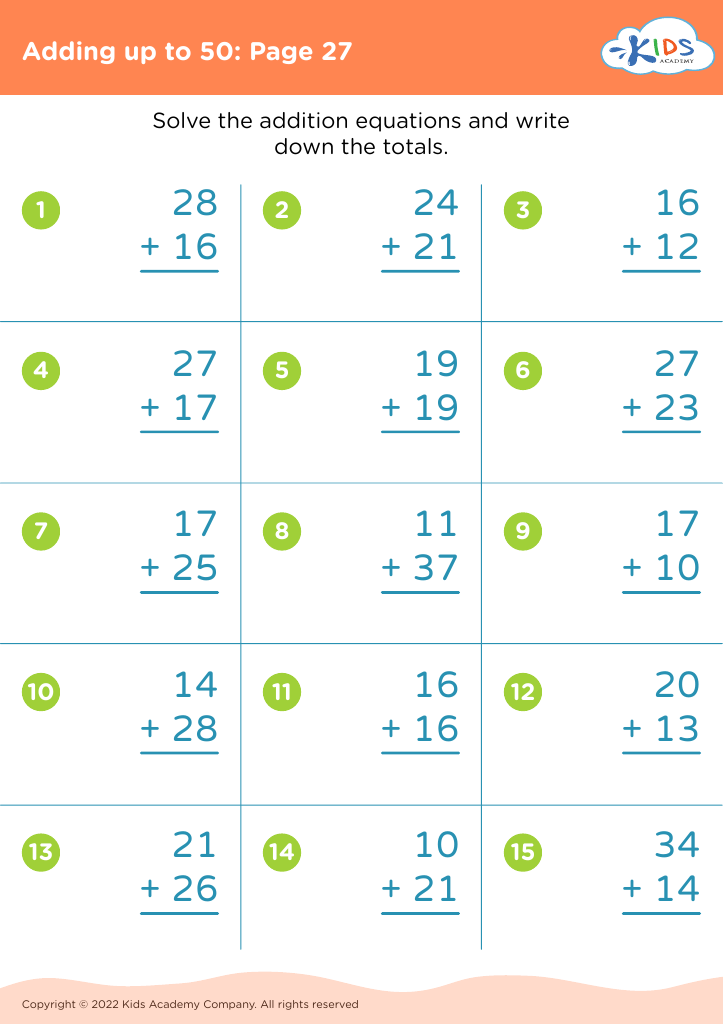
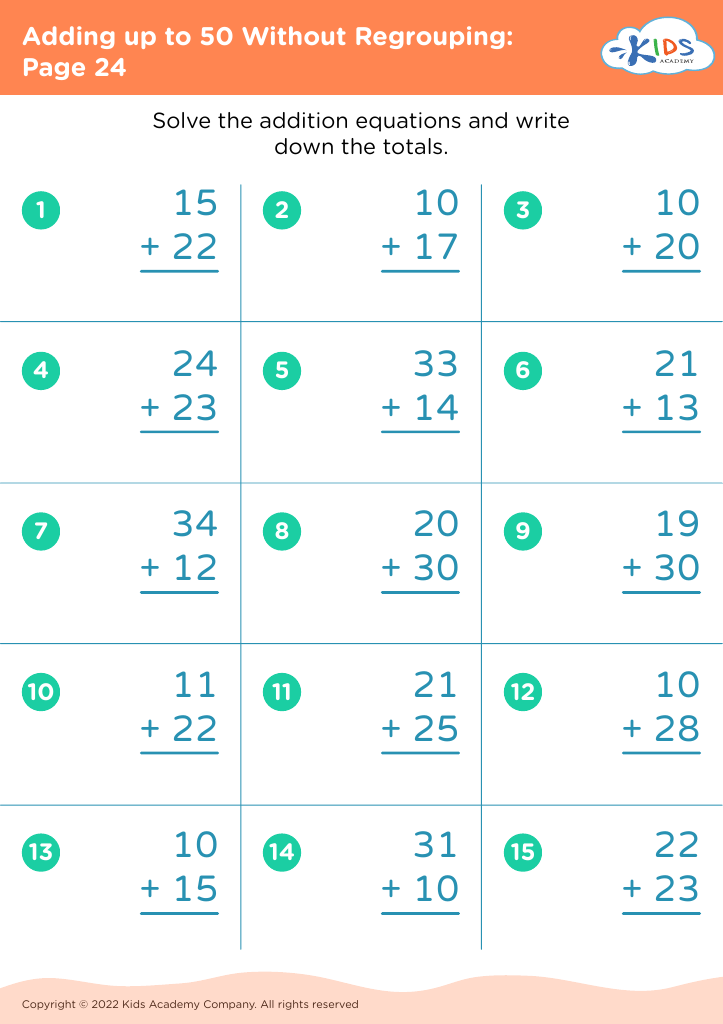
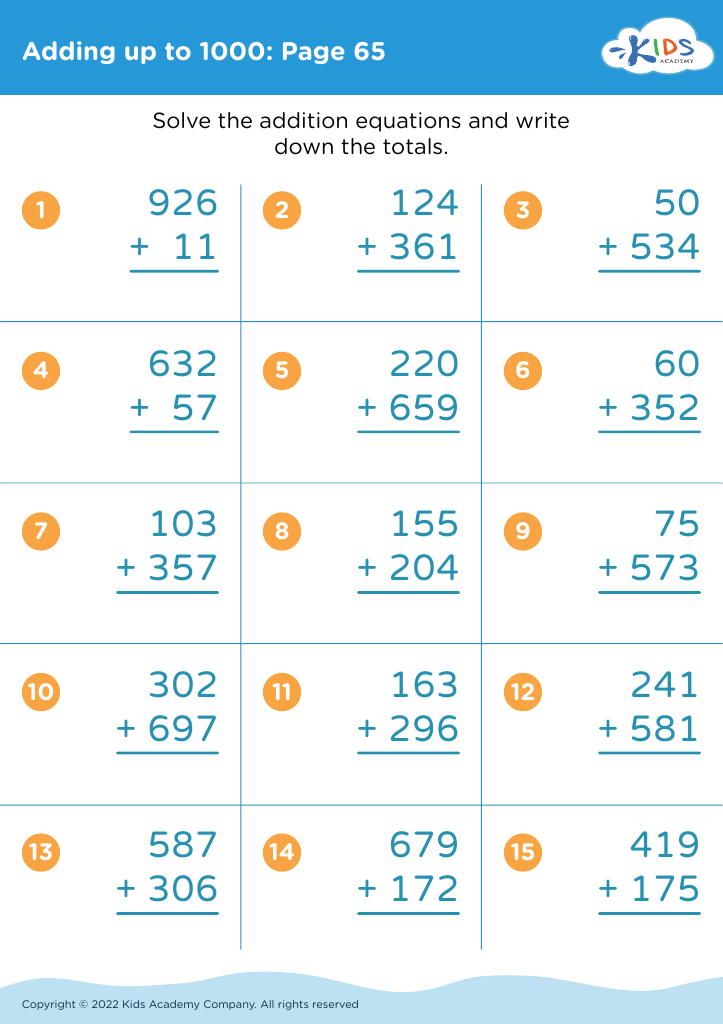
Enhance your child's math abilities with our Sequencing Skills Addition & Subtraction Worksheets! Carefully designed for early learners, these engaging worksheets focus on building essential sequencing skills that complement addition and subtraction practices. As children work through fun, interactive activities, they'll improve their ability to organize information, understand numeric relationships, and tackle problem-solving challenges. Our worksheets often include colorful visuals and relatable scenarios, making learning enjoyable and effective. Perfect for classroom use or at-home practice, these resources provide varied exercises to reinforce skills. Equip your child with a strong math foundation while fostering critical thinking and sequencing prowess!
Favorites
With answer key
Interactive
Join Kids Academy for Free
Who is primarily going to use this learning content?








Sequencing skills in addition and subtraction are crucial for young learners, as they form the foundation for more advanced mathematical concepts. Parents and teachers should care about these skills because they help children understand the order of operations and enhance their problem-solving abilities. Mastering sequencing—recognizing the steps to take in solving math equations—improves children’s comprehension and ability to tackle both simple and complex math problems.
For instance, when faced with a multi-step addition and subtraction problem, students must learn to act in a logical sequence. This skill not only aids in mathematics but also translates into other subjects where logical progression is fundamental, such as reading comprehension and scientific reasoning. Furthermore, strong sequencing skills foster confidence in young learners, enabling them to approach mathematical challenges independently.
Additionally, early proficiency in these foundational skills can predict future success in mathematics, making them a priority for educational strategies. By focusing on sequencing, teachers and parents can nurture critical thinking, promote a positive attitude toward math, and prepare students for the challenges of higher learning. In essence, sequencing is a key component in developing well-rounded, capable students who are ready to engage with the world.








