Understand sequences Addition & Subtraction Worksheets
5 filtered results
-
From - To
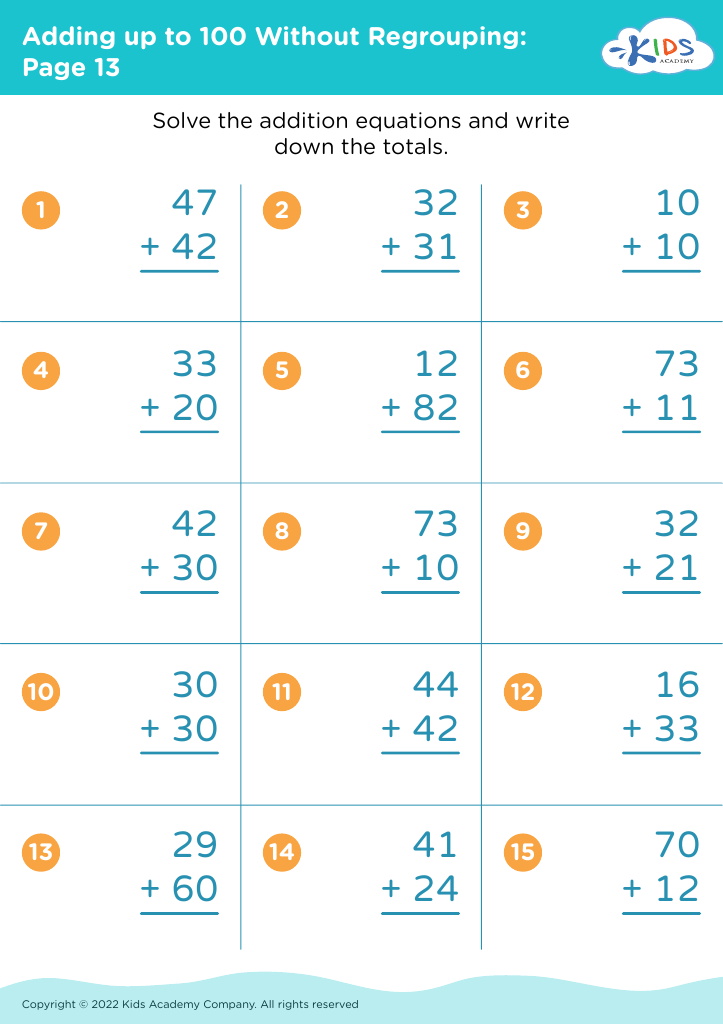
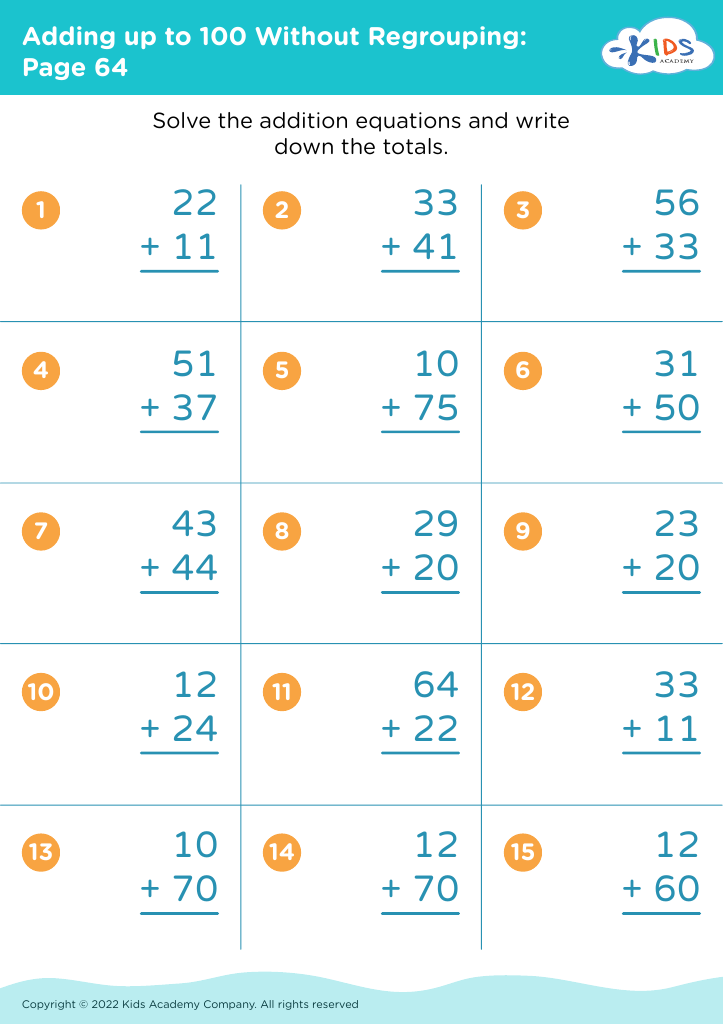
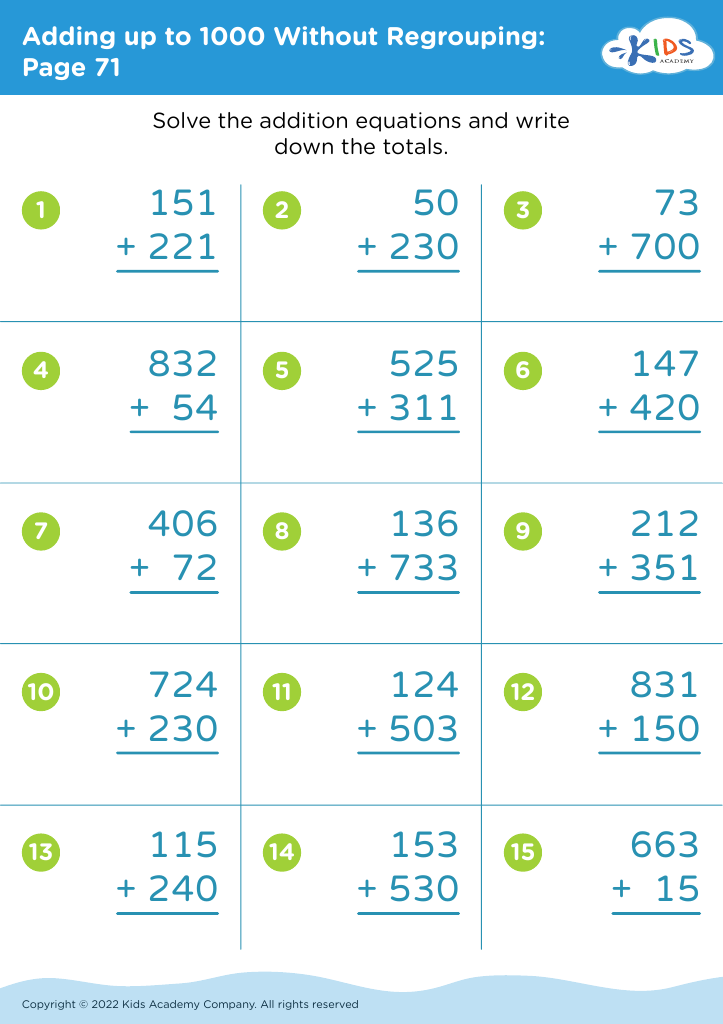
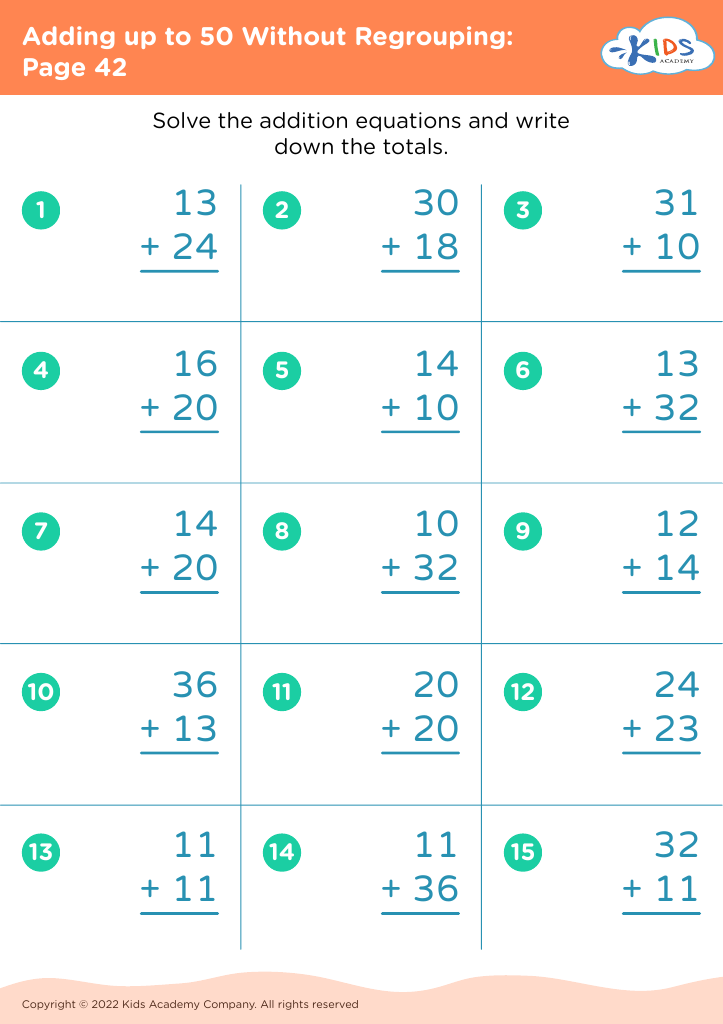
Discover our "Understand Sequences: Addition & Subtraction Worksheets" designed to enhance children's mathematical skills in a fun and interactive way. These worksheets focus on helping students grasp number sequences through engaging exercises that incorporate both addition and subtraction. By mastering these vital skills, children will build a strong foundation for future math concepts. Our worksheets are suited for early learners, promoting critical thinking as they identify patterns and solve problems. Parents and educators can easily integrate these resources into lesson plans, ensuring a comprehensive learning experience. Start helping your child explore the world of sequences today!
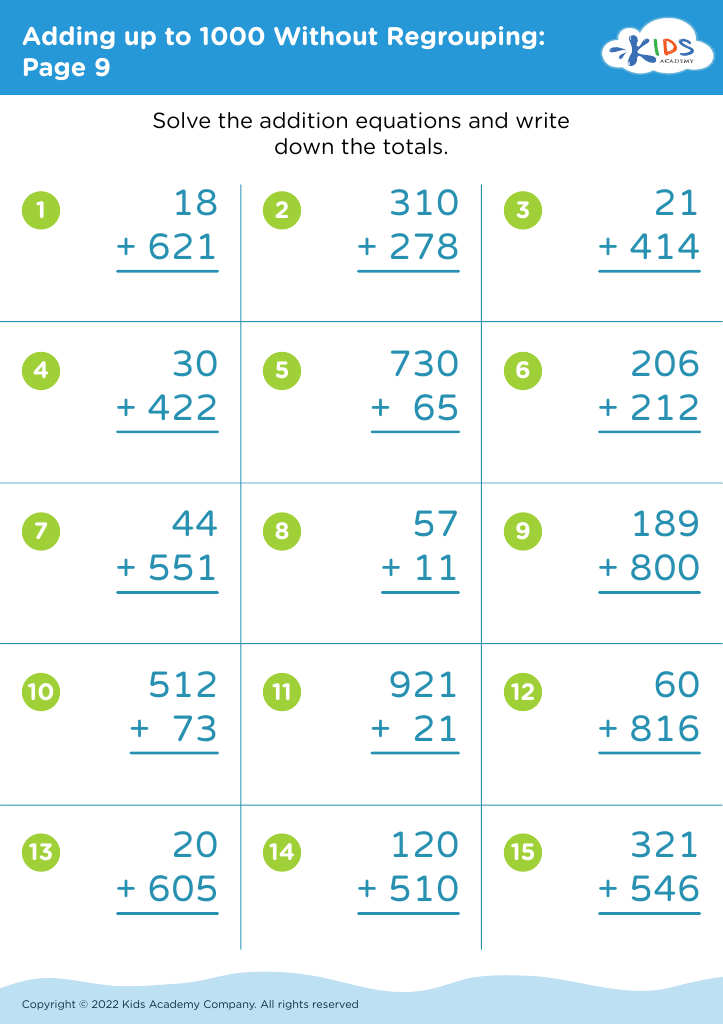








Understanding sequences in addition and subtraction is fundamental to a child's mathematical development and critical thinking skills. For parents and teachers, it is essential to recognize the significance of these concepts in promoting numeracy and enhancing problem-solving abilities.
Firstly, grasping the sequence of addition and subtraction helps children develop a solid foundation for more complex mathematical operations. By recognizing patterns, they learn to predict outcomes and solve problems mathematically, rather than relying solely on memorization.
Moreover, the ability to understand and manipulate sequences cultivates logical reasoning and cognitive skills. Children become adept at analyzing problems, breaking them down into smaller steps, and finding efficient solutions. This skill set not only supports mathematics but also builds their confidence in handling various challenges across subjects.
Additionally, fostering an understanding of sequences can promote a positive attitude toward math. When children see that numbers follow certain patterns and rules, it becomes less intimidating and more engaging—a crucial factor in lifelong learning.
In conclusion, parents and teachers should prioritize teaching sequences in addition and subtraction to boost children's overall math proficiency, instill confidence, and prepare them for future academic and real-life challenges.








