Understanding division Addition & Subtraction Worksheets
5 filtered results
-
From - To
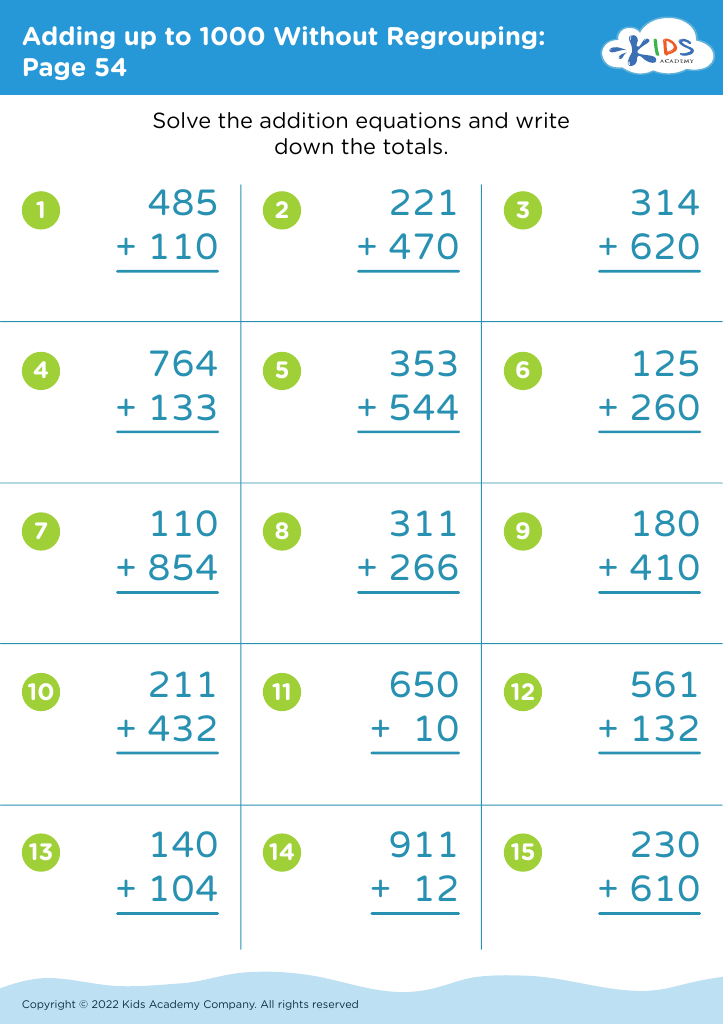
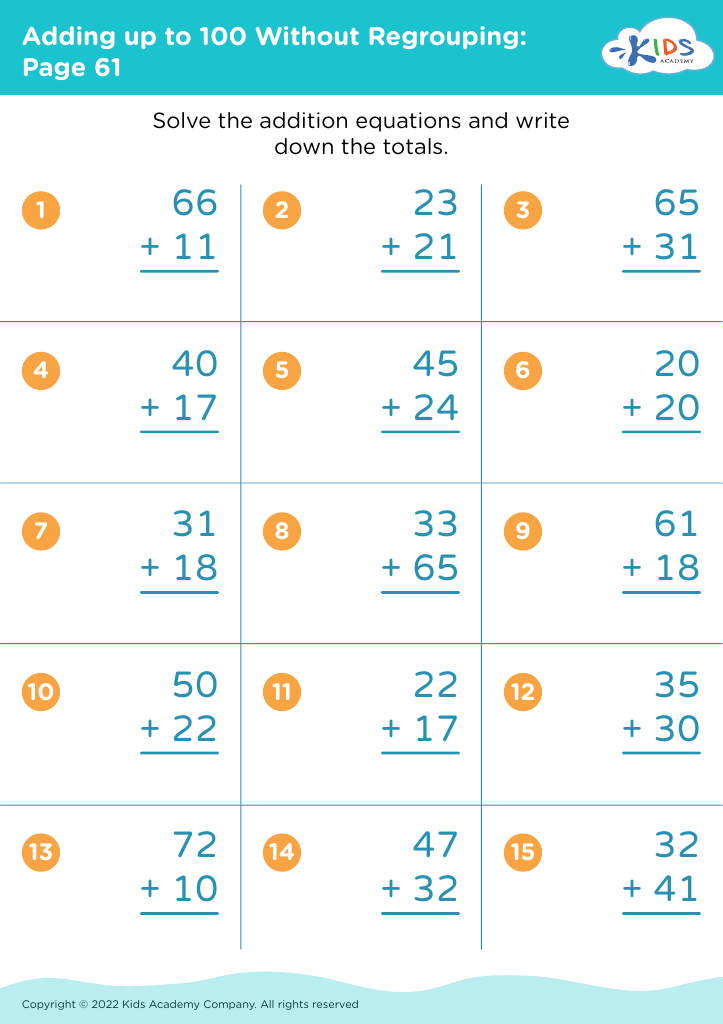
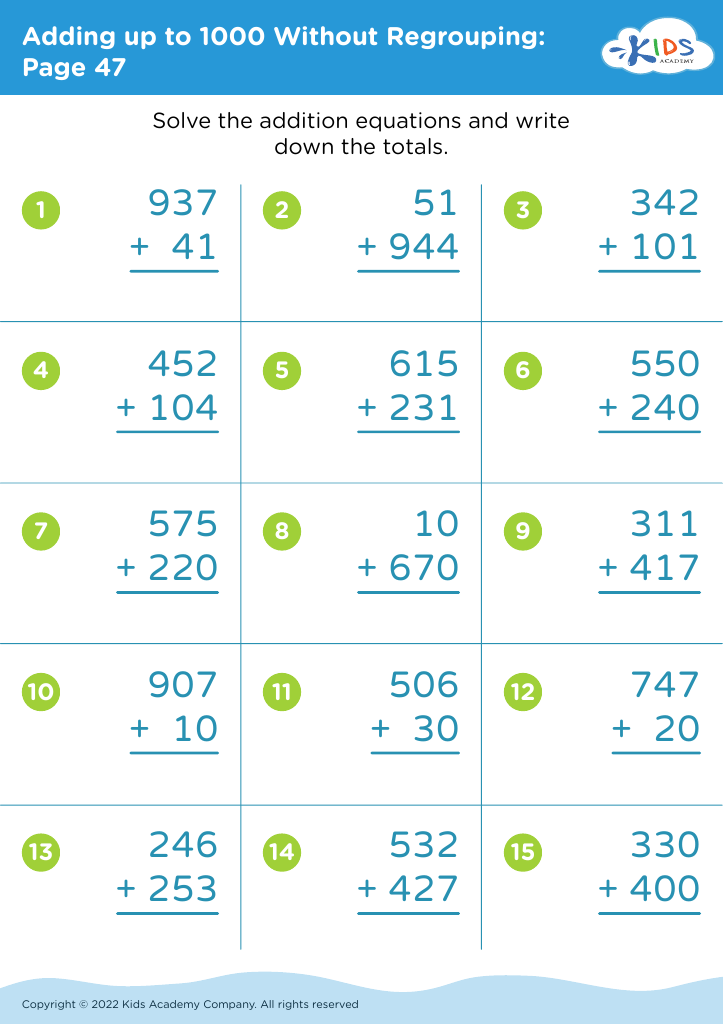
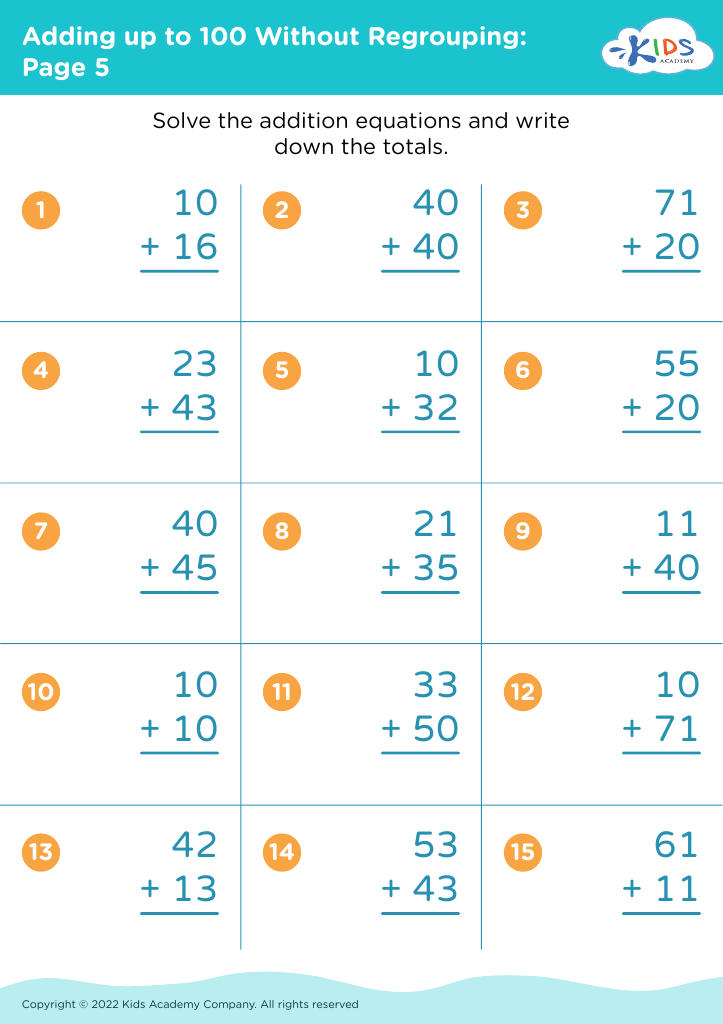
Welcome to our "Understanding Division Addition & Subtraction Worksheets" page! Here, you'll find an engaging collection of printable worksheets designed to help young learners grasp the foundational concepts of division by connecting it to addition and subtraction. These worksheets provide a variety of exercises, encouraging students to practice math skills in a fun and interactive way. With visual aids and clear instructions, children will develop problem-solving abilities and confidence in their mathematical skills. Perfect for home or classroom use, these resources make learning math accessible and enjoyable for early grade students. Dive into our worksheets today to enhance your child's understanding!
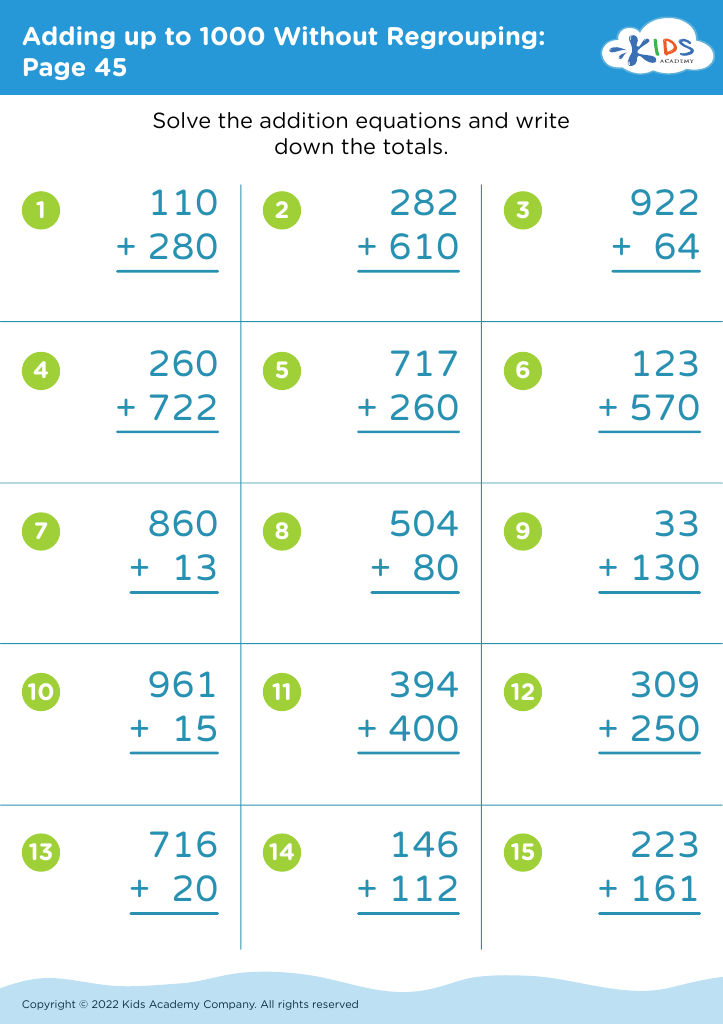








Understanding addition, subtraction, and division lays the foundation for a child's mathematical development and overall academic success. These fundamental operations are not just isolated skills; they are interconnected and essential for tackling more complex mathematical concepts later on. When parents and teachers emphasize a solid grasp of these operations, they equip children with the tools needed for critical thinking and problem-solving.
Addition and subtraction are the building blocks for understanding division. For instance, dividing a number often requires the ability to add or subtract repeatedly. When children understand these relationships, they find it easier to grasp more advanced topics like fractions, and eventually, algebra and geometry.
Furthermore, instilling an appreciation for mathematics can enhance children's confidence. When they succeed in mastering basic operations, they develop a positive attitude toward math, leading to increased engagement and curiosity. This ripple effect not only nurtures their computational skills but also encourages a lifelong interest in learning.
Lastly, these skills are indispensable in daily life, as they are used in various everyday situations, from budgeting to cooking. By focusing on these foundational concepts, parents and teachers significantly contribute to a child's preparedness for future academic challenges and life skills.








