Understanding number relationships Addition & Subtraction Worksheets
8 filtered results
-
From - To
Enhance your child's arithmetic skills with our "Understanding Number Relationships: Addition & Subtraction Worksheets." Designed for young learners, these worksheets help them grasp the fundamental concepts of addition and subtraction through engaging exercises. Each activity focuses on recognizing patterns, understanding number bonds, and developing problem-solving strategies. Perfect for both classroom and at-home practice, these well-structured sheets empower children to build a strong mathematical foundation while boosting their confidence. Foster a love for math and make learning fun with resources from Kids Academy, tailored to ensure academic success and boost cognitive development. Download and start practicing today!
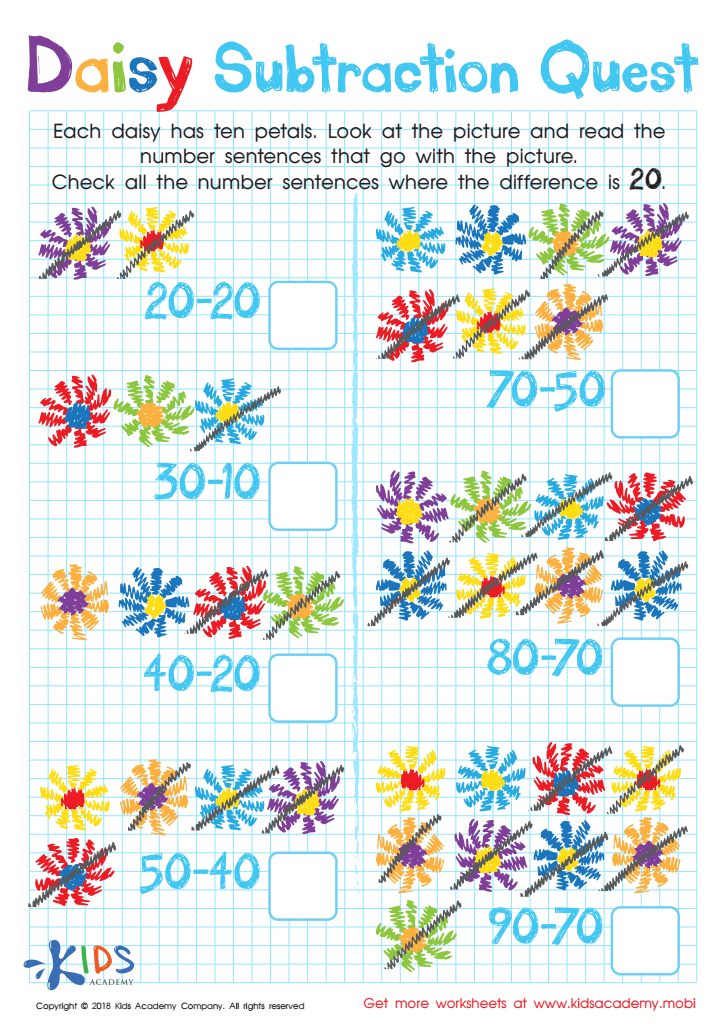
Daisy Subtraction Quest Worksheet
 Assign to My Students
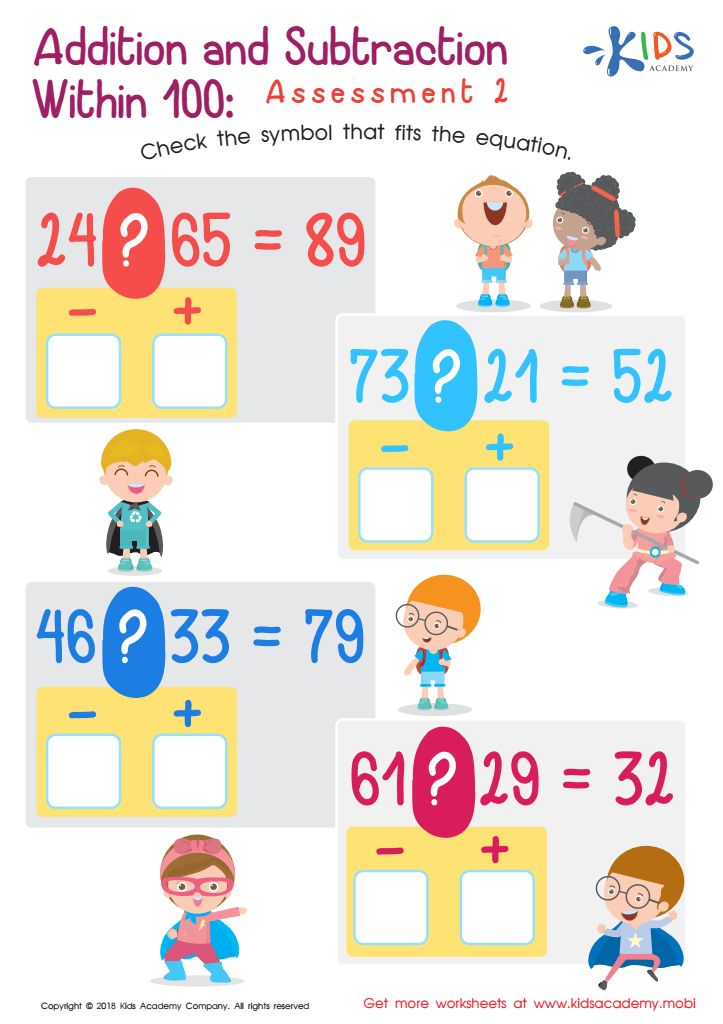
Addition and Subtraction Within 1: Assessment 2 Worksheet
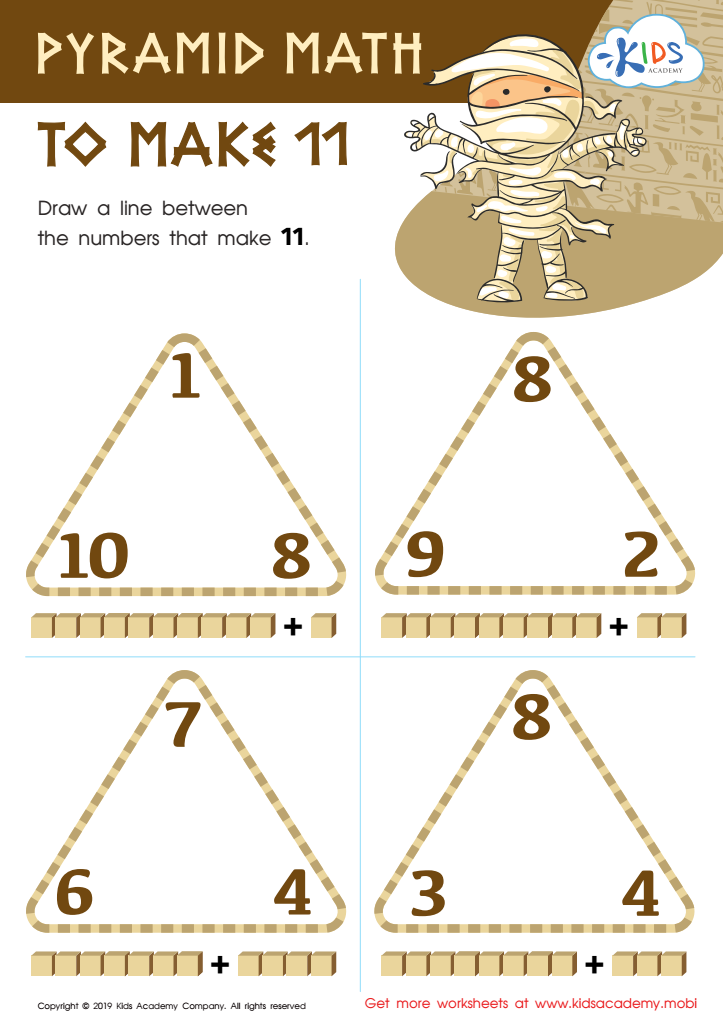
Pyramid Math to Make 11 Worksheet








Understanding number relationships, such as addition and subtraction, is fundamental in early childhood education and is crucial for a child's cognitive development. Parents and teachers who prioritize these concepts provide their children with critical building blocks for future mathematical learning.
Firstly, mastering these basic operations enhances a child's numerical fluency, which is the ability to understand and manipulate numbers effortlessly. This fluency is important because it underpins more complex math skills, enabling children to tackle multi-step problems with confidence.
Secondly, having a solid grasp of addition and subtraction helps children develop logical thinking and problem-solving skills. They learn to recognize patterns, make predictions, and ensure that their answers are reasonable. These skills are not limited to math lessons but extend to real-world situations, such as making decisions and solving everyday problems.
Moreover, early proficiency in these areas can boost a child's self-esteem and love for learning. Success in math can make them feel competent and motivated to take on new challenges in other subjects.
Lastly, parental involvement in learning number relationships reinforces concepts learned in school, creating a supportive learning environment. It showcases to children that education is valued and encourages ongoing achievement.
In summary, understanding number relationships through addition and subtraction lays the groundwork for academic success, fosters essential cognitive skills, and builds confidence in young learners, making it paramount for parents and teachers to prioritize these early math skills.








