Understanding number sequence Addition & Subtraction Worksheets
4 filtered results
-
From - To
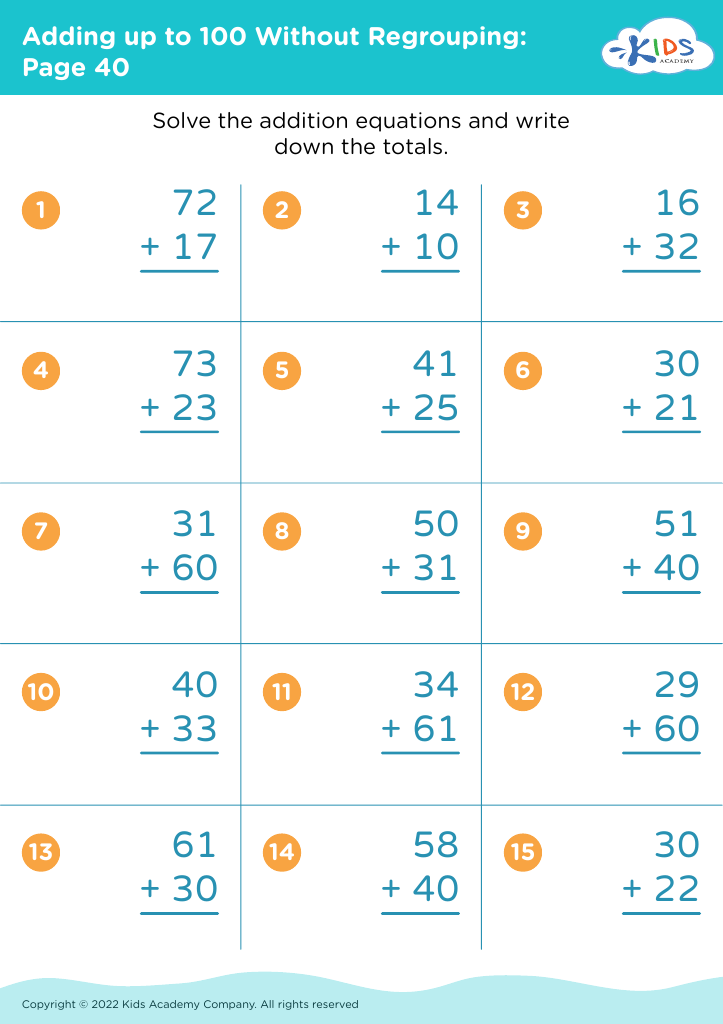
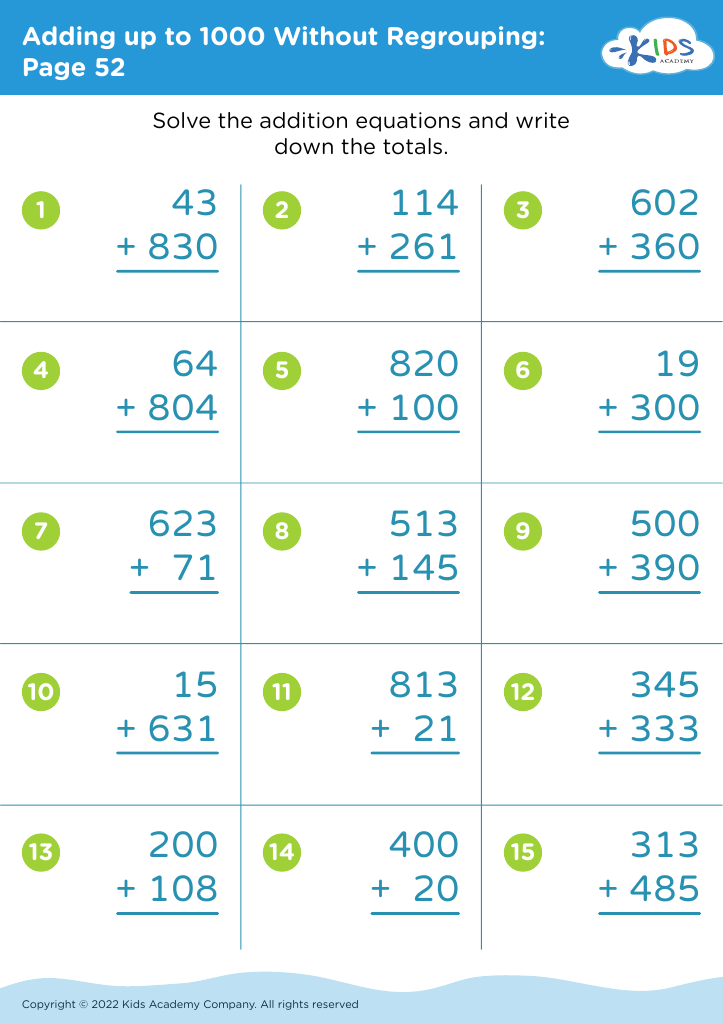
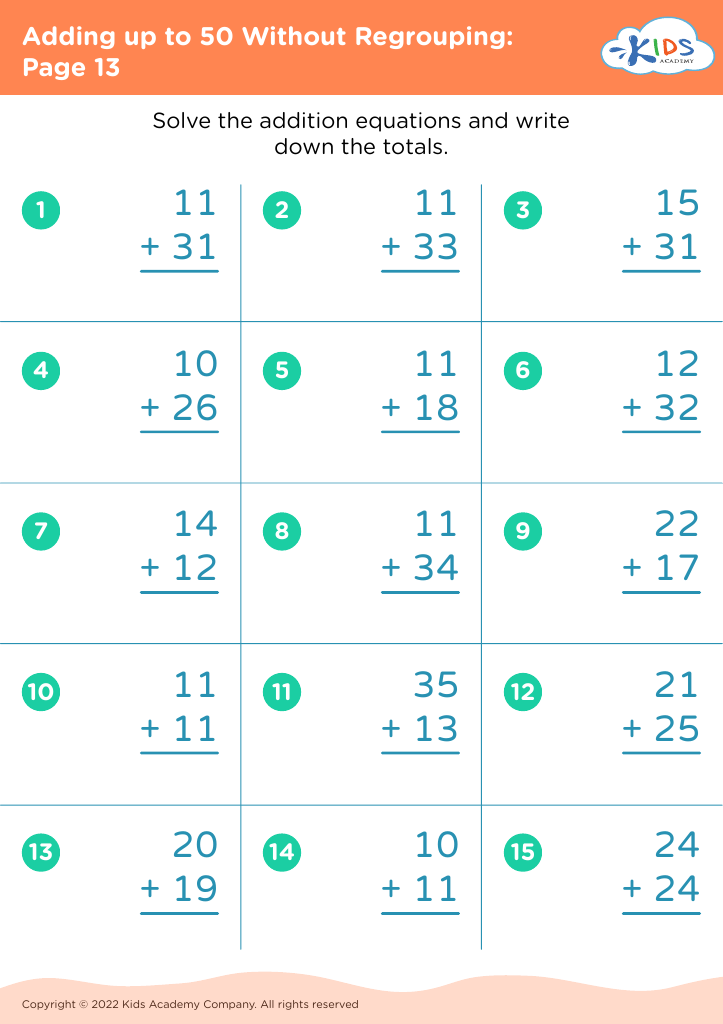
Prepare your child for math success with our "Understanding Number Sequence Addition & Subtraction Worksheets." Perfect for early learners, these engaging activities focus on mastering number order through fun addition and subtraction exercises. Designed to build foundational math skills, each worksheet encourages young minds to recognize patterns, understand numerical relationships, and develop problem-solving abilities. Easy-to-follow instructions and playful illustrations make learning exciting, ensuring kids stay interested and motivated. Free to download, these worksheets are an excellent resource for parents and teachers looking to support their children’s mathematical journey, paving the way for future academic achievement. Discover more at Kids Academy!
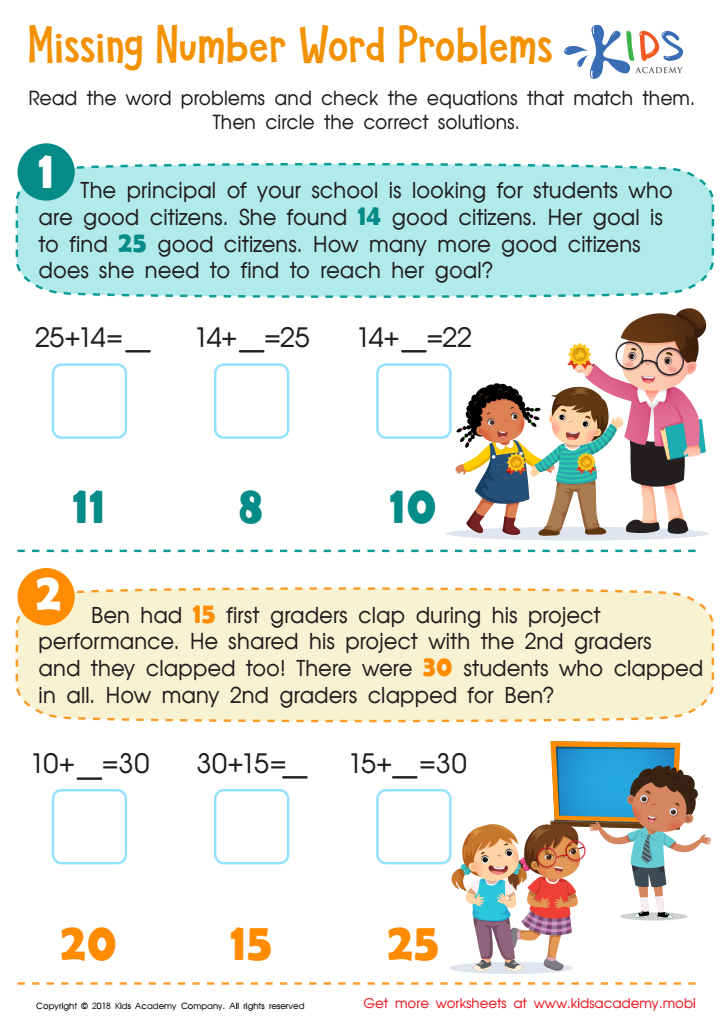
Missing Number Word Problems Worksheet
 Assign to My Students








Understanding number sequences, addition, and subtraction is fundamental for early math development in children. These basic concepts form the foundation for more advanced arithmetic and mathematical reasoning. If children grasp these skills early on, they build confidence and develop a positive attitude towards math, which can last a lifetime.
Parents and teachers should prioritize these areas because they enhance logical thinking and problem-solving skills. Mastery of number sequences helps children recognize patterns, which is crucial for higher mathematical concepts like multiplication and division. Addition and subtraction, meanwhile, are essential for everyday life. From sharing toys to buying groceries, these skills are frequently used and help children understand the value of numbers.
Moreover, early proficiency in these topics can significantly influence a child's academic performance across various subjects. Math skills consistently correlate with success in science, technology, engineering, and even arts, as these fields often require analytical skills and precise thinking.
Finally, introducing these concepts in an engaging, hands-on way fosters a joy for learning. Activities like using manipulatives, playing math games, or applying real-world scenarios can make learning fun, ensuring children develop strong mathematical foundations without it feeling like a chore. By investing in this critical area early, parents and teachers can set children on a path to academic success and an enthusiastic relationship with learning.








