Visual representation comprehension Addition & Subtraction Worksheets
5 filtered results
-
From - To
Boost your child's math skills with our Visual Representation Comprehension Addition & Subtraction Worksheets! These engaging worksheets offer a colorful, visually stimulating approach to help young learners grasp the concepts of addition and subtraction. By using diagrams, illustrations, and charts, students can easily understand and solve problems, enhancing their comprehension and critical thinking skills. Ideal for early grades, our worksheets cater to diverse learning styles, making math accessible and enjoyable for every child. Encourage a solid foundation in mathematics that will benefit your child for years to come. Explore our collection today and watch your little one thrive in math!
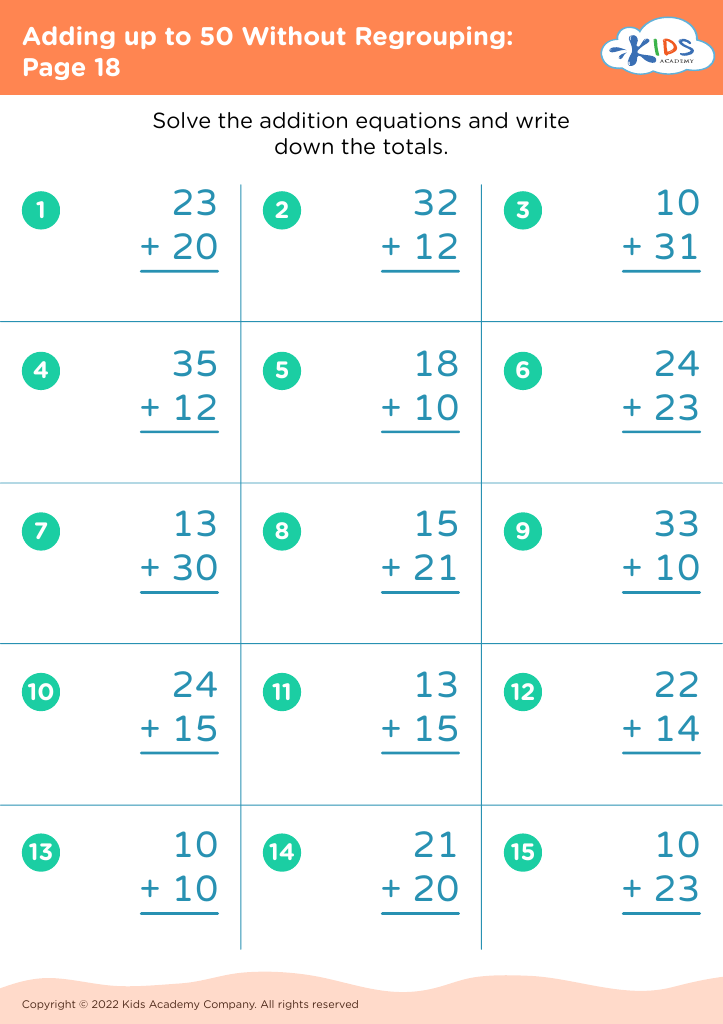
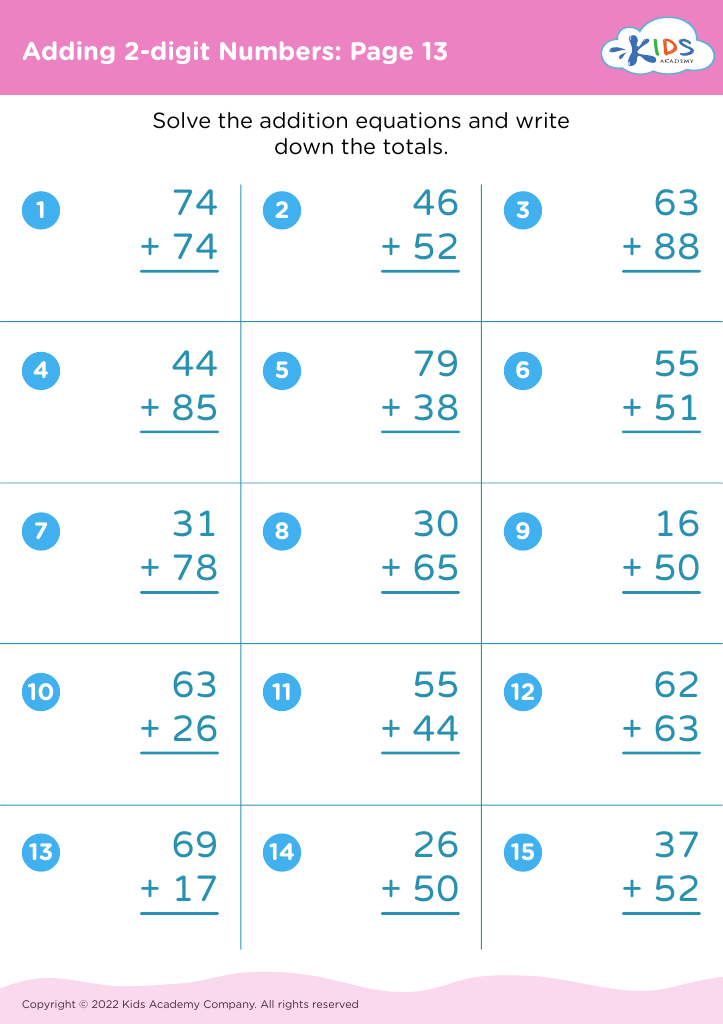
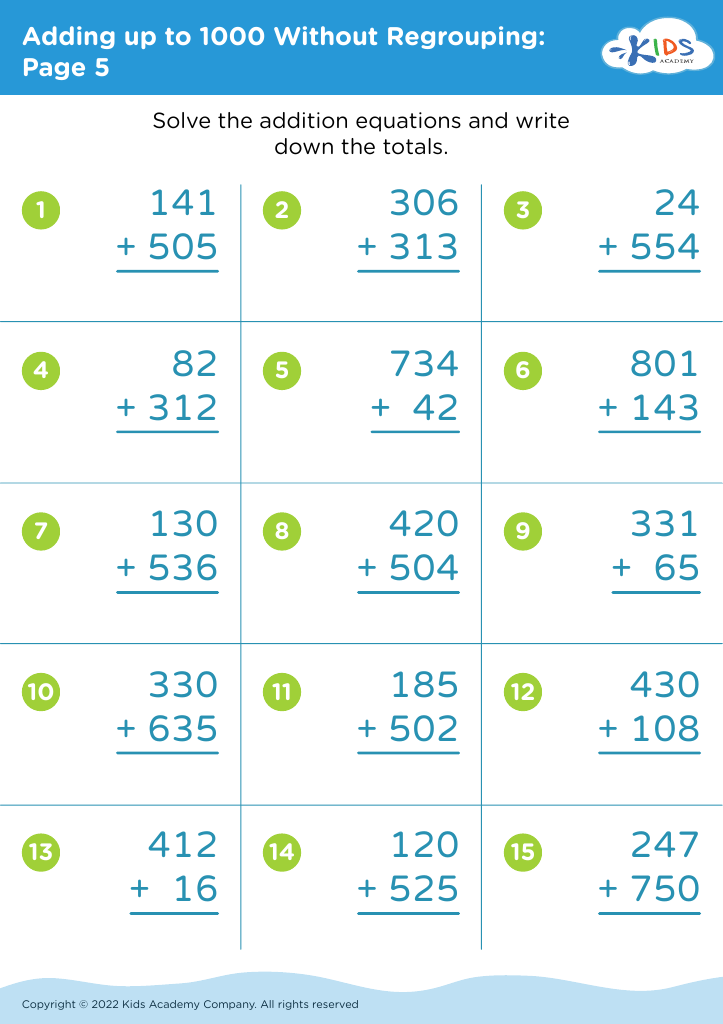
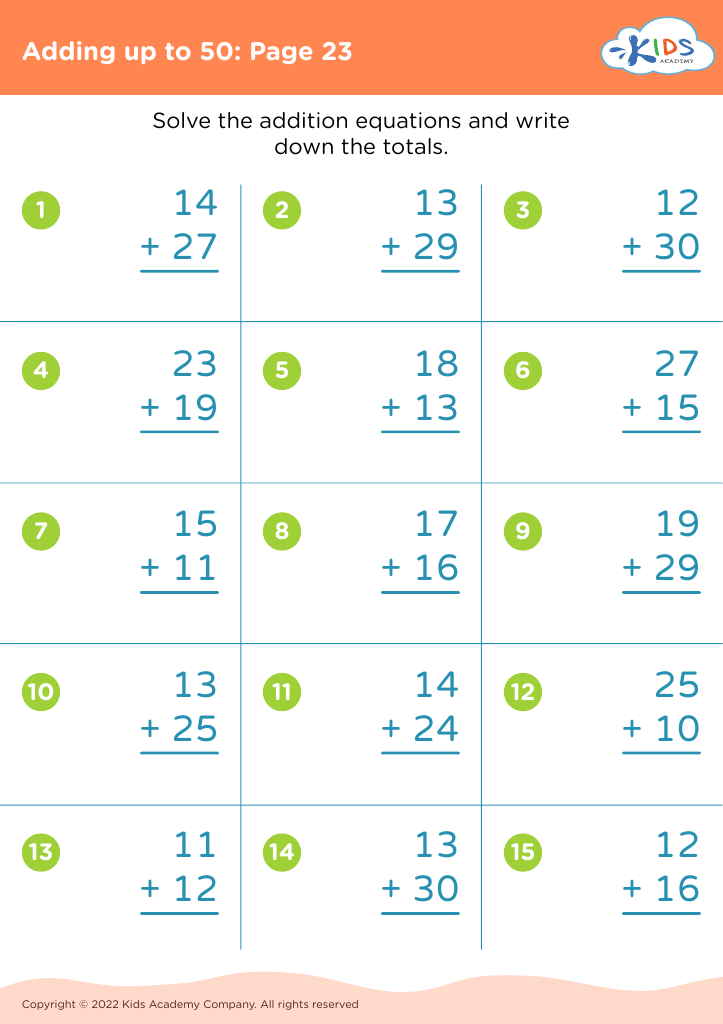
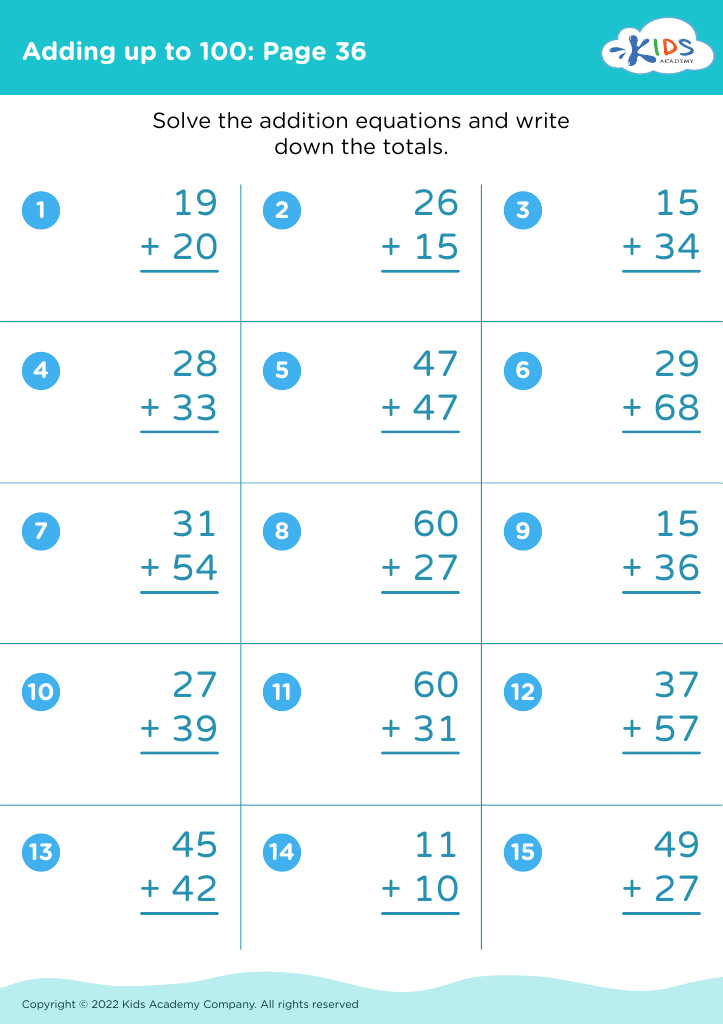








Visual representation comprehension is crucial for young learners when it comes to understanding addition and subtraction. Parents and teachers should be invested in fostering this skill because visual aids strengthen cognitive connections, making abstract numerical concepts more tangible. The use of pictures, diagrams, and manipulatives can help children visualize problems, making it easier for them to grasp the operations of adding and subtracting.
Engaging with visual representations also caters to various learning styles, allowing students who may struggle with standard algorithms to demonstrate their understanding in alternative ways. This approach encourages critical thinking and problem-solving, skills that are essential for success in math and beyond. Furthermore, visual aids can help alleviate math anxiety by breaking down complex problems into manageable steps, promoting a more positive and confident learning experience.
In the long run, developing strong visual representation comprehension not only enhances mathematical proficiency but also builds a foundation for future learning in subjects that rely on similar comprehension skills. By prioritizing this aspect of math education, parents and teachers can nurture independent, capable learners who are equipped to tackle more advanced mathematical challenges as they progress in their education.








