Filters

18 filtered results

Clear all filters
Favorites
With answer key
Interactive

18 filtered results

Difficulty Level

Grade


Enhance your child's math skills with our engaging Basic Addition Practice Worksheets from Kids Academy. These expertly designed printables help young learners master essential addition skills in a fun, interactive way. By providing varied exercises and colorful illustrations, our worksheets make arithmetic both enjoyable and educational. Ideal for early-grade students, each worksheet aims to boost math confidence and ensure a strong foundation for future learning. With easy-to-follow instructions and progressive difficulty levels, Kids Academy offers the perfect resources to support your child's mathematical journey. Download our Basic Addition Practice Worksheets today and watch your child excel!
Check out this FREE Trial Lesson on Addition!

P

Favorites
With answer key
Interactive
  • Basic addition practice
  • Addition
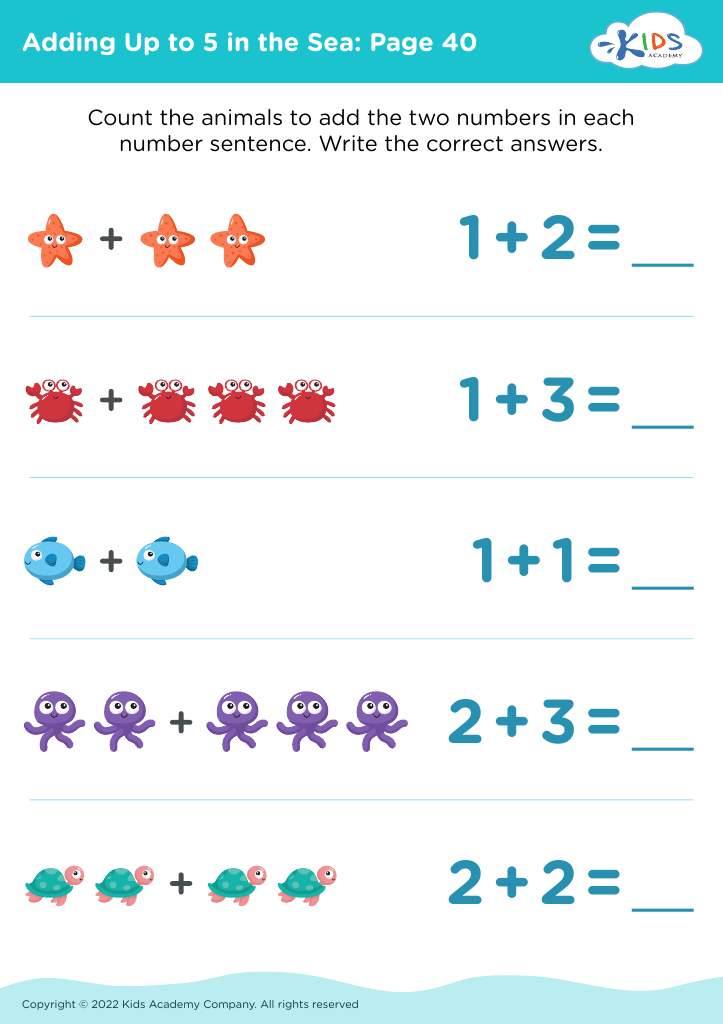
Adding Up to 5 in the Sea: Page 40
Worksheet
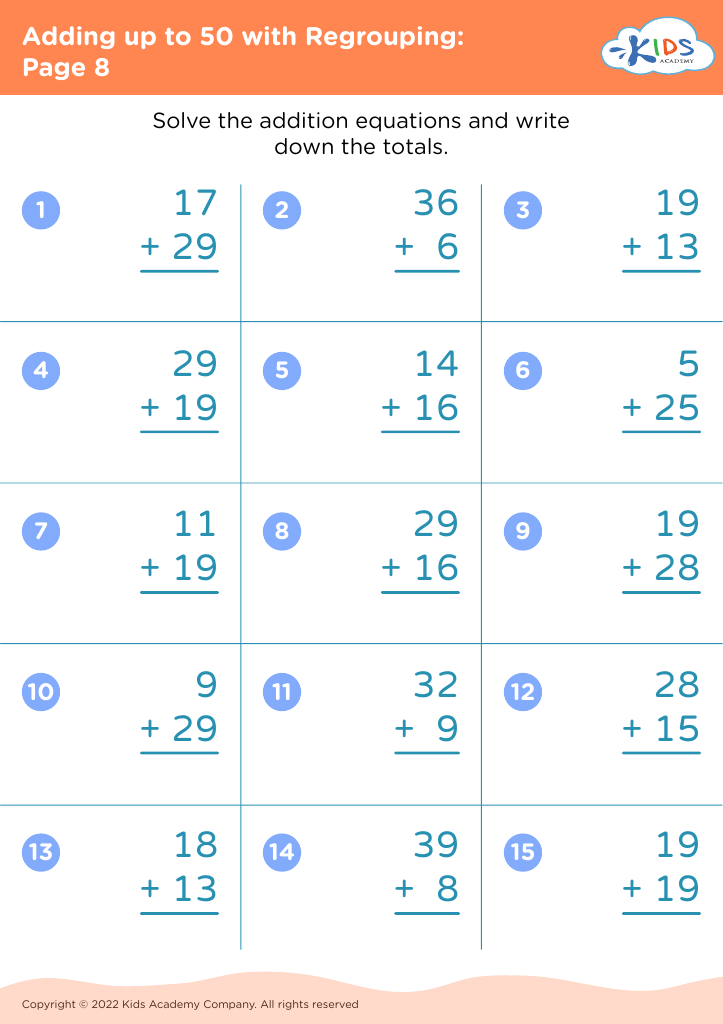
Adding up to 50 with Regrouping: Page 8
Worksheet
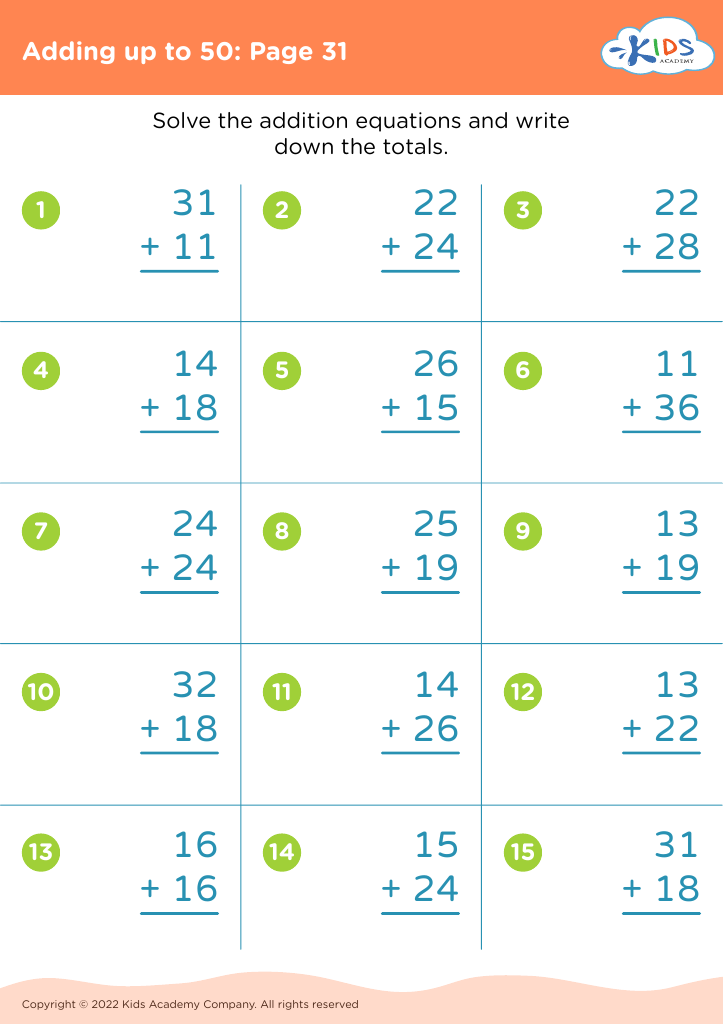
Adding up to 50: Page 31

Adding up to 50: Page 31

Adding up to 50: Page 31
Worksheet
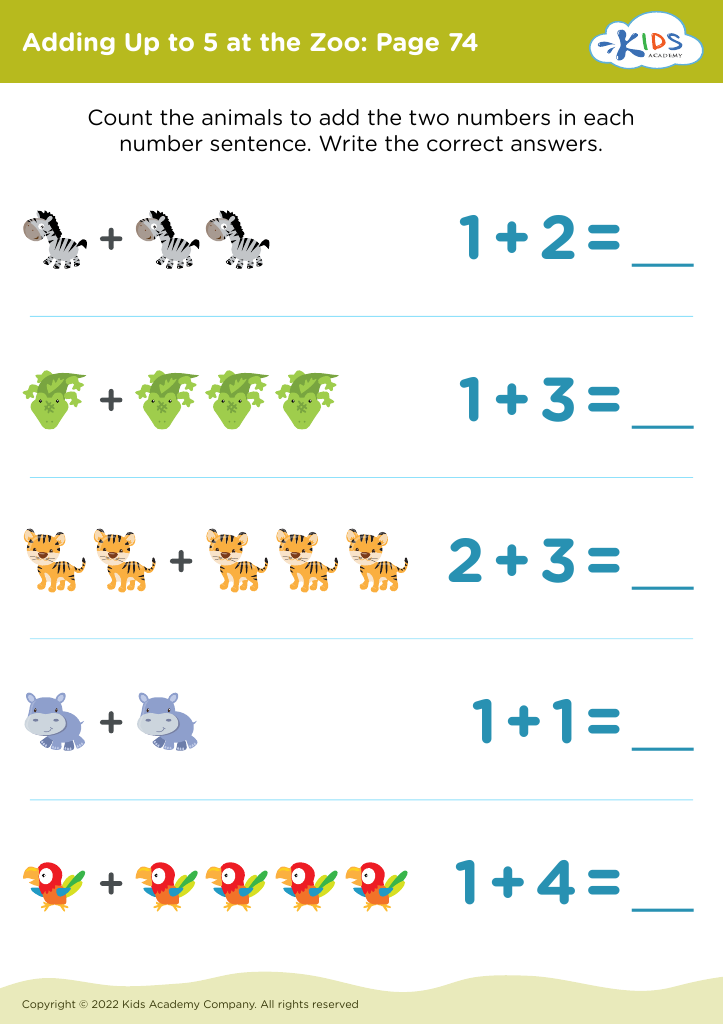
Adding Up to 5 at the Zoo: Page 74
Worksheet
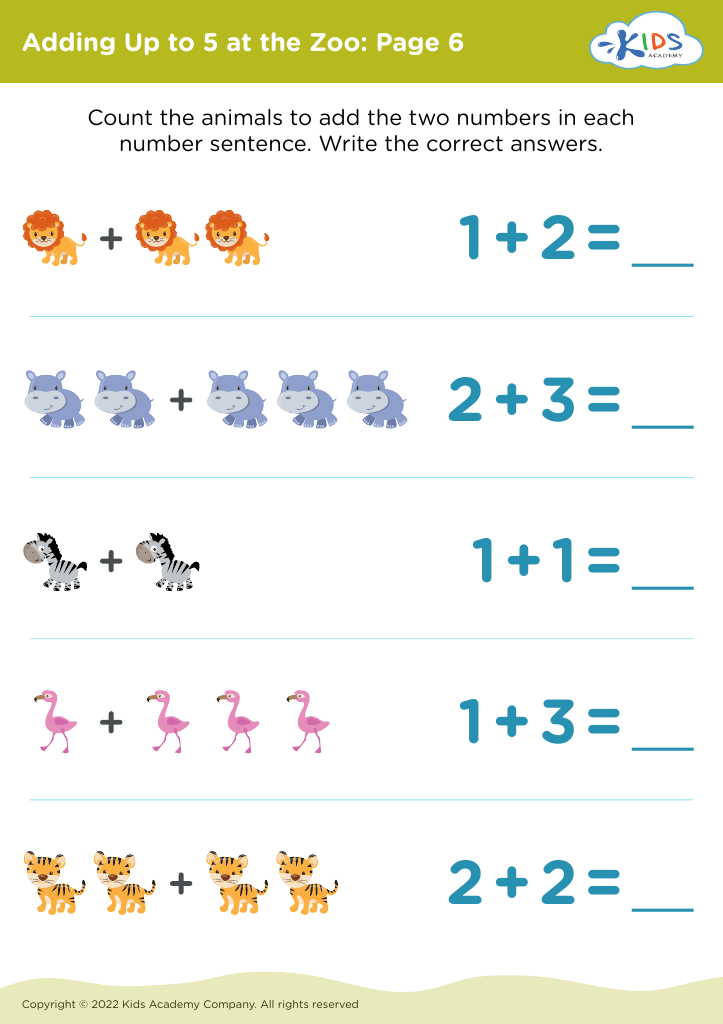
Adding Up to 5 at the Zoo: Page 6

Adding Up to 5 at the Zoo: Page 6

Adding Up to 5 at the Zoo: Page 6
Worksheet
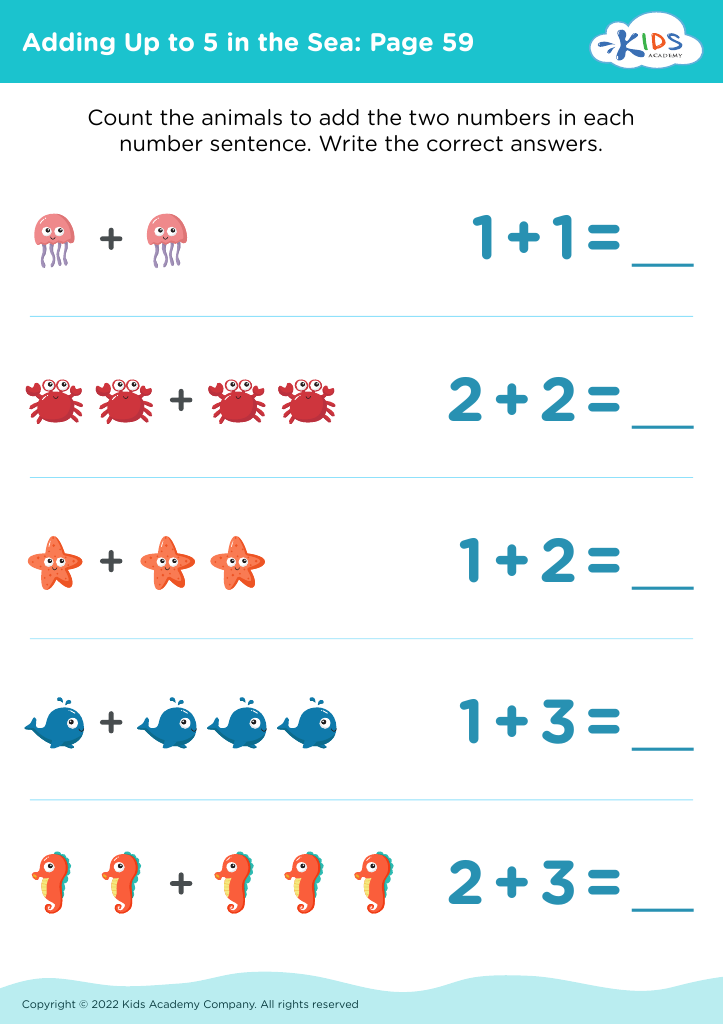
Adding Up to 5 in the Sea: Page 59
Worksheet
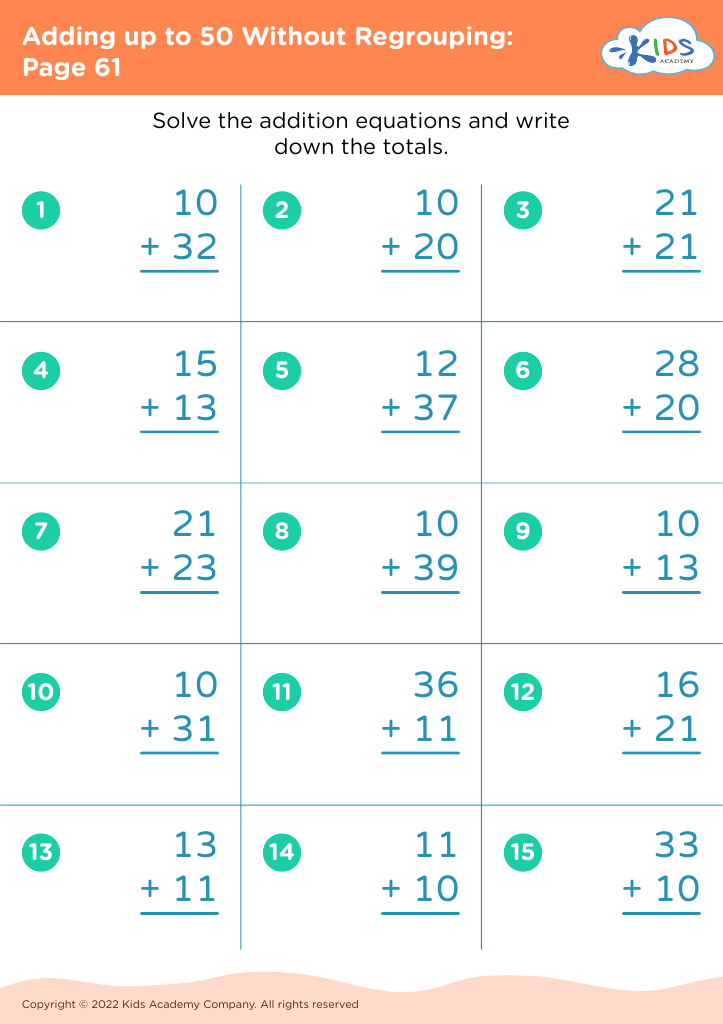
Adding up to 50 Without Regrouping: Page 61
Worksheet
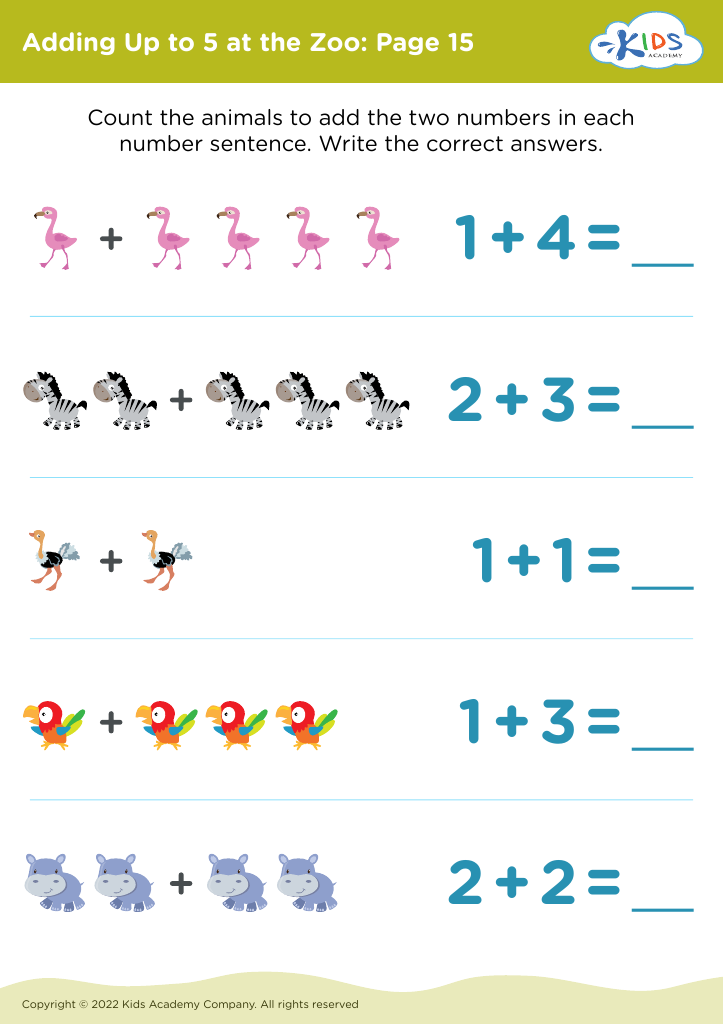
Adding Up to 5 at the Zoo: Page 15
Worksheet
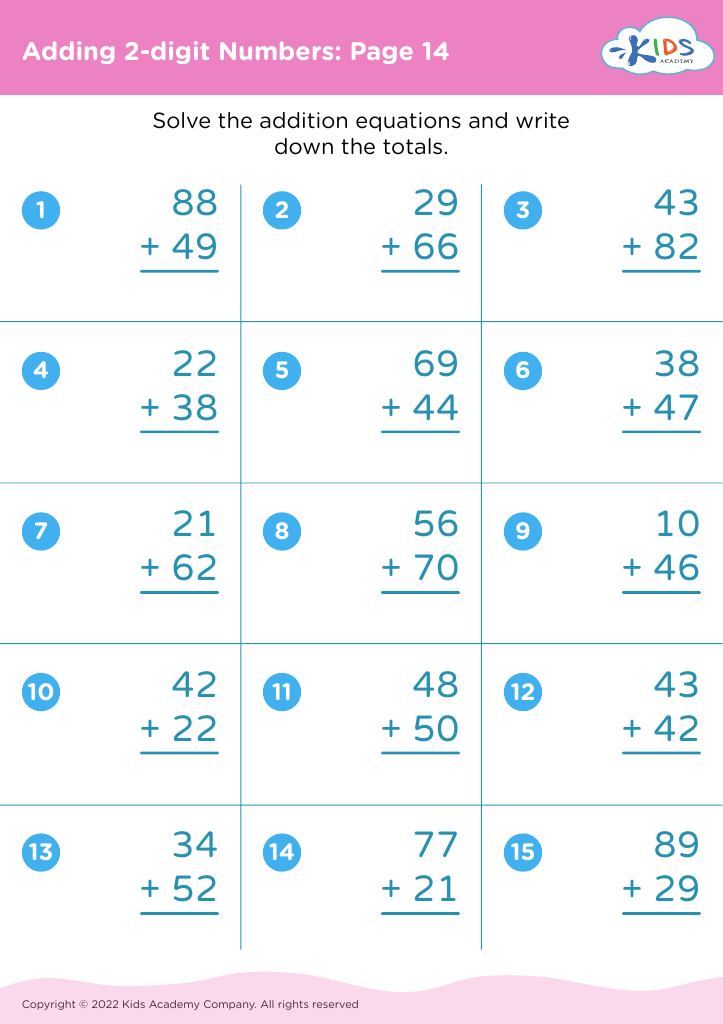
Adding 2-digit Numbers: Page 14

Adding 2-digit Numbers: Page 14

Adding 2-digit Numbers: Page 14
Worksheet
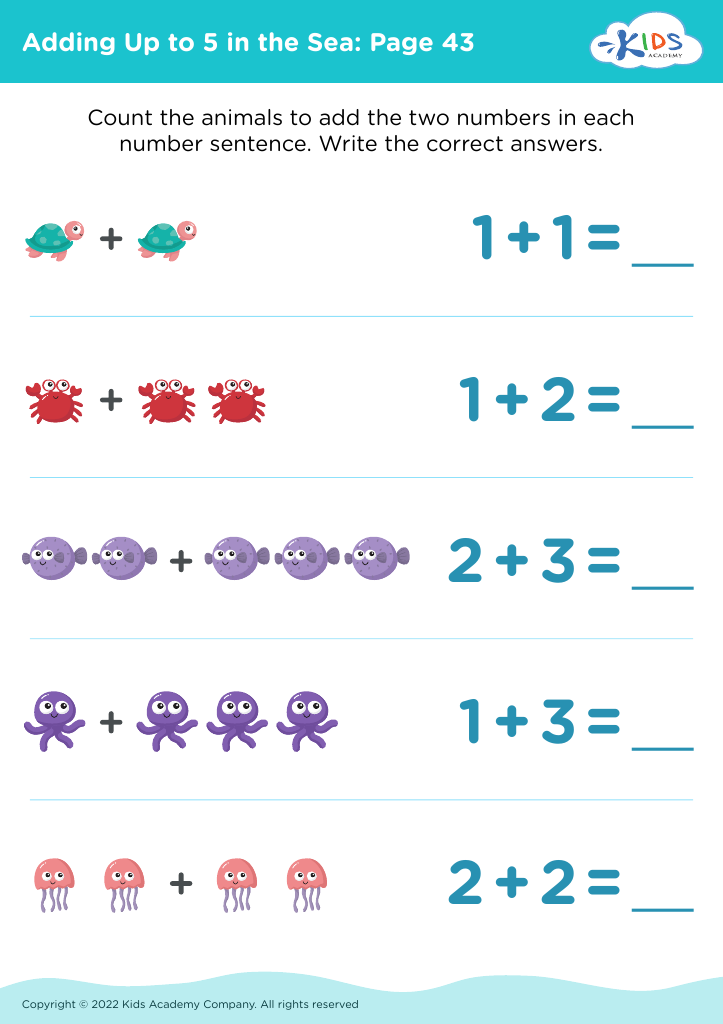
Adding Up to 5 in the Sea: Page 43
Worksheet
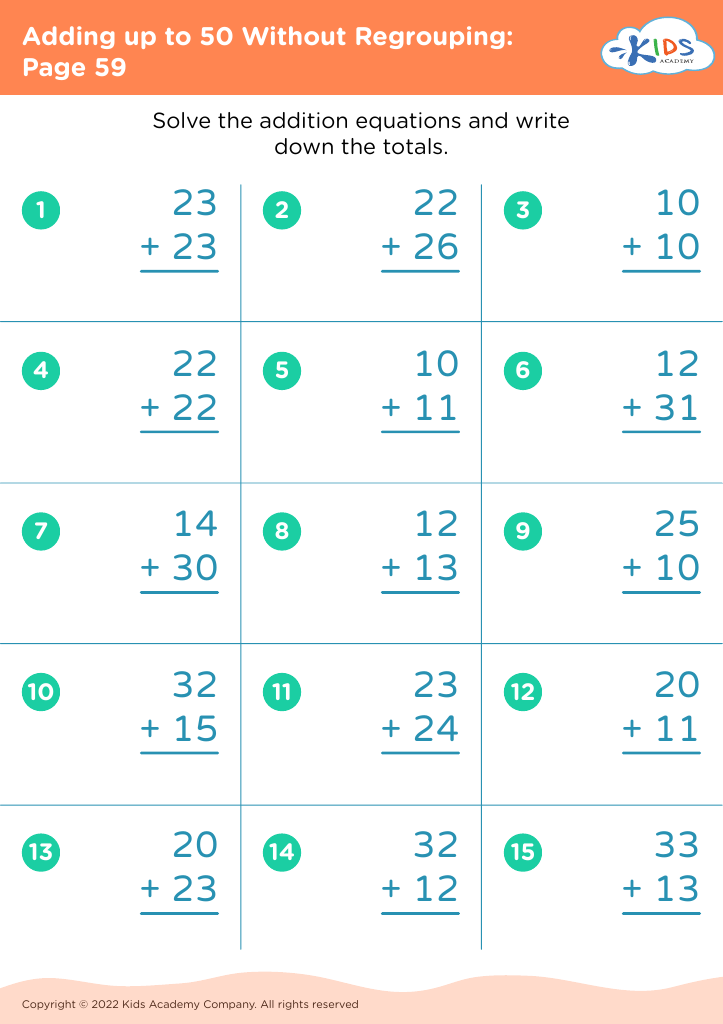
Adding up to 50 Without Regrouping: Page 59
Worksheet
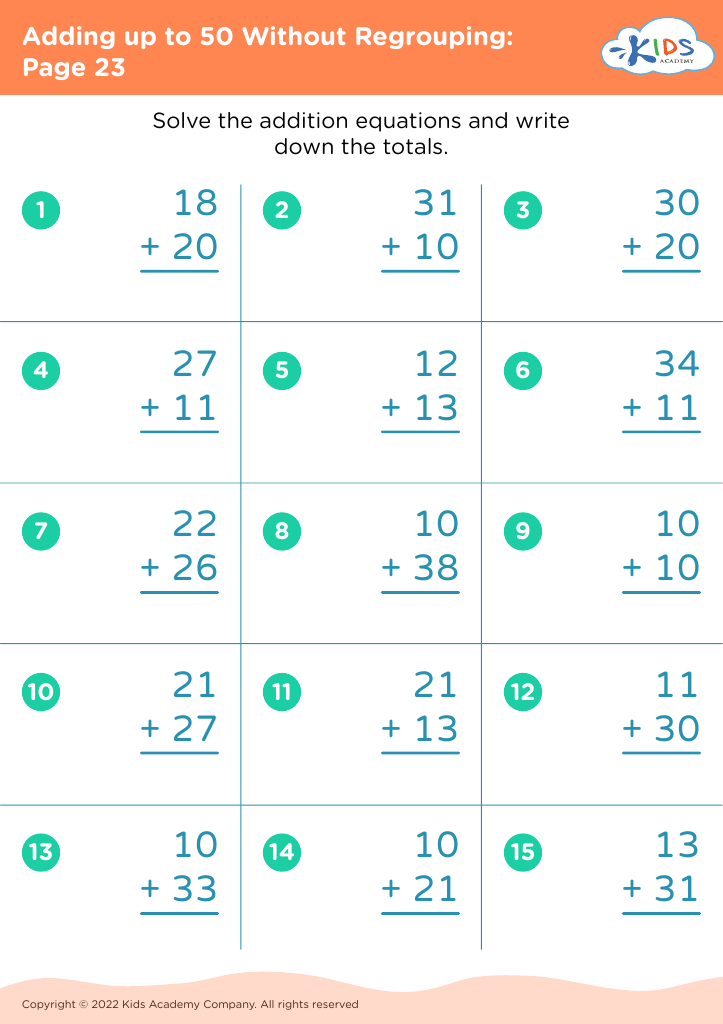
Adding up to 50 Without Regrouping: Page 23
Worksheet
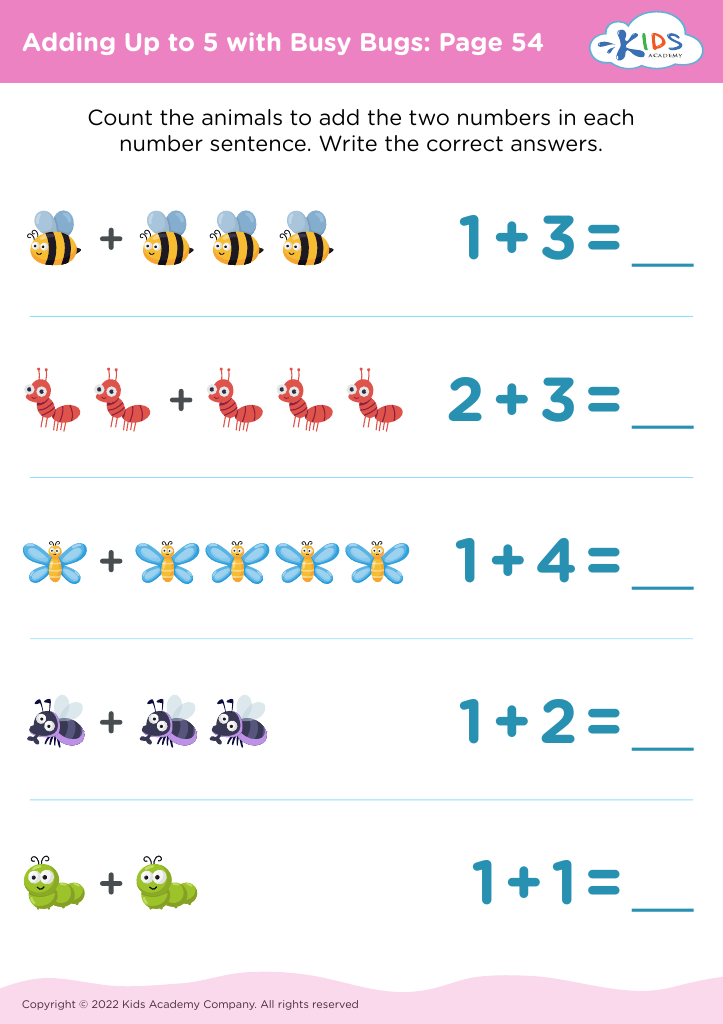
Adding Up to 5 with Busy Bugs: Page 54
Worksheet
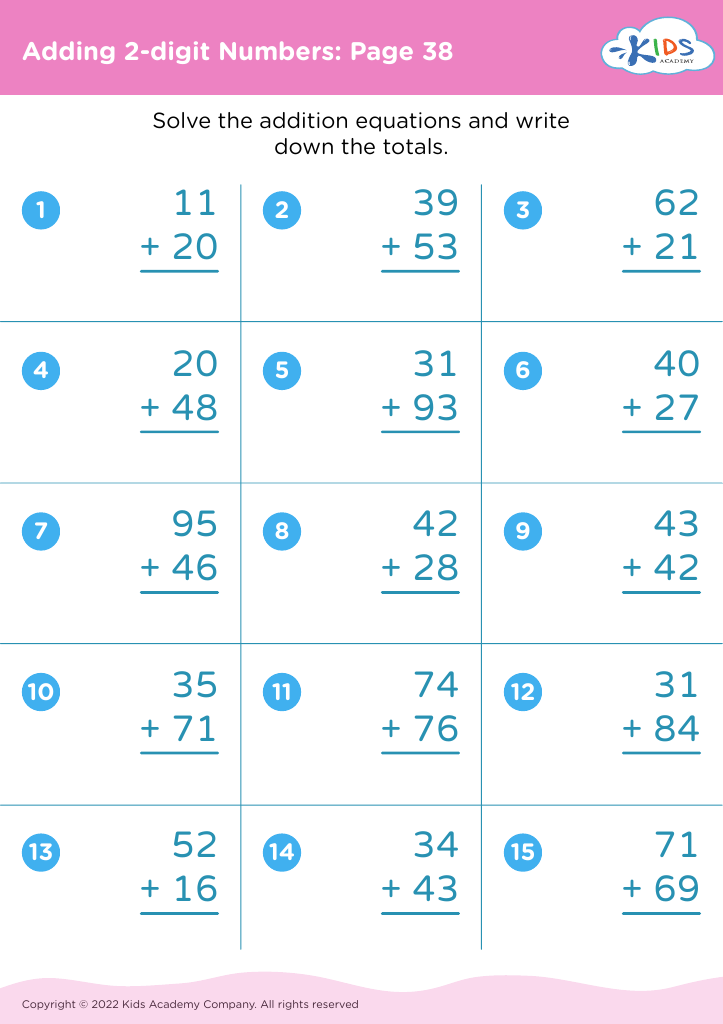
Adding 2-digit Numbers: Page 38

Adding 2-digit Numbers: Page 38

Adding 2-digit Numbers: Page 38
Worksheet
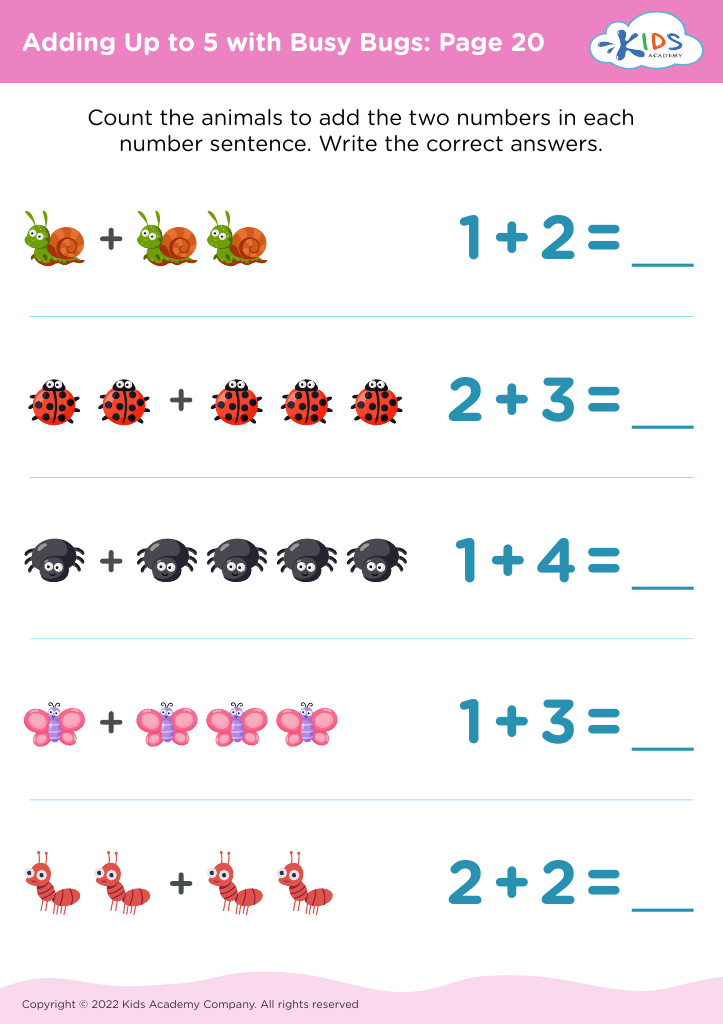
Adding Up to 5 with Busy Bugs: Page 20
Worksheet
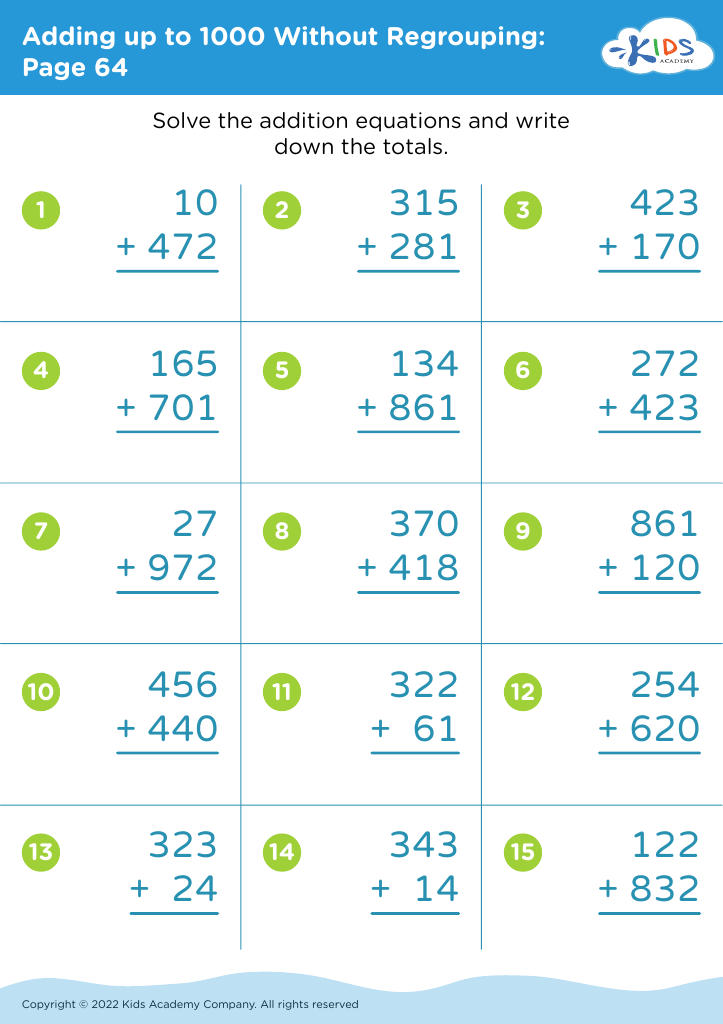
Adding up to 1000 Without Regrouping: Page 64
Worksheet
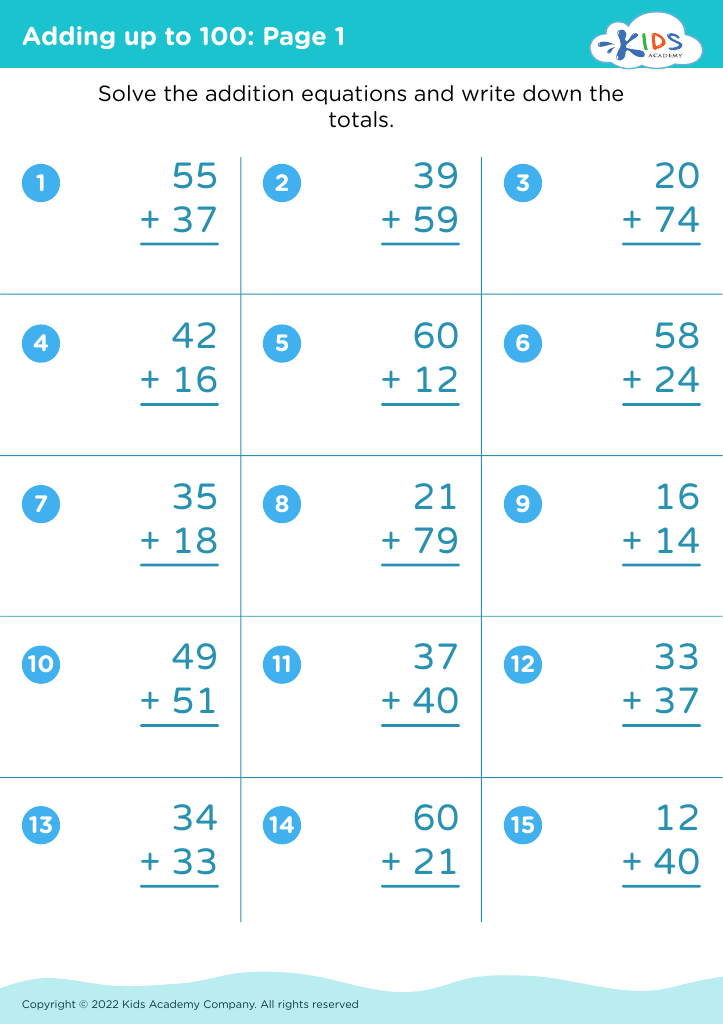
Adding up to 100: Page 1

Adding up to 100: Page 1

Adding up to 100: Page 1
Worksheet
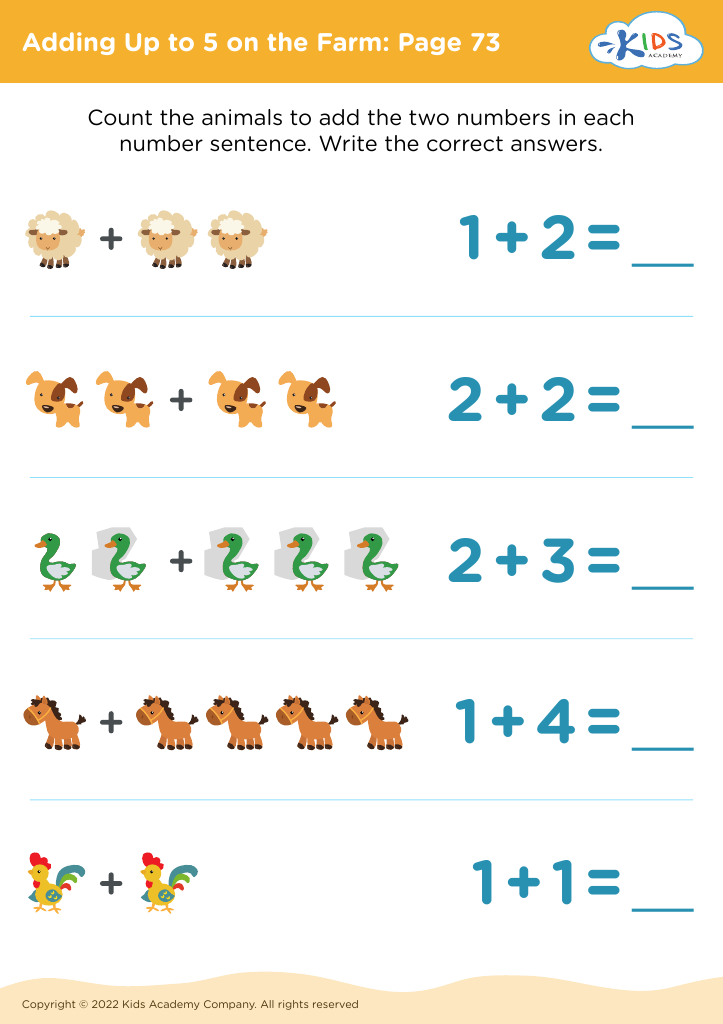
Adding Up to 5 on the Farm: Page 73
Worksheet


Basic addition is fundamental to a child's early mathematical development and serves as the groundwork for more complex arithmetic skills they will encounter later. Parents and teachers should prioritize basic addition practice for several reasons. Firstly, it builds numerical fluency, allowing children to quickly and accurately perform more involved calculations. Without such fluency, future concepts like multiplication, division, and fractions may become daunting hurdles.

Moreover, the process of mastering basic addition supports critical cognitive skills such as logical thinking, problem-solving, and memory. These skills are not confined to mathematics but are essential for overall academic achievement and real-world tasks requiring analytical reasoning.

Additionally, positive experiences and successes with basic addition can foster a child's confidence in their mathematical abilities. This confidence can have a long-lasting impact on their attitude towards math, potentially mitigating math anxiety and encouraging a more positive approach to learning in general.

For parents, engaging in basic addition practice at home offers quality one-on-one time that strengthens both understanding and familial bonds. For teachers, implementing structured practice within the classroom ensures that all students have a solid arithmetic foundation, thereby leveling the playing field and promoting inclusive education.

In summary, caring about basic addition practice equips children with essential life skills and fosters a love for learning, setting them up for future success in and outside the classroom.