Categorization skills Addition Worksheets
3 filtered results
-
From - To
Enhance your child's arithmetic and critical thinking abilities with our "Categorization Skills Addition Worksheets." Tailored for young learners, these worksheets combine the essential math practice of addition with engaging categorization tasks. As children solve addition problems, they simultaneously categorize items, promoting dual learning and reinforcing cognitive organization. Perfect for classroom or at-home practice, these printable worksheets foster a deeper understanding of math concepts while keeping learning interactive and fun. Help your child develop both math proficiency and critical categorization skills, laying a strong foundation for future academic success. Discover a world where learning is structured and enjoyable!
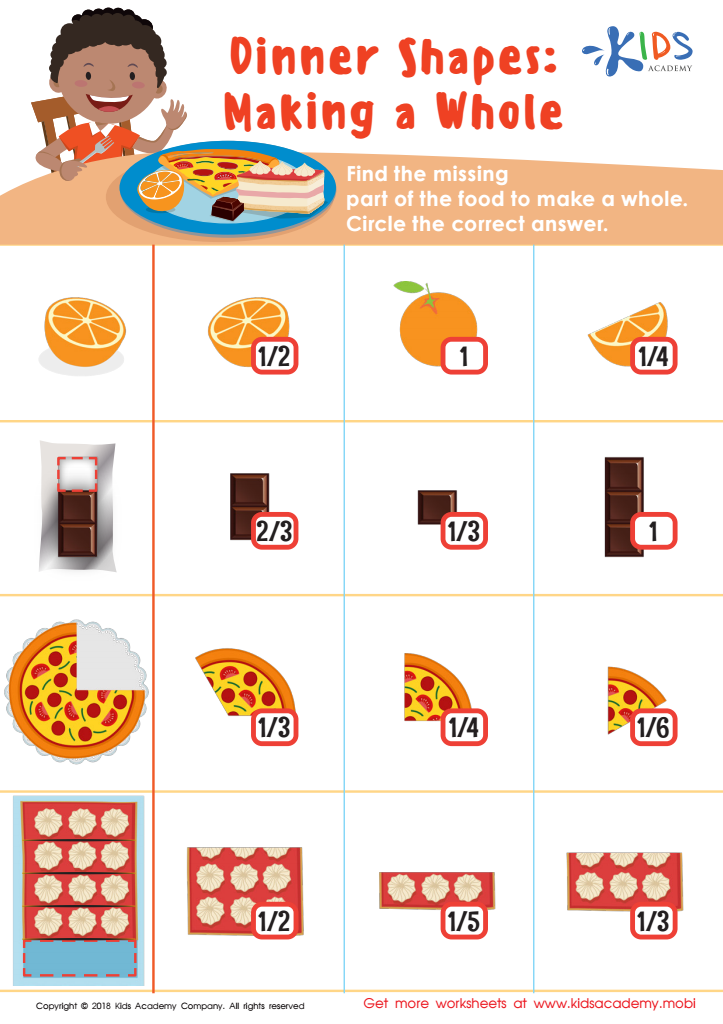
Dinner Shapes: Making a Whole Worksheet
 Assign to My Students
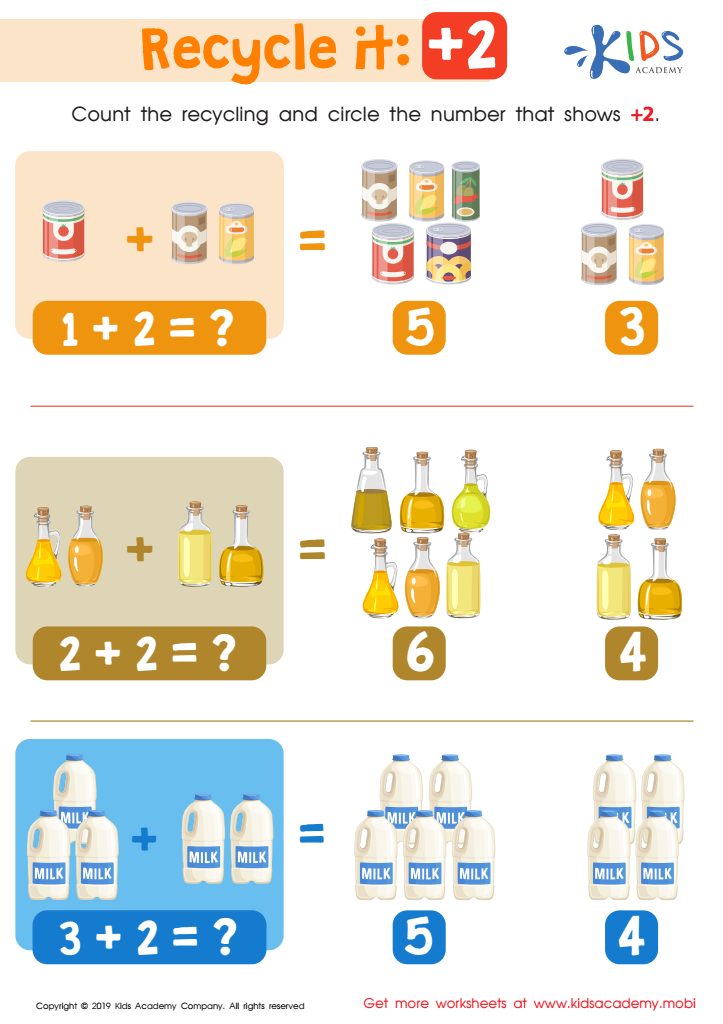
Recycle It: +2 Worksheet








Categorization skills are foundational cognitive abilities that help children make sense of the world, paving the way for complex thought processes. For parents and teachers, enhancing a child's categorization skills is critical because these skills directly impact learning and problem-solving abilities. When children learn to group objects, ideas, or elements based on shared characteristics, they can more easily comprehend and retain new information. This is particularly important in early education, where subjects like mathematics, science, and language arts require sorting, classifying, and organizing data or concepts.
Moreover, categorization aids in vocabulary expansion and reading comprehension. By grouping words and concepts, children develop a framework to understand new vocabularies and stories meaningfully. For instance, knowing the categories of animals (mammals, reptiles, birds) provides a scaffold for children to organize additional animal-related information more easily.
Additionally, solid categorization skills improve decision-making and critical thinking. When children can sort experiences and data into categories, they are better equipped to understand relationships, draw inferences, and make predictions, which are critical for both academic and life success.
Therefore, focusing on developing categorization skills is crucial. Teachers and parents who invest in activities and lessons that sharpen these skills lay a robust foundation for lifelong learning and intellectual development.








