Color matching Addition Worksheets
3 filtered results
-
From - To
Enhance your child's math skills with our engaging Color Matching Addition Worksheets! Designed for early learners, these interactive worksheets integrate vibrant visuals with fundamental addition concepts. Children will love connecting colors while solving addition problems, making math a fun and enjoyable experience. Our resources support the development of essential early math skills, helping students boost their number recognition and counting abilities. Ideal for classroom activity or home practice, these worksheets make learning algebraic concepts approachable and entertaining. Perfect for reinforcing knowledge through playful learning, our Color Matching Addition Worksheets ensure your little ones are on their way to becoming confident mathematicians!
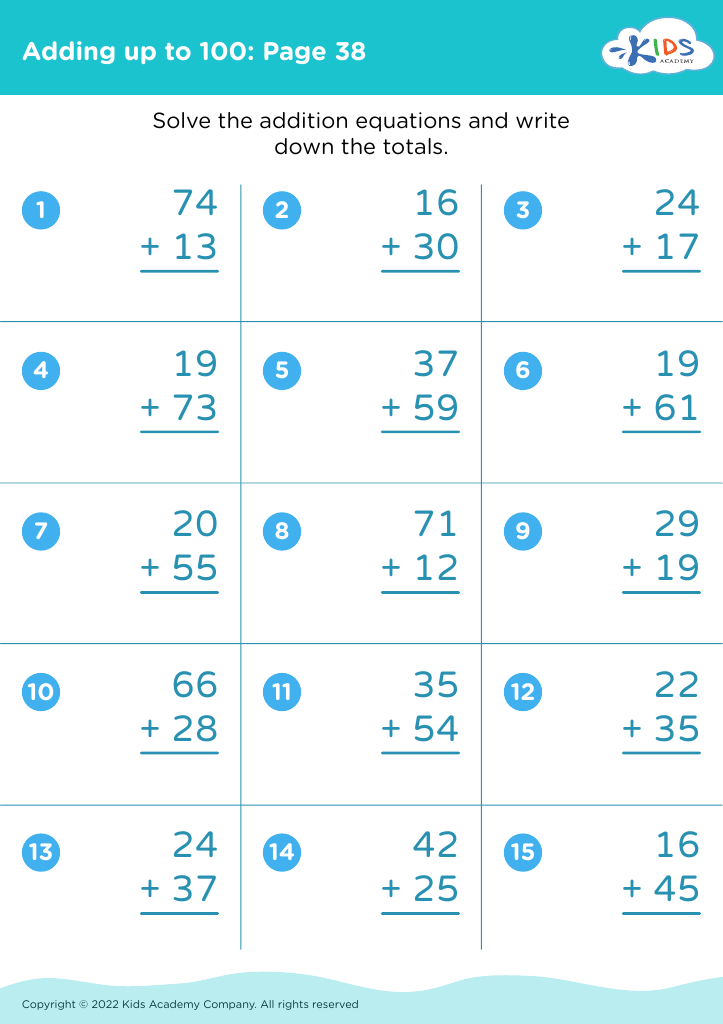
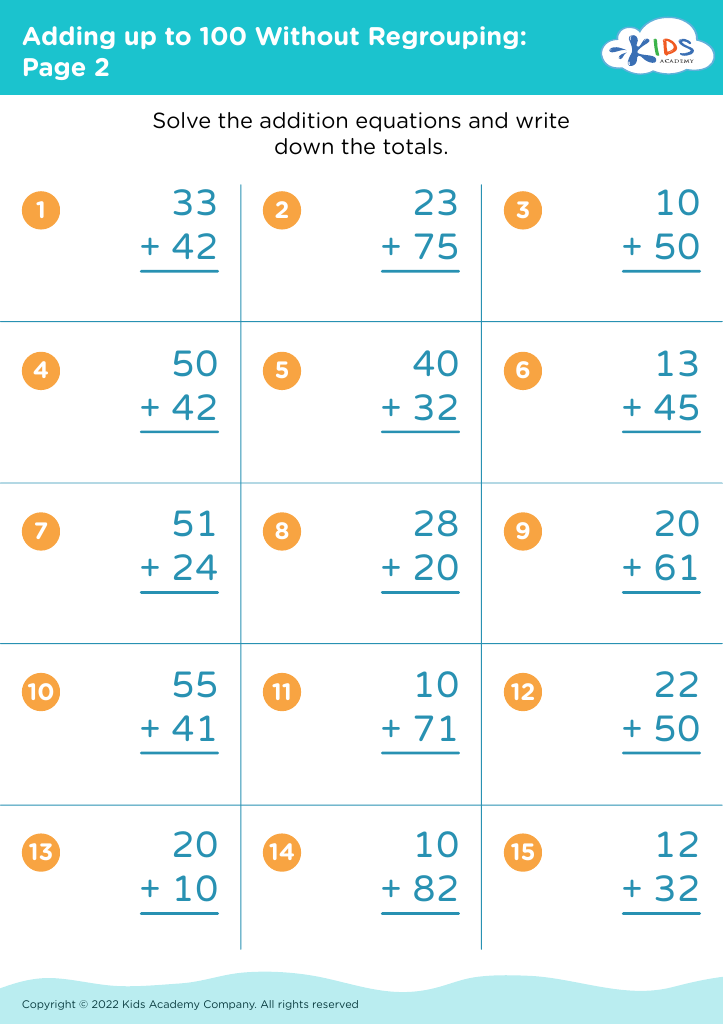
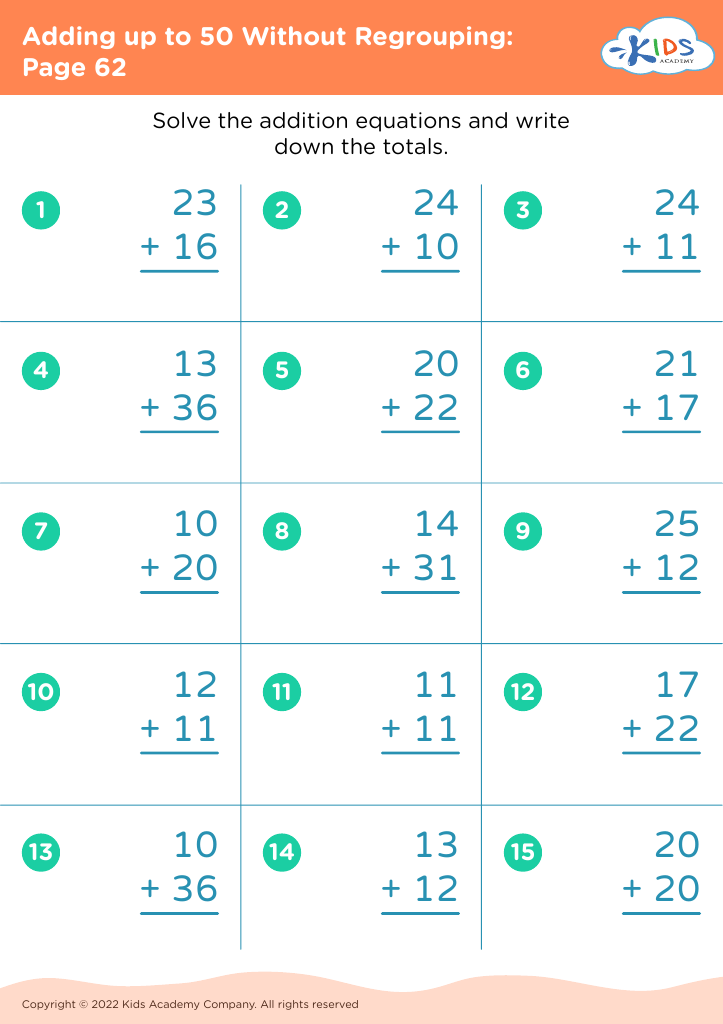





.jpg)


Color matching addition is an engaging and effective way to help young learners grasp basic mathematical concepts. This playful approach combines visual stimulation and hands-on activities, making learning fun and interactive. When children use colored objects, like counters or blocks, to complete addition problems, they not only develop their numerical skills but also enhance their cognitive abilities.
Parents and teachers should care about color matching addition for several reasons. Firstly, it promotes active learning, helping children to visualize abstract concepts, making addition more relatable and understandable. By associating numbers with colors, children can build stronger mental connections, which aids retention and recall.
Secondly, this method encourages collaboration among peers, fostering social skills and encouraging teamwork as they engage in group activities. Additionally, it promotes fine motor skills as children manipulate objects to solve problems.
Finally, the use of color can be particularly beneficial for visual learners, providing an inclusive learning environment that accommodates diverse learning styles. By integrating color matching addition into early education, parents and teachers can ignite a passion for math, set a solid foundation for future learning, and create positive associations with academic success.








