
Develop fine motor skills Addition Worksheets
9 filtered results
Difficulty Level
Grade
Age
-
From - To
Subject
Activity
Standards
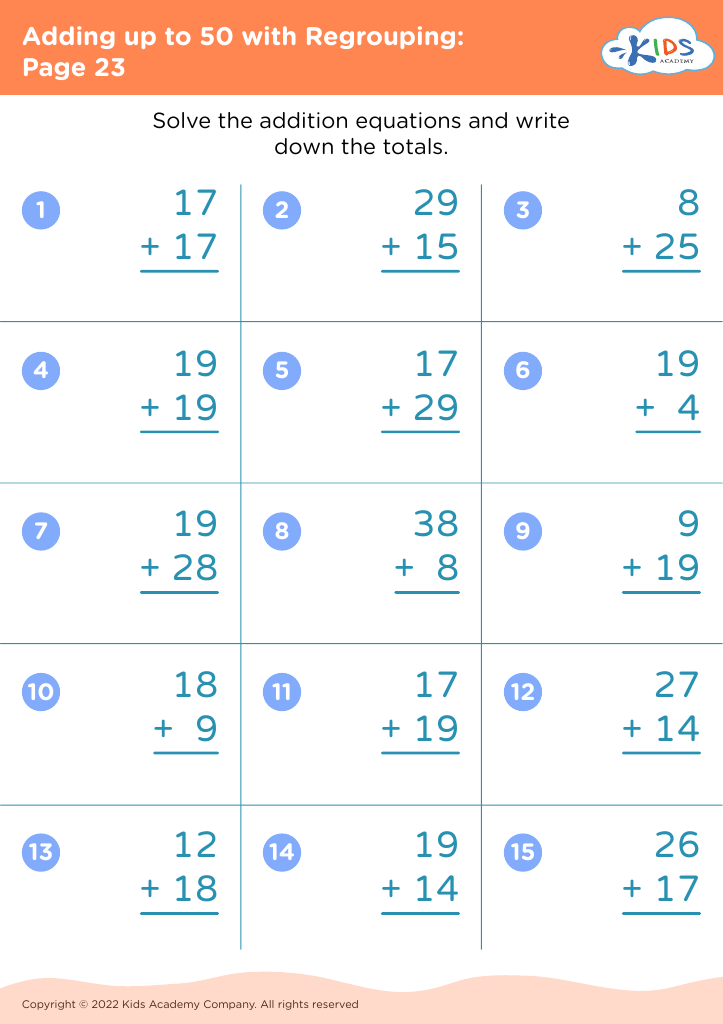
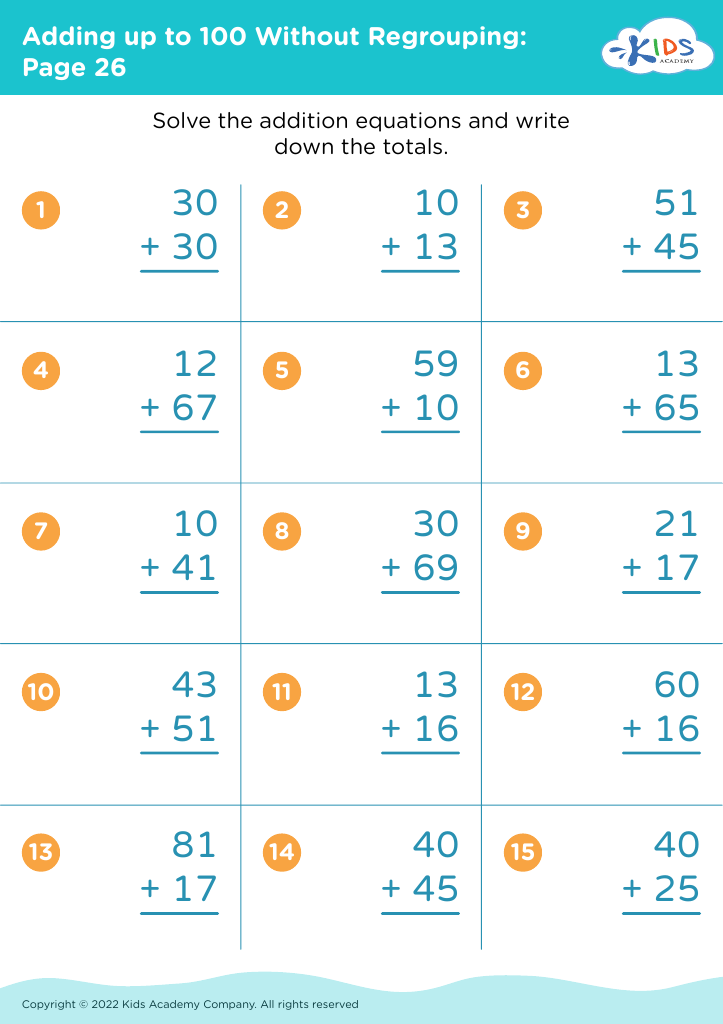
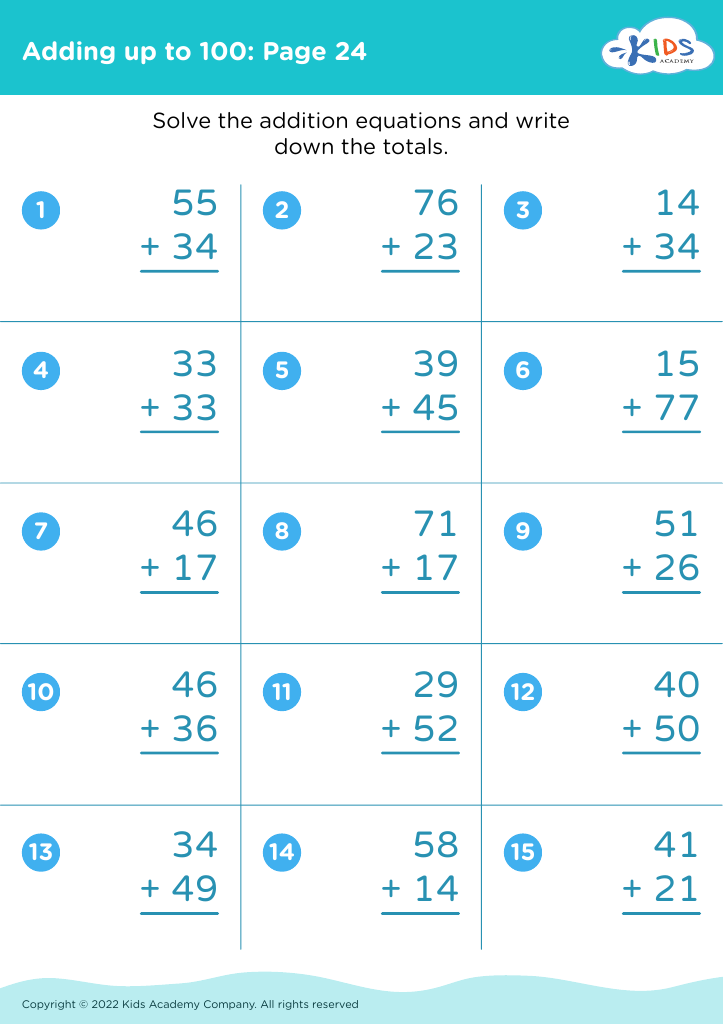
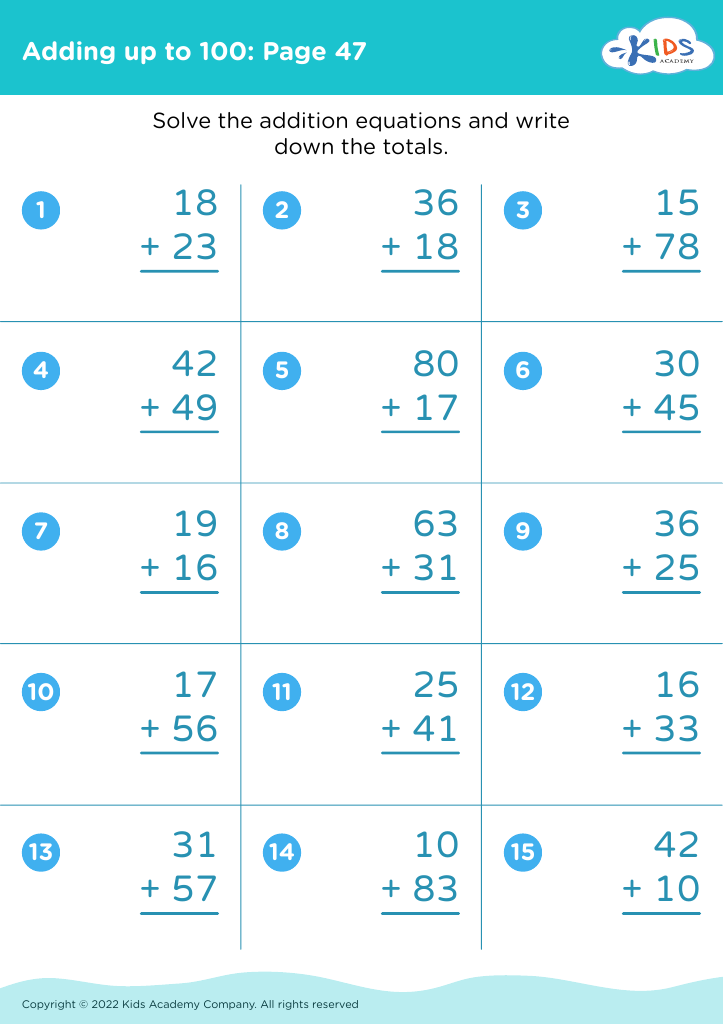
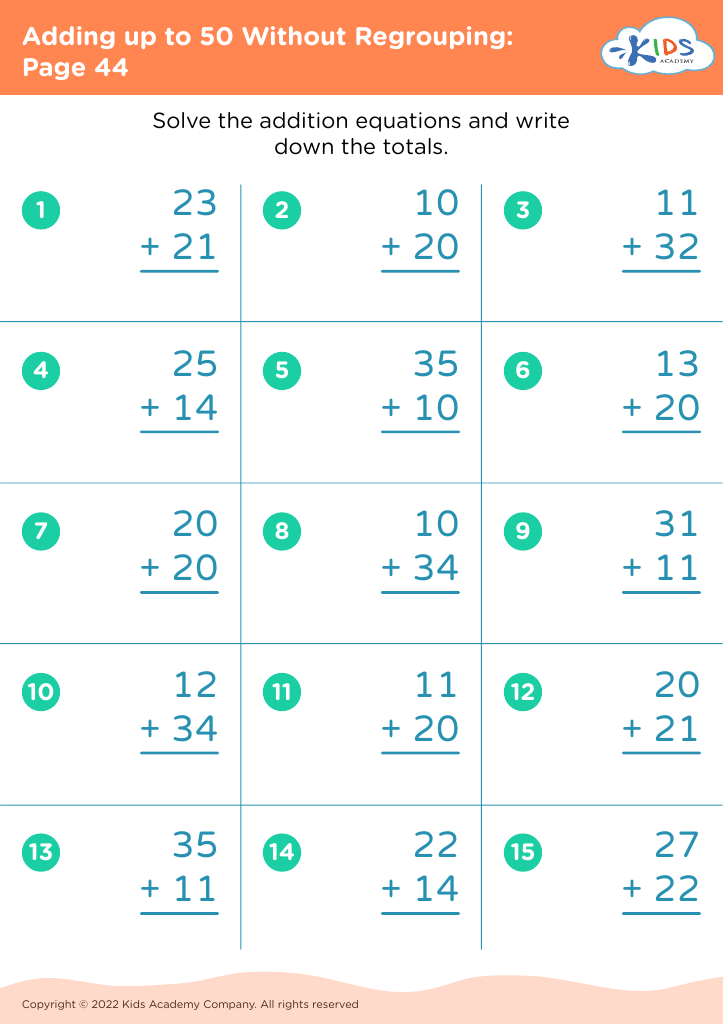
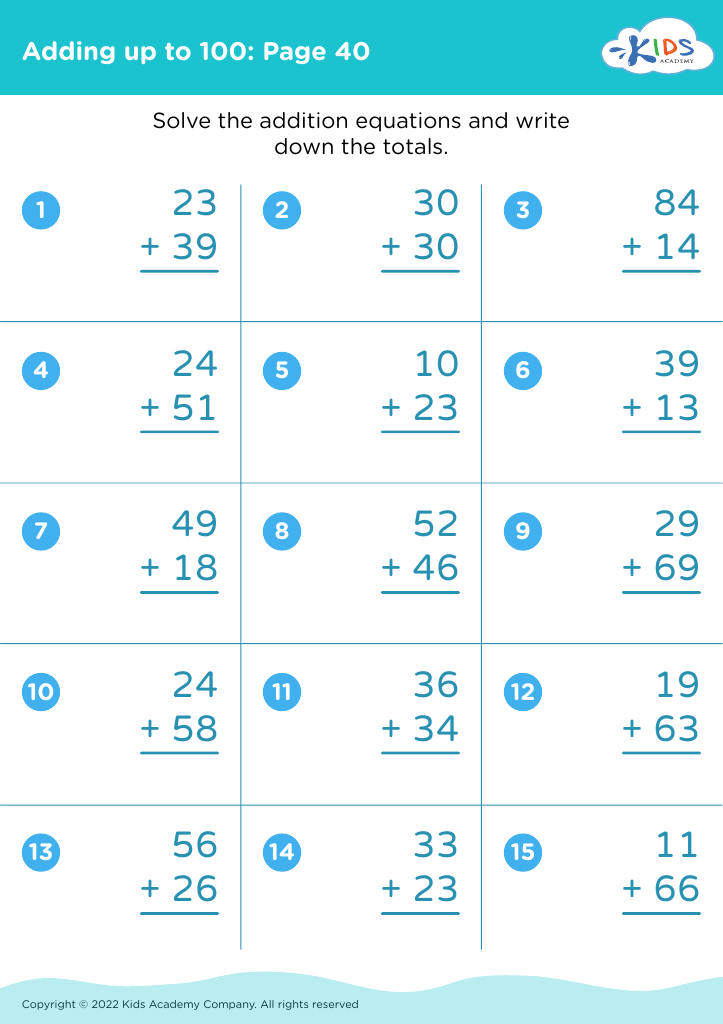
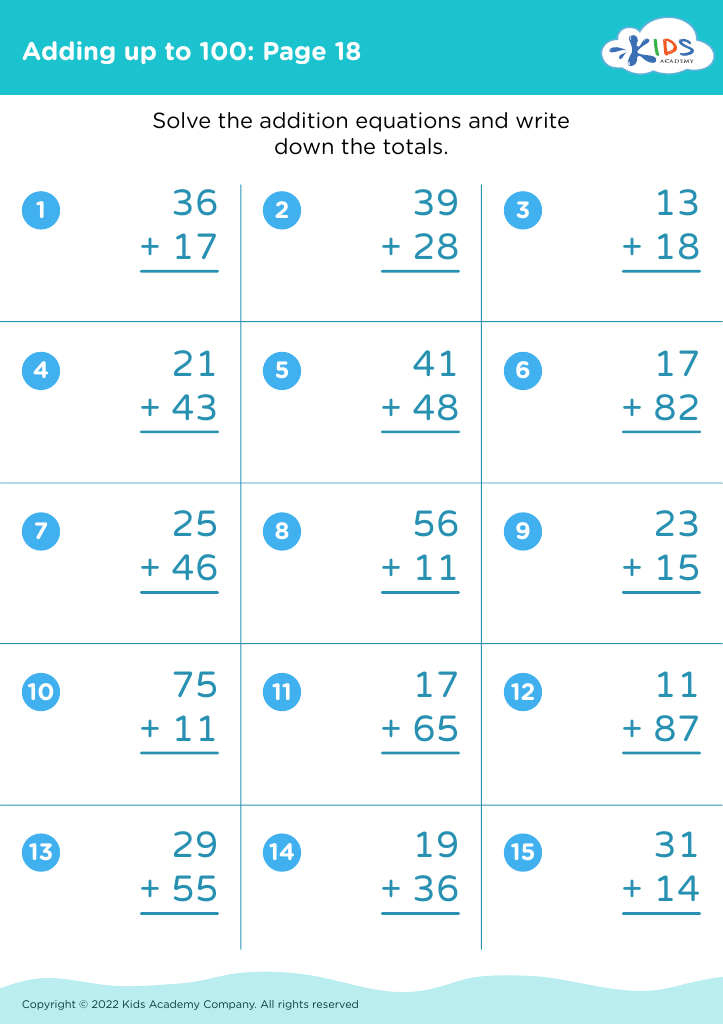
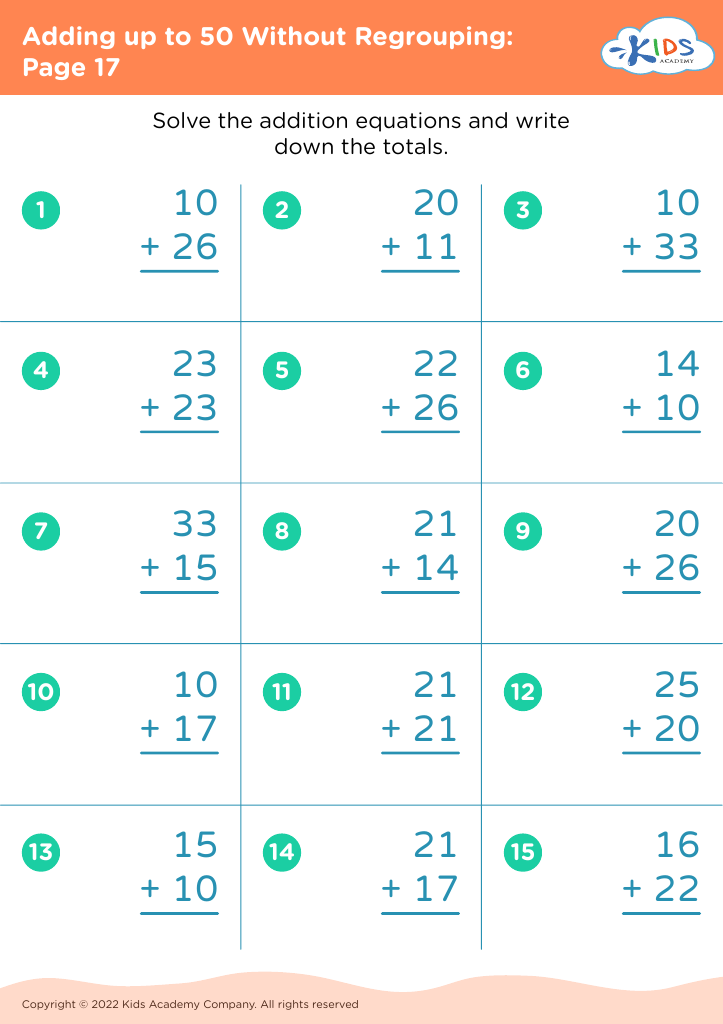
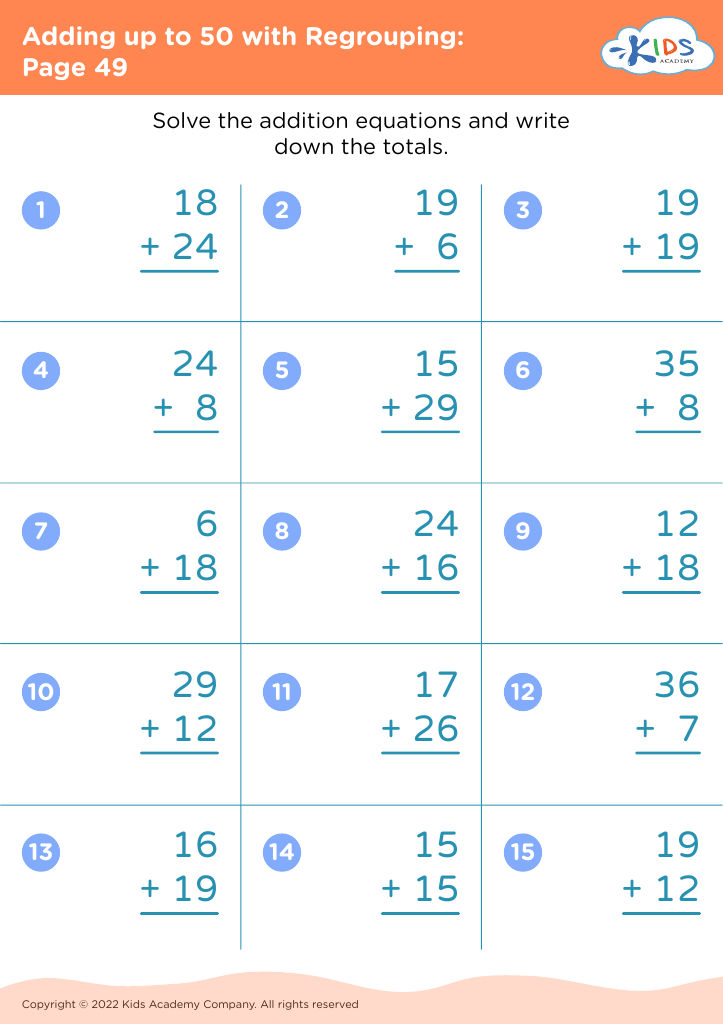
Our "Develop Fine Motor Skills Addition Worksheets" are expertly designed to help young learners master addition while honing their fine motor skills. Each engaging worksheet incorporates fun, hands-on activities like tracing, coloring, and connecting the dots to enhance control and coordination. These carefully crafted exercises not only build foundational math skills but also strengthen hand-eye coordination, pencil grip, and dexterity. Ideal for early childhood education, our worksheets make learning addition enjoyable and interactive. Encourage your child's mathematical journey with our vibrant, educational resources, perfect for home or classroom use. Explore our collection today!
Feel free to ask for any changes. Would you also like a broader description of the company's overall service offerings from the linked page?
Favorites
With answer key
Interactive
Join Kids Academy for Free
Who is primarily going to use this learning content?







.jpg)
Developing fine motor skills in early childhood is essential for a child's overall growth and academic success. Fine motor skills involve the use of small muscles in the hands and fingers, enabling children to perform tasks such as writing, cutting, buttoning, and manipulating small objects. For parents and teachers, prioritizing fine motor skill development can significantly impact a child's daily functioning and classroom participation.
Firstly, children with well-developed fine motor skills are better prepared for writing, an essential academic task. Holding a pencil, forming letters, and spacing words requires intricate hand movements. Improved dexterity and hand-eye coordination aid in these activities, making learning smoother and more enjoyable.
Beyond academics, fine motor skills play a crucial role in self-care activities like dressing, feeding, and grooming, promoting a child's independence. Mastering skills like tying shoes or buttoning a shirt enhances self-esteem and confidence.
Additionally, fine motor activities such as drawing, playing with building blocks, or using scissors can boost creativity and problem-solving skills. These engaging, hands-on tasks can nurture a child's cognitive and spatial awareness.
By fostering fine motor skills, parents and teachers lay a strong foundation for a child's academic achievement and daily self-sufficiency, ensuring they are well-equipped for future challenges. Prioritizing these skills from an early age is a crucial investment in a child's overall development.








