Enhance number recognition Addition Worksheets
17 filtered results
-
From - To
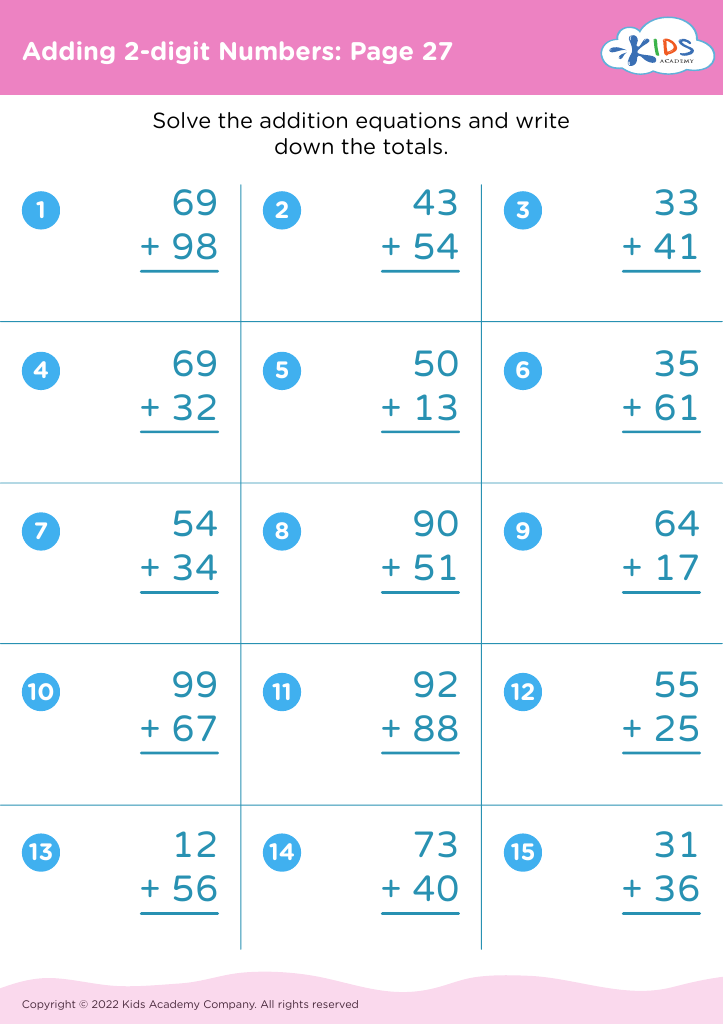
Enhance your child's number recognition and addition skills with our expertly designed worksheets from Kids Academy. Specifically crafted for young learners, these worksheets help children develop a solid foundation in mathematics by focusing on recognizing numbers and improving addition abilities. Each engaging and colorful page is created to make learning fun and interactive, making math practice enjoyable for kids. Perfect for home or classroom use, these printable worksheets provide plenty of opportunities for practice and progression. Discover the perfect blend of learning and creativity to boost your child's confidence and competence in math today!
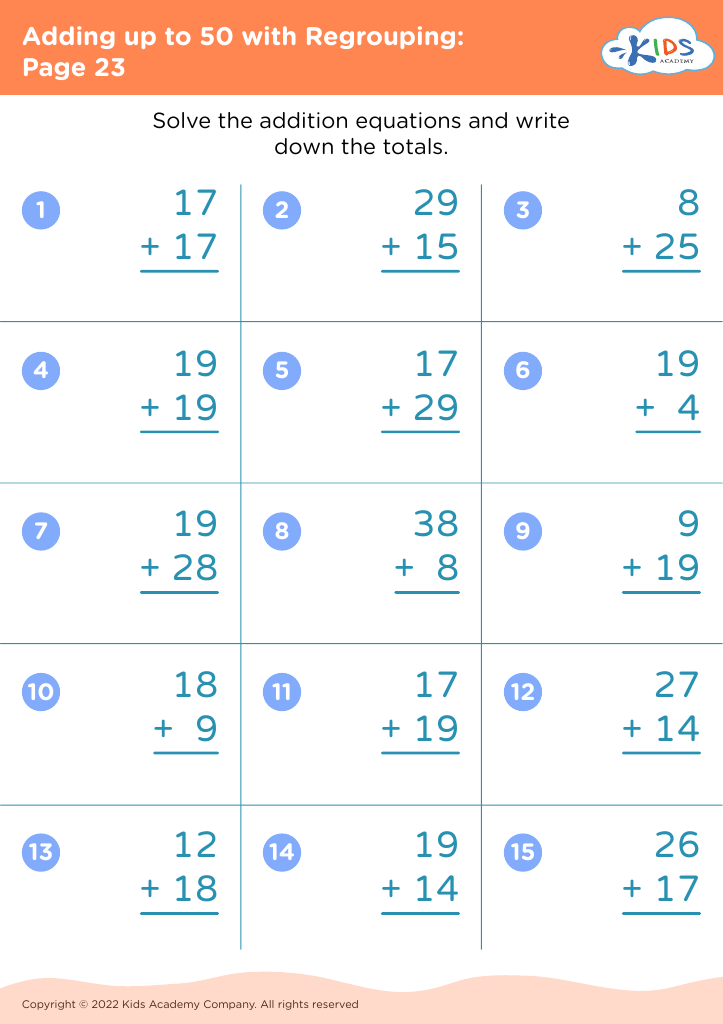
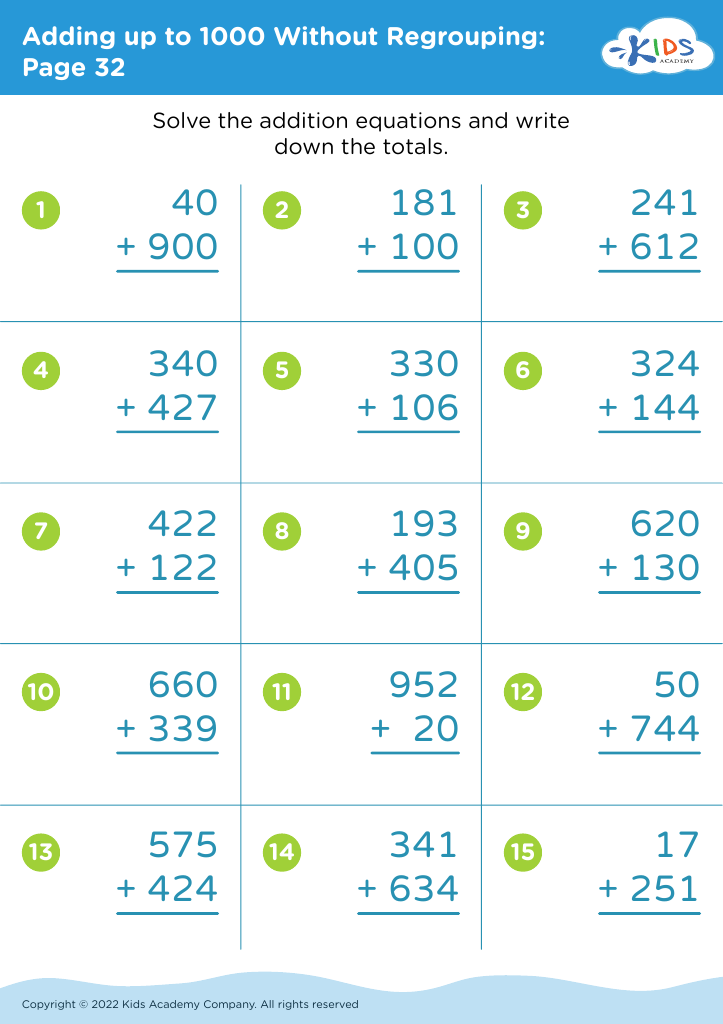
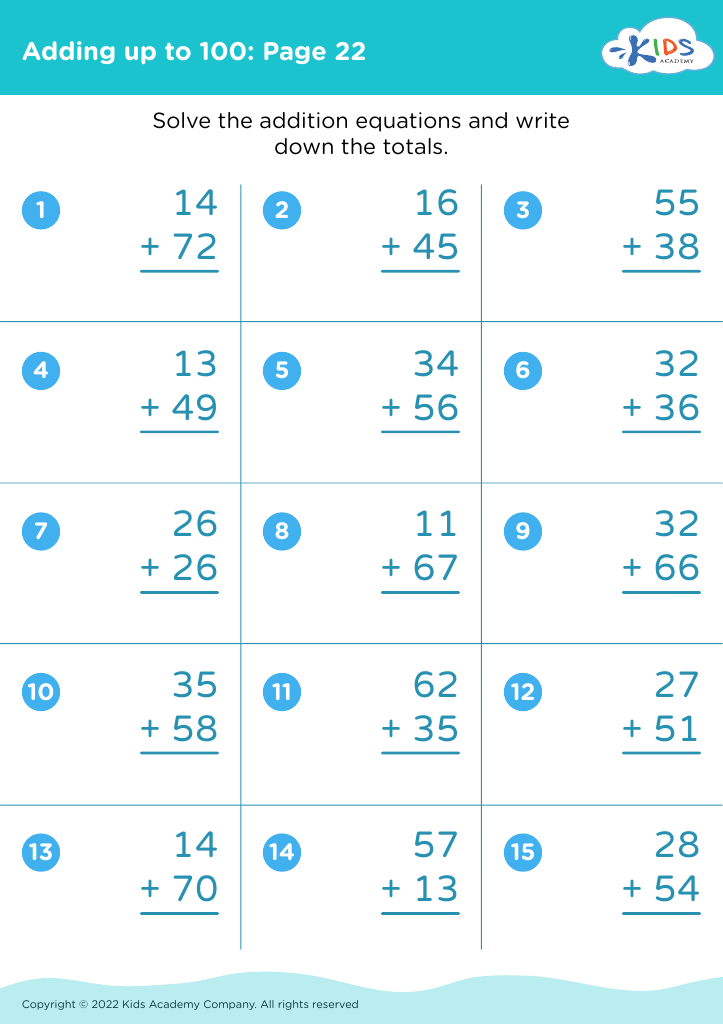
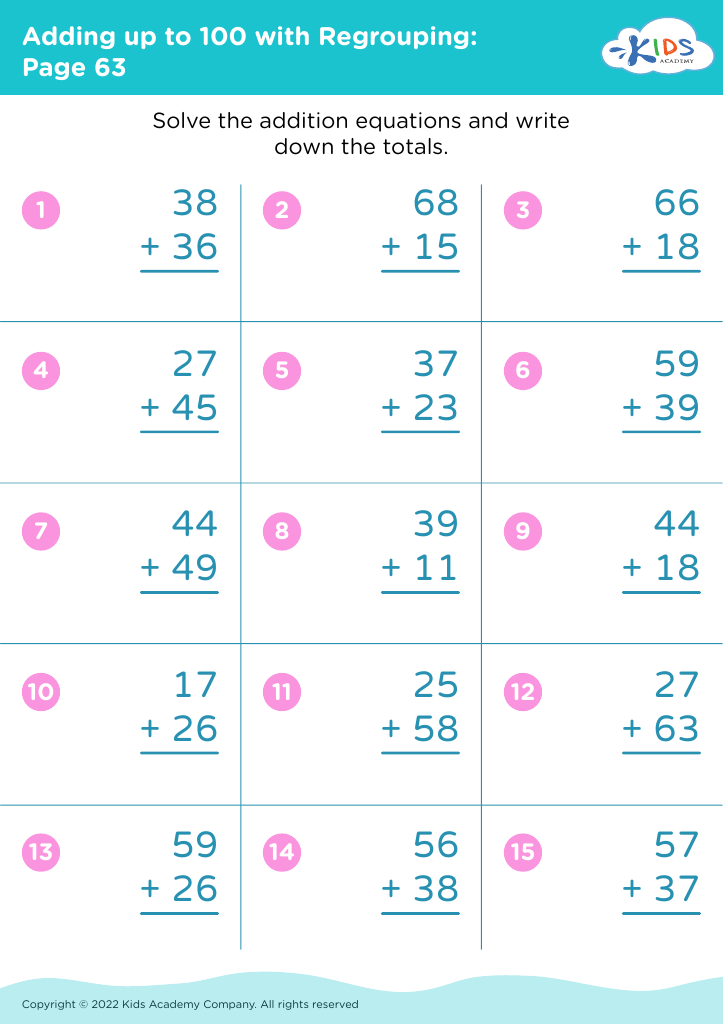
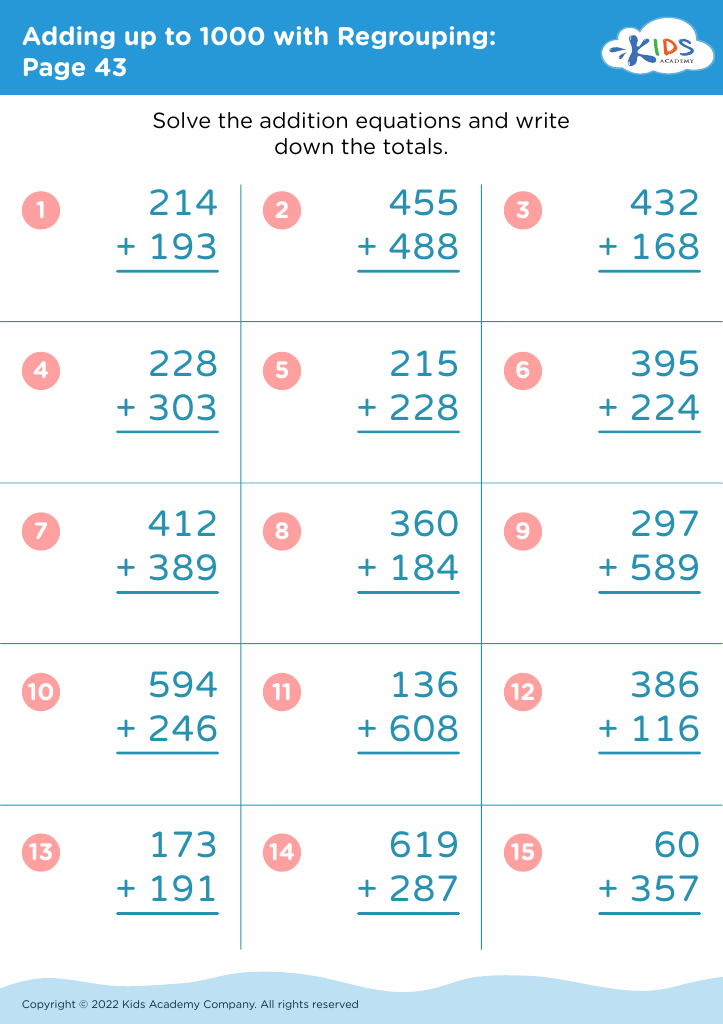
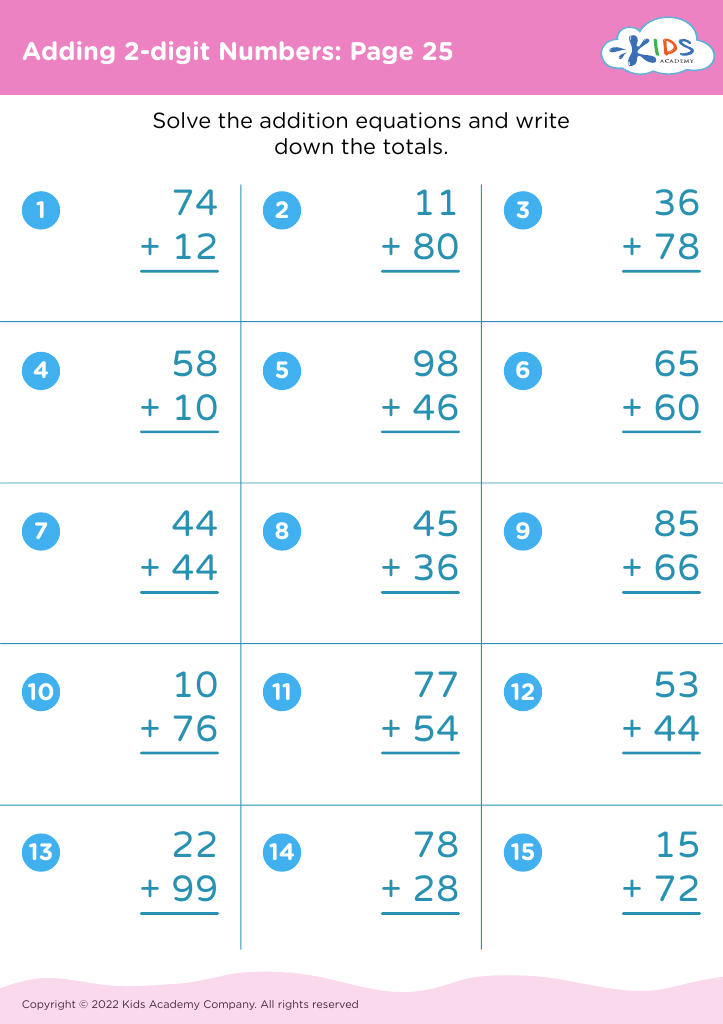
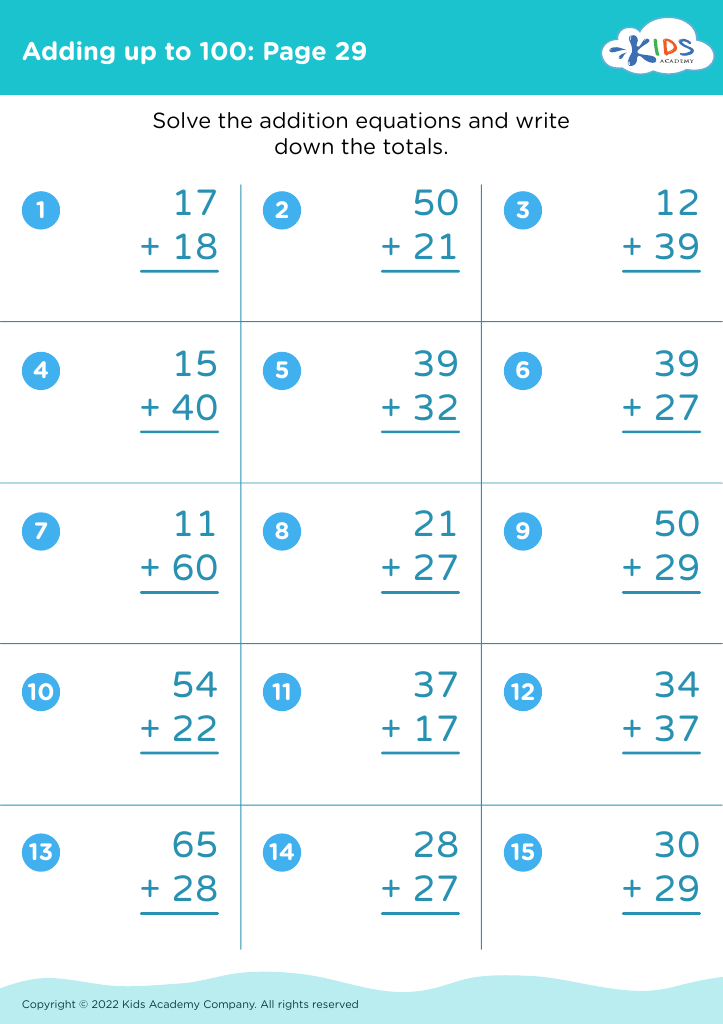
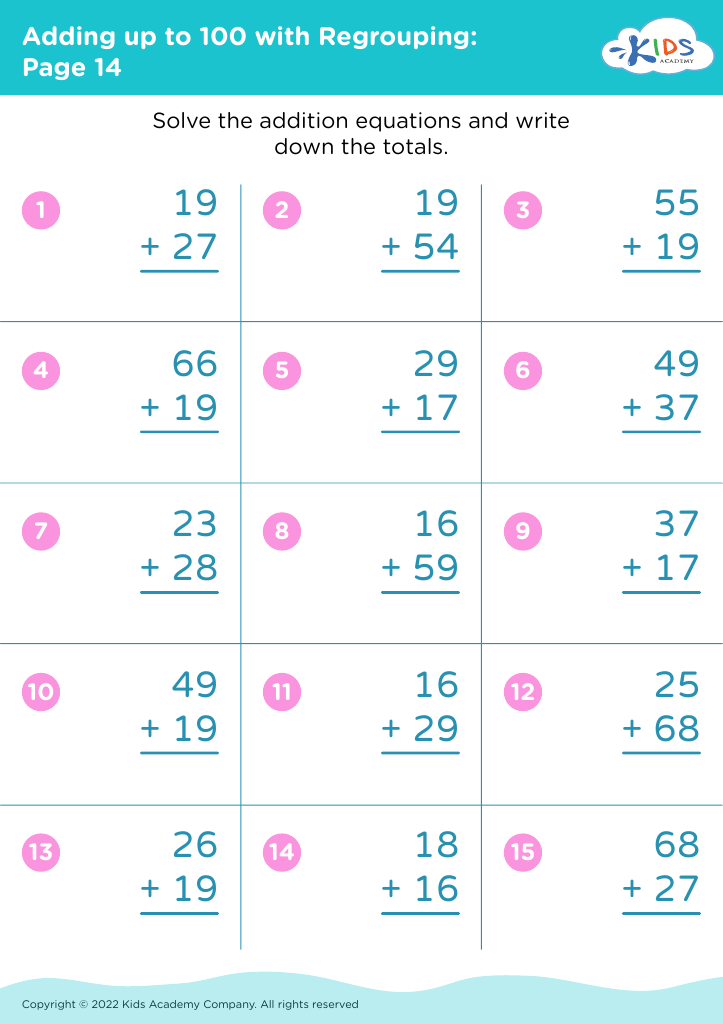
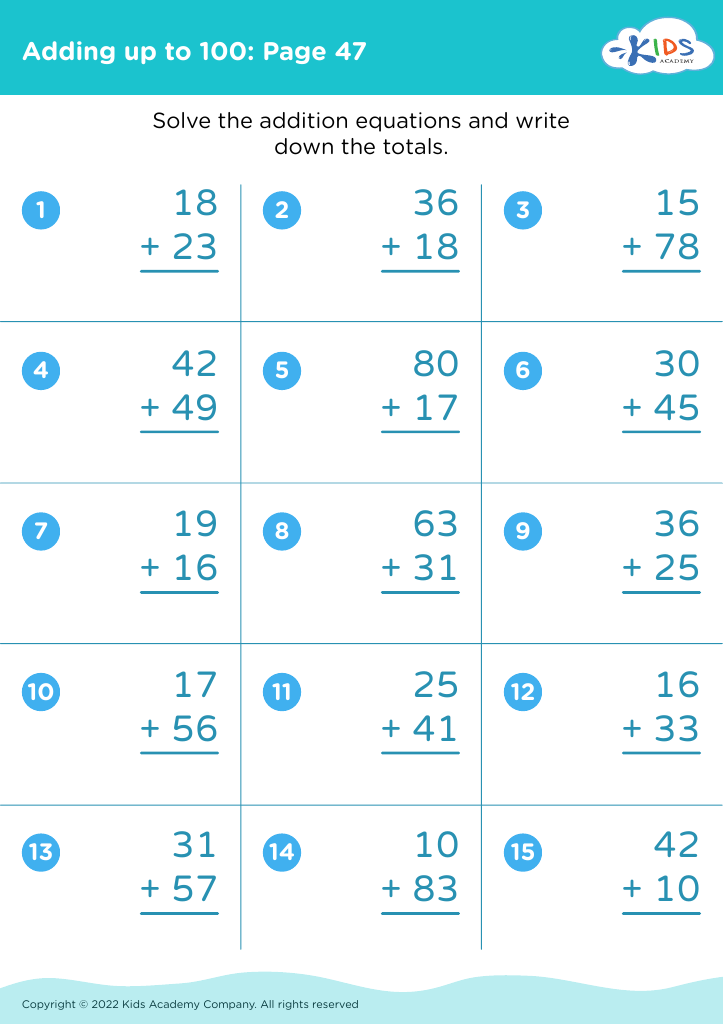
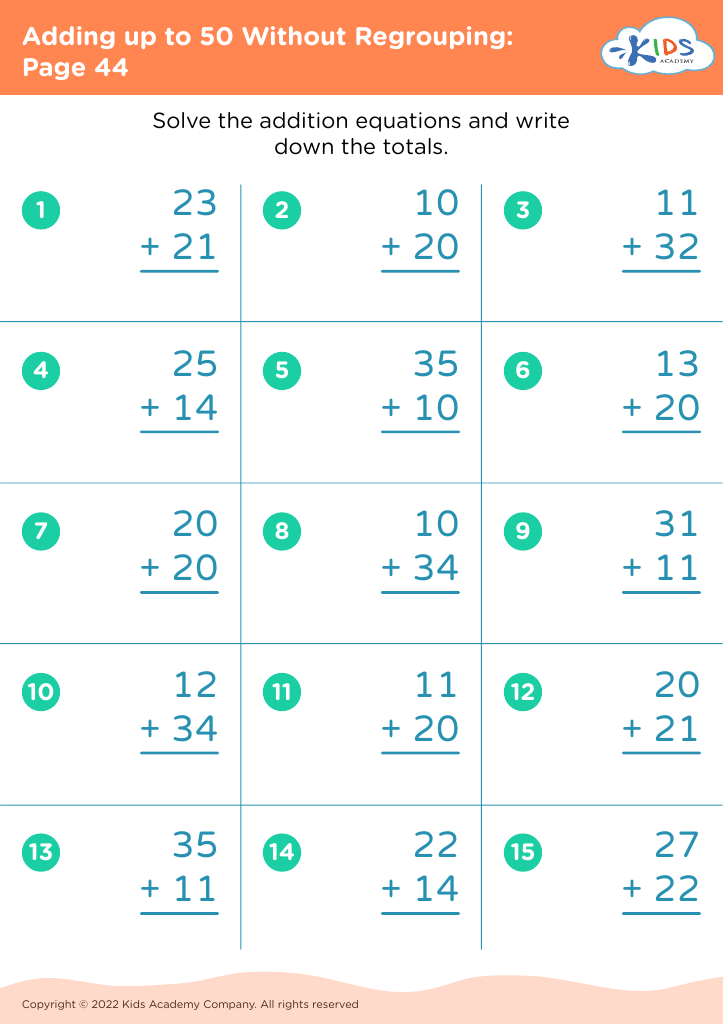
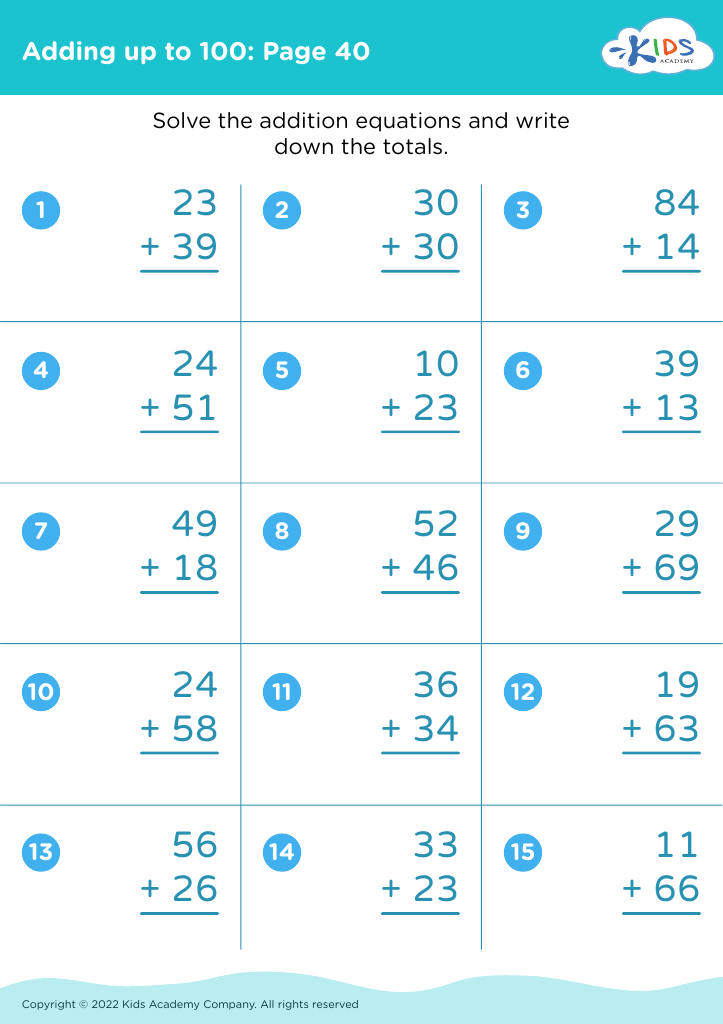
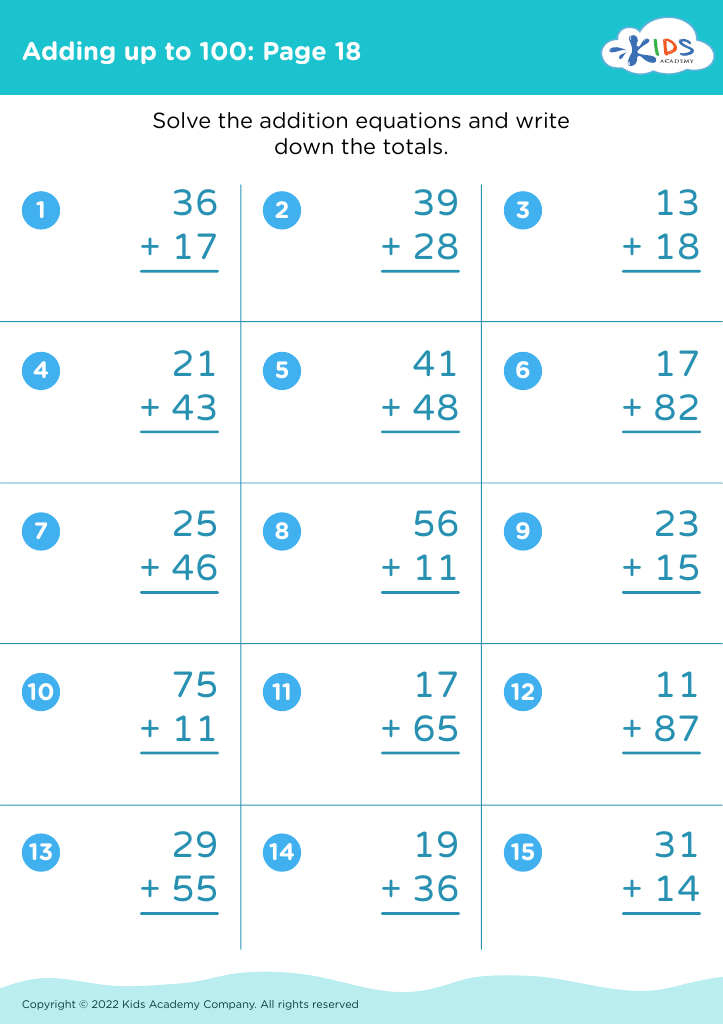
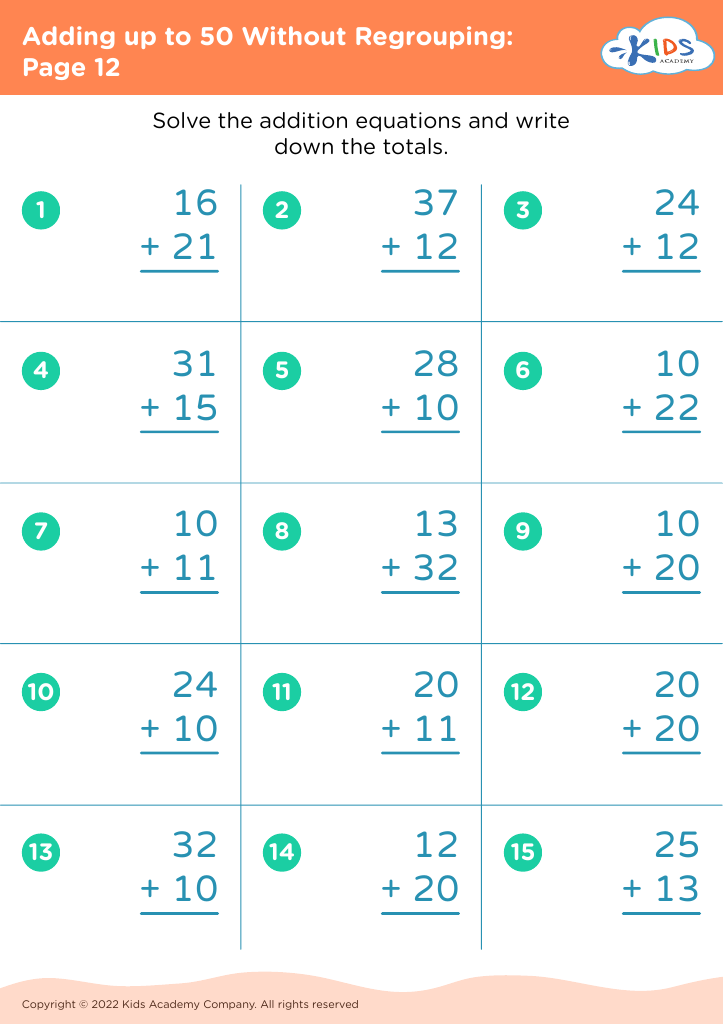
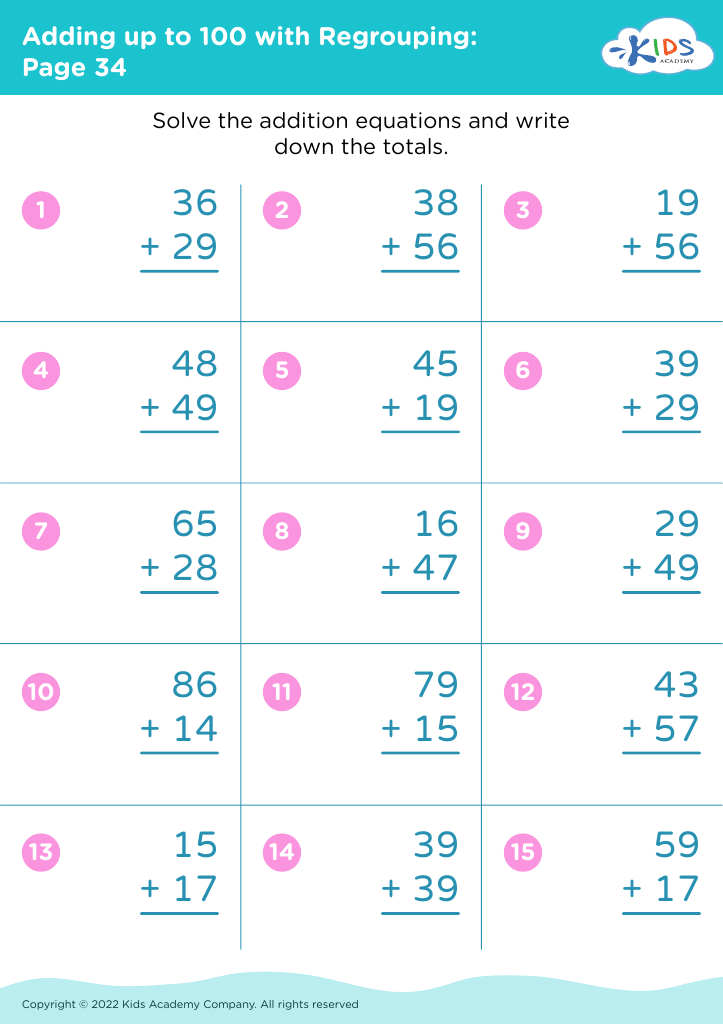
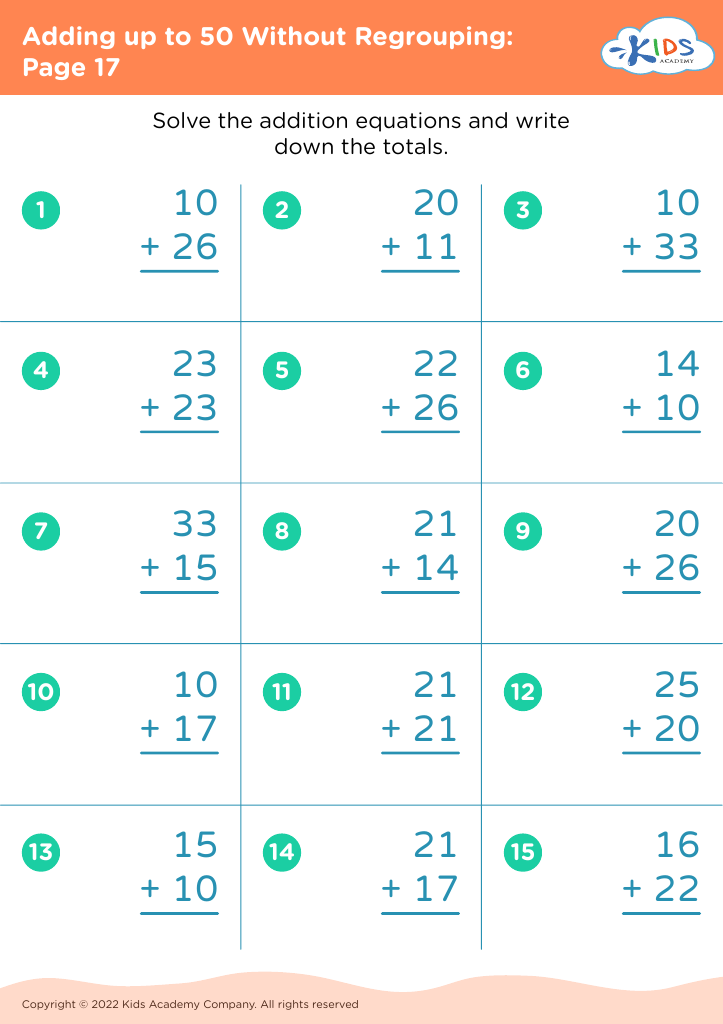
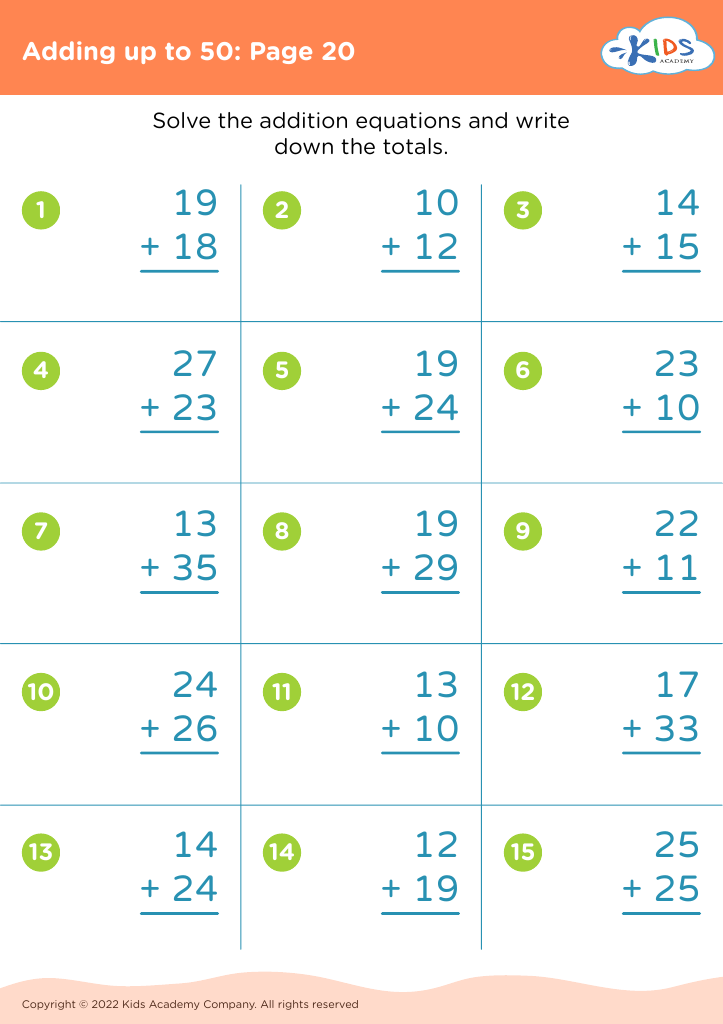







Parents and teachers play a pivotal role in fostering early math skills, such as enhanced number recognition and addition, which are foundational building blocks for cognitive development and academic success. Understanding numbers and basic math concepts is essential for everyday life, influencing everything from counting toys and sharing snacks to navigating money and time in adulthood. By focusing on enhancing number recognition, children develop the ability to identify and differentiate numbers, which builds their confidence and competence in handling more complex mathematical tasks later.
Furthermore, early introduction to addition aids in developing problem-solving skills and logical thinking. When children grasp the concept of addition, they learn how to combine sets, understand part-whole relationships, and begin to see patterns – all crucial elements of mathematical reasoning. This not only improves their academic performance in math but also in related subjects like science and technology.
Engagement in numeracy activities encourages a positive attitude towards learning. Children with solid foundational skills often experience less math anxiety and perform better in school. From a teacher’s perspective, incorporating number recognition and addition into lessons makes the curriculum more dynamic and interactive. For parents, practicing these skills at home strengthens the home-school connection and assures them their child is on the right developmental track. All these reasons highlight the importance of prioritizing enhanced number recognition and addition in early education.








