Enhancing observation skills Addition Worksheets
3 filtered results
-
From - To
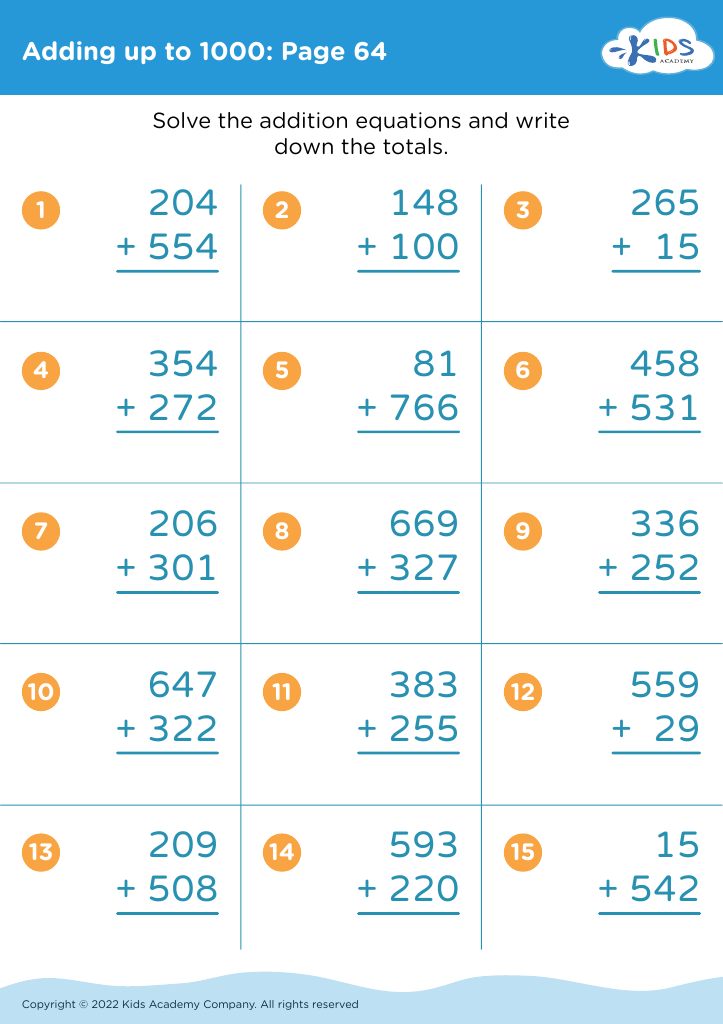
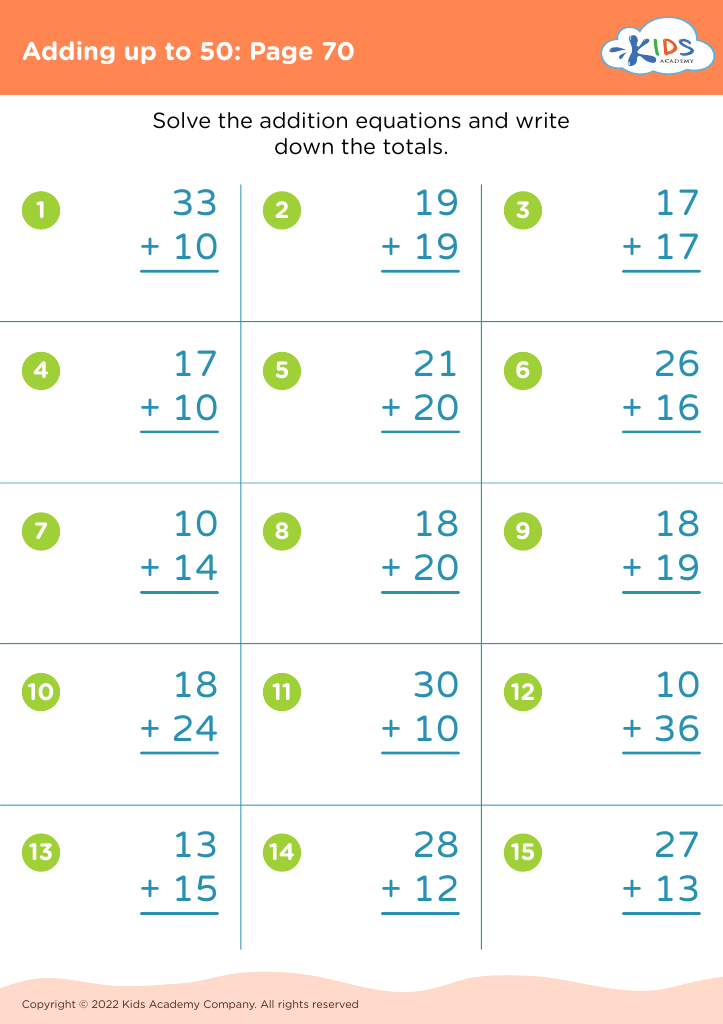
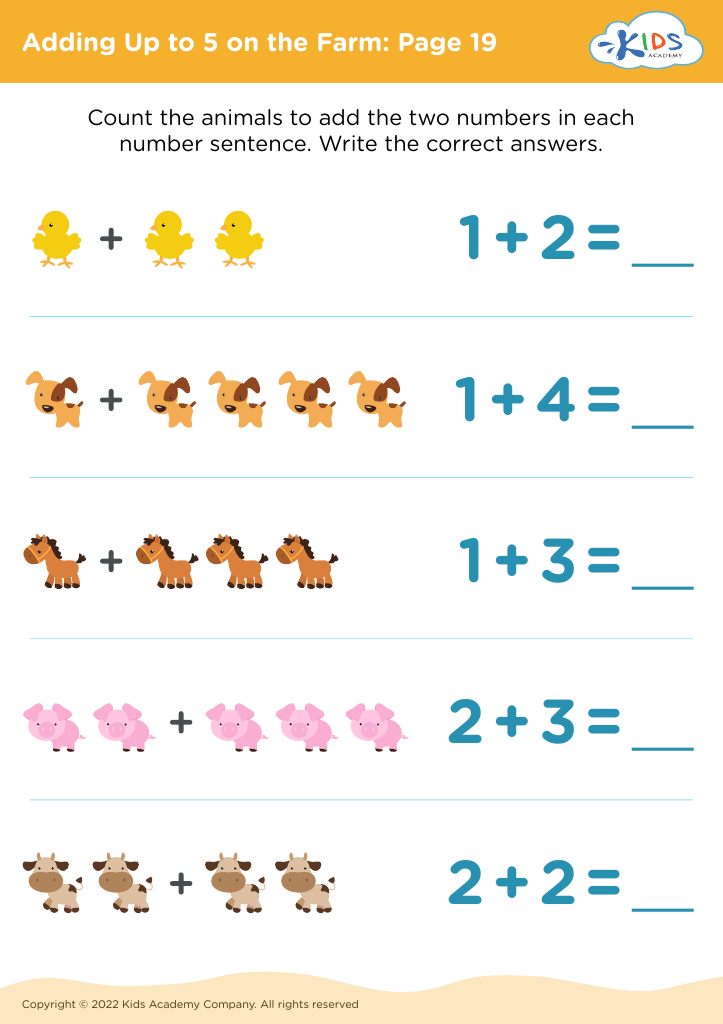
Enhancing observation skills with addition worksheets will not only help children improve their math abilities but also strengthen their cognitive and analytical skills. These engaging, colorful worksheets are designed to challenge young minds and develop their attentiveness by integrating fun addition exercises with observation tasks. By carefully scrutinizing images, numbers, and patterns, children will bolster their attention to detail, enhance critical thinking, and build a solid foundation in early mathematics. Perfect for preschoolers, kindergarteners, and early graders, these worksheets make learning an enjoyable journey, paving the way for academic success and sharp observational prowess. Empower your child’s learning process today!








Enhancing observation skills in young children is crucial for their holistic development and should be a priority for both parents and teachers. When children refine their ability to observe, they become more adept at understanding their environment, which promotes cognitive development and critical thinking. By paying attention to details, children can notice patterns, make connections, and develop problem-solving skills that are foundational for academic success.
Observation skills also play a vital role in social and emotional learning. By closely observing facial expressions, body language, and social cues, children can improve their empathy and interpersonal skills. This makes them better communicators and more attuned to the feelings of others, fostering positive relationships in school and beyond.
For educators, enhanced observation skills in students make assessing progress and identifying individual needs more straightforward. Teachers can tailor their instruction to optimize learning outcomes. For parents, nurturing these skills at home transforms everyday activities into rich learning experiences. Observing together during nature walks, cooking, or even playtime encourages curiosity and provides opportunities for meaningful conversations.
In essence, enhancing observation skills is not just about academic growth; it’s about equipping children with essential life skills. Parents and teachers who emphasize these abilities are investing in well-rounded, insightful, and emotionally intelligent individuals.








