Improve reading skills Addition Worksheets - Page 2
29 filtered results
-
From - To
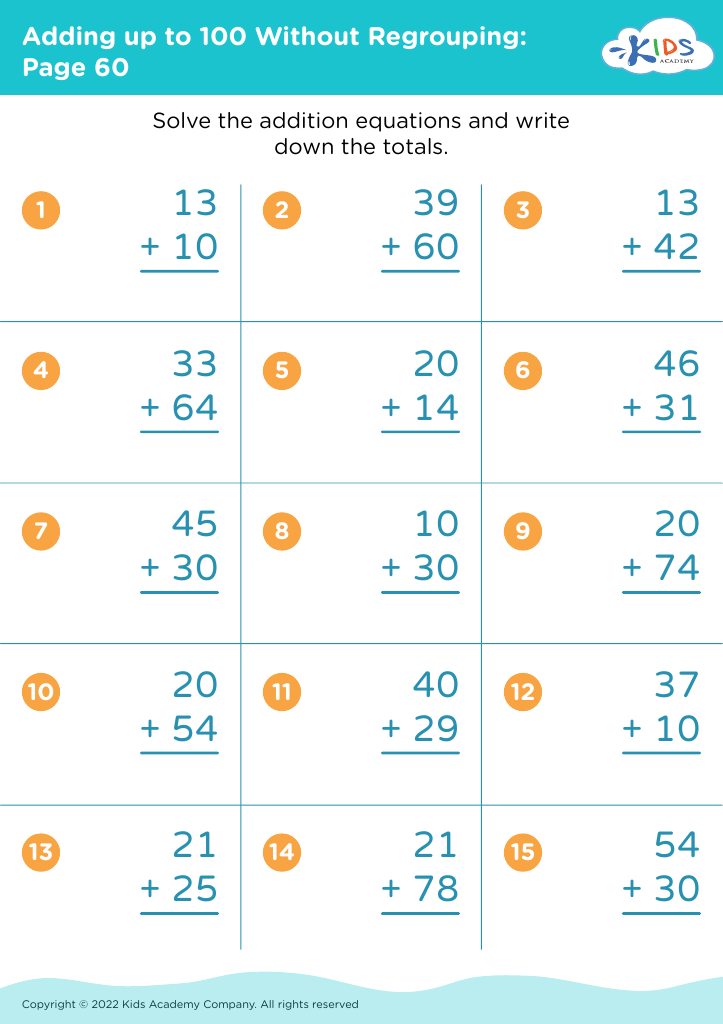








Improving reading skills in young children is vital for their overall development and lifelong success. Reading forms the foundation for learning across all subjects, meaning that proficient readers can comprehend instructional materials better and engage with them more deeply. As students progress through grades, strong reading abilities enable them to tackle more complex texts and subjects, fostering critical thinking and analytical skills.
Additionally, enhanced reading skills contribute to building a child's self-esteem and confidence. When children can read effectively, they are more likely to participate in classroom discussions, complete assignments successfully, and enjoy learning. This sense of achievement is crucial during the formative years, shaping how they perceive education and themselves as learners.
For parents and teachers, investing time in improving children's reading skills is essential not just for academic success, but also for emotional and social development. Children who read well can express themselves better and relate to their peers, enhancing social connections and communication skills.
Therefore, by prioritizing reading improvement, parents and teachers can play a pivotal role in ensuring that children develop the necessary competencies to thrive academically, socially, and emotionally throughout their lives.








