
Mathematical thinking Addition Worksheets
4 filtered results
Difficulty Level
Grade
Age
-
From - To
Subject
Activity
Standards
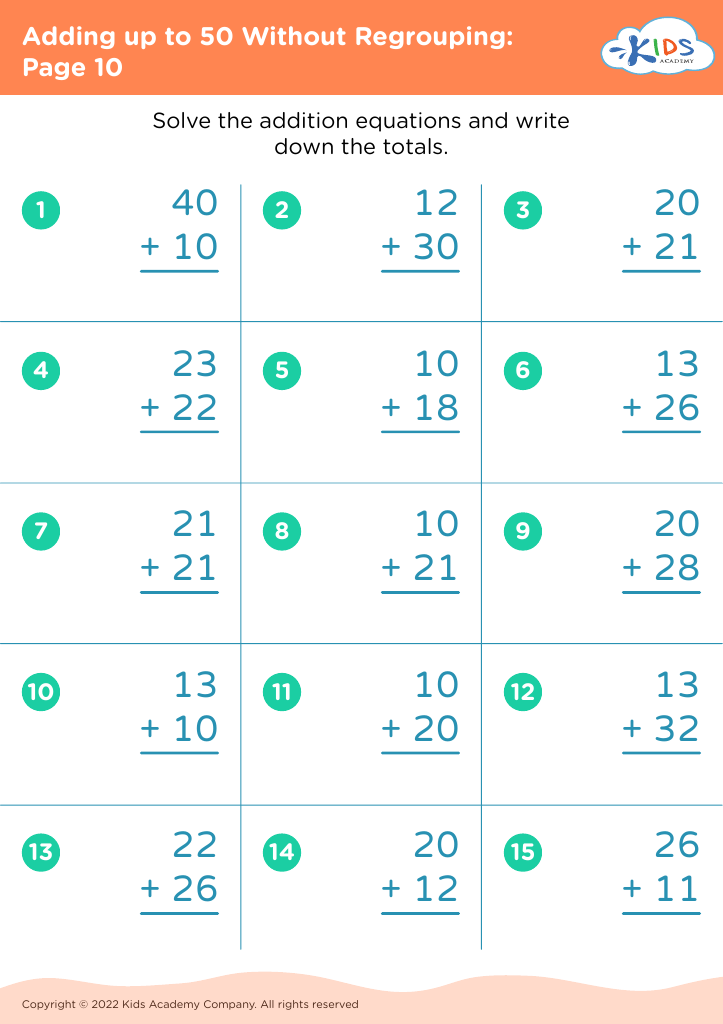
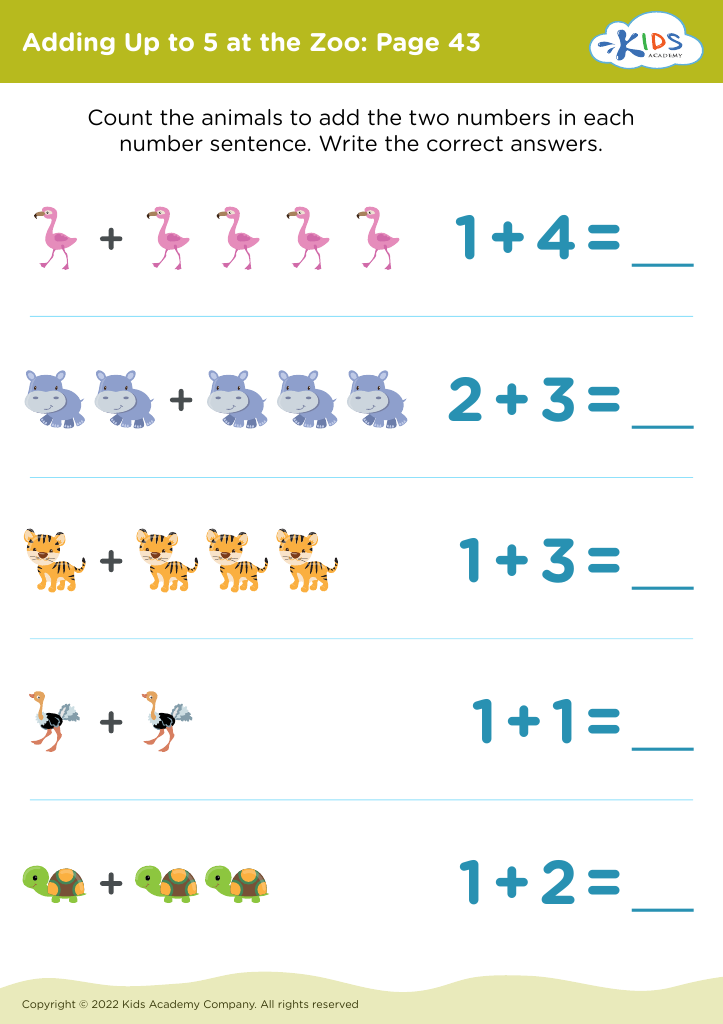
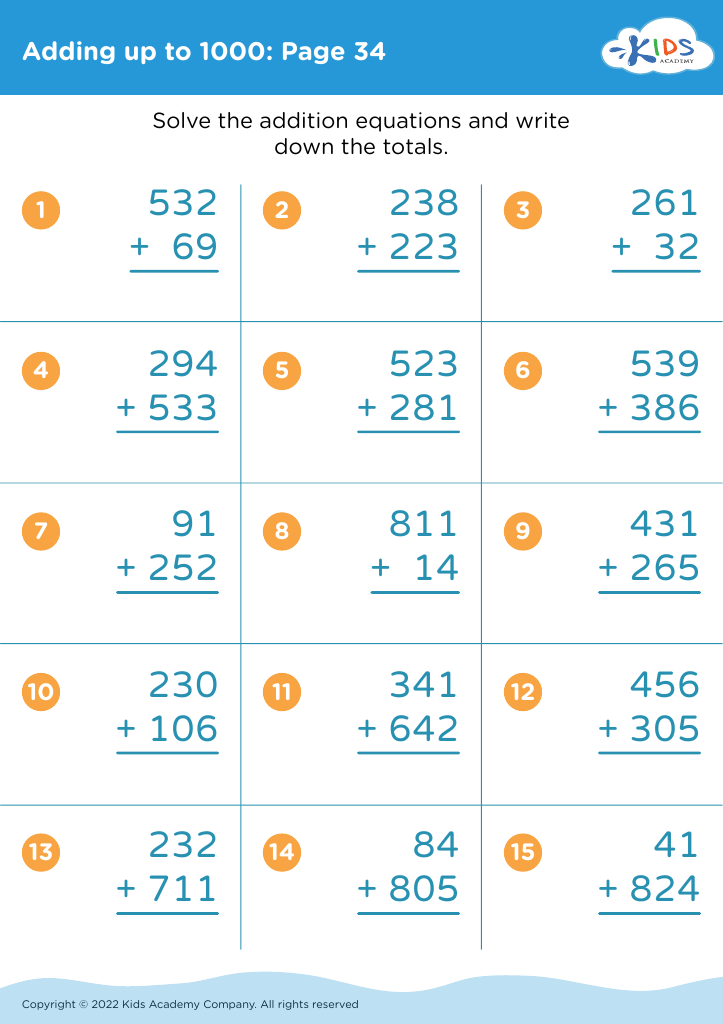
Enhance your child's mathematical thinking with our engaging Addition Worksheets, designed for early learners. These worksheets focus on developing crucial addition skills while fostering problem-solving abilities and critical thinking. Tailored for young minds, they feature colorful visuals and fun exercises that make learning enjoyable. Students will explore various addition concepts, from basic sums to more complex problems, all aimed at nurturing their confidence in math. Perfect for at-home practice or classroom activities, our worksheets cater to various learning styles and ensure a comprehensive understanding of addition. Equip your child with essential math skills that will serve them well in their academic journey!
Favorites
With answer key
Interactive
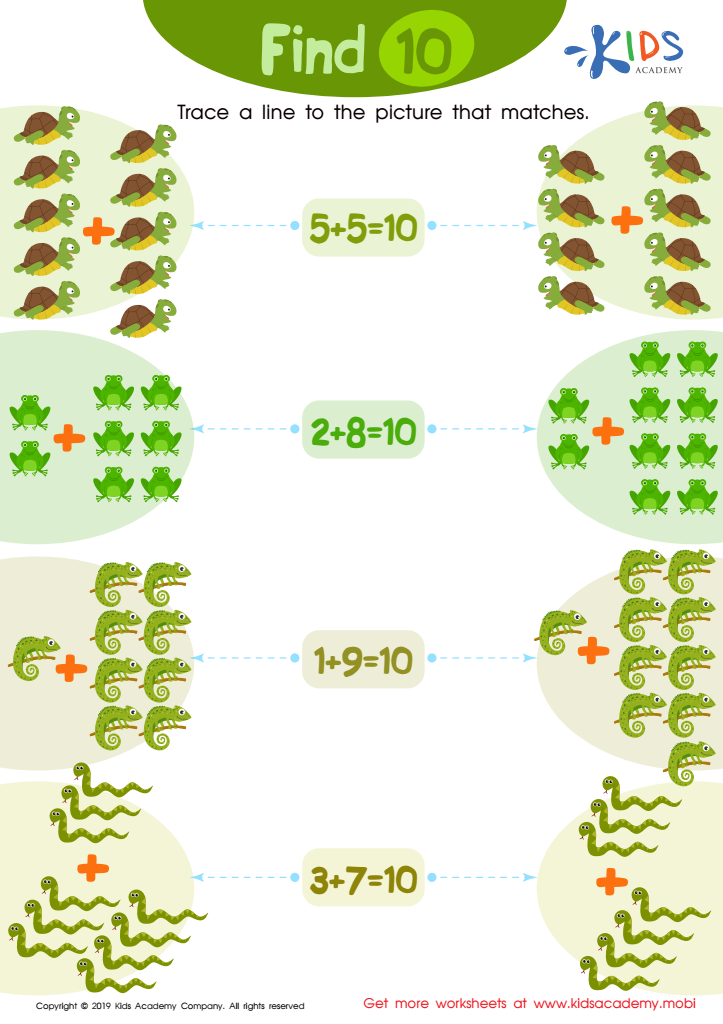
Find 10 Worksheet
Counting can be tricky, but your kids can master it with regular practice. Here's a fun activity to help: count the animals, then trace a line to the pictures that matches. With these tips, math will be an easy walk in the park.
 Assign to My Students
Find 10 Worksheet
Worksheet
Join Kids Academy for Free
Who is primarily going to use this learning content?








Mathematical thinking, particularly in addition, is crucial for young learners as it serves as the foundation for broader problem-solving skills and cognitive development. Mastering addition enhances a child's ability to understand relationships between numbers, which is vital for grasping more complex mathematical concepts such as subtraction, multiplication, and division later on. As they learn to combine options and make calculations, children develop logical reasoning and critical thinking skills that extend beyond math.
Moreover, developing strong base-number skills can boost a child's confidence, reducing anxiety towards math as they progress in their education. Teachers and parents should nurture a positive attitude toward addition by engaging in fun activities that promote practice, such as games or everyday scenarios that require counting and combining items. By demonstrating the real-world applications of addition, children can see its relevance in daily life, which helps cultivate intrinsic motivation to learn.
Additionally, supporting a child's learning in addition fosters teamwork and communication skills when done in collaborative setups. Ultimately, investing attention and resources into a child's mathematical thinking can shape their academic trajectory, encouraging lifelong learning, curiosity, and resilience in the face of challenges.








