Filters

158 filtered results

Clear all filters
Favorites
With answer key
Interactive

158 filtered results

Difficulty Level

Grade


Check out this FREE Trial Lesson on Addition!

P

Favorites
With answer key
Interactive
  • Understanding fractions
  • Addition
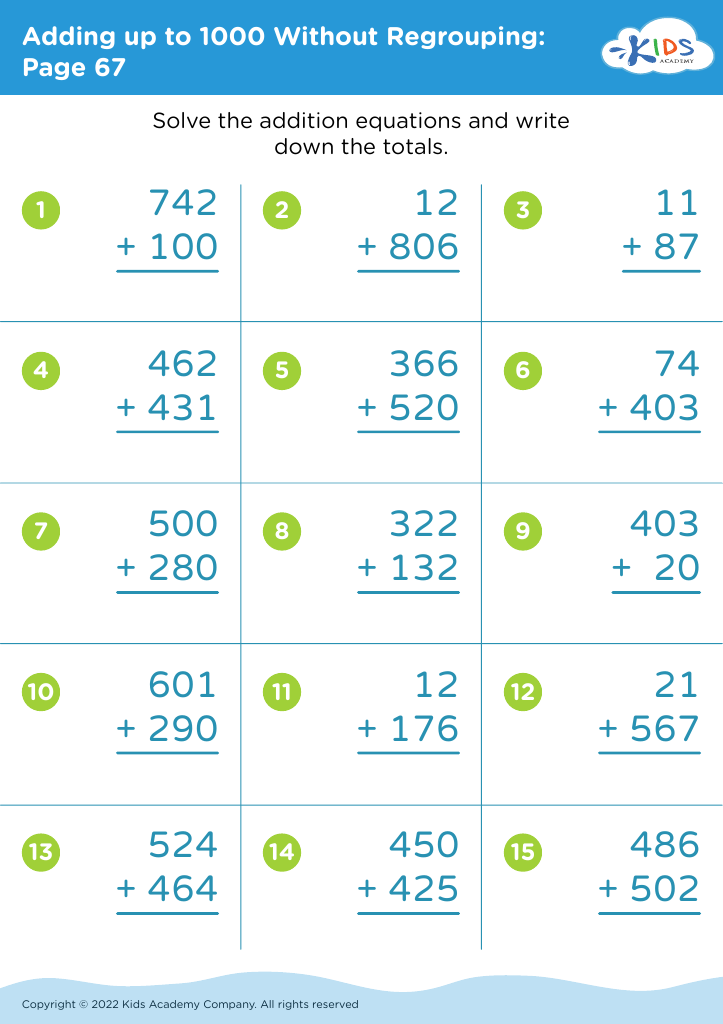
Adding up to 1000 Without Regrouping: Page 67
Worksheet
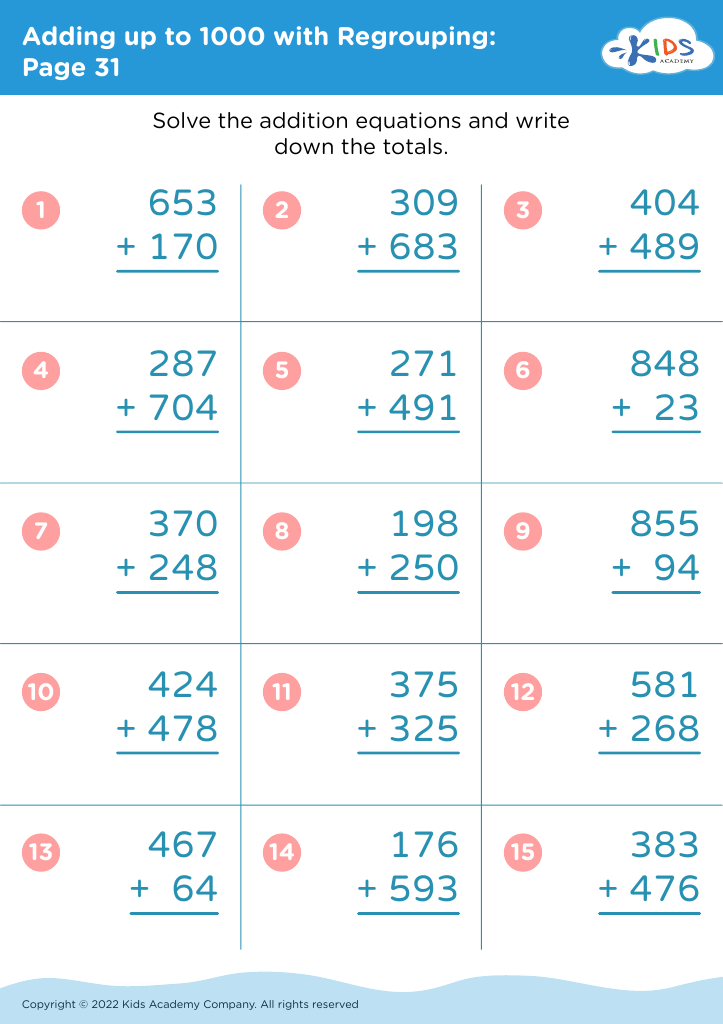
Adding up to 1000 with Regrouping: Page 31
Worksheet
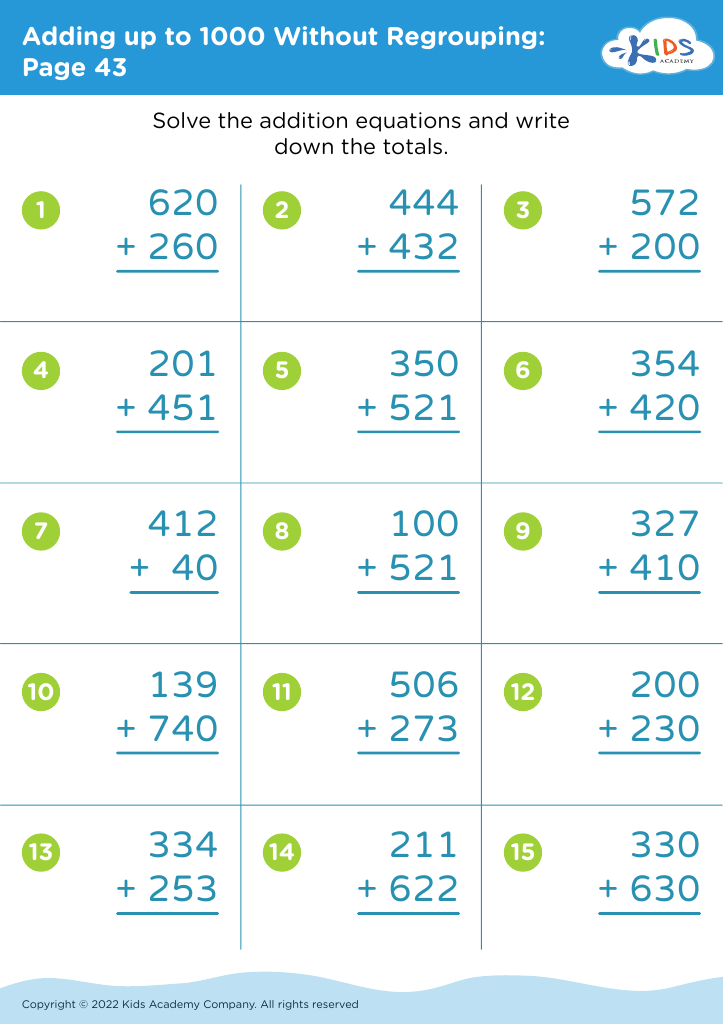
Adding up to 1000 Without Regrouping: Page 43
Worksheet
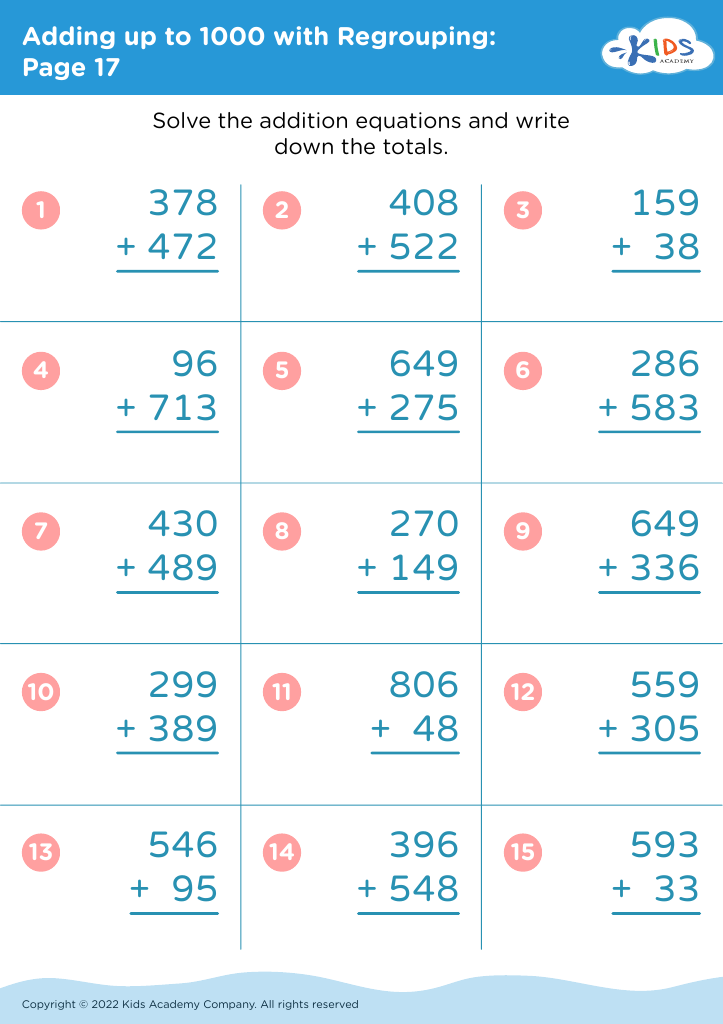
Adding up to 1000 with Regrouping: Page 17
Worksheet
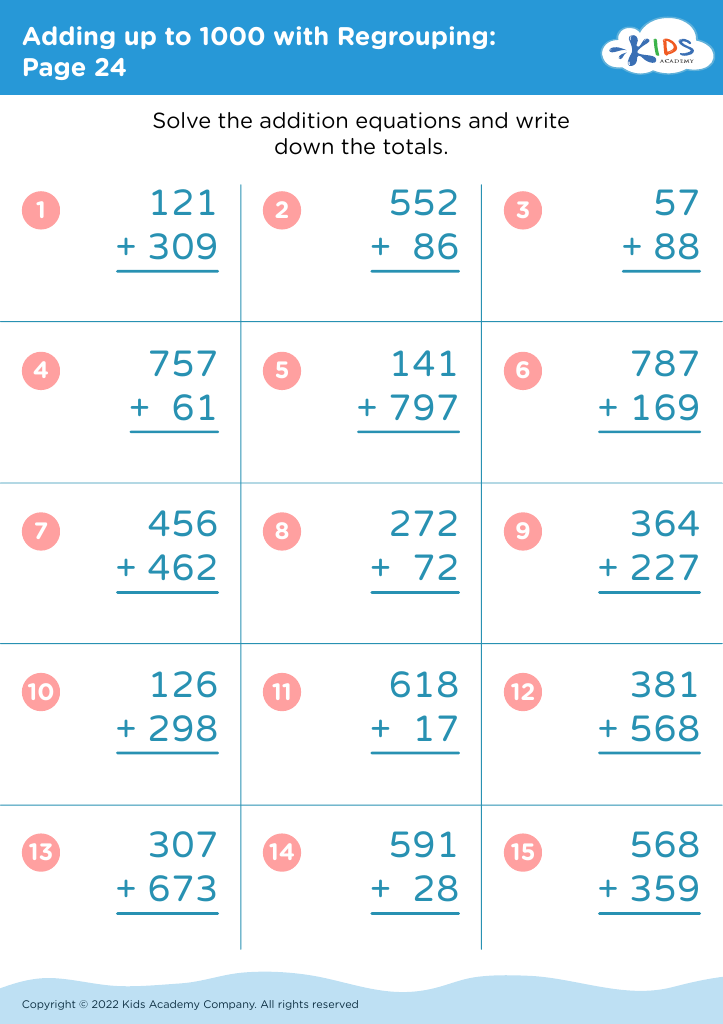
Adding up to 1000 with Regrouping: Page 24
Worksheet
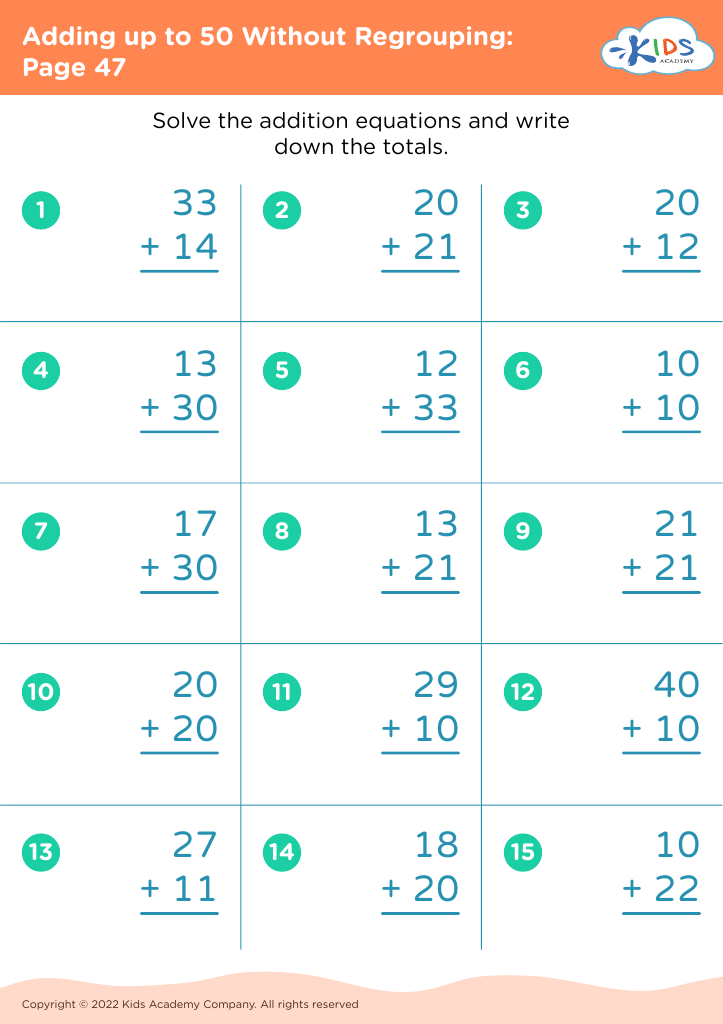
Adding up to 50 Without Regrouping: Page 47
Worksheet
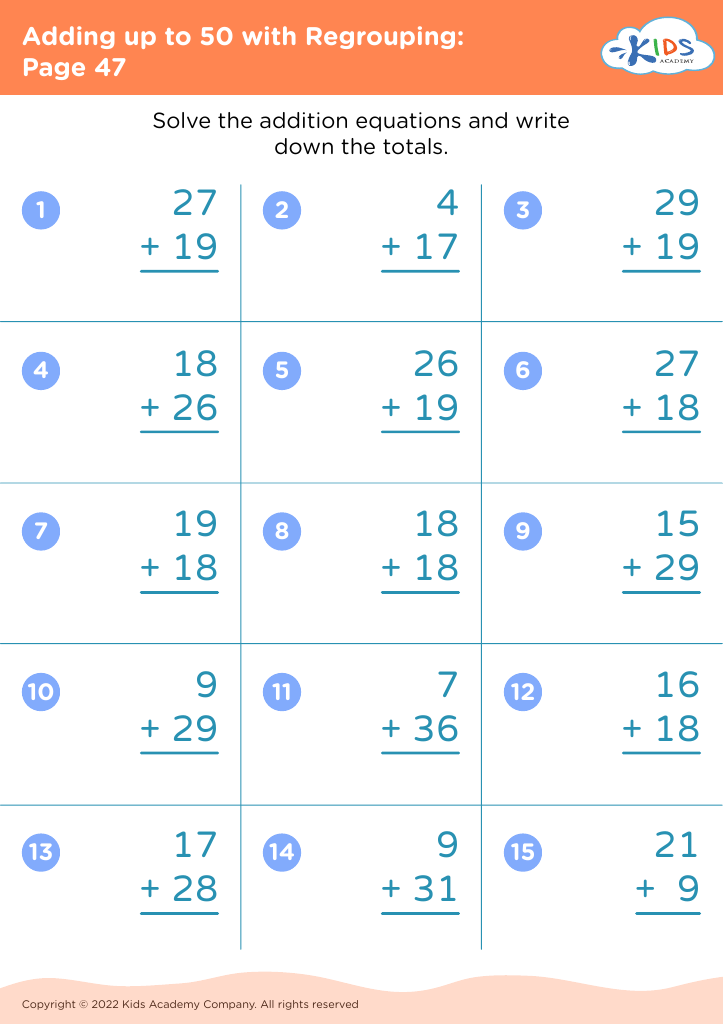
Adding up to 50 with Regrouping: Page 47
Worksheet
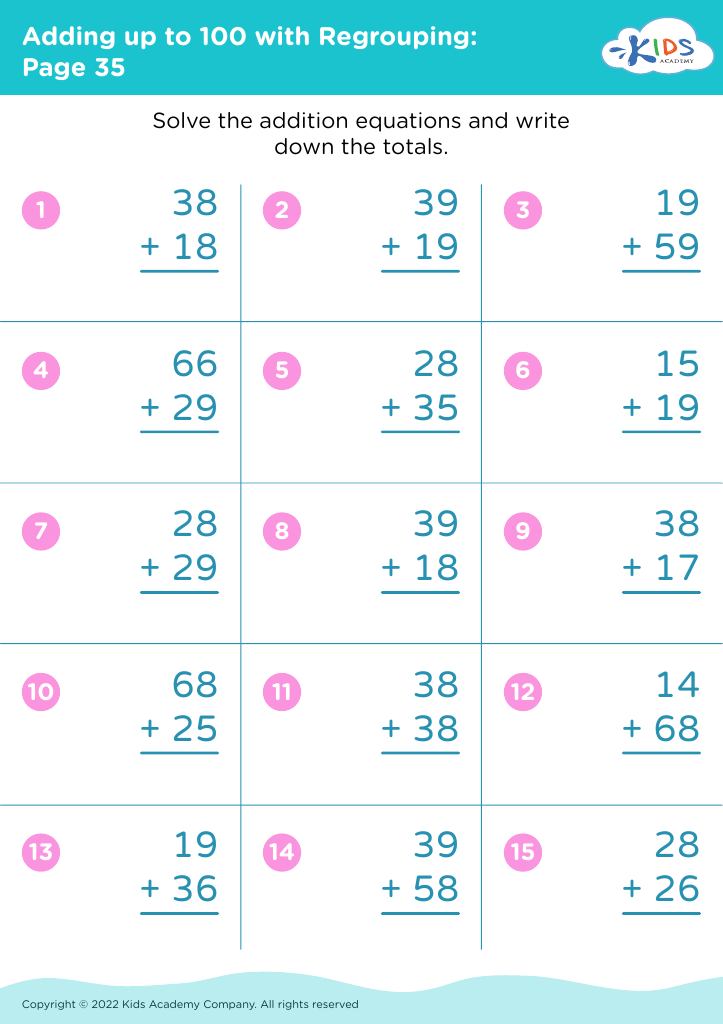
Adding up to 100 with Regrouping: Page 35
Worksheet
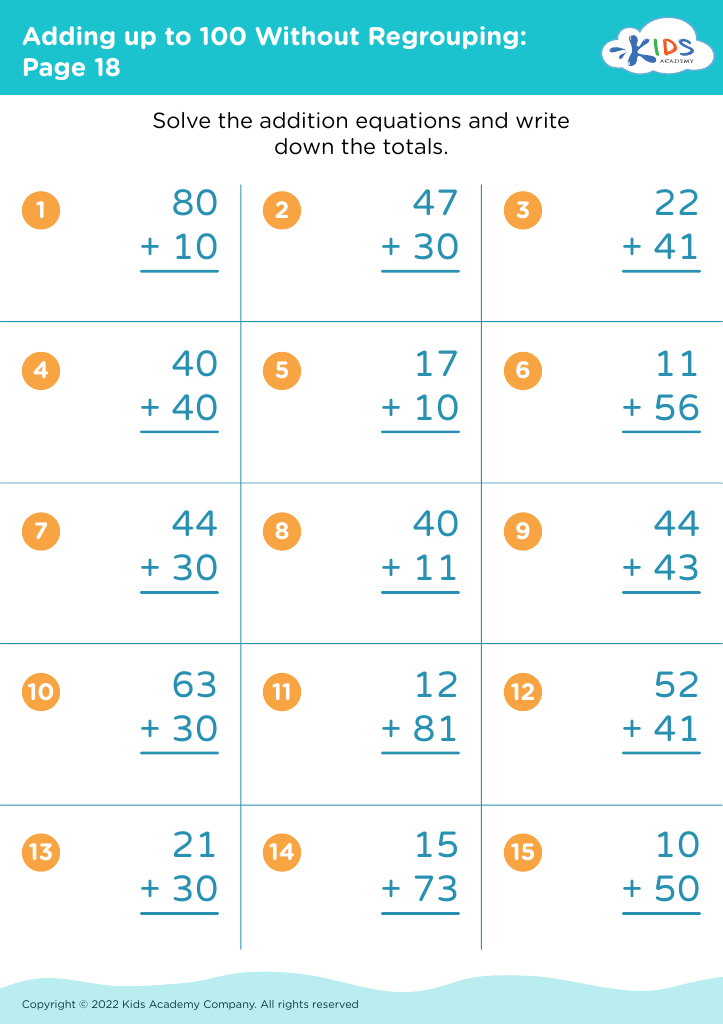
Adding up to 100 Without Regrouping: Page 18
Worksheet
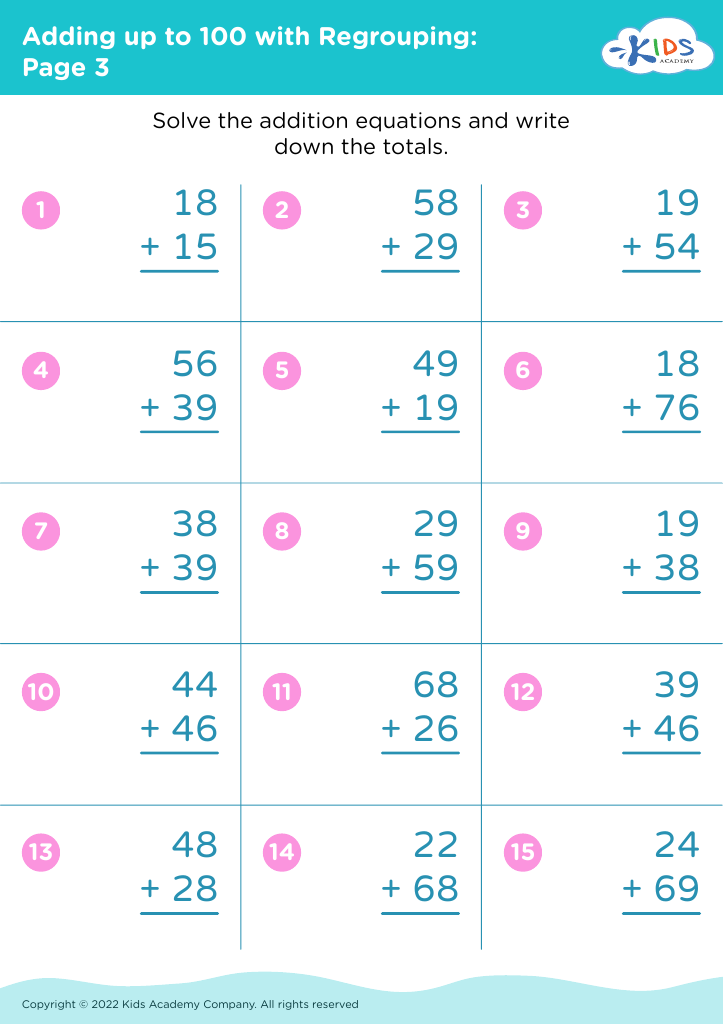
Adding up to 100 with Regrouping: Page 3
Worksheet
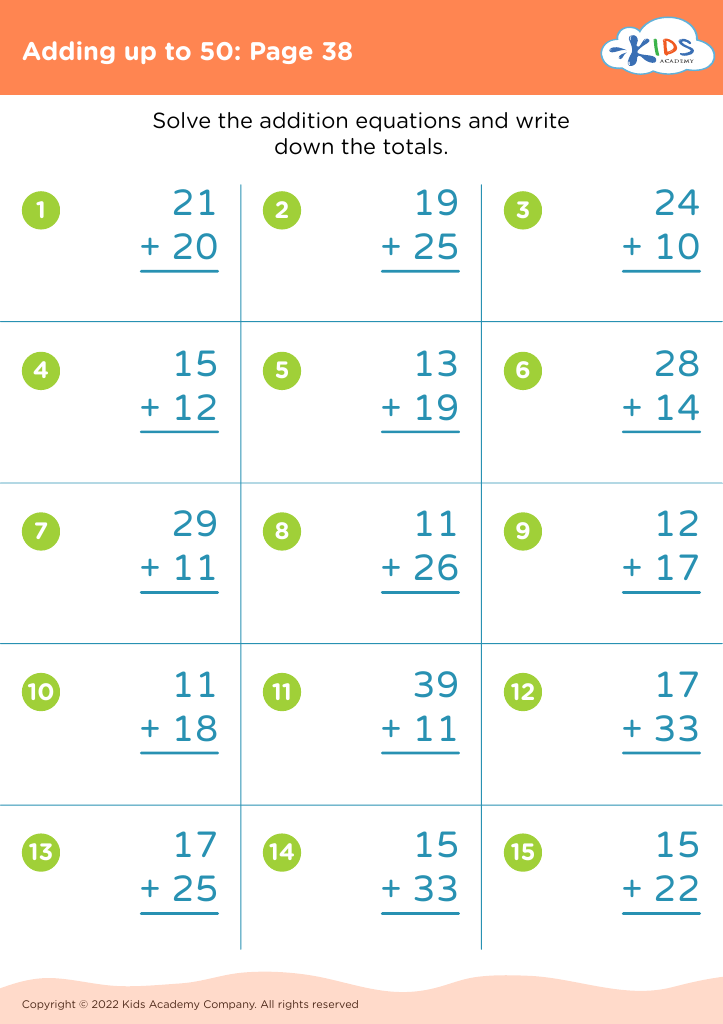
Adding up to 50: Page 38

Adding up to 50: Page 38

Adding up to 50: Page 38
Worksheet
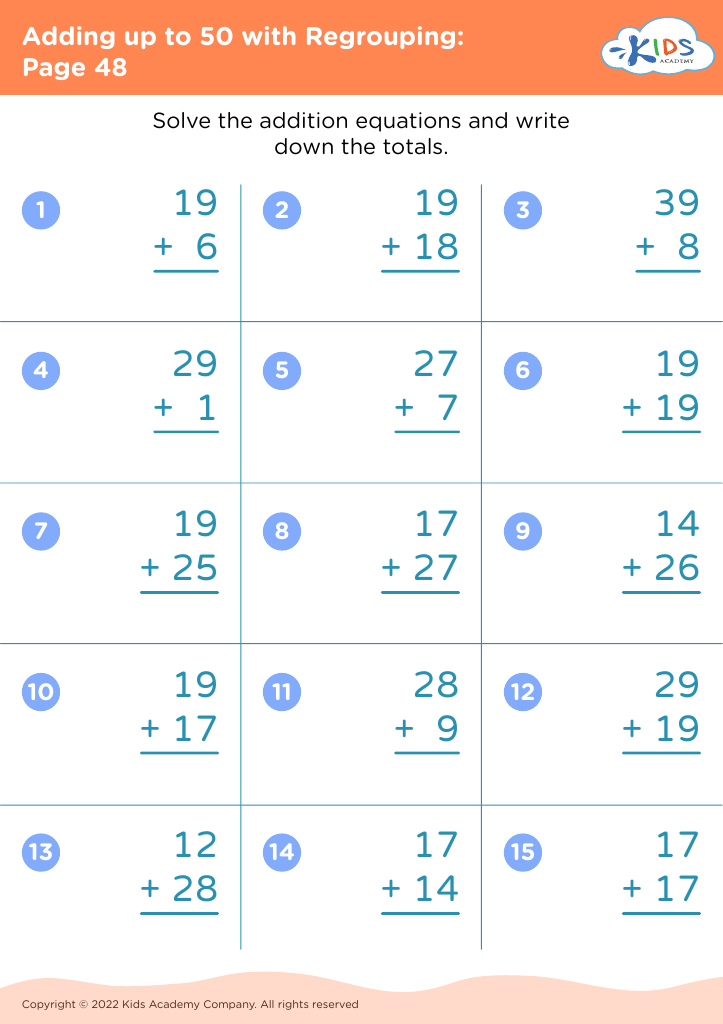
Adding up to 50 with Regrouping: Page 48
Worksheet
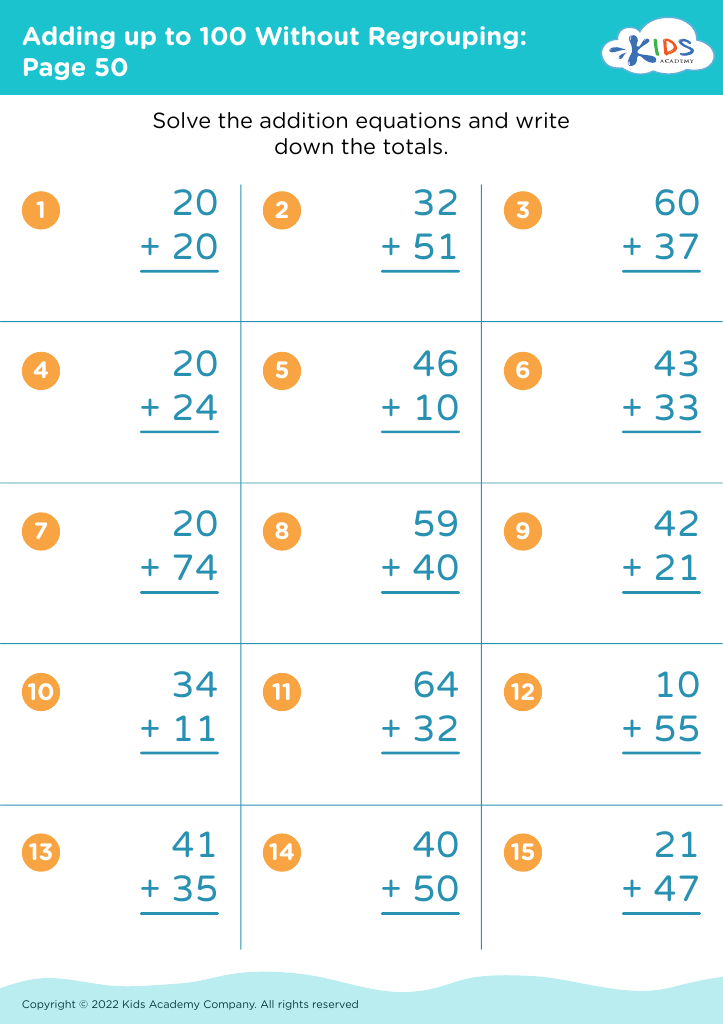
Adding up to 100 Without Regrouping: Page 50
Worksheet
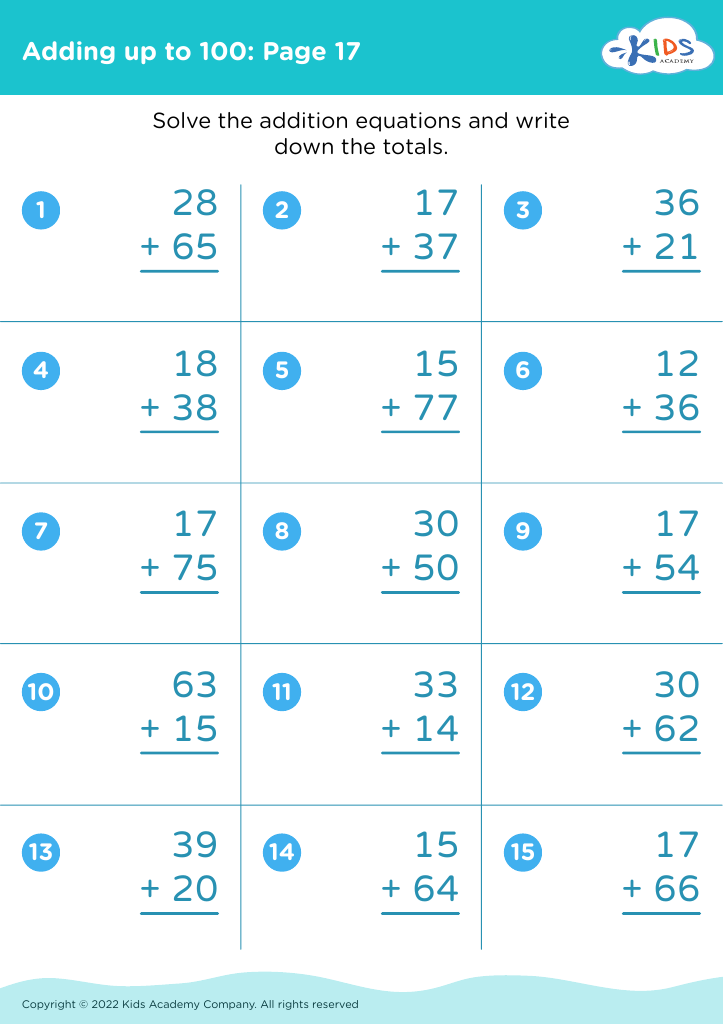
Adding up to 100: Page 17

Adding up to 100: Page 17

Adding up to 100: Page 17
Worksheet
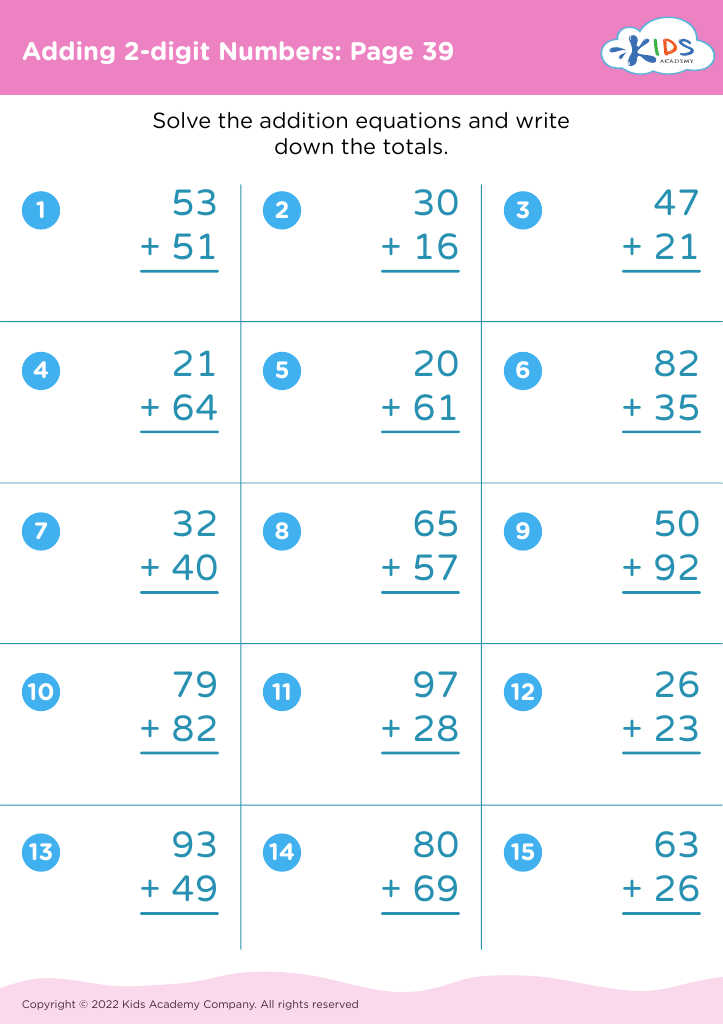
Adding 2-digit Numbers: Page 39

Adding 2-digit Numbers: Page 39

Adding 2-digit Numbers: Page 39
Worksheet
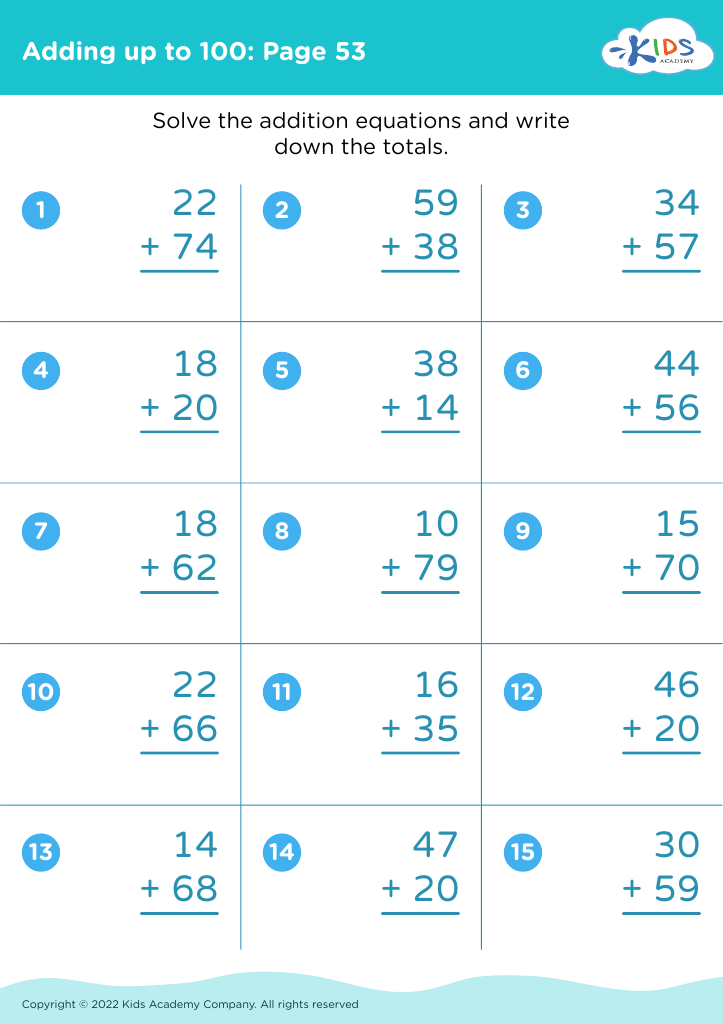
Adding up to 100: Page 53

Adding up to 100: Page 53

Adding up to 100: Page 53
Worksheet
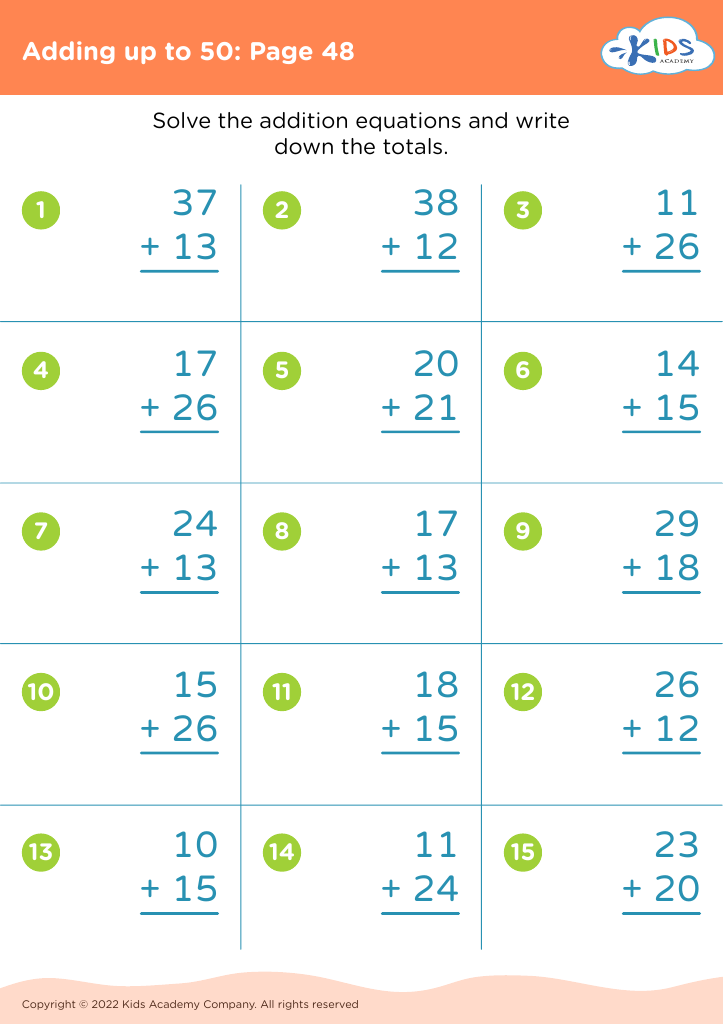
Adding up to 50: Page 48

Adding up to 50: Page 48

Adding up to 50: Page 48
Worksheet
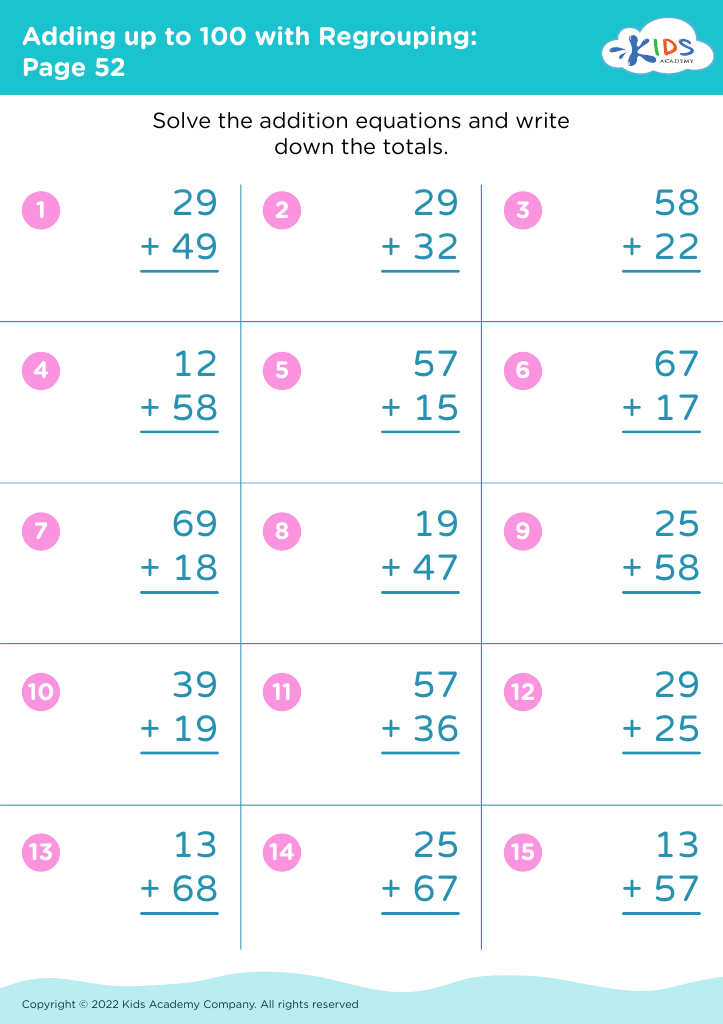
Adding up to 100 with Regrouping: Page 52
Worksheet
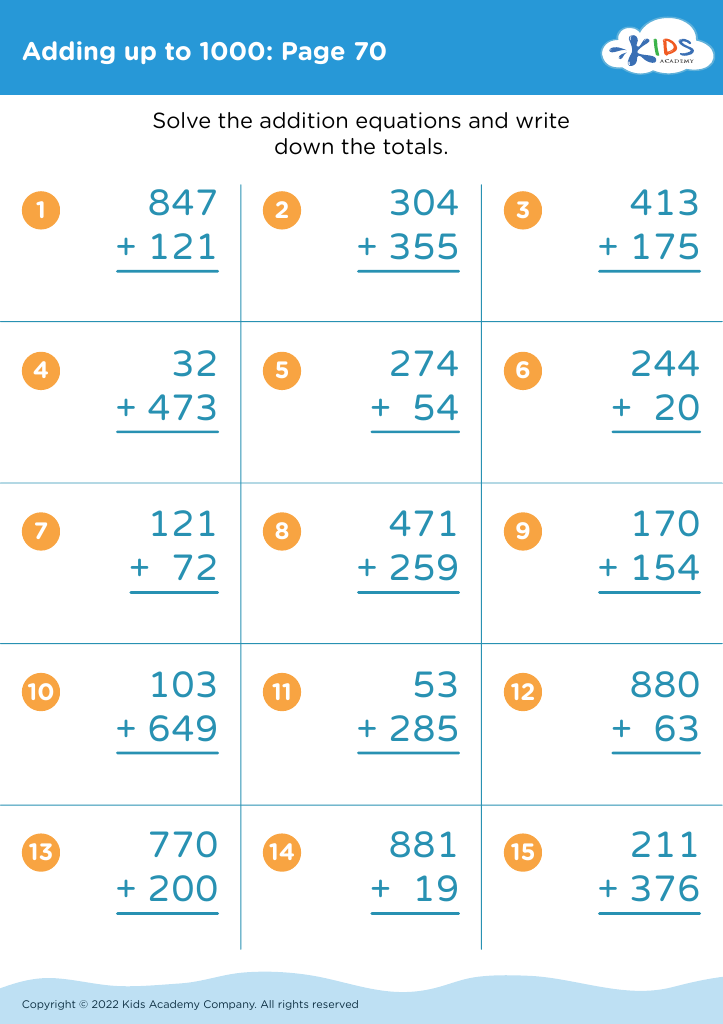
Adding up to 1000: Page 70

Adding up to 1000: Page 70

Adding up to 1000: Page 70
Worksheet
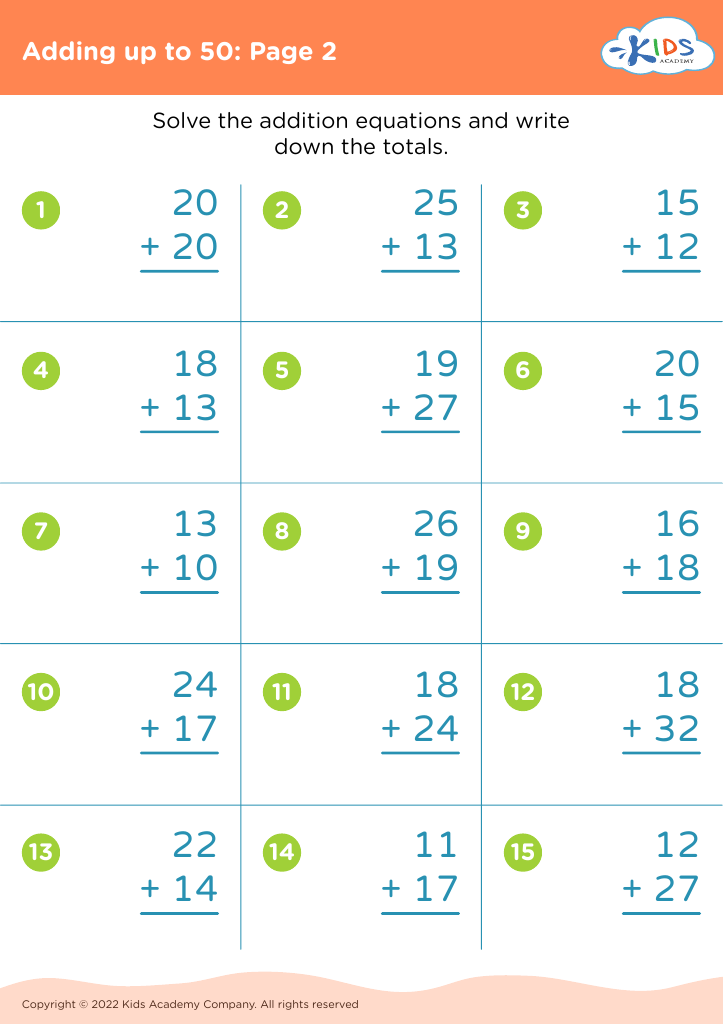
Adding up to 50: Page 2

Adding up to 50: Page 2

Adding up to 50: Page 2
Worksheet
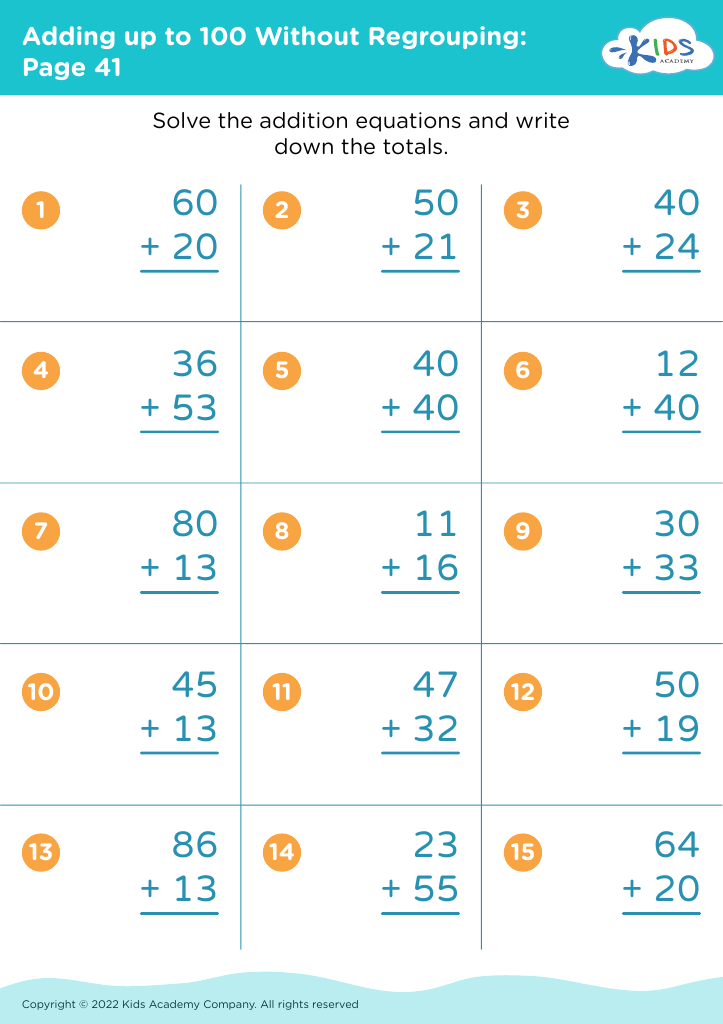
Adding up to 100 Without Regrouping: Page 41
Worksheet
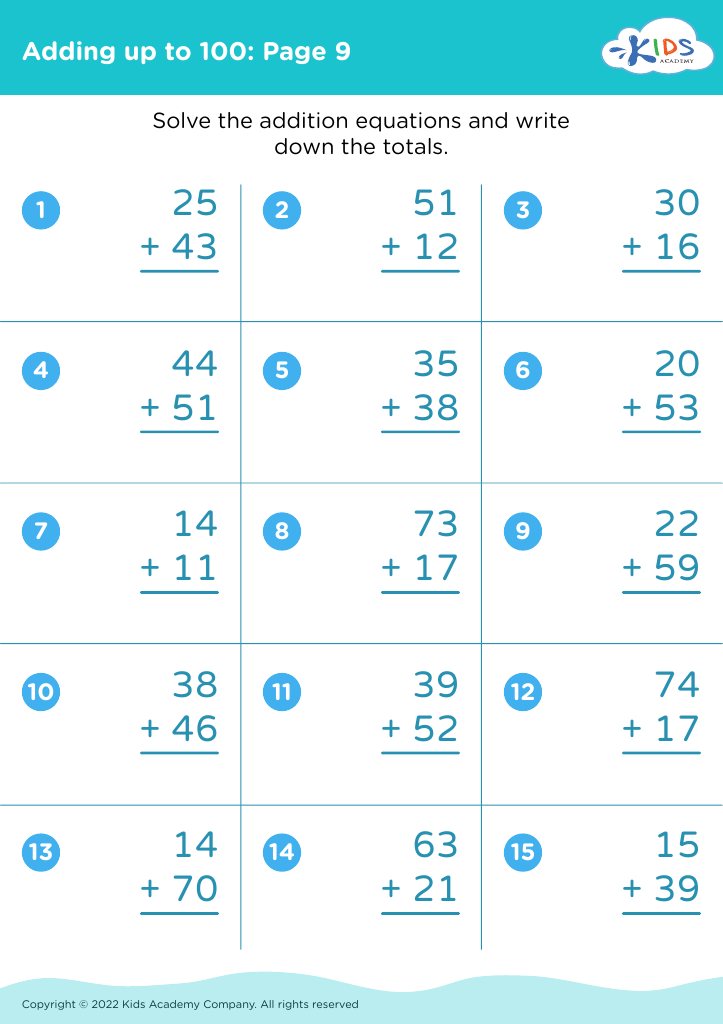
Adding up to 100: Page 9

Adding up to 100: Page 9

Adding up to 100: Page 9
Worksheet
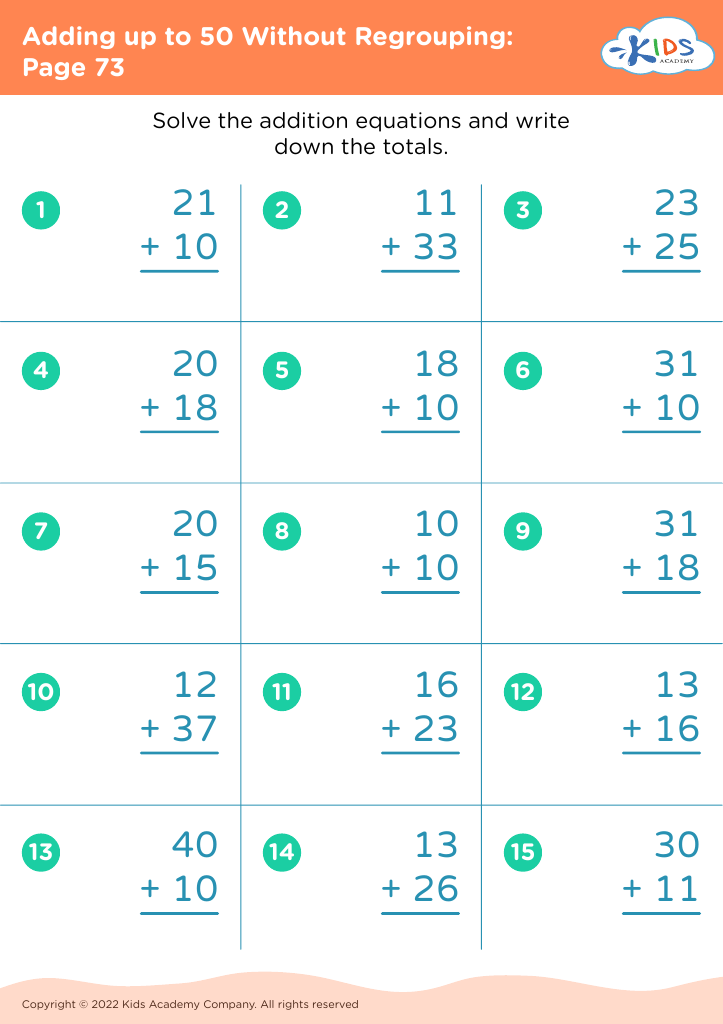
Adding up to 50 Without Regrouping: Page 73
Worksheet
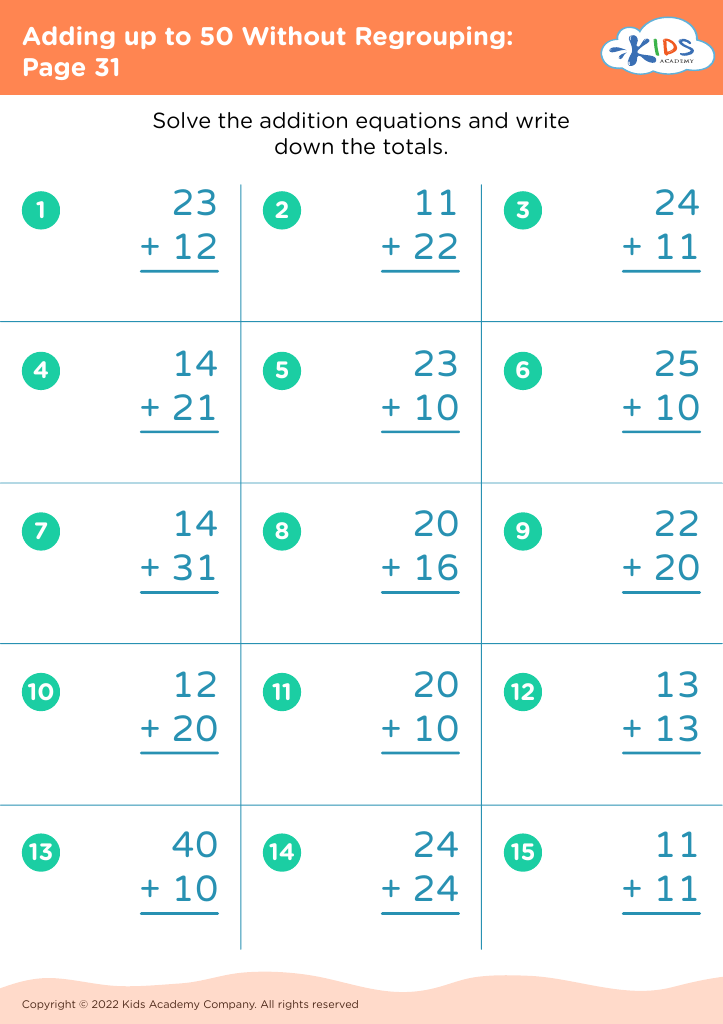
Adding up to 50 Without Regrouping: Page 31
Worksheet


Understanding fractions and their addition is crucial for students as it forms a key component of mathematical literacy, impacting their future learning and everyday decision-making. For parents and teachers, fostering a solid grasp of fractions lays the groundwork for more complex mathematical concepts, such as ratios, proportions, and algebra. Since fractions are a common part of daily life—whether in cooking, sharing, or financial literacy—children need to understand how to work with them effectively.

Moreover, a strong foundation in fractions enhances a child's problem-solving skills, critical thinking, and ability to comprehend various contexts where fractions are applicable. When parents and teachers prioritize teaching fraction addition, they encourage students to explore mathematical relationships and visualize concepts, which improves retention and promotes a positive attitude toward math.

Furthermore, the ability to add fractions is essential in real-life scenarios, such as measuring ingredients in recipes or dividing tasks in a fair manner. When adults engage in this learning process, they not only contribute to children's academic success but also model a positive approach to overcoming challenges in math. Overall, understanding fractions is pivotal for fostering future academics and life skills in children.