Understanding number relationships Addition Worksheets
5 filtered results
-
From - To
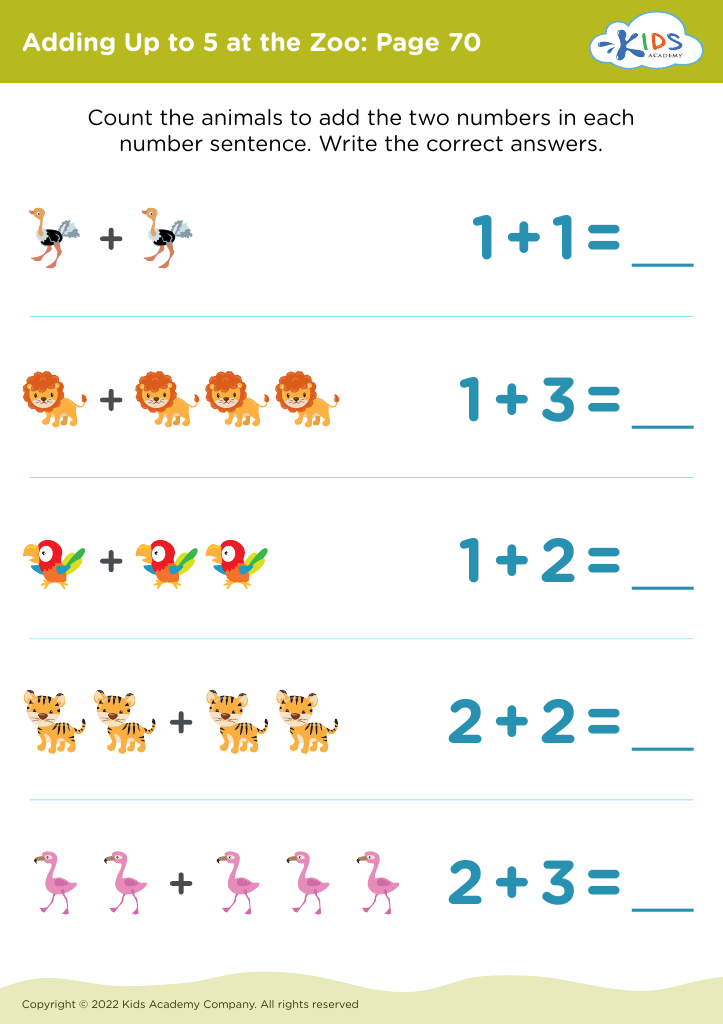
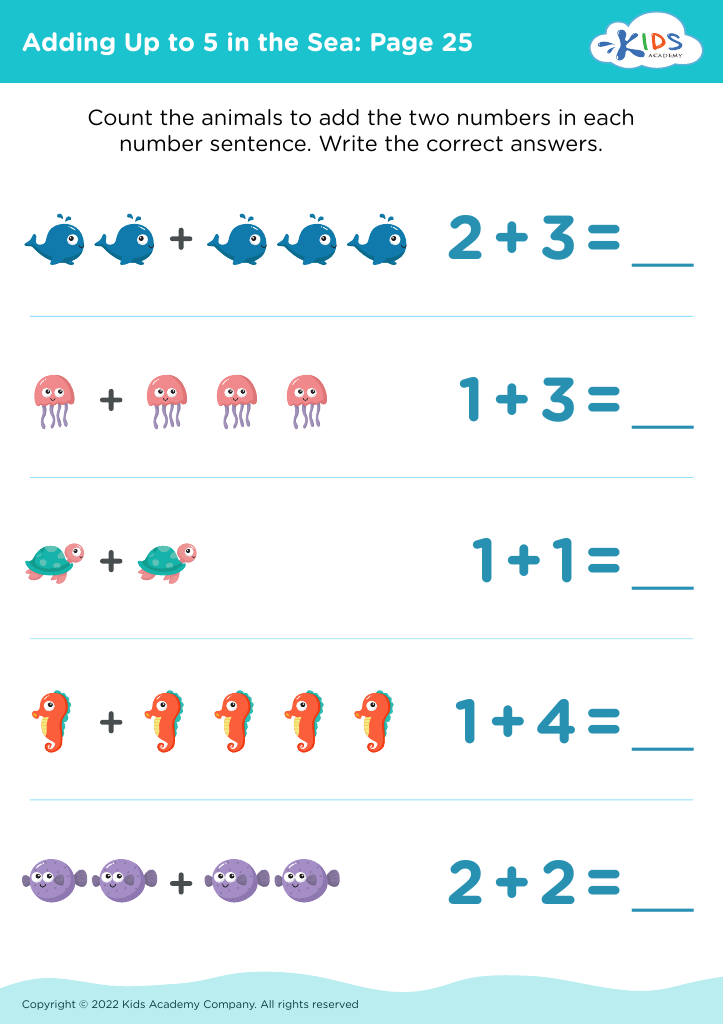
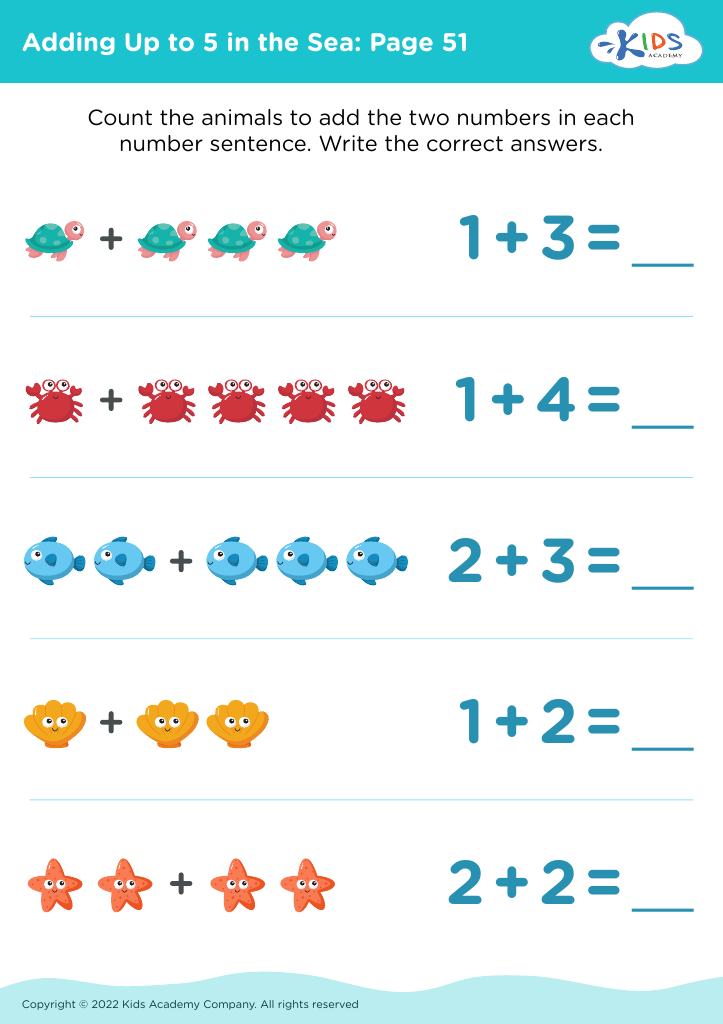
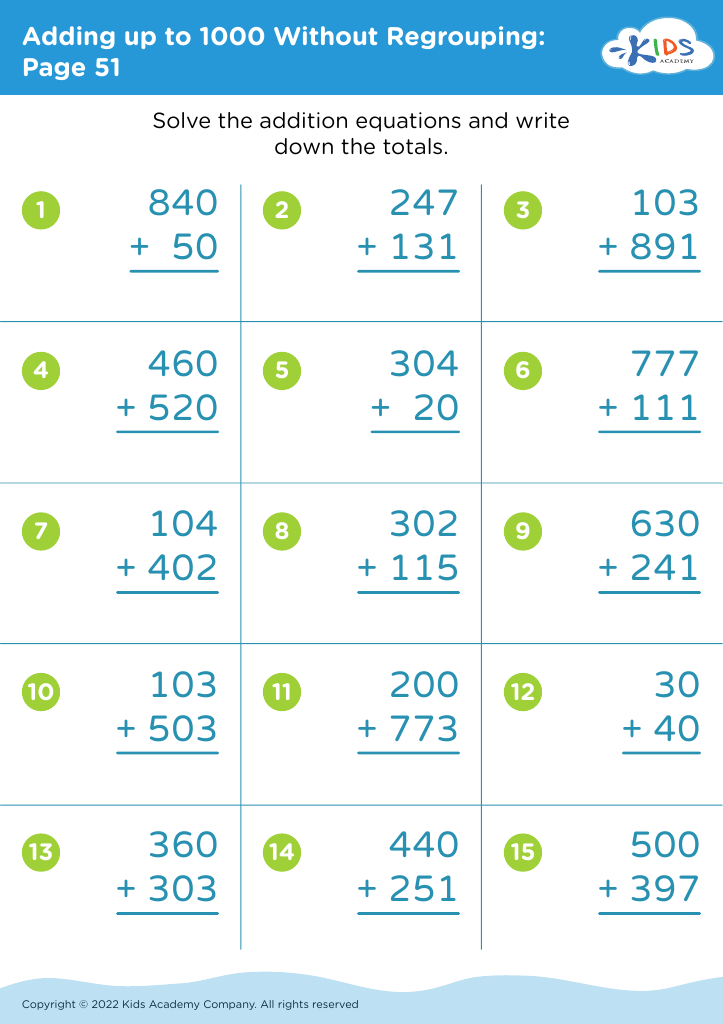
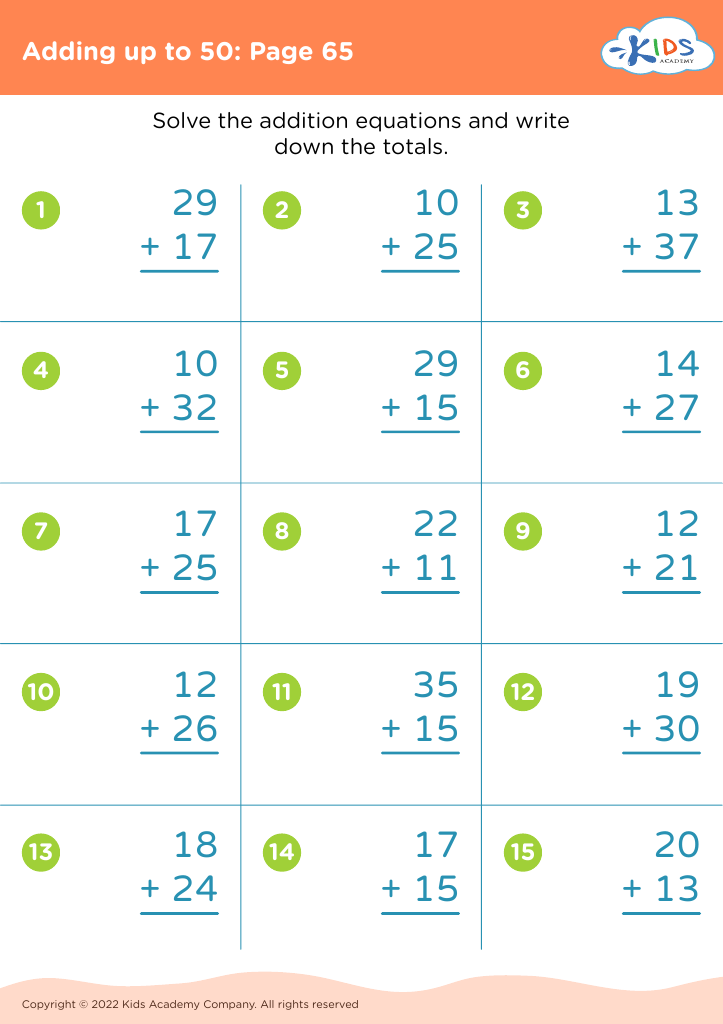
Explore our engaging "Understanding Number Relationships Addition Worksheets" designed to enhance your child's arithmetic skills and foster a deeper comprehension of number relationships. These worksheets guide young learners through the fundamentals of addition, emphasizing how numbers interact and connect. With a variety of fun exercises, students will develop their ability to recognize patterns, identify number bonds, and solve problems confidently. Perfect for reinforcing classroom learning or as a fun home activity, our resources cater to different learning styles and provide helpful visual aids. Help your child master addition while building a strong mathematical foundation today!







Understanding number relationships in addition is crucial for both parents and teachers, as it lays the foundation for children’s mathematical development. When students grasp how numbers relate to each other, they foster a solid understanding of addition, which is essential for all advanced mathematical concepts. It helps them recognize patterns, comprehend magnitude, and see how adding numbers impacts total value.
Encouraging children to think about number relationships promotes critical thinking skills. Rather than just memorizing facts, they begin to visualize and manipulate numbers, which enhances problem-solving abilities. For example, understanding that 8 + 2 can also be seen as adding 2 to 8 demonstrates commutative properties and encourages flexibility in thinking.
Furthermore, when children grasp these concepts early on, they're better equipped to tackle more complex arithmetic operations, supporting long-term academic success. Additionally, this understanding builds confidence in their abilities, as they feel competent in manipulating numbers and solving problems. Therefore, both parents and teachers should focus on nurturing an environment that values understanding number relationships, ensuring that children develop a robust mathematical foundation that will support them throughout their education and beyond.








