Understanding fractions Comparing Numbers Worksheets
3 filtered results
-
From - To
Welcome to our "Understanding Fractions: Comparing Numbers Worksheets" page! Here, young learners will discover essential skills in understanding and comparing fractions through engaging and interactive worksheets. Our materials are designed to support kids in grasping the concepts of fractions, enhancing their ability to identify, compare, and contrast different values. With guided exercises and visually appealing graphics, we make learning fractions fun and accessible. Perfect for classroom use or homeschooling, these worksheets promote critical thinking and help build a solid math foundation. Explore our resources today and empower your child with confident fraction comprehension and comparison skills!
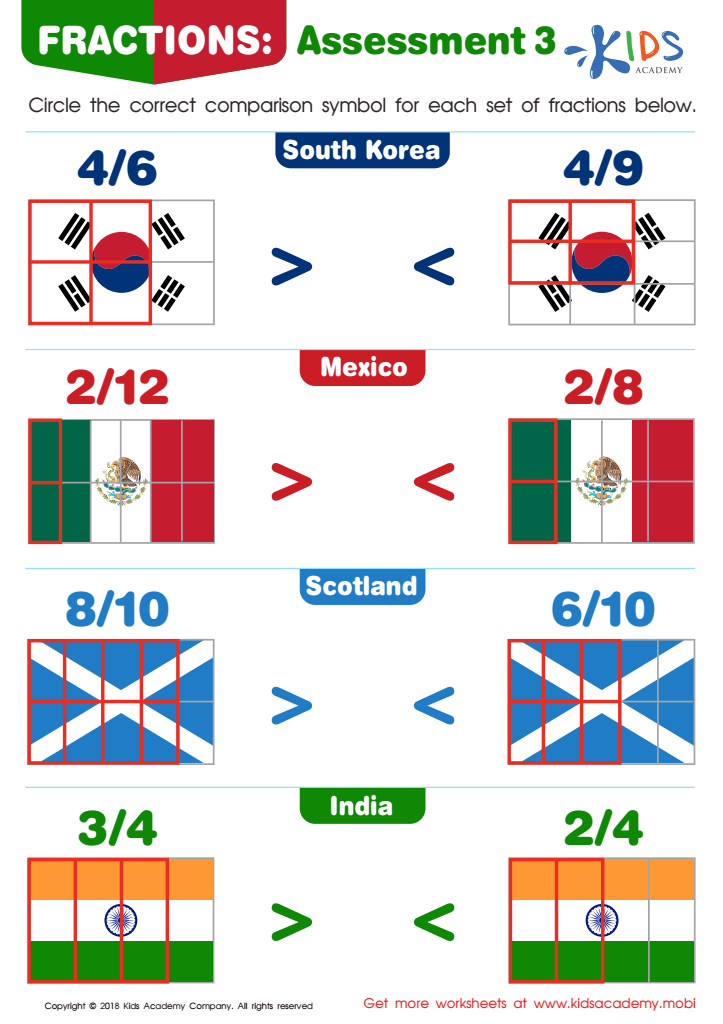
Fractions: Assessment 3 Worksheet
 Assign to My Students
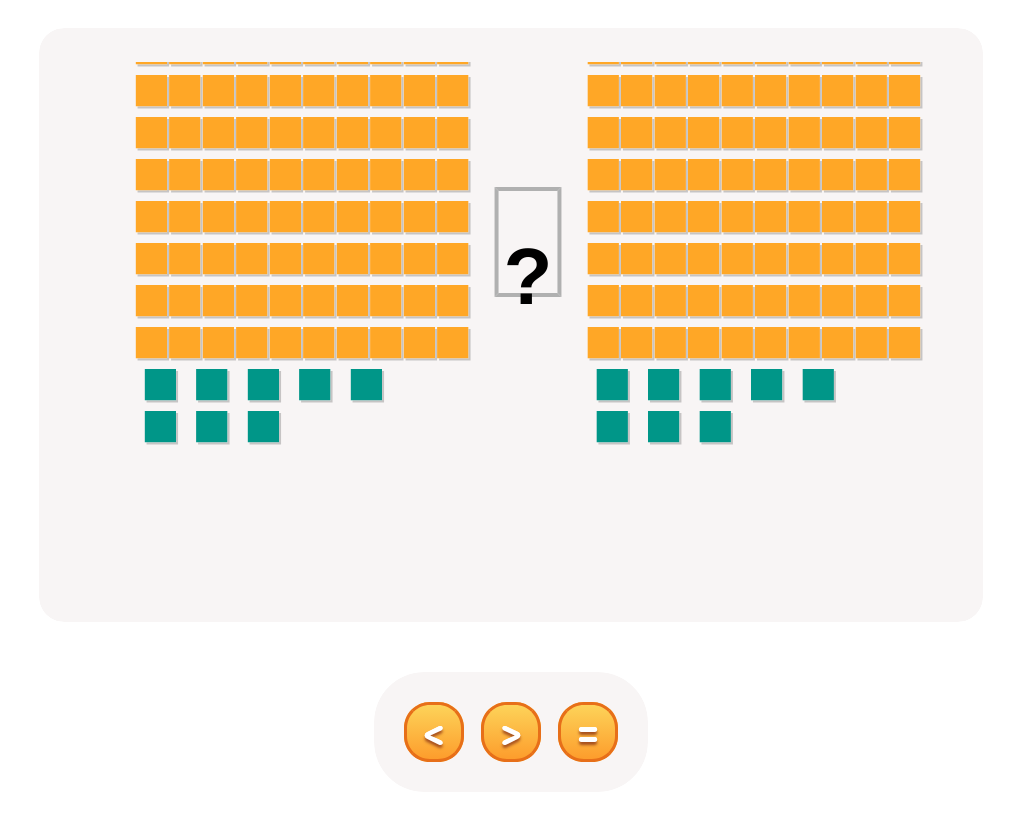

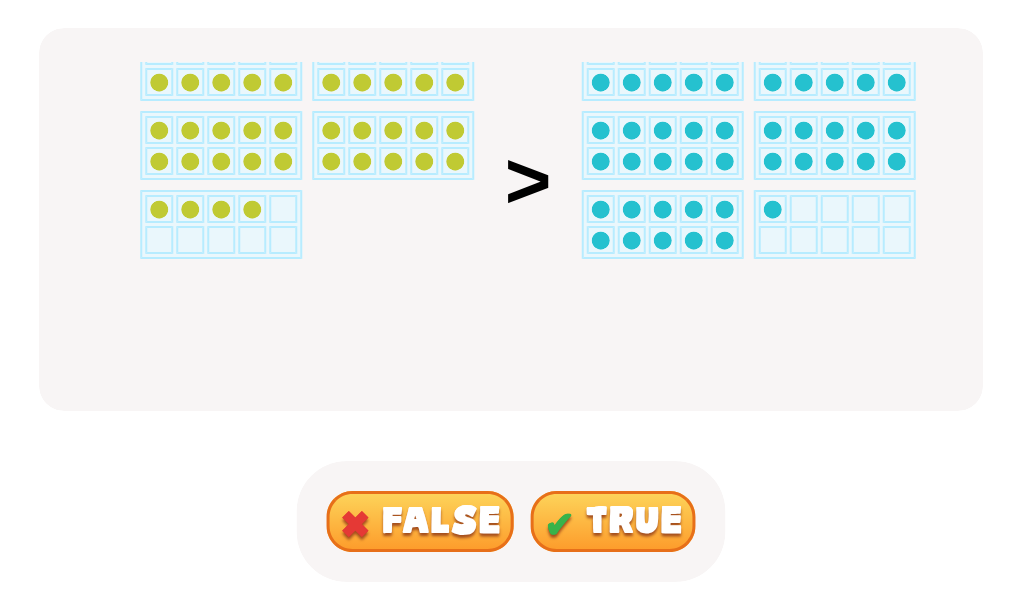
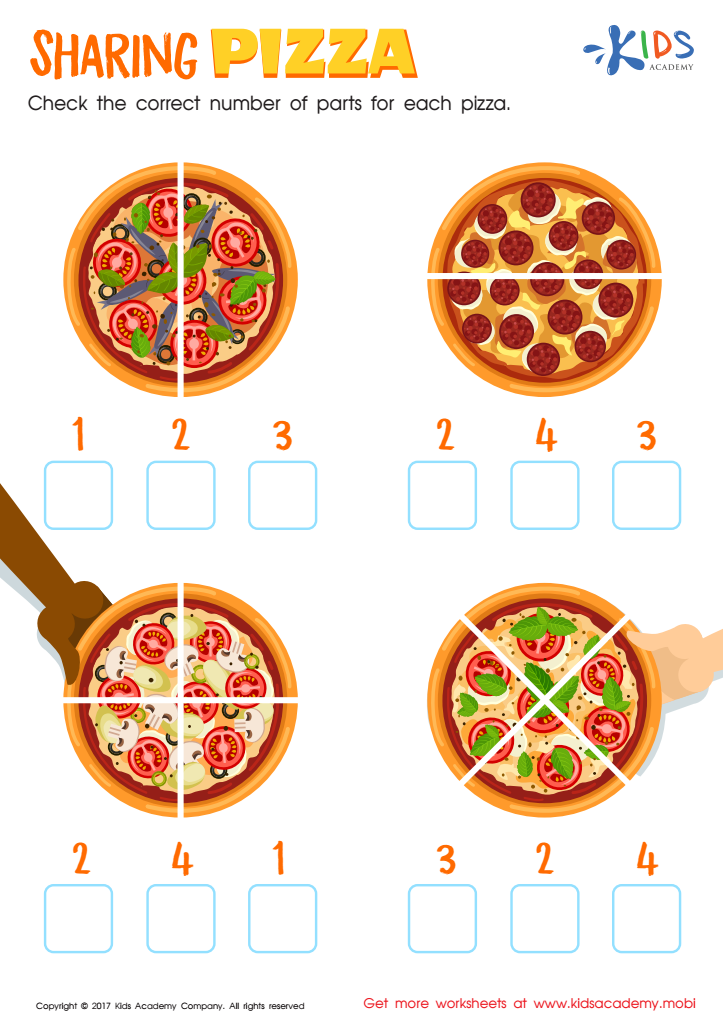
Sharing Pizza Worksheet
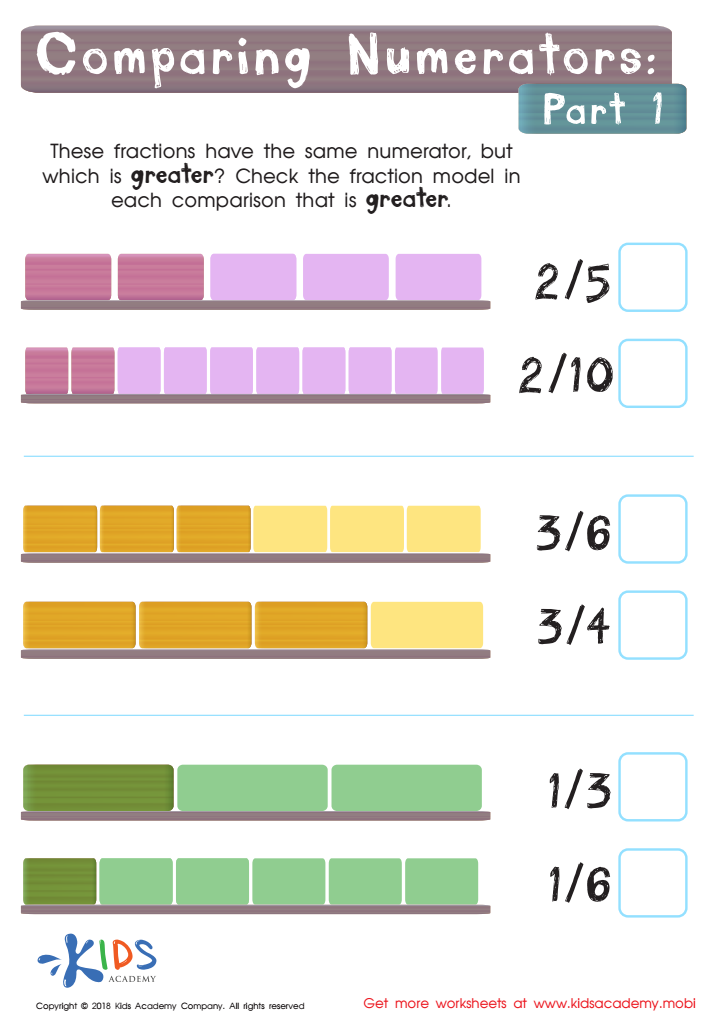
Comparing Numerators Part 1 Worksheet








Understanding fractions and comparing numbers is essential for children’s mathematical development, impacting their overall academic success and daily life skills. For parents and teachers, grasping these concepts lays the foundation for numerical literacy. Fractions represent parts of a whole and help children comprehend ratios and proportions, skills vital in various real-world contexts, from sharing pizza equally to measuring ingredients in cooking.
By teaching children how to compare numbers and understand fractions, caregivers and educators cultivate critical thinking skills. These concepts enable students to solve problems and make informed decisions. For instance, comparing fractions can enhance understanding of concepts like greater or lesser values and introduces them to the idea of equivalence.
Moreover, a strong foundation in math can boost confidence, as children learn to approach complex tasks systematically. It enables parents and teachers to engage children in discussions about everyday scenarios involving measurement and comparisons, making math relevant and enjoyable.
Ultimately, fostering a solid comprehension of fractions and number comparison prepares children for more advanced mathematics in later grades, encouraging a positive attitude towards math and enhancing their problem-solving abilities for life's challenges. Thus, attention to these skills is vital for holistic development.