Shape Recognition Fractions of Shapes Worksheets
9 filtered results
-
From - To
Enhance your child's understanding of both shape recognition and fractions with our engaging "Shape Recognition Fractions of Shapes Worksheets." These worksheets are designed to help young learners identify and differentiate various shapes while introducing the concept of fractions. Through fun visuals and interactive activities, children will grasp how whole shapes can be divided into equal parts, fostering a solid foundational knowledge of both math and geometry. Perfect for early-grade classrooms or home learning, our worksheets make learning enjoyable and effective. Explore our diverse collection today and support your child's journey to mastery in recognizing shapes and understanding fractions!
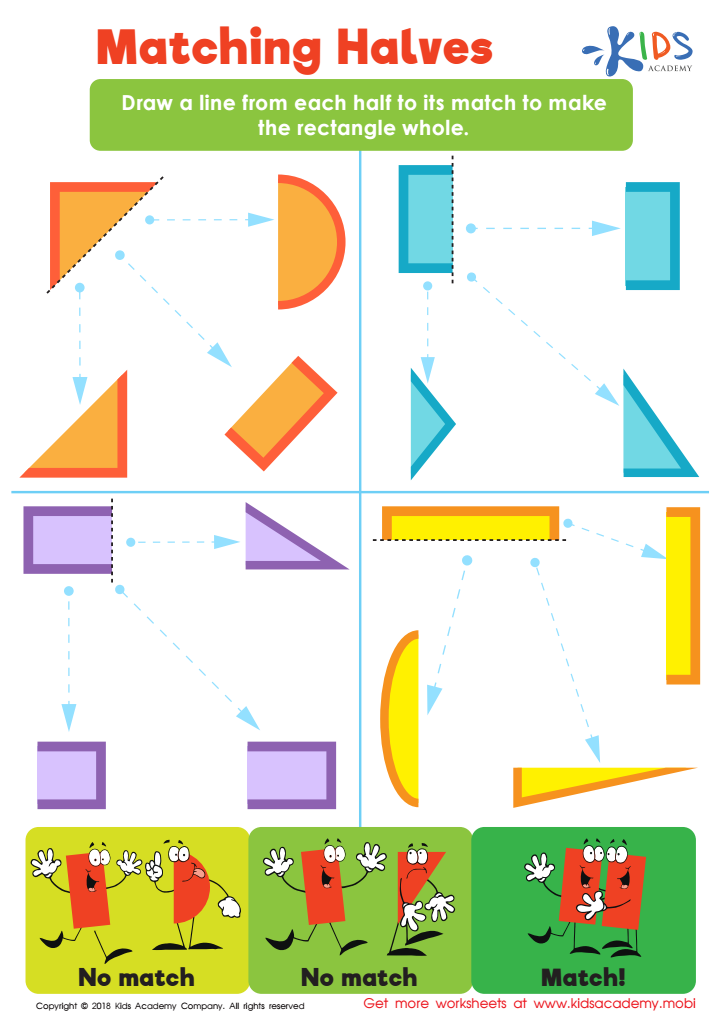
Matching Halves Worksheet
 Assign to My Students
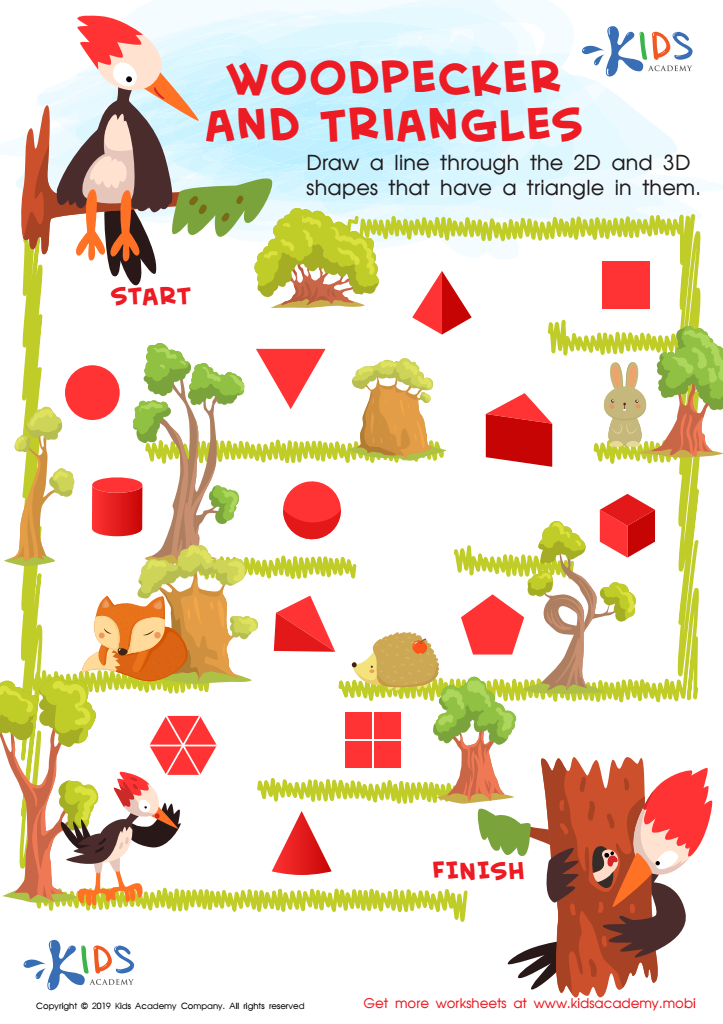
Woodpecker and Triangles Worksheet
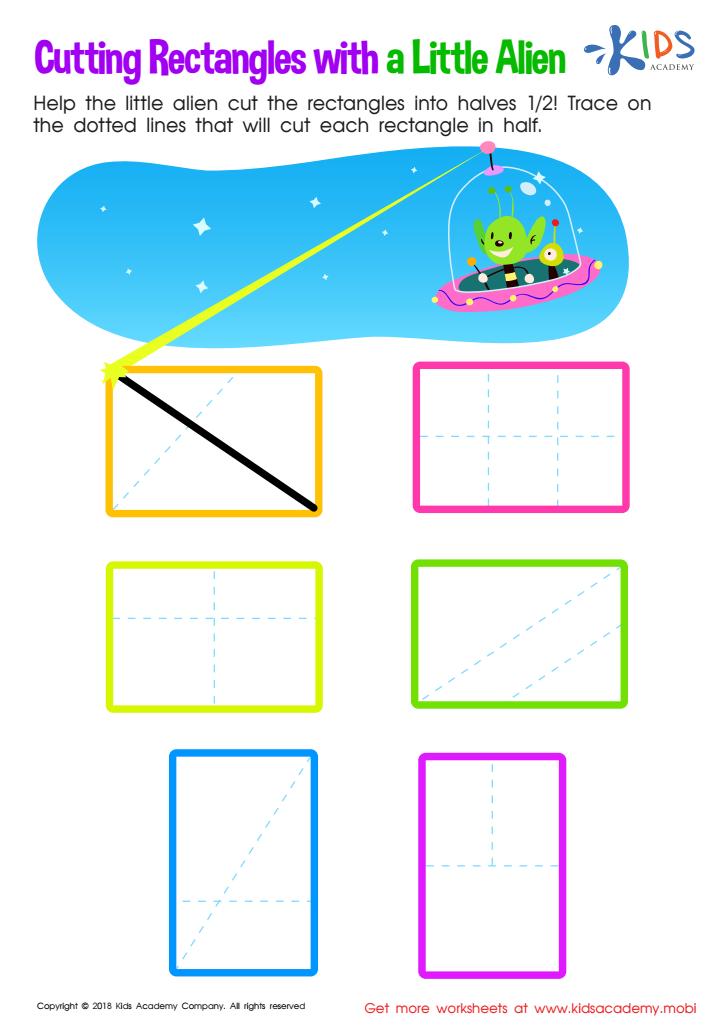
Cutting Rectangles with Alien Worksheet
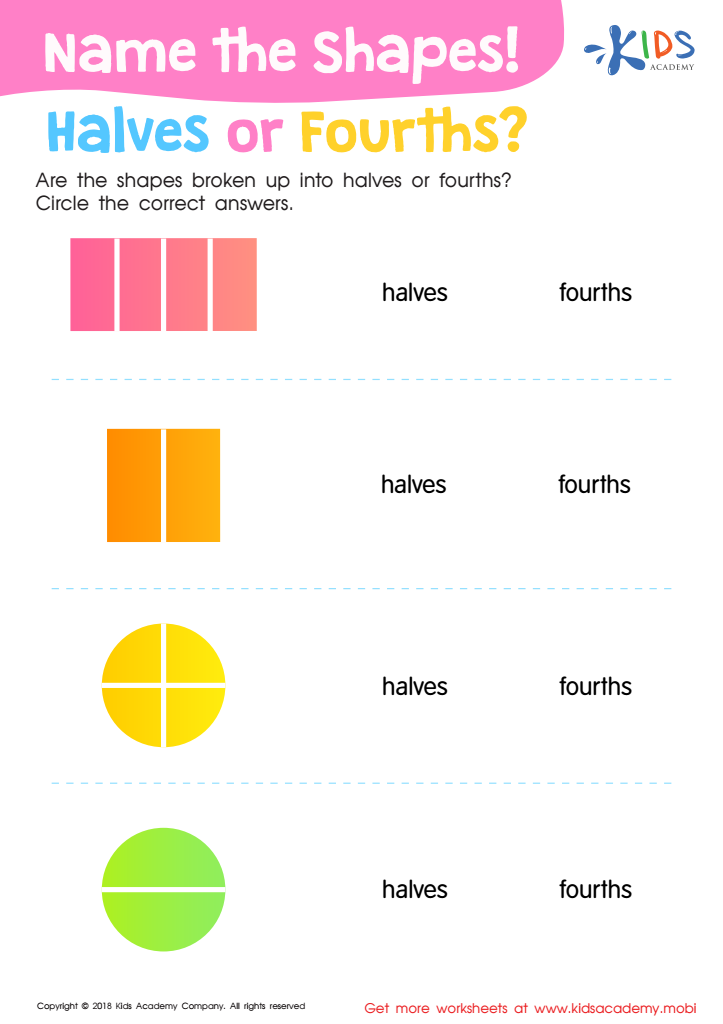
Name the Shapes Halves or Fourths? Worksheet
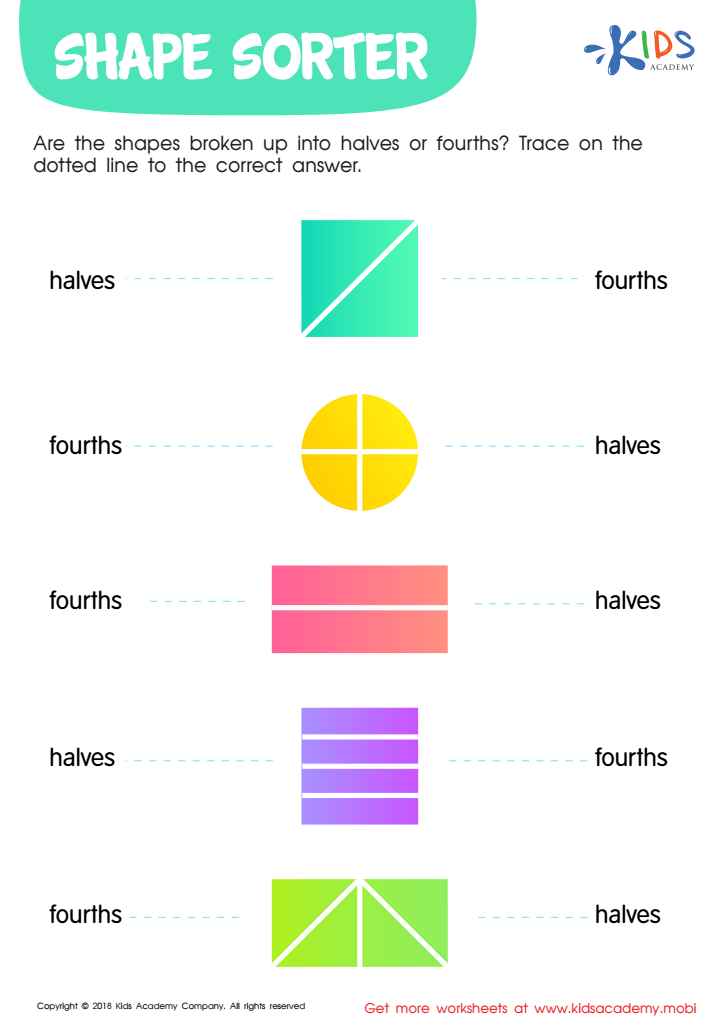
Shape Sorter Worksheet
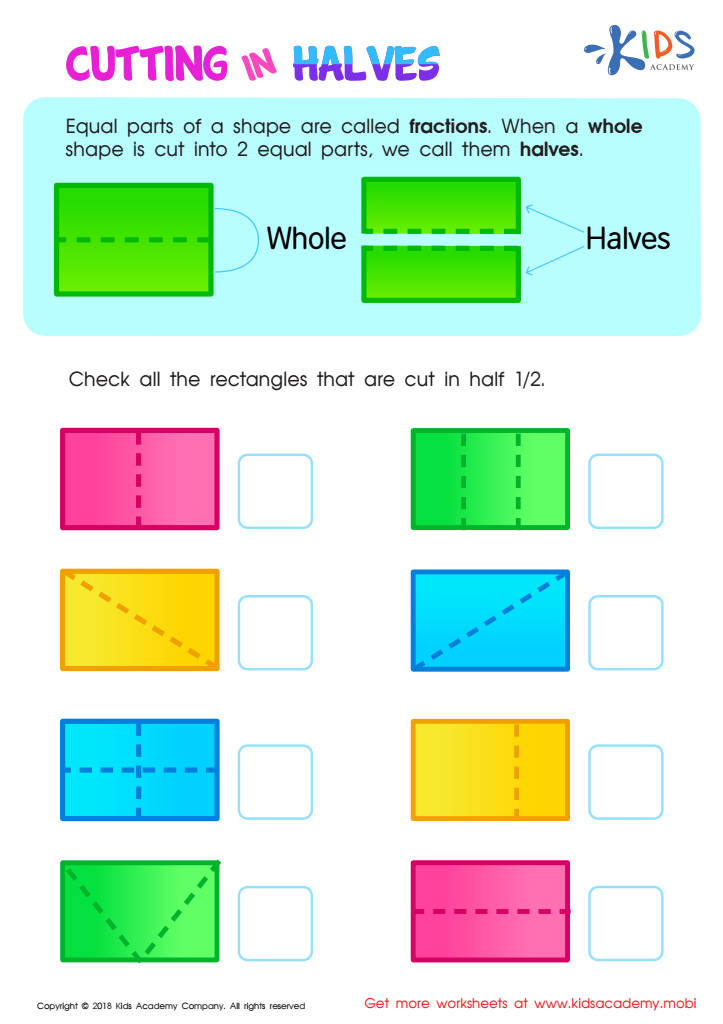
Cutting in Halves Worksheet
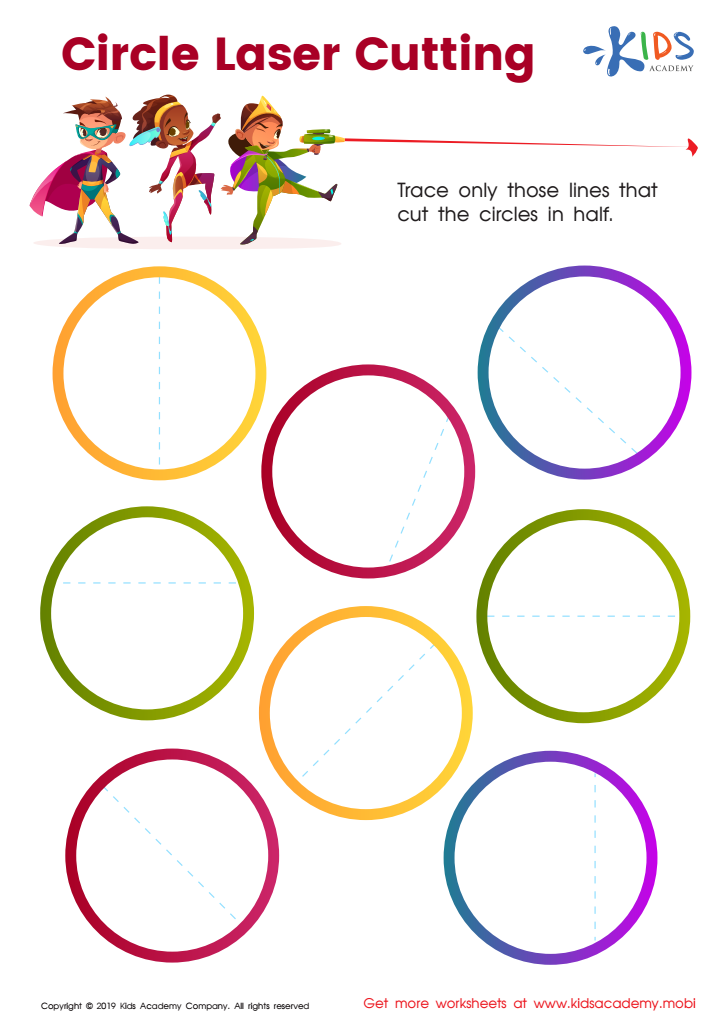
Circle Laser Cutting Worksheet
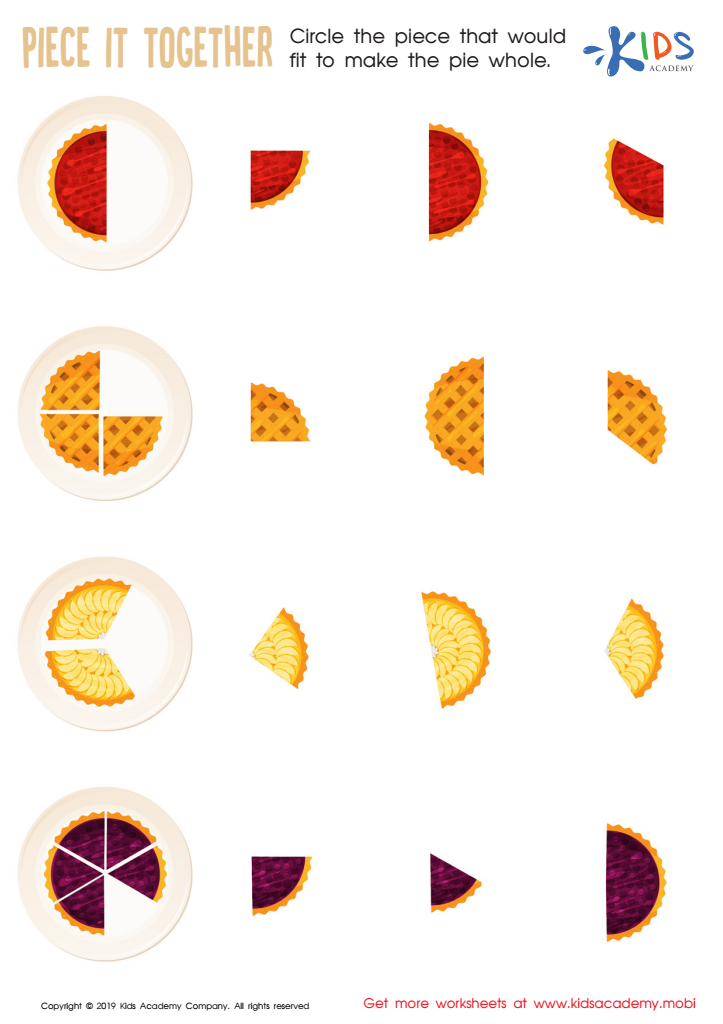
Piece it together Worksheet
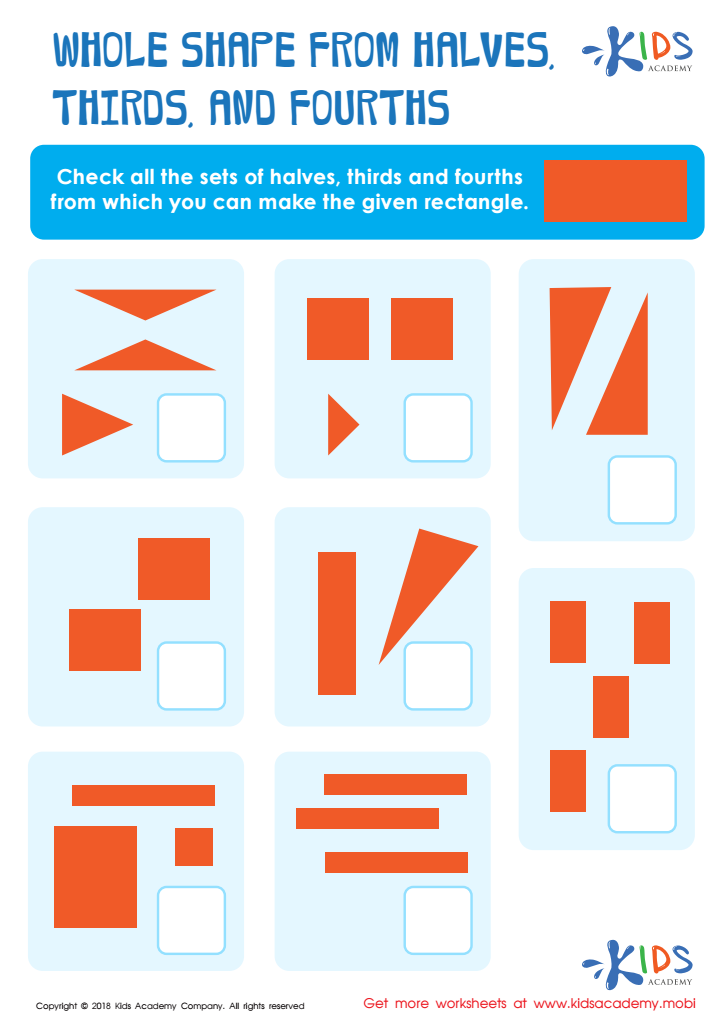
Whole Shape from Halves, Thirds and Fourths Worksheet








Shape recognition, particularly in the context of fractions of shapes, is crucial in early childhood education for several reasons. Firstly, it lays the groundwork for mathematical understanding. Recognizing shapes and their fractional parts helps children grasp fundamental concepts of geometry and spatial awareness, which are essential not only in mathematics but also in everyday problem-solving.
Moreover, understanding fractions through shapes nurtures critical thinking skills. Children learn to visualize and manipulate parts and wholes, fostering an intuitive understanding of proportions. This also reinforces their knowledge of addition, subtraction, and even concepts of dividing, which are foundational for more complex math concepts encountered later.
Additionally, shape recognition can boost cognitive development. Engaging with shapes and fractions enhances children's observational skills and empowers them to perceive the world more analytically. Socially, discussions around fractions of shapes can promote collaboration and communication among peers, allowing for shared learning experiences.
For parents and teachers, cultivating shape recognition and the comprehension of fractions is vital not only to equip children with academic skills but also to nurture their confidence and enthusiasm towards learning. This foundational knowledge sets students on a positive trajectory for future educational success.