Basic geometry Geometry Worksheets
3 filtered results
-
From - To
Discover our collection of engaging Basic Geometry Worksheets designed to make learning shapes, lines, and angles fun and interactive for early learners. Perfect for kindergarten through third grade, our worksheets help build foundational geometry skills through hands-on activities and colorful illustrations. Children will enjoy differentiating between 2D and 3D shapes, identifying angles, and exploring symmetry, while developing critical thinking and problem-solving abilities. Ideal for classroom use or additional practice at home, Kids Academy worksheets provide drills tailored to reinforce and challenge young minds. Foster a love of math and beautiful geometry with materials that make learning a joy.
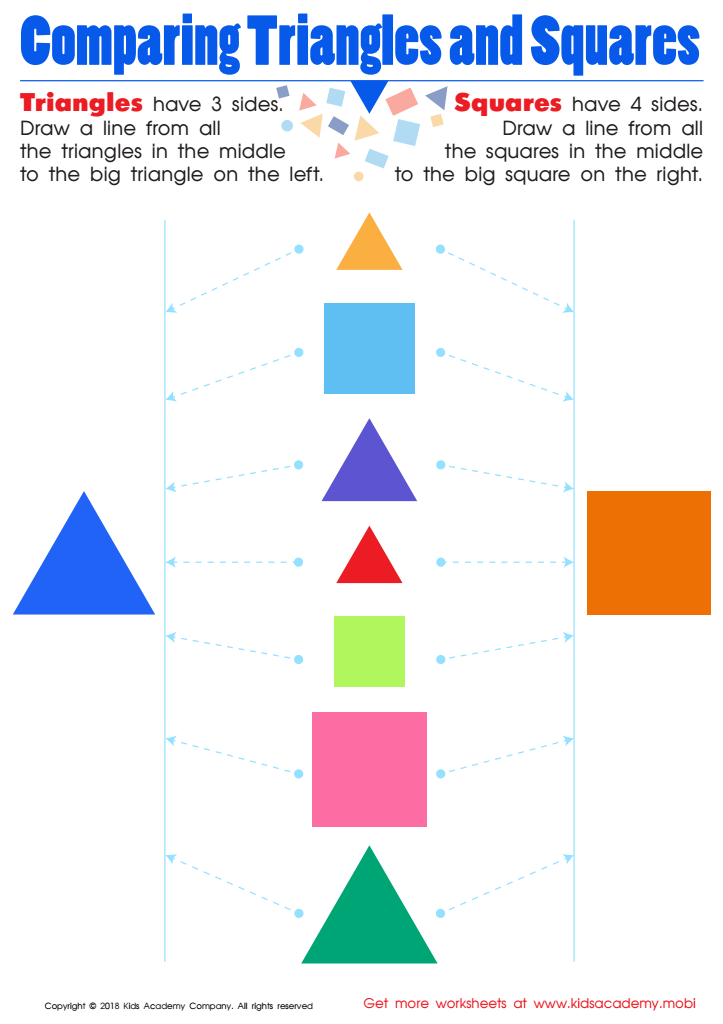
Comparing Triangles Squares Worksheet
 Assign to My Students











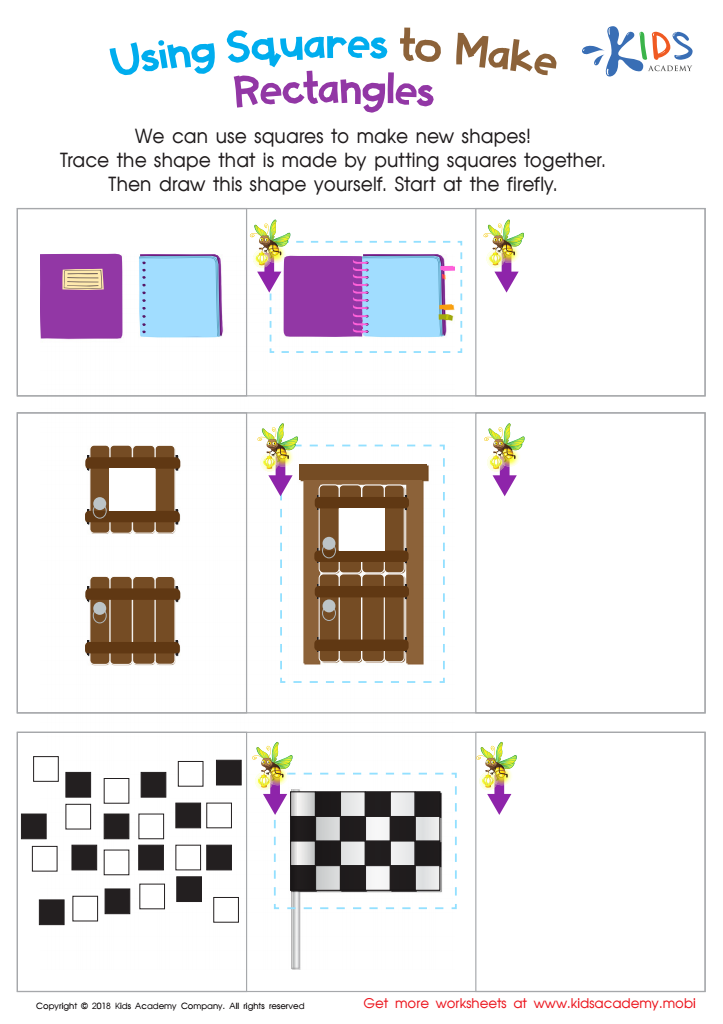
Using Squares to Make Rectangles Worksheet
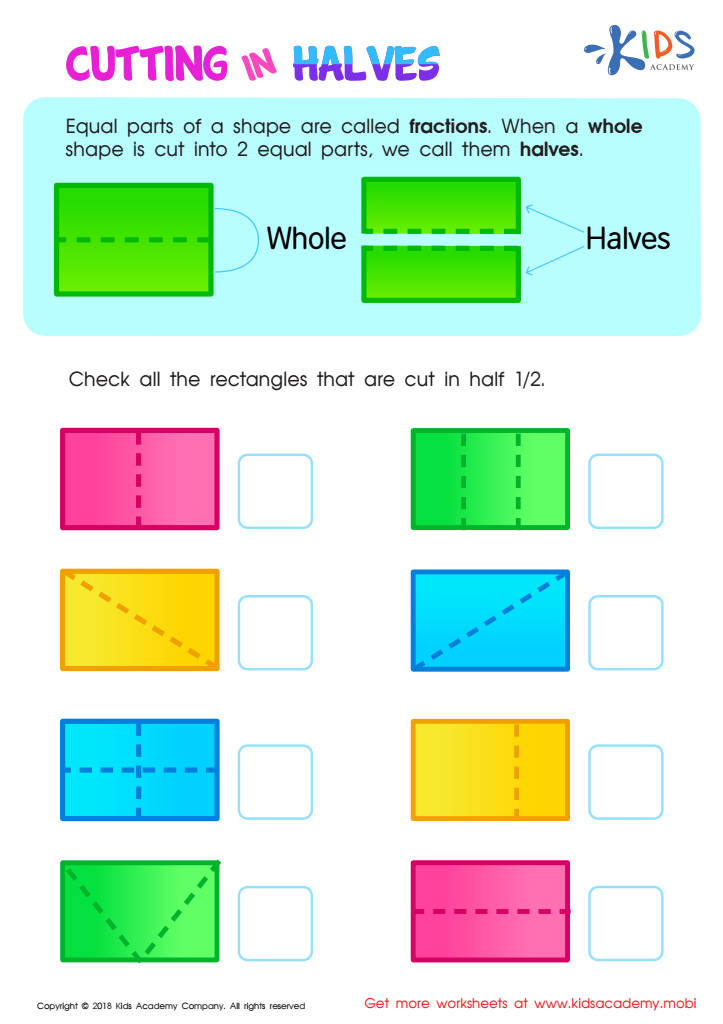
Cutting in Halves Worksheet








Parents and teachers should care deeply about basic geometry because it lays the foundation for critical thinking, problem-solving skills, and spatial awareness in young children. Basic geometry helps students understand shapes, sizes, patterns, and the relationships between different objects. This fundamental knowledge is crucial for many everyday tasks, such as reading maps, packing, or even navigating through space effectively.
Firstly, geometry enhances logic and reasoning skills. When children learn to identify, compare, and analyze shapes, they develop a logical framework that helps them approach problems analytically. This kind of thinking is not only vital for more advanced math topics but is transferable to other subjects and real-life situations.
Secondly, geometry develops spatial awareness. Understanding the properties of different shapes and how they fit together helps children better visualize and manipulate objects in their environment. This skill is particularly important for fields that involve design, engineering, or architecture later in life.
Moreover, engaging in geometric activities, such as building with blocks or creating patterns, makes learning interactive and enjoyable, fostering a positive attitude towards mathematics from an early age. Ultimately, a strong foundation in basic geometry equips children with essential skills that are important for academic growth and everyday functioning, making it a critical area for parents and teachers to support.








