Filters

6 filtered results

Clear all filters
Favorites
With answer key
Interactive

6 filtered results

Difficulty Level

Grade


Enhance your child's learning experience with our engaging Categorization Skills Geometry Worksheets! Designed for early learners, these worksheets focus on developing essential skills while exploring geometric shapes and concepts. Children can practice classifying and sorting various shapes, enhancing their spatial awareness and critical thinking. Each worksheet is tailored to offer both fun and educational value, making geometry approachable and enjoyable. Ideal for use in classrooms or at home, our resources help facilitate interactive learning through diverse activities. Encourage your young mathematicians to recognize, compare, and categorize shapes, laying a strong foundation for future math success. Discover the fun of geometry today!

Check out this FREE Trial Lesson on Geometry!

Sorting Objects into 3 Categories

Favorites
With answer key
Interactive
  • Categorization skills
  • Geometry
Sorting Jewels Worksheet

Sorting Jewels Worksheet

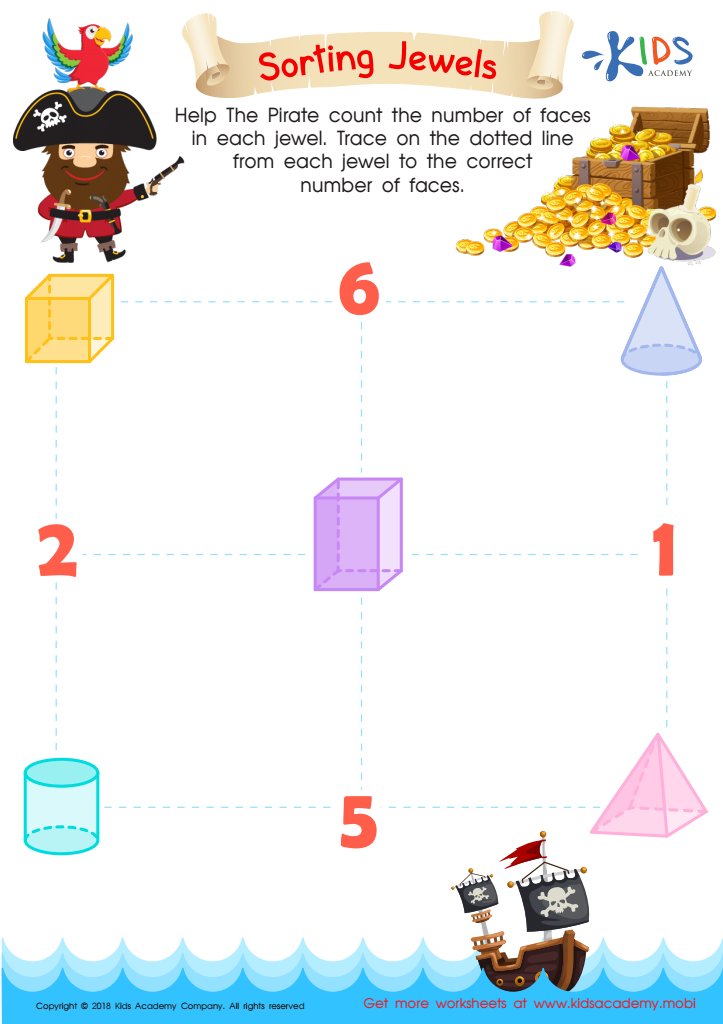
Help your kids explore their pirate fantasies with this tracing sheet. Ask them to count the number of faces in each jewel and then trace the dotted line to the correct number. How many faces does a rectangle have? What about a triangle and a cone? This fun worksheet is a great way to teach your kids the basics of identifying the number of faces on shapes.
Sorting Jewels Worksheet
Worksheet
Sorting Shapes - Part 3 Worksheet

Sorting Shapes - Part 3 Worksheet

Download this fun PDF to help your kiddos recognize basic shapes like circles, squares, and triangles. It'll sharpen their fine motor skills as they trace and sort shapes by color, size, and sides. Your kids won't even realize they're learning with these cheery shapes!
Sorting Shapes - Part 3 Worksheet
Worksheet
Dinner Shapes: Making a Whole Worksheet

Dinner Shapes: Making a Whole Worksheet

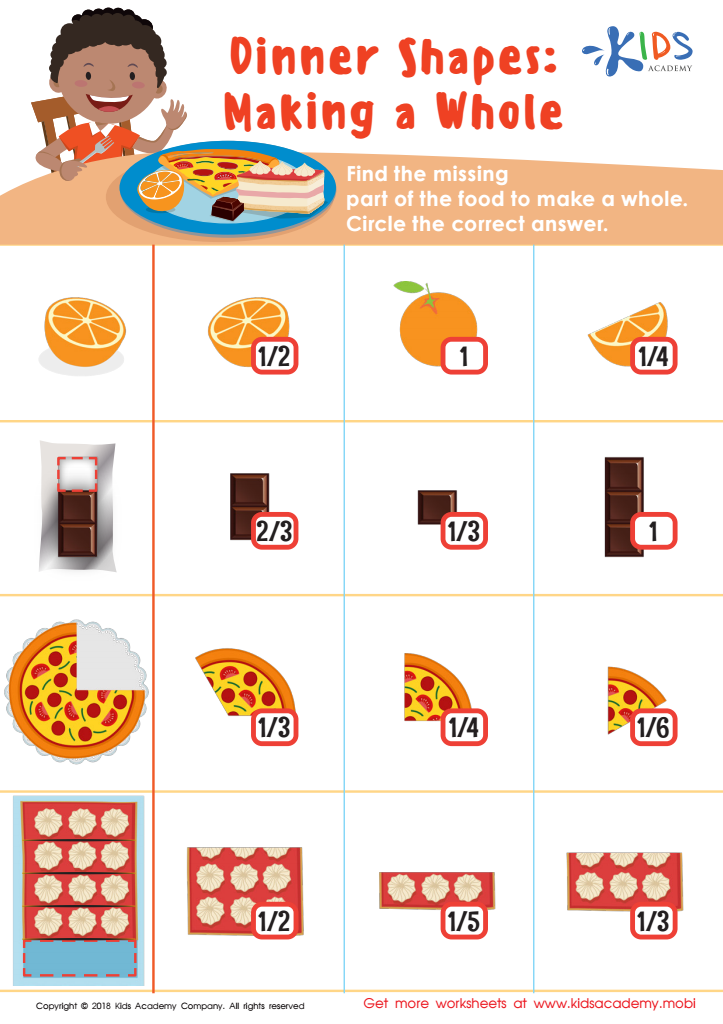
Using food and snacks to stimulate learning and interest in topics is a great strategy. Fractions can prove tricky, but this worksheet can help your child become an expert. Have them look for the missing parts of the food to make a whole, then circle the answer.
Dinner Shapes: Making a Whole Worksheet
Worksheet
Sorting Shapes Worksheet

Sorting Shapes Worksheet

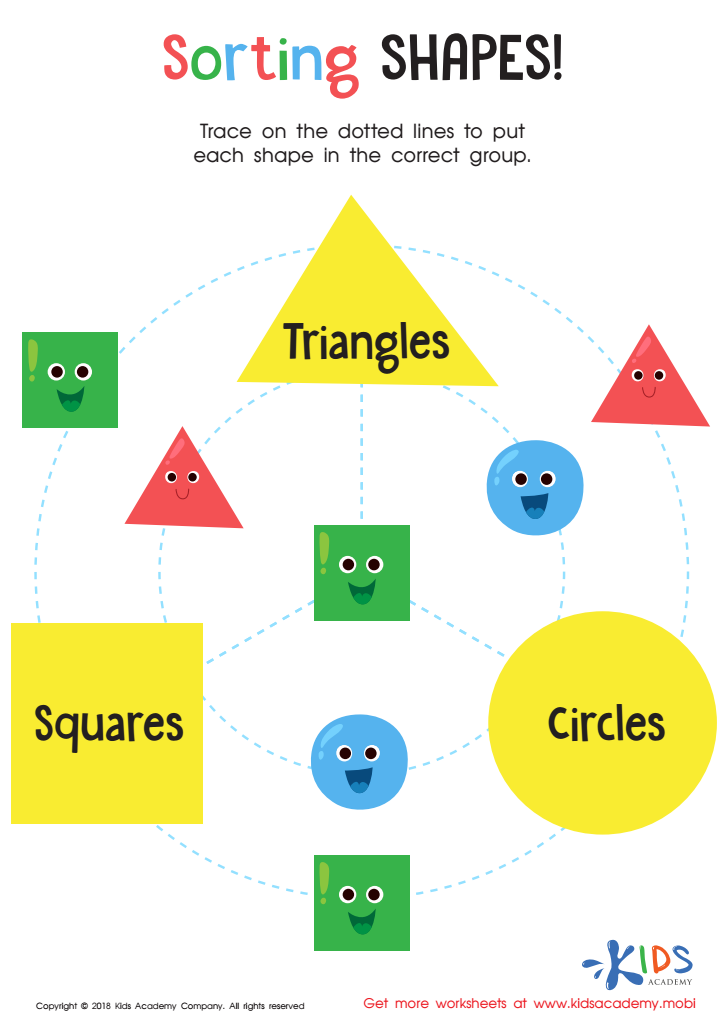
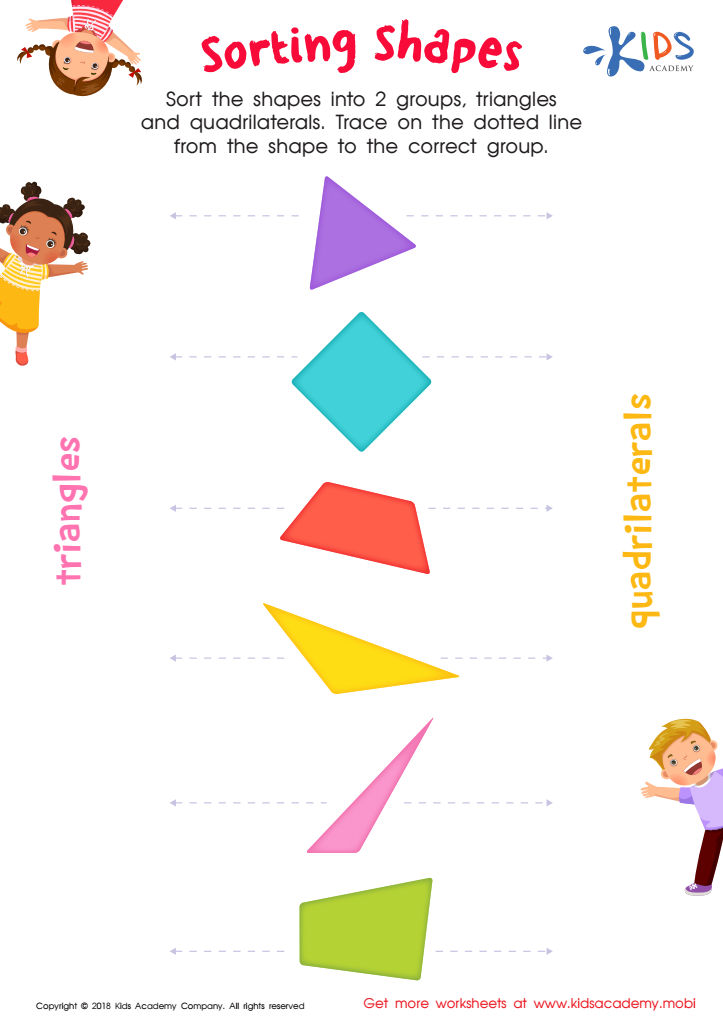
Before beginning, ensure your child is familiar with quadrilaterals (4 sides) and triangles (3 sides). This tracing exercise is easy: sort the shapes into the two groups and trace the dotted lines to the correct group.
Sorting Shapes Worksheet
Worksheet
Shape Sorter Worksheet

Shape Sorter Worksheet

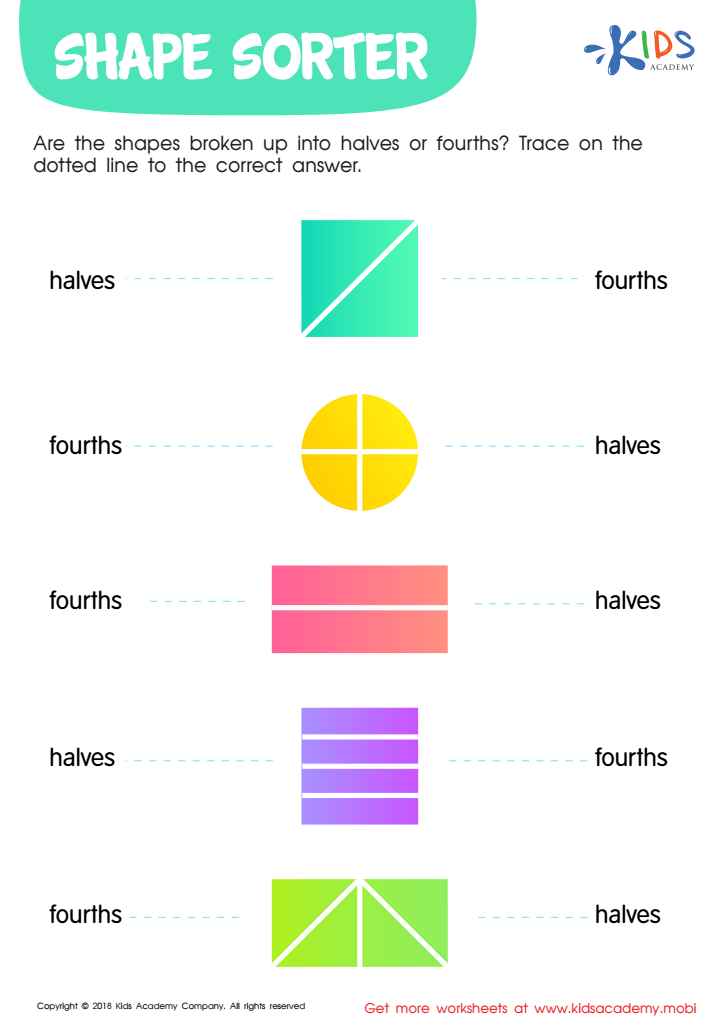
Ask your child if they know halves and fourths. If not, explain that halves are when a shape is divided into two equal parts and fourths is when a shape is divided into four equal parts. Look through this worksheet with your child and let them trace the dotted lines to the correct answer to show whether the shapes are cut into halves or fourths.
Shape Sorter Worksheet
Worksheet
Let's Look! Part 1 Worksheet


Let's Look! Part 1 Worksheet

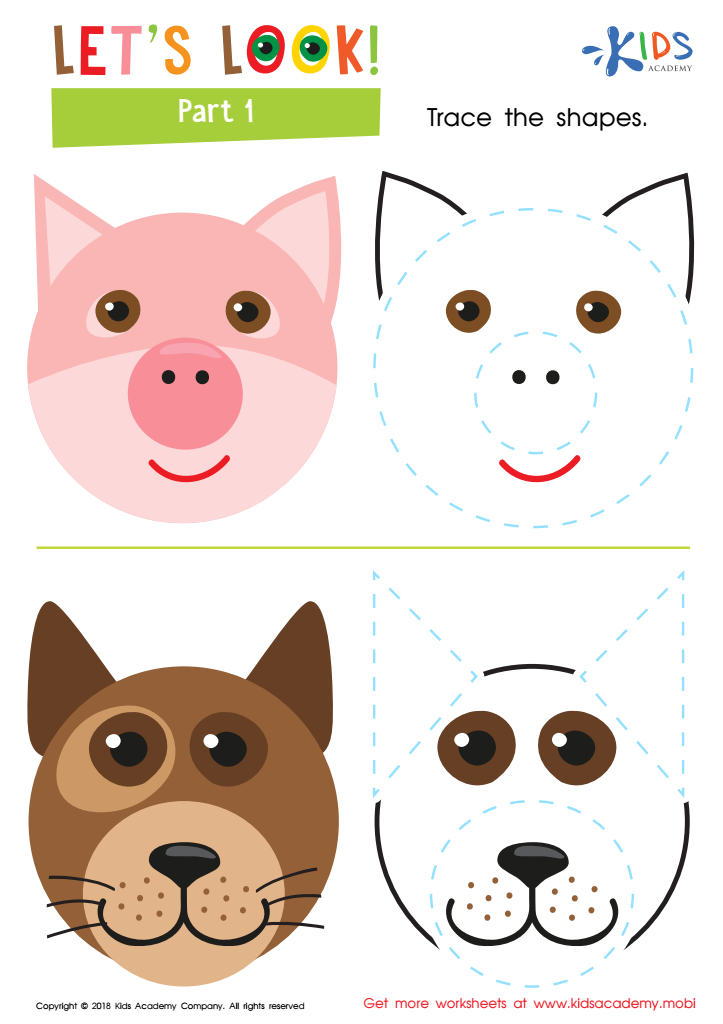
If your kids love animals or have a pet at home, they'll get a kick out of this tracing worksheet. It tests their ability to imitate shapes, starting with a pig and followed by a dog. Beside each of these pictures is a space for tracing the shapes. Unleash your child's creativity and see what they come up with!
Let's Look! Part 1 Worksheet
Worksheet


Categorization skills in geometry are crucial for young learners as they provide the foundation for critical thinking and problem-solving. Parents and teachers should care about these skills because they help children recognize, understand, and classify shapes and objects based on their properties, such as size, color, and symmetry.

When children engage in categorizing geometric shapes, they develop a clearer understanding of spatial relationships and the characteristics that differentiate one shape from another. This understanding not only enhances their mathematical skills but also promotes cognitive development through analysis and reasoning. Categorization aids in fostering vocabulary acquisition, enabling children to articulate their thoughts better when discussing geometric concepts.

Moreover, strong categorization skills in geometry are integral for later learning in higher-level mathematics, as they form the basis for concepts like measurement, area, and volume. Additionally, these skills support the application of geometry in real-life situations, from understanding architectural designs to navigating environments.

By prioritizing the development of categorization skills, parents and teachers empower children with essential tools for academic success and everyday problem-solving, ultimately encouraging a lifelong appreciation for mathematics and logical reasoning.