Comparing Fractions Geometry Worksheets
5 filtered results
-
From - To
Enhance your child's understanding of geometry and fractions with our Comparing Fractions Geometry Worksheets, designed to make learning fun and interactive. These worksheets combine visual geometry exercises with fraction comparison tasks to build a strong mathematical foundation. Children will develop essential skills by comparing and analyzing different geometric shapes and their fractional parts. Perfect for early grade levels, each worksheet is expertly crafted to reinforce classroom lessons and encourage independent practice at home. Download now to support your child's journey in mastering fractions through exciting and engaging geometry activities!
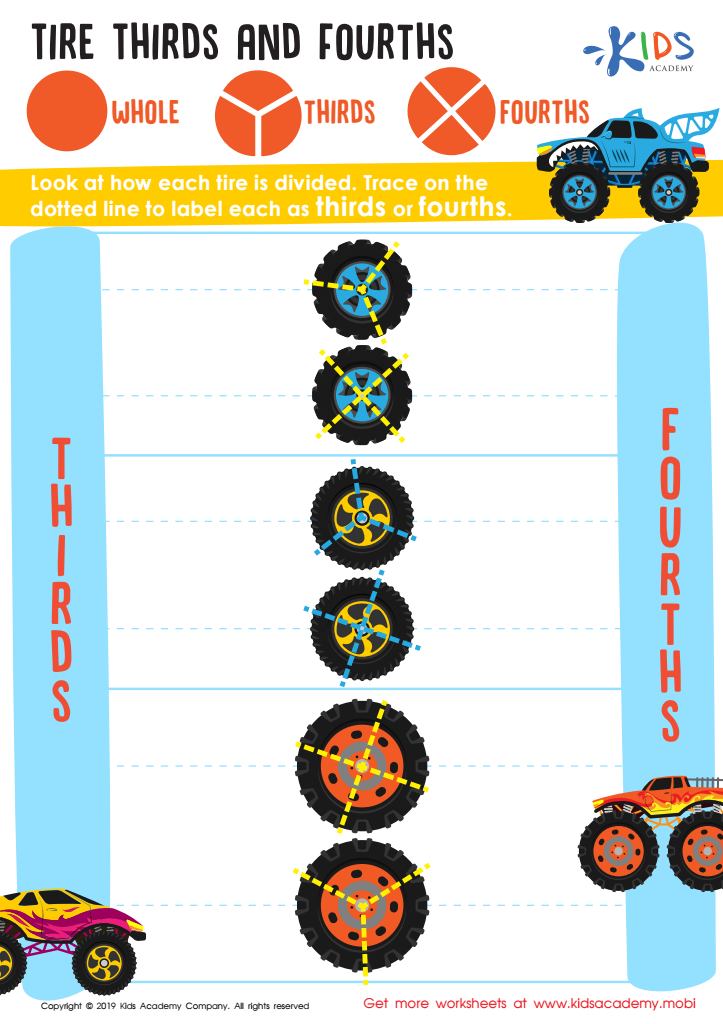
Tire Thirds and Fourths Worksheet
 Assign to My Students











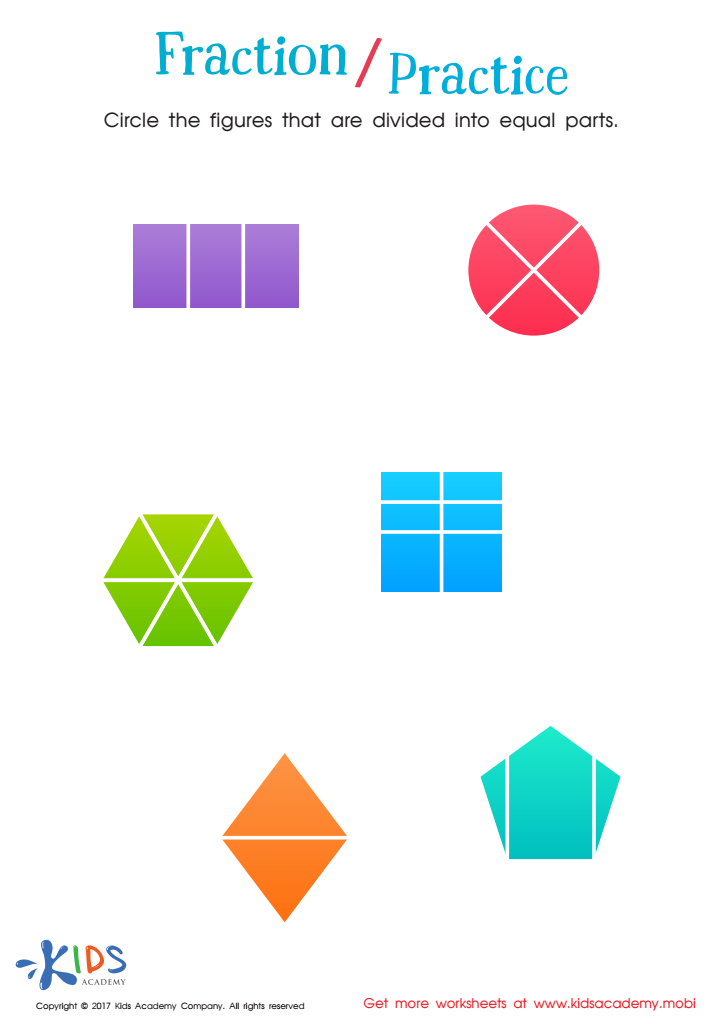
Fractions: Shapes Worksheet
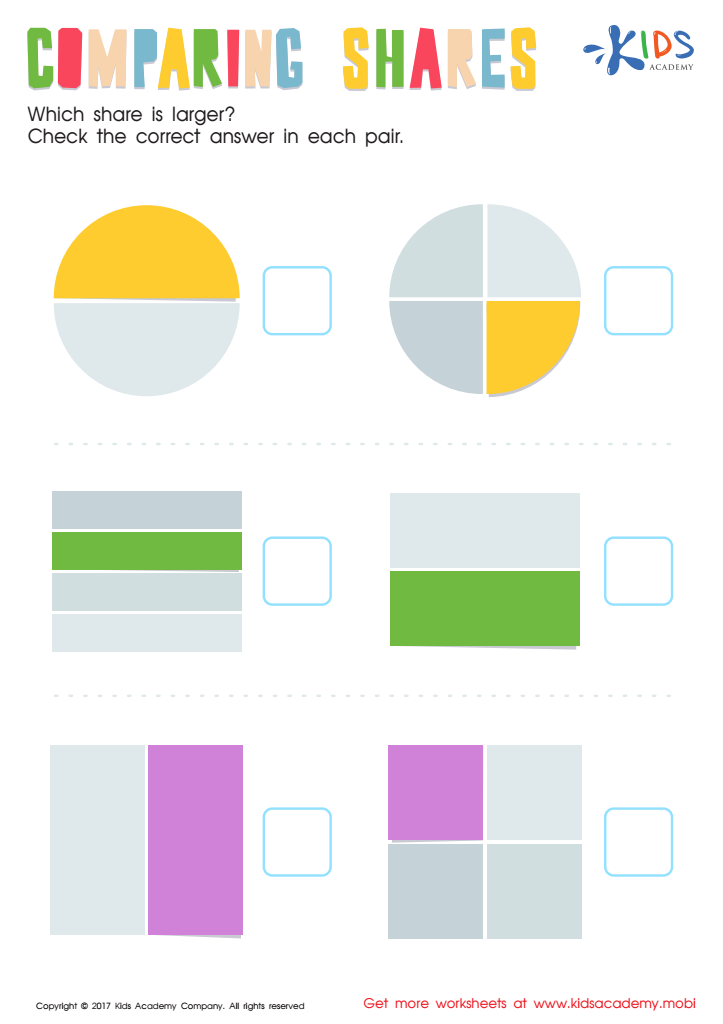
Comparing Shares Worksheet
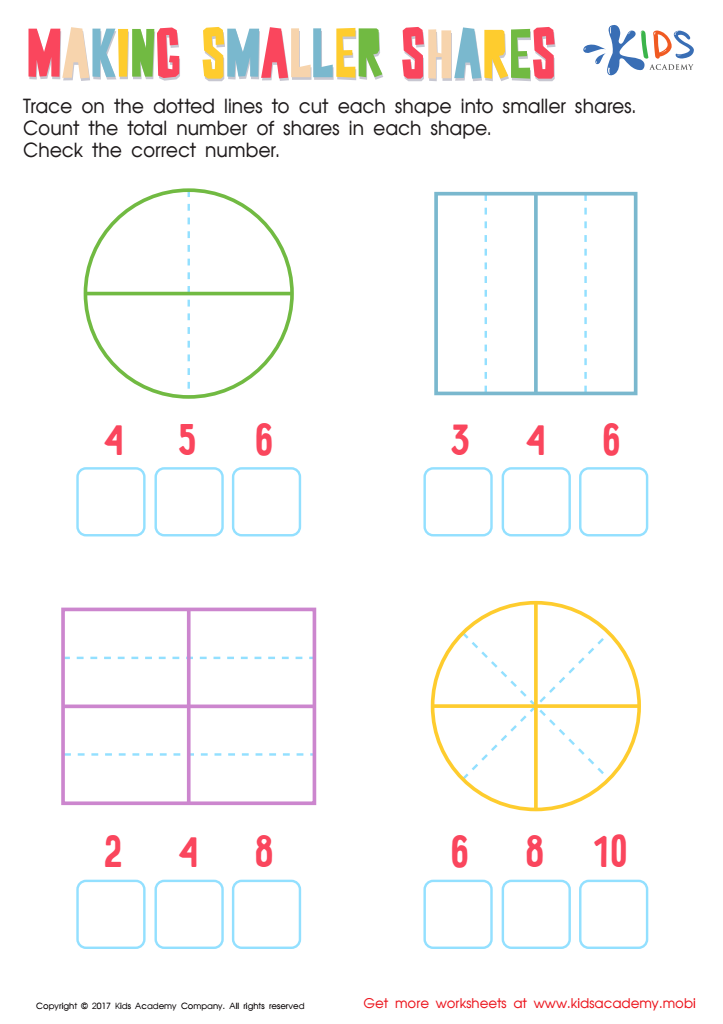
Making Smaller Shares Worksheet
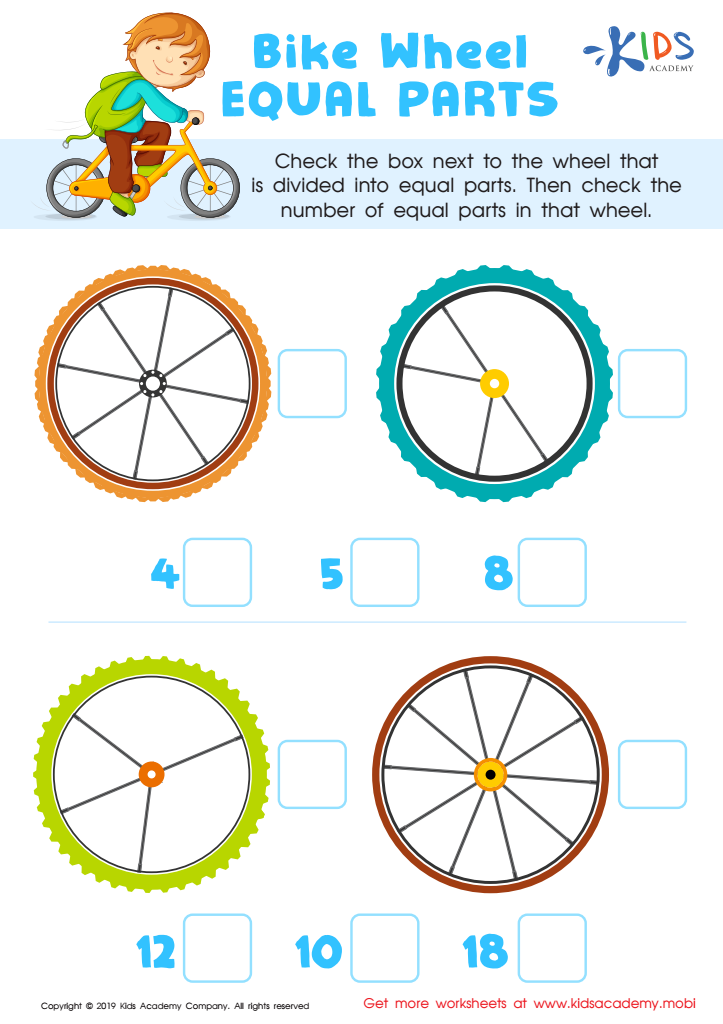
Bike Wheel Equal Parts Worksheet








Understanding and comparing fractions geometrically is crucial for young learners as it forms a foundation for essential math skills and real-life applications. By teaching children to compare fractions using geometric representations, parents and teachers engage students in visual learning, making abstract concepts more concrete and relatable. Visual tools, such as fraction bars or pie charts, help students see the sizes of fractions, fostering better number sense and intuitive grasp of proportional relationships.
A strong grasp of fractions is essential for advanced math topics such as algebra, ratios, and percentages. Early comprehension also has a lasting impact, aiding in everyday activities like cooking, sharing, and financial literacy. Engaging with geometric comparisons emphasizes the spatial reasoning skills necessary for higher-order thinking in science, technology, engineering, and mathematics (STEM) fields.
Additionally, mastering these concepts builds confidence and reduces math anxiety among students by making challenging topics accessible and less intimidating. When parents and teachers prioritize such foundational skills, they encourage a positive and productive mathematical journey, laying the groundwork for lifelong learning and problem-solving. Investing time in comparing fractions geometrically benefits not only individual academic success but also contributes to developing well-rounded, critical thinkers.








