Differentiating shapes Geometry Worksheets
3 filtered results
-
From - To
Discover the ultimate collection of "Differentiating Shapes Geometry Worksheets" on Kids Academy, meticulously designed for early grade learners. These engaging, vibrant worksheets introduce young minds to various shapes, enhancing their visual and cognitive skills. Through fun, interactive activities, students will learn to compare, contrast, and identify shapes, understanding their unique characteristics. Catered to different skill levels, our worksheets foster independent learning while bolstering essential geometry concepts. Ideal for classroom or home use, these printables are perfect for transforming the learning experience into an enjoyable adventure. Elevate your child's shape recognition and differentiation abilities with Kids Academy today!
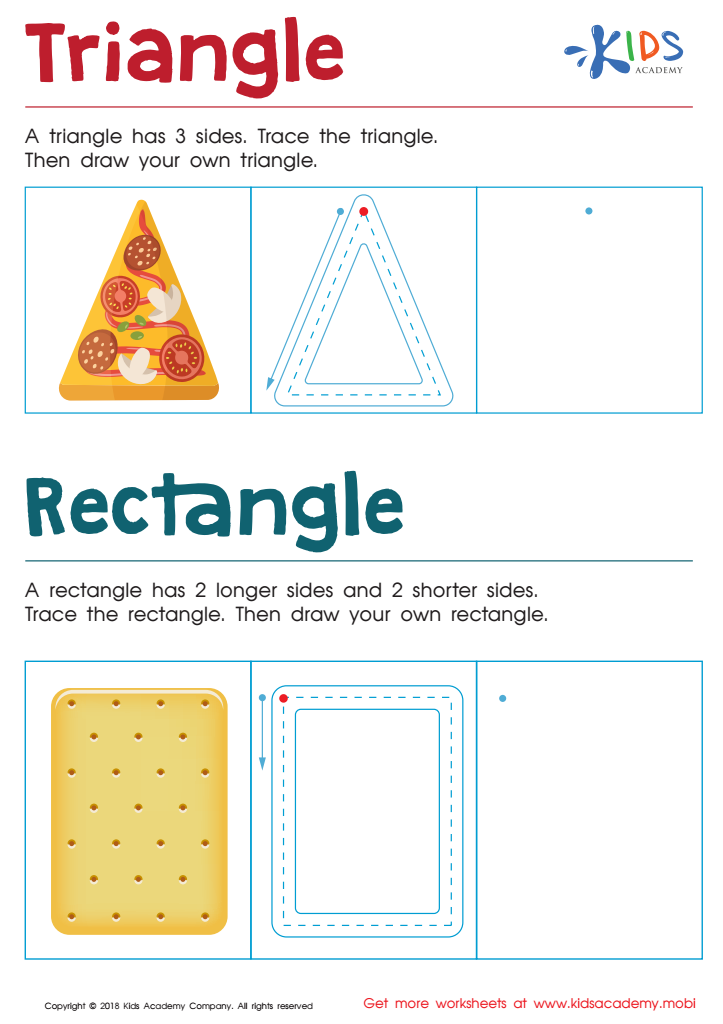
Triangle Rectangle Worksheet
 Assign to My Students











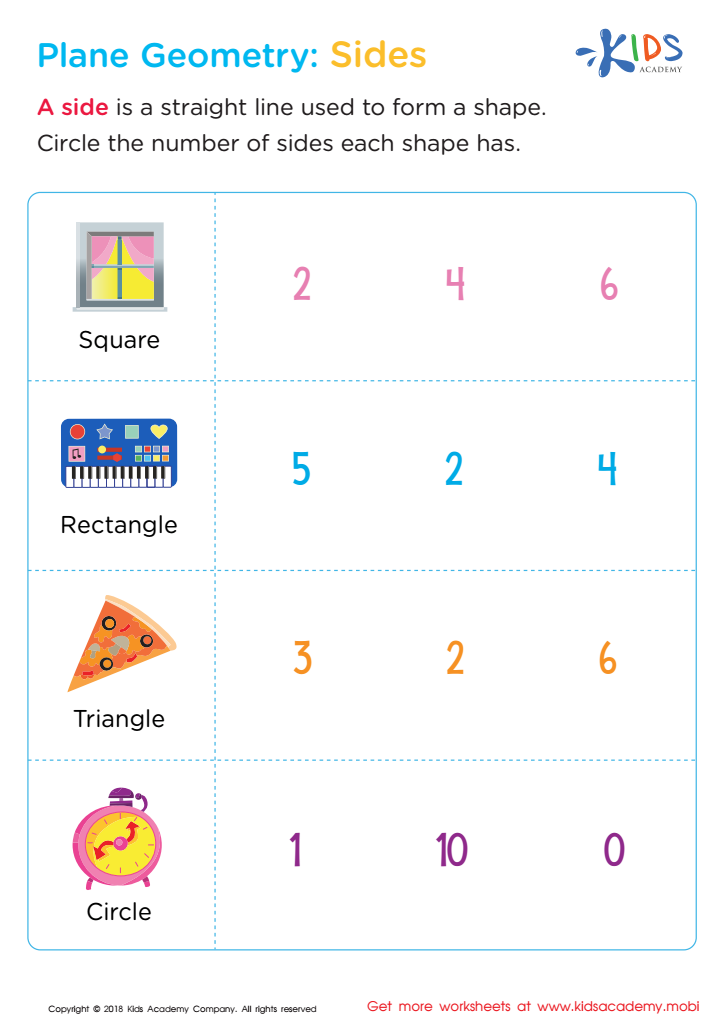
Plane Geometry: Sides Worksheet
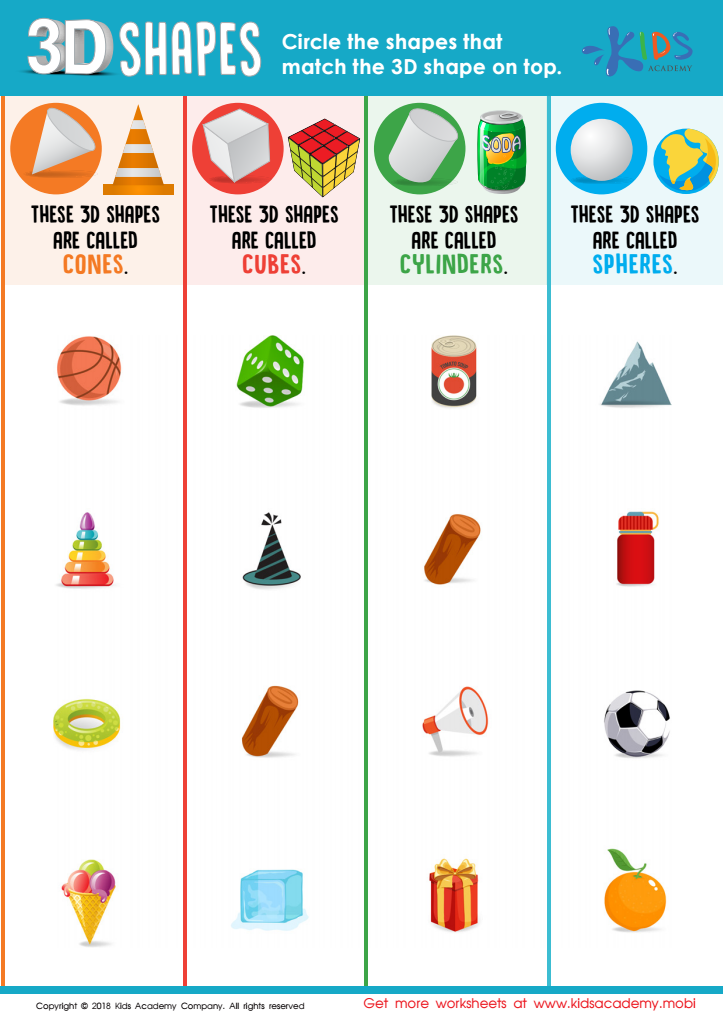
3D Shapes Worksheet








Differentiating shapes in geometry is essential for young learners as it lays the groundwork for critical thinking, spatial awareness, and mathematical understanding. Parents and teachers should prioritize this aspect of learning for several reasons. Firstly, it develops visualization skills which are crucial in everyday tasks such as reading maps or understanding diagrams. Recognizing and differentiating shapes helps children to better grasp more complex mathematical concepts in the future, ranging from fractions to geometry and algebra.
Moreover, shape differentiation enhances problem-solving abilities. By studying various shapes and their properties, students learn to make comparisons, categorize, and deduce information, fostering logical reasoning. For instance, distinguishing between a square and a rectangle—both quadrilaterals but with different properties—teaches them the importance of precise definitions and attention to detail.
Additionally, it supports fine motor skills and hand-eye coordination when they draw or construct shapes. Such activities build the foundation for tasks that require dexterity, like writing or manipulating objects. Beyond academics, this skill also promotes a greater understanding of the physical world, aiding in recognition and appreciation of shapes and patterns in art, nature, and architecture.
Therefore, by nurturing an ability to differentiate shapes, adults set children up for a balanced development in cognitive and motor skills equally vital in academics and everyday life.








