Fraction comparison Geometry Worksheets
4 filtered results
-
From - To
Explore our engaging Fraction Comparison Geometry Worksheets designed to enhance your child's understanding of fractions in a mathematical context. These worksheets provide a fun and interactive approach to comparing fractions while integrating geometric concepts. Perfect for early grade students, our carefully crafted exercises develop critical mathematical thinking and problem-solving skills. Kids will practice visualizing fractions through various geometric shapes, making learning enjoyable and effective. With a variety of exercises tailored to different learning styles, our worksheets encourage independent practice and reinforce essential math skills. Get started today to help your child master fraction comparisons in geometry!
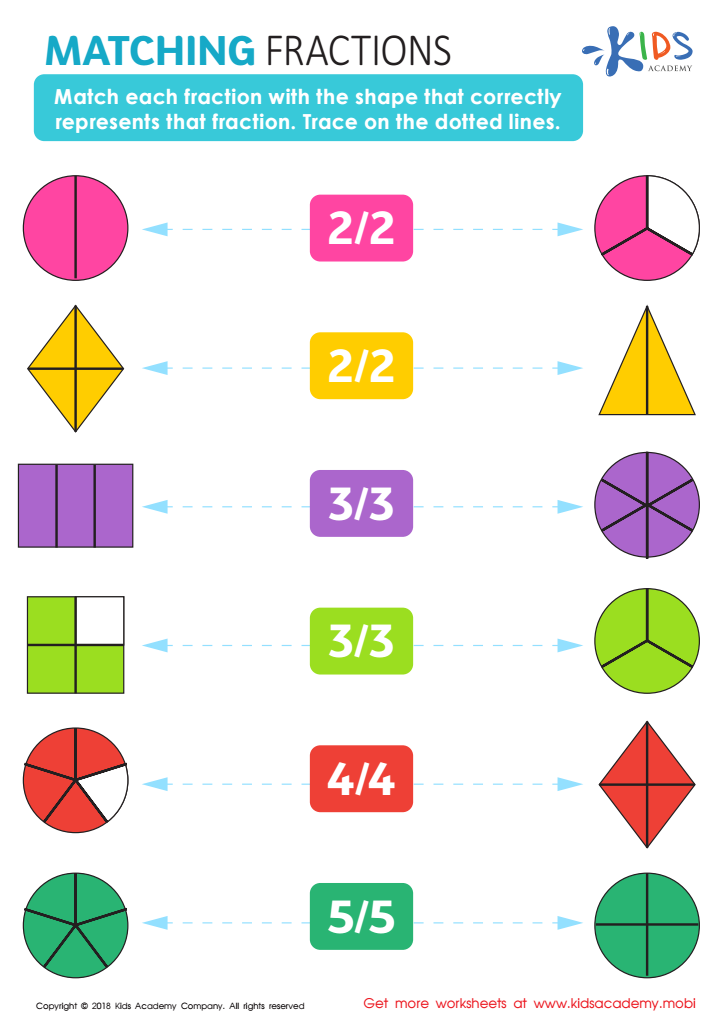
Matching Fractions Worksheet
 Assign to My Students











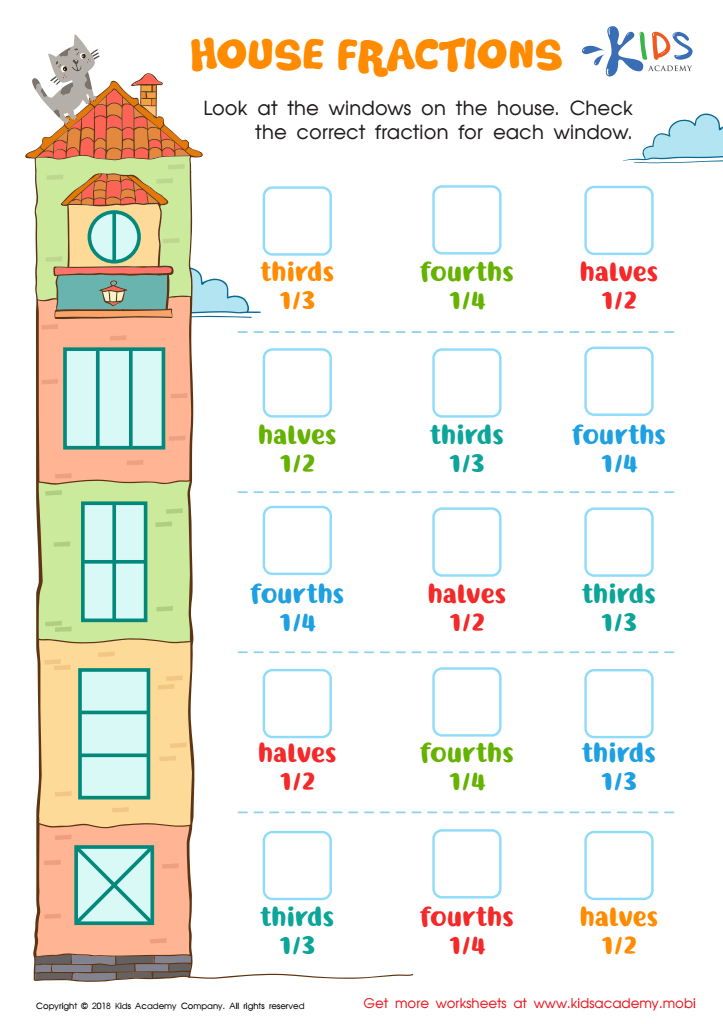
House Fractions Worksheet
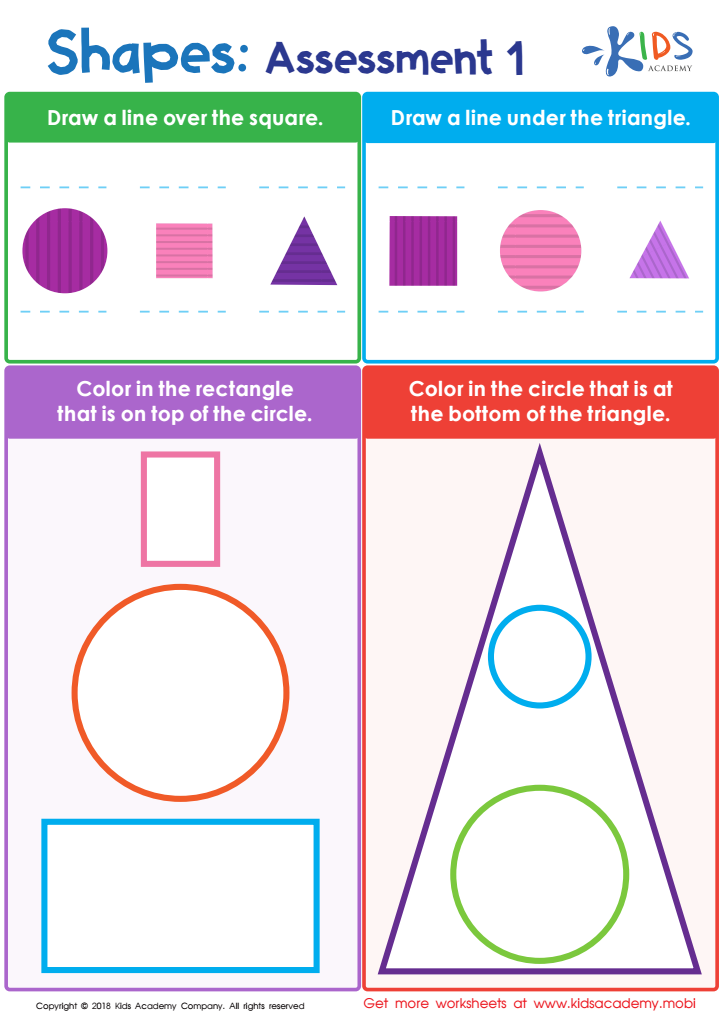
Shapes: Assessment 1 Worksheet
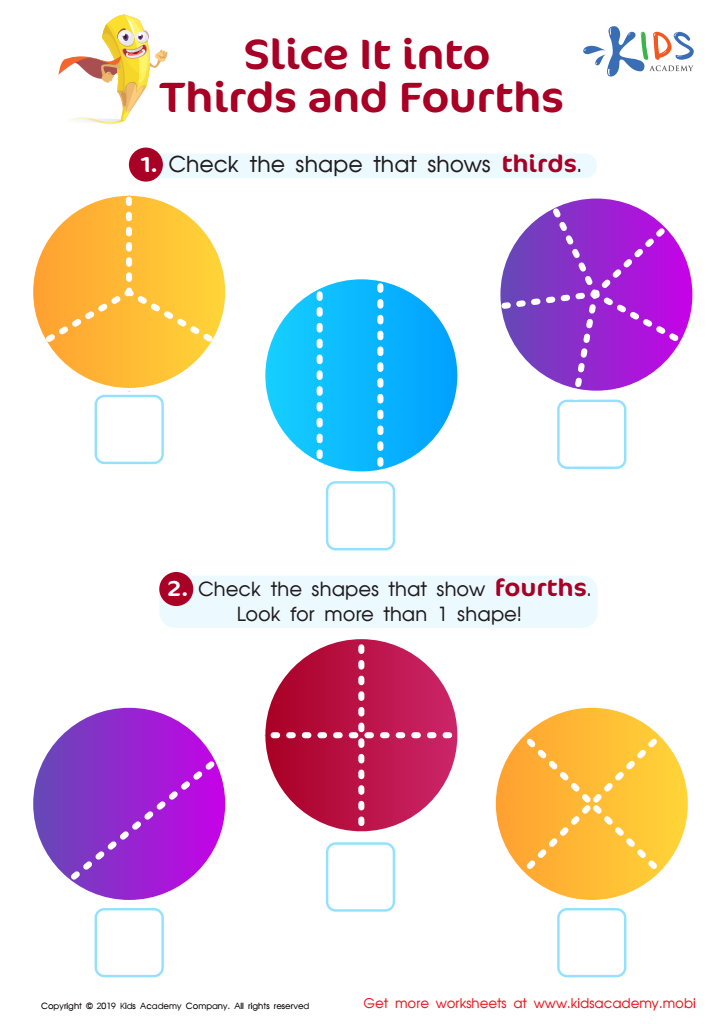
Slice in Thirds Fourths Worksheet








Understanding fraction comparison and basic geometric concepts is vital for young learners as it lays the foundation for advanced mathematical skills. Parent and teacher involvement in this area strengthens a child's critical thinking and problem-solving abilities.
Fraction comparison teaches children how to assess quantities and relationships. For instance, when children learn to compare fractions like 1/4 and 1/2, they gain an understanding of proportionality that helps in daily life scenarios, such as cooking or sharing equally. These skills foster logical reasoning and analytical thinking, which are transferable to other subjects and real-world situations.
Furthermore, geometry connects children to their spatial awareness and observational skills. Concepts such as symmetry, angles, and shapes encourage creativity and even introduce them to the world of art and design. Facilitating this understanding helps children classify and make sense of their surroundings better.
By supporting fraction comparison and geometry, parents and teachers equip students with lifelong tools for rational decision-making and real-world application. Ultimately, these subjects promote cognitive development and lay the groundwork for future academic success in mathematics and beyond. Therefore, engaging with these mathematical areas is a crucial aspect of a child’s educational journey.








