Spatial reasoning Geometry Worksheets
5 filtered results
-
From - To
Enhance your child's mathematical skills with our comprehensive collection of Spatial Reasoning Geometry Worksheets! Designed for early learners, these engaging worksheets promote essential skills in visualizing and manipulating shapes, understanding spatial relationships, and developing logical thinking. Each worksheet features fun activities that encourage kids to explore geometry through puzzles, interactive tasks, and coloring challenges, making learning enjoyable and effective. Perfect for classroom reinforcement or at-home practice, our worksheets cater to various learning styles and promote cognitive development in young minds. Equip your child with foundational skills that will boost their confidence in mathematics and help them excel! Discover our worksheets today!
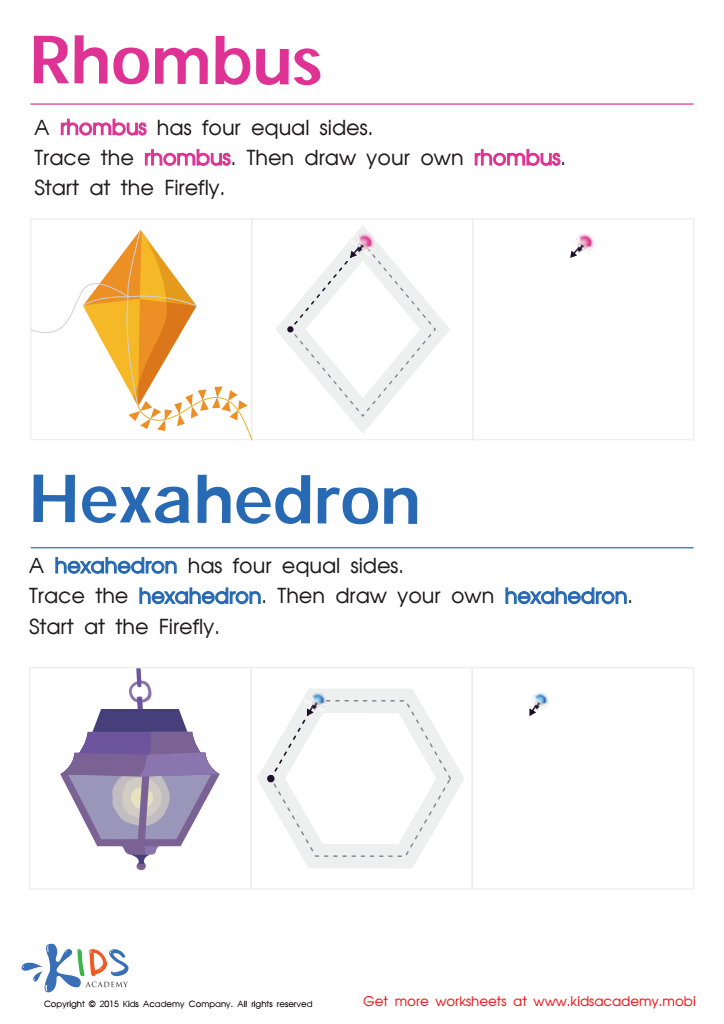
Draw a Rhombus And a Hexahedron Printable
 Assign to My Students











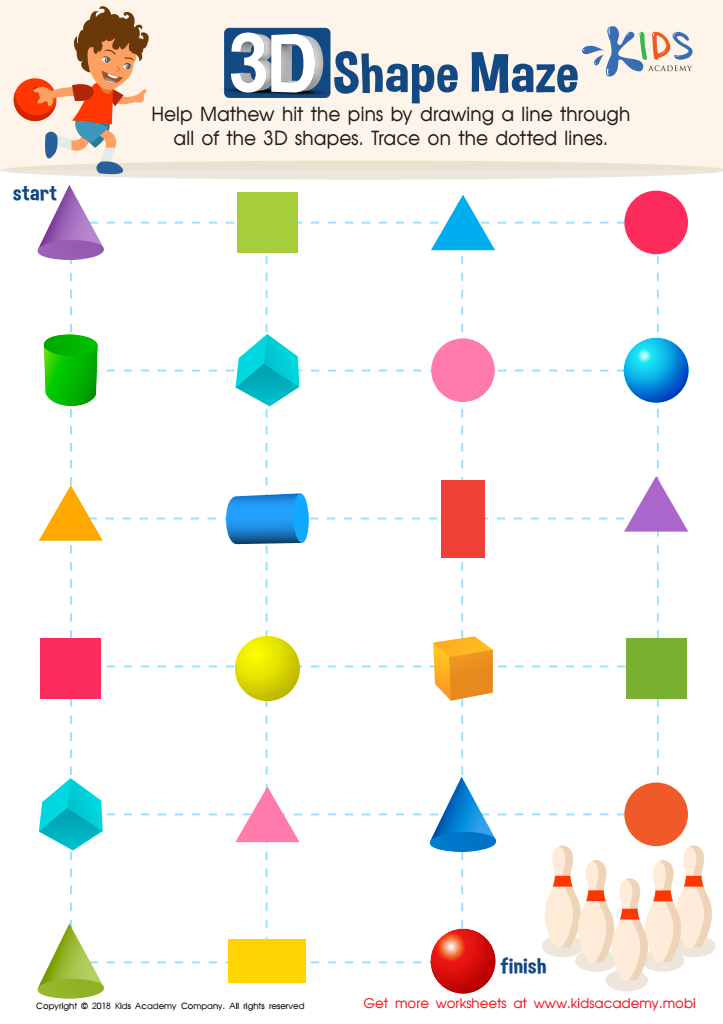
Shapes Maze Geometry Worksheet
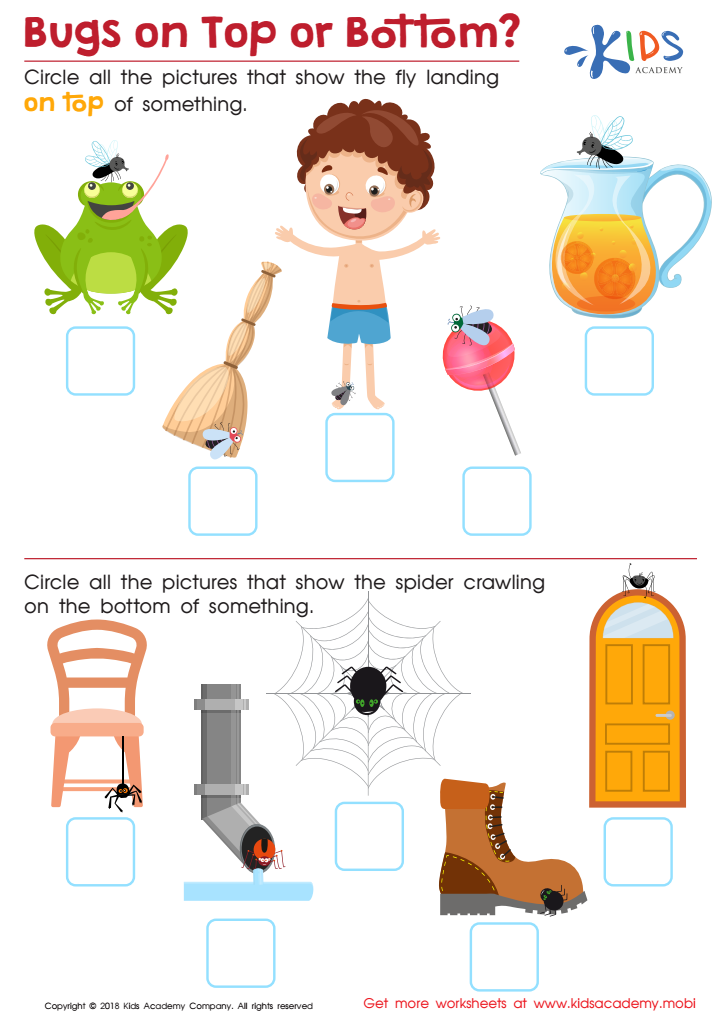
Bugs on Top or Bottom? Worksheet
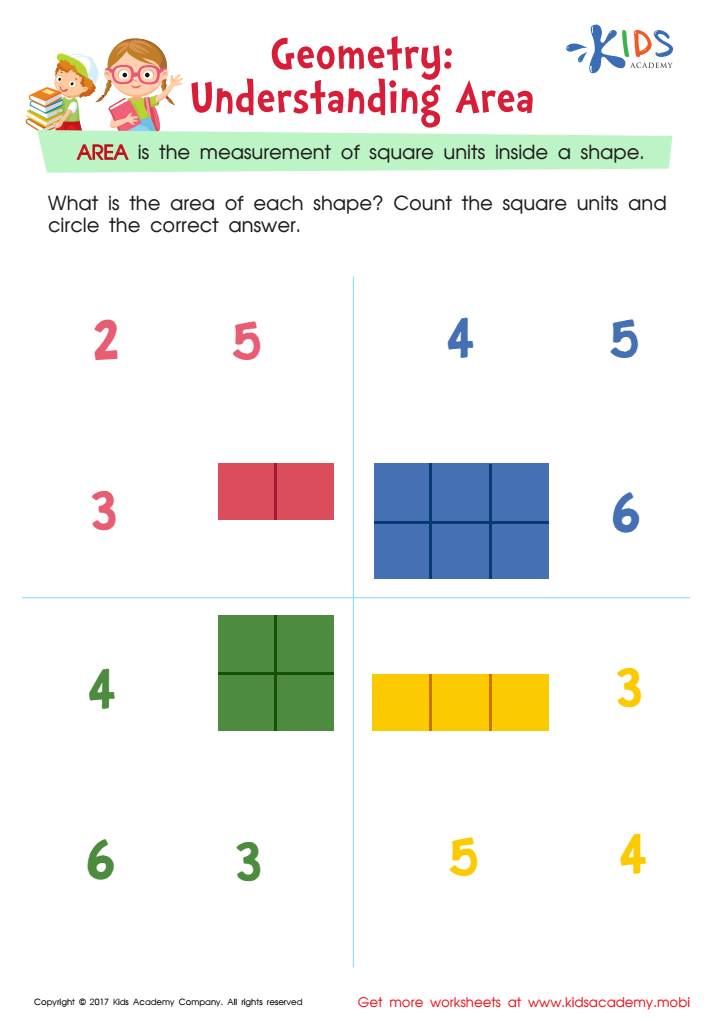
Understanding Area Worksheet
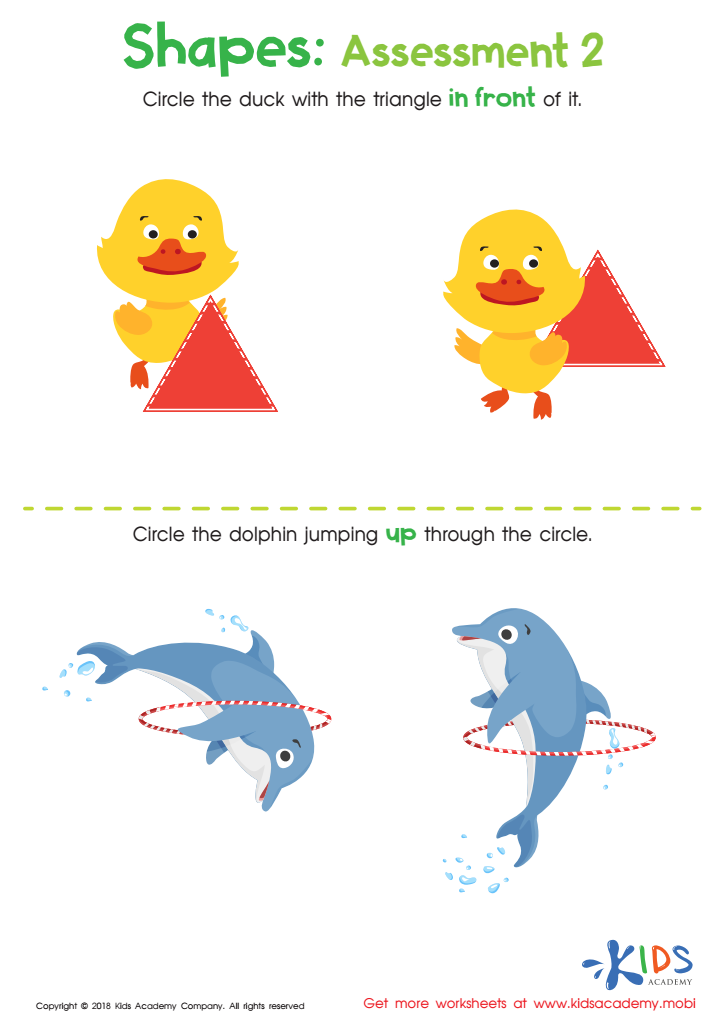
Geometry – Assessment 2 Worksheet








Spatial reasoning is a crucial cognitive skill that underpins a child’s ability to understand and interact with the world around them. It involves visualizing and manipulating shapes, measuring distances, and comprehending spatial relationships, which are fundamental aspects of geometry. Parents and teachers should care about fostering this skill because it plays a significant role in various academic disciplines and everyday life.
Firstly, proficient spatial reasoning enhances success in math, particularly in geometry and algebra, where visualizing problems is essential. Research demonstrates that children who develop strong spatial skills tend to excel in STEM (science, technology, engineering, and mathematics) fields, which are increasingly important in our technology-driven society.
Moreover, spatial reasoning fosters important life skills, such as critical thinking and problem-solving. These abilities are vital in daily tasks, like navigating spaces or organizing information in a cohesive manner. Encouraging activities like puzzles, building with blocks, or drawing shapes can both engage children’s interest and strengthen spatial skills.
In essence, prioritizing spatial reasoning in early education empowers children with the tools they need for academic success and practical life management, shaping them into capable and adaptable individuals. By recognizing the value of this skill, parents and teachers can play a pivotal role in a child's development.








