Understanding quadrilaterals Geometry Worksheets
4 filtered results
-
From - To
Explore our "Understanding Quadrilaterals Geometry Worksheets," designed to help young learners master the properties and types of quadrilaterals with engaging and interactive activities. These worksheets provide a variety of exercises that cater to different learning styles, ensuring students can recognize, classify, and differentiate between shapes such as squares, rectangles, rhombuses, and trapezoids. Each worksheet encourages critical thinking and problem-solving skills through puzzles, matching activities, and drawing tasks that make learning fun. Ideal for classroom use or homeschooling, our worksheets are a valuable resource for building a strong foundation in geometry, helping kids gain confidence in their math abilities.
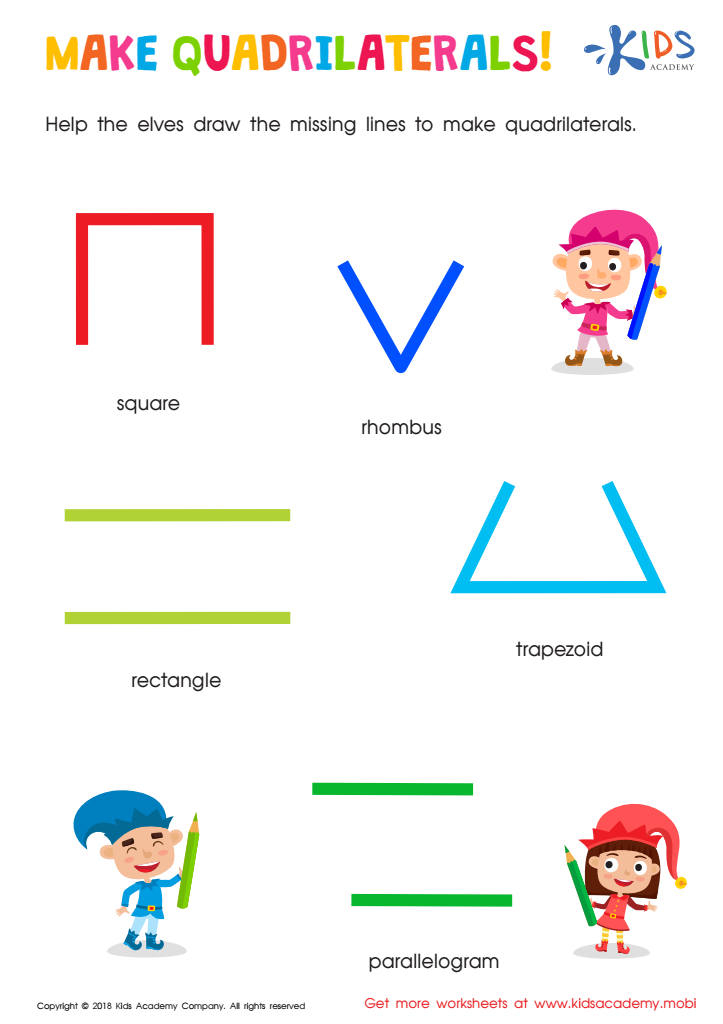
Make Quadrilaterals Worksheet
 Assign to My Students











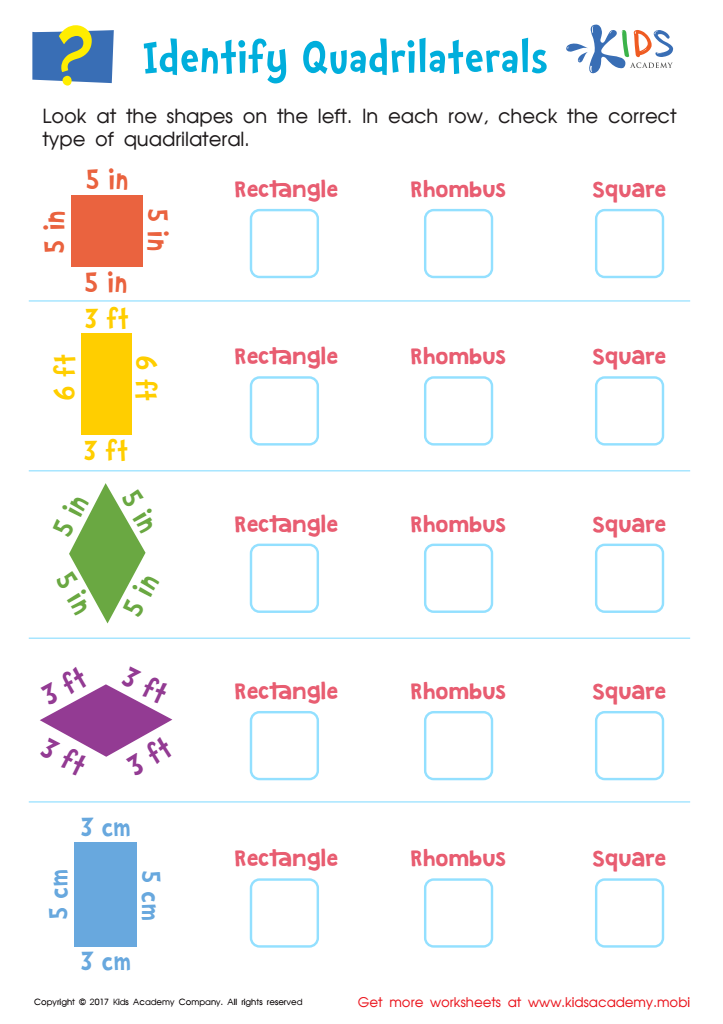
Identify Quadrilaterals Worksheet
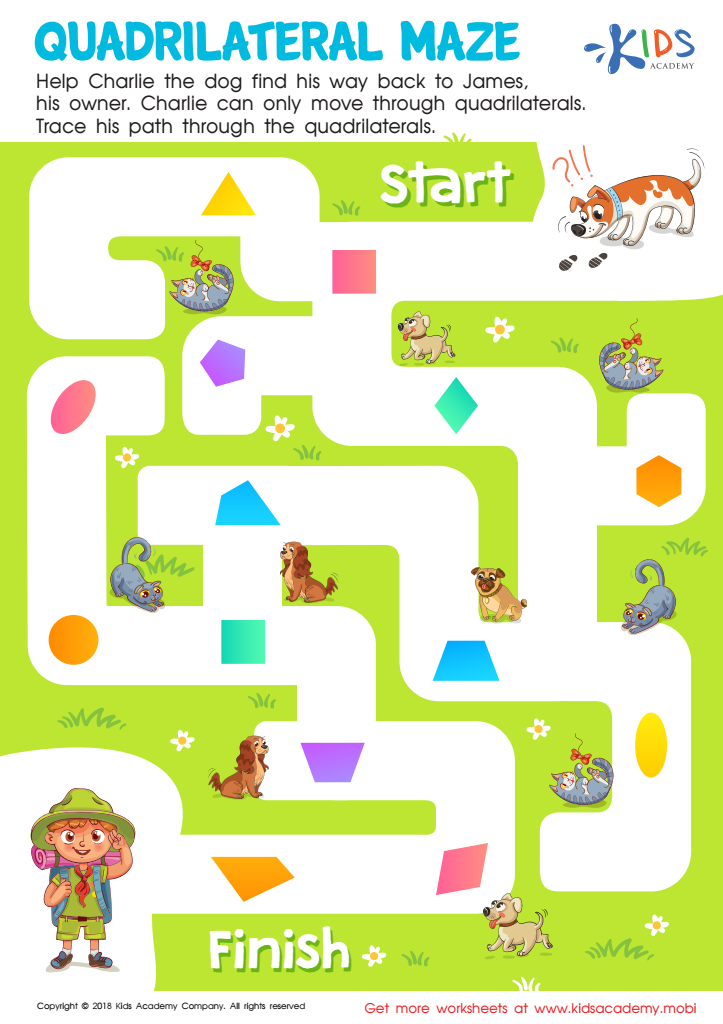
Quadrilateral Maze Worksheet
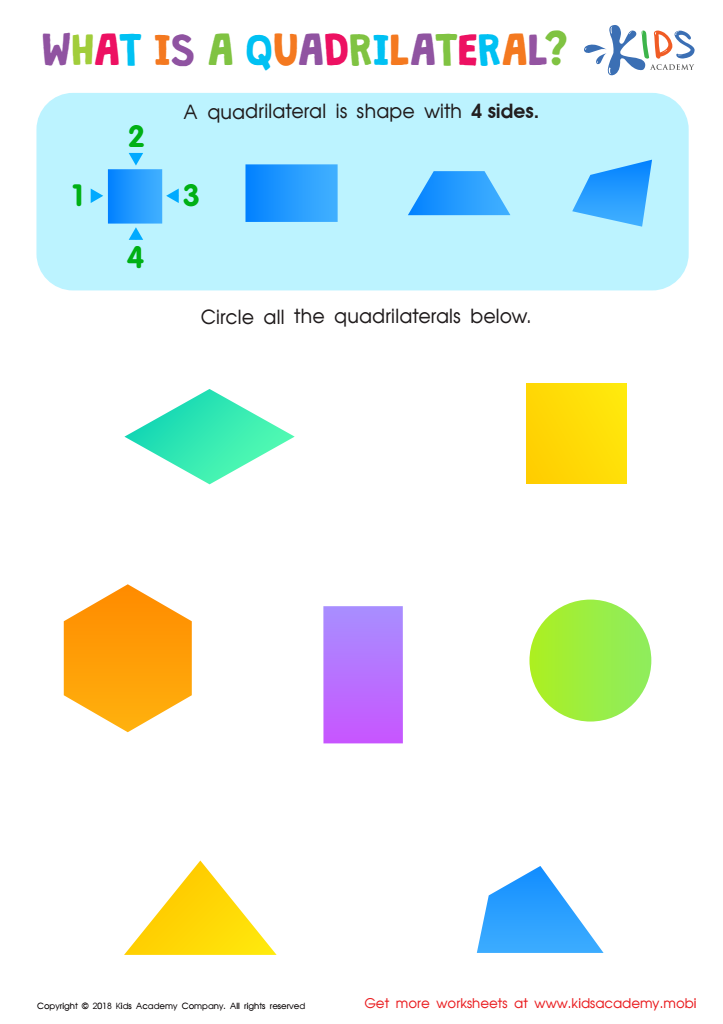
What Is a Quadrilateral? Worksheet








Understanding quadrilaterals is essential for both parents and teachers because it lays a critical foundation for a child's mathematical education. Quadrilaterals, which include shapes like squares, rectangles, trapezoids, and parallelograms, are among the basic building blocks in geometry. Knowing their properties helps students develop spatial reasoning skills, which are crucial not just in math, but in everyday life and in various professions.
For teachers, emphasizing quadrilaterals in lessons ensures that students grasp geometry’s key concepts, promoting critical thinking and problem-solving abilities. Effective understanding also lends itself to more complex topics later, like polygons and advanced geometry.
From a parental perspective, understanding quadrilaterals allows for better support of children’s homework and reinforces the relevance of math in real life, such as in architecture, engineering, and art. Engaging in activities that involve these shapes—like measuring room dimensions or creating art projects with different quadrilaterals—can strengthen children's learning. Ultimately, fostering an appreciation for geometry, beginning with quadrilaterals, is essential for holistic cognitive development. It opens pathways for academic success and prepares children for challenges in higher education and their future careers.








