Visual representation comprehension Geometry Worksheets
3 filtered results
-
From - To
Enhance your child's understanding of geometry with our Visual Representation Comprehension Geometry Worksheets! These engaging resources are designed to help young learners grasp geometric concepts through visual aids, encouraging spatial awareness and critical thinking. varje worksheet presents colorful diagrams and interactive exercises that make learning enjoyable and effective. Students will explore shapes, angles, and spatial reasoning, building a solid foundation for future math skills. Perfect for classrooms or at-home practice, these worksheets foster independent learning and boost confidence in geometry. Discover the power of visual learning and watch your child's math skills flourish! Access our printable worksheets today!
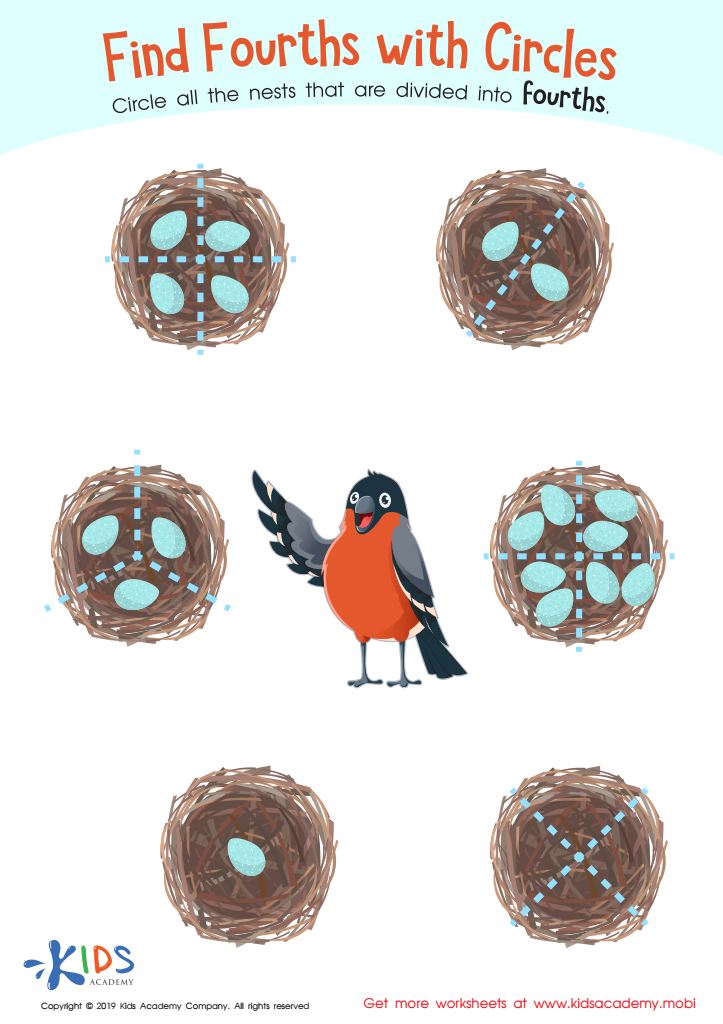
Find Fourths Circles Worksheet
 Assign to My Students











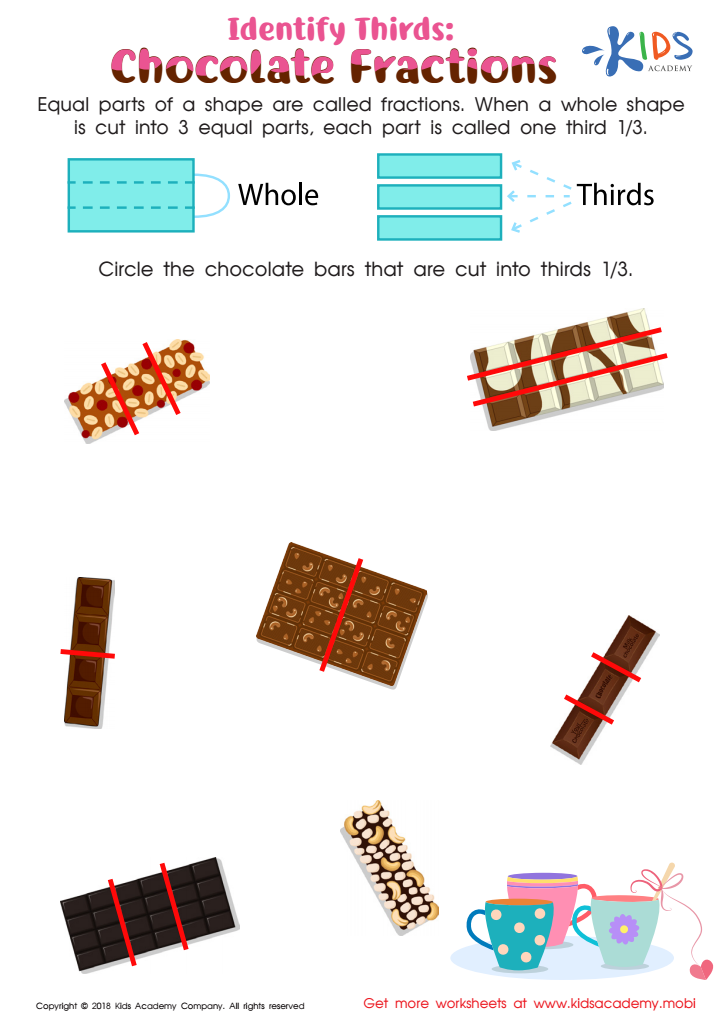
Identify Thirds: Chocolate Fractions Worksheet
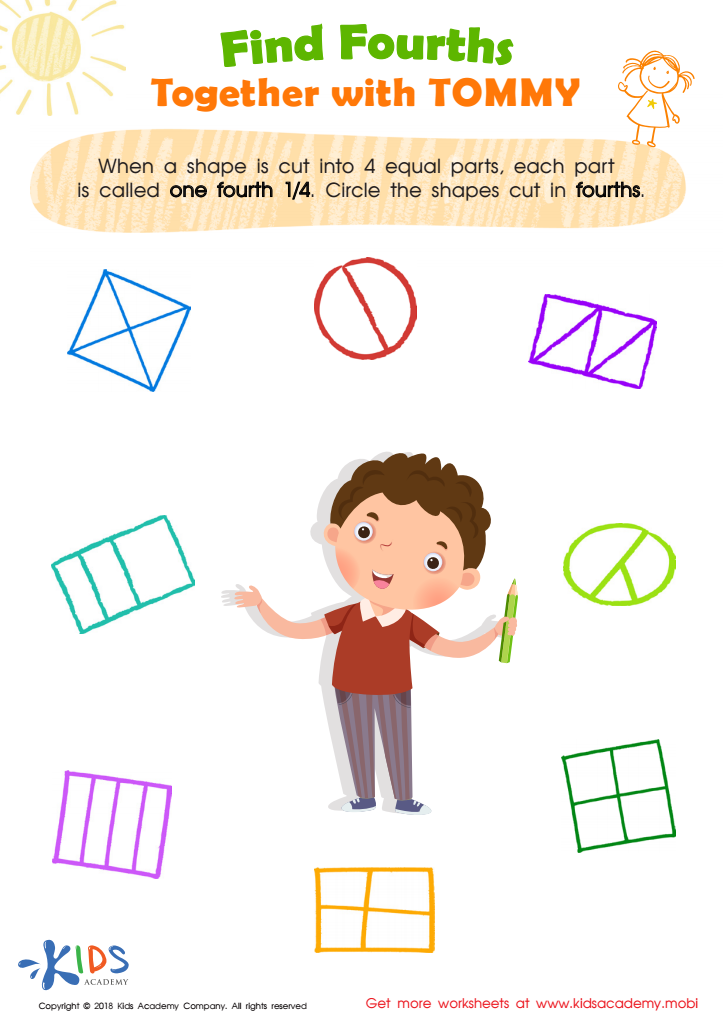
Find Fourths Together with Tommy Worksheet








Visual representation comprehension in geometry is crucial for young learners as it lays the foundation for spatial reasoning skills. When parents and teachers prioritize this aspect of learning, they help students grasp geometric concepts more effectively. Understanding shapes, sizes, and the relationships between objects enhances cognitive development and problem-solving abilities.
In early education, geometry is not just about memorizing shapes. It involves recognizing patterns, understanding symmetry, and visualizing transformations. These skills are vital for later success in math and sciences and contribute to critical thinking and creativity.
Moreover, engaging children with visual representations—through drawings, models, and technology—makes learning more interactive and enjoyable. This hands-on approach caters to diverse learning styles, ensuring that all students can connect with the material.
Teachers and parents who focus on visual comprehension also empower students to apply geometric concepts in real-world contexts, fostering a deeper appreciation for mathematics in everyday life.
In summary, emphasizing visual representation in geometry helps children develop essential skills that are fundamental to their overall academic success and personal growth. By nurturing this comprehension, parents and teachers prepare students for future challenges in learning and problem-solving.








