Recognizing Patterns Numbers Worksheets
3 filtered results
-
From - To
Unlock your child's mathematical potential with our “Recognizing Patterns Numbers Worksheets”! Designed for early learners, these engaging worksheets help students identify and understand numerical patterns, a fundamental skill in building a strong math foundation. Through fun and interactive activities, children will explore sequences, repetitions, and trends using colorful illustrations and relatable scenarios. Our user-friendly materials are perfect for classroom use or at-home learning, ensuring that kids develop critical thinking and problem-solving skills in a playful manner. Promote confidence in math and make learning enjoyable with our carefully crafted worksheets, ideal for reinforcing recognizing patterns in numbers and enhancing overall numerical literacy!
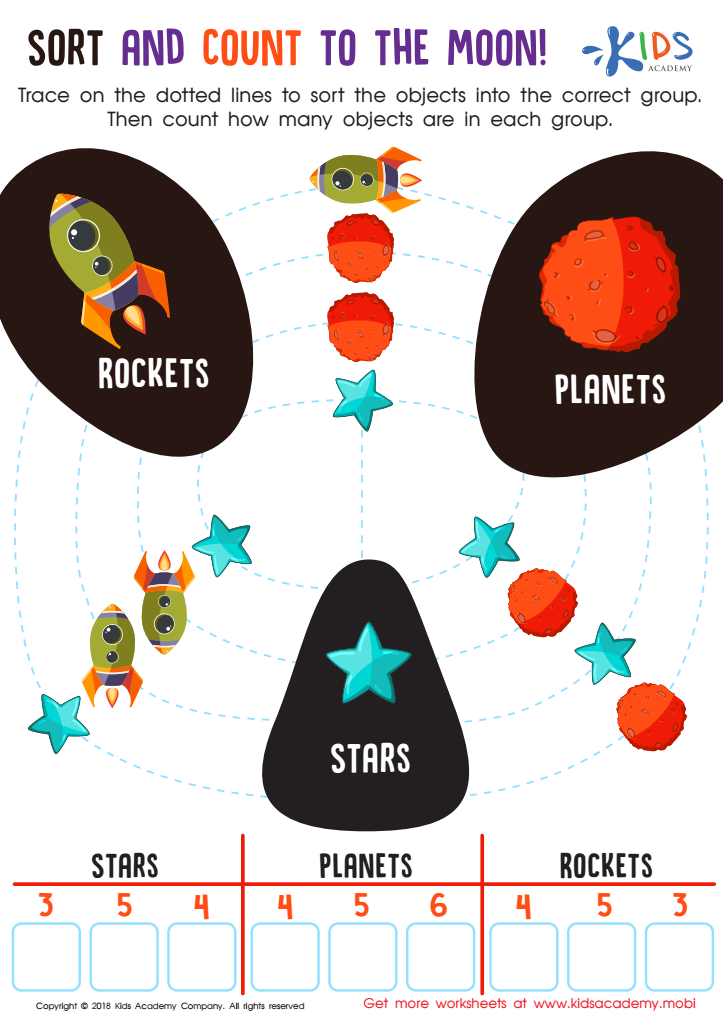
Sort and Count to the Moon Worksheet
 Assign to My Students
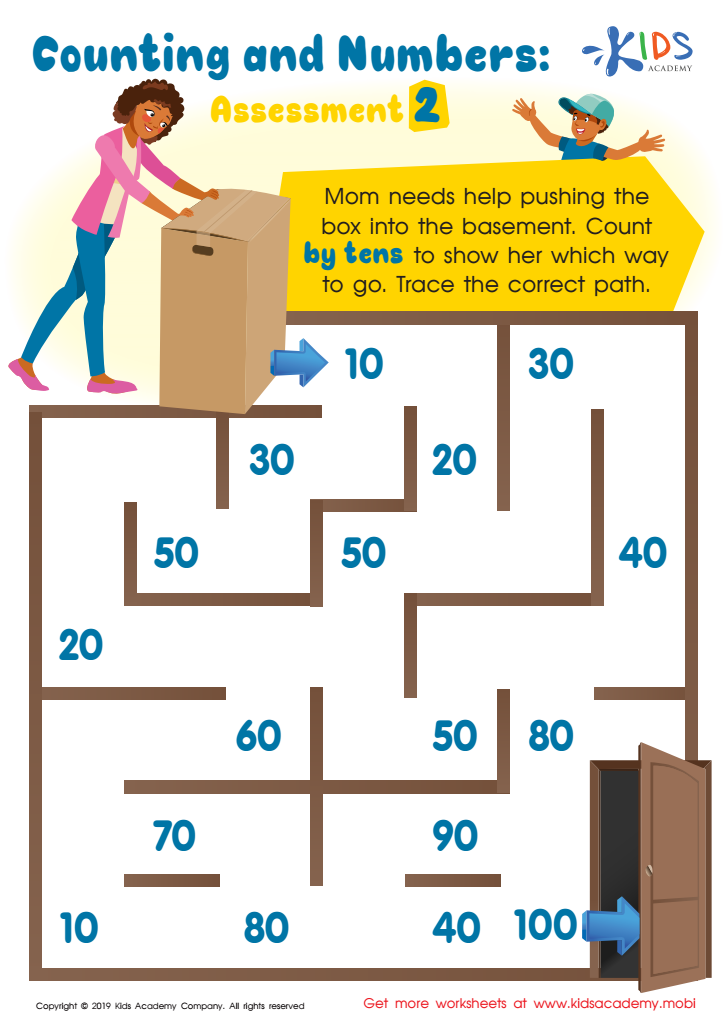
Counting and Numbers: Assessment 2 Worksheet
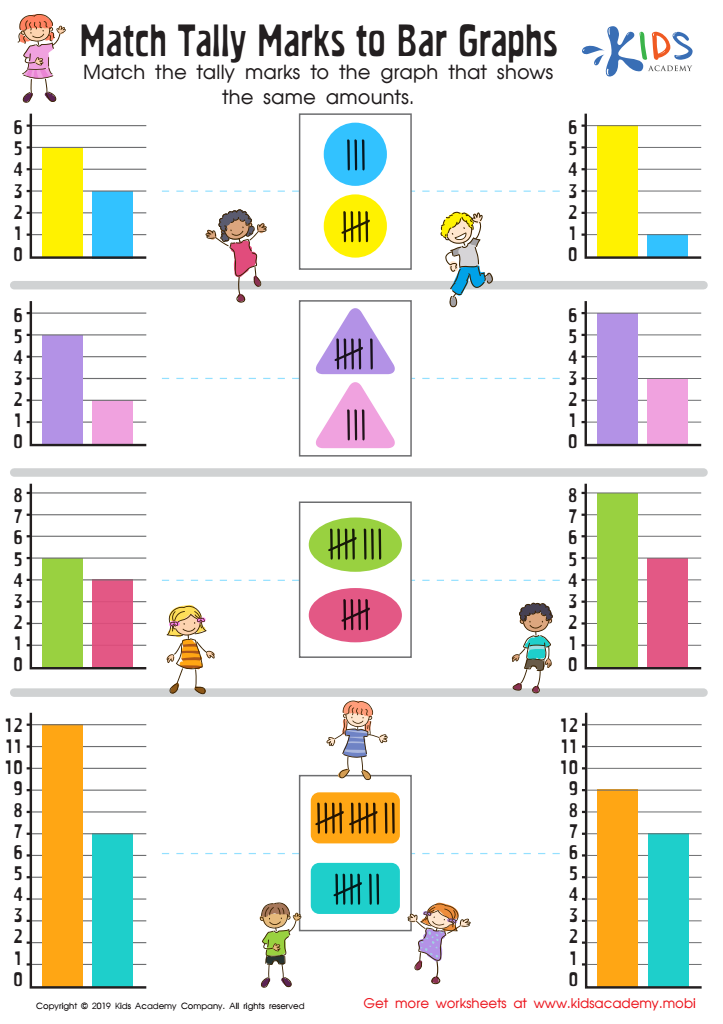
Match Tally Marks to Bar Graphs Worksheet








Recognizing patterns in numbers is a fundamental skill that lays the groundwork for mathematical understanding and critical thinking in young learners. For parents and teachers, fostering this skill is crucial, as it enhances children's ability to see the world through a mathematical lens. When children learn to identify patterns, they develop stronger problem-solving skills, which are vital not just in math, but across various subjects and daily life applications.
Patterns help children make predictions and understand relationships between numbers, which are essential for more complex concepts such as algebra, statistics, and geometry. By engaging in activities that encourage pattern recognition, educators and parents can cultivate a child's analytical skills, boosting their confidence in mathematics.
Furthermore, recognizing patterns fosters creativity and logical reasoning. Children who understand how to make connections between ideas can approach problems in innovative ways. Parents can further support this development at home through games, puzzles, and real-life pattern recognition activities, enriching their child's learning experience. Ultimately, cultivating pattern recognition in young learners prepares them not just for academic success, but for skilled decision-making in their everyday lives, proving invaluable as they progress in their education and beyond.








