Understanding comparisons Numbers Worksheets
3 filtered results
-
From - To
Welcome to our "Understanding Comparisons Numbers Worksheets" page! Here, young learners can enhance their math skills through engaging and interactive worksheets designed to teach the concept of comparisons. Our resources focus on comparing numbers, helping children understand the ideas of "greater than," "less than," and "equal to." Each worksheet is crafted to promote critical thinking while making learning fun and enjoyable. Ideal for preschool and early grade students, these worksheets include colorful visuals and relatable examples, making it easy for kids to grasp foundational math concepts. Start your child's journey toward confidence in numbers and comparisons today!
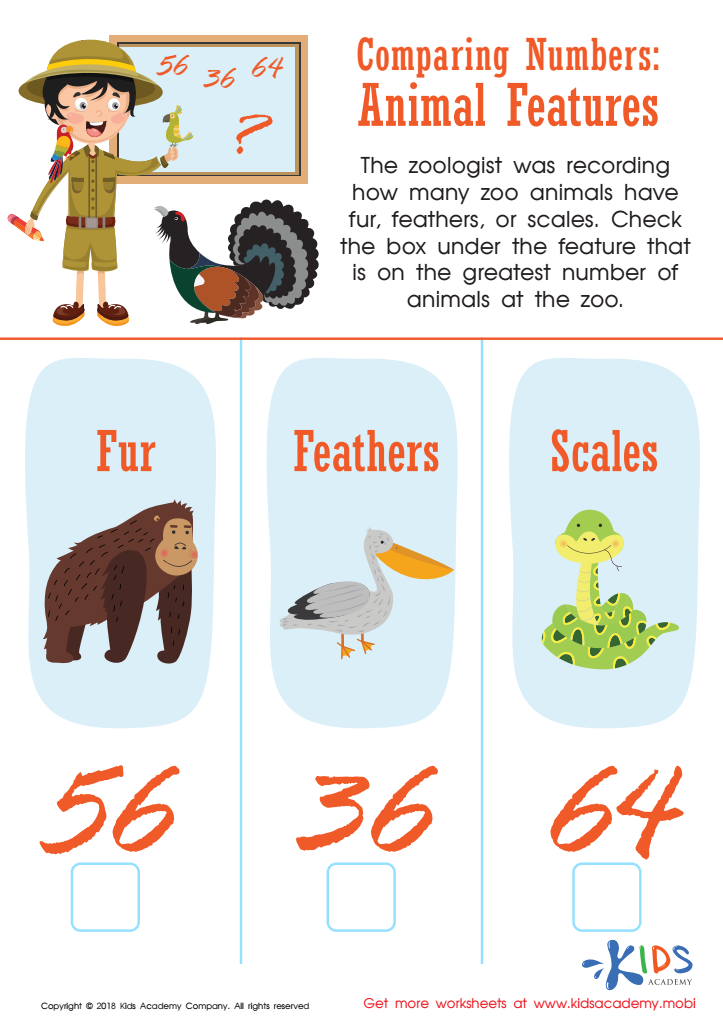
Animal Features Worksheet
 Assign to My Students
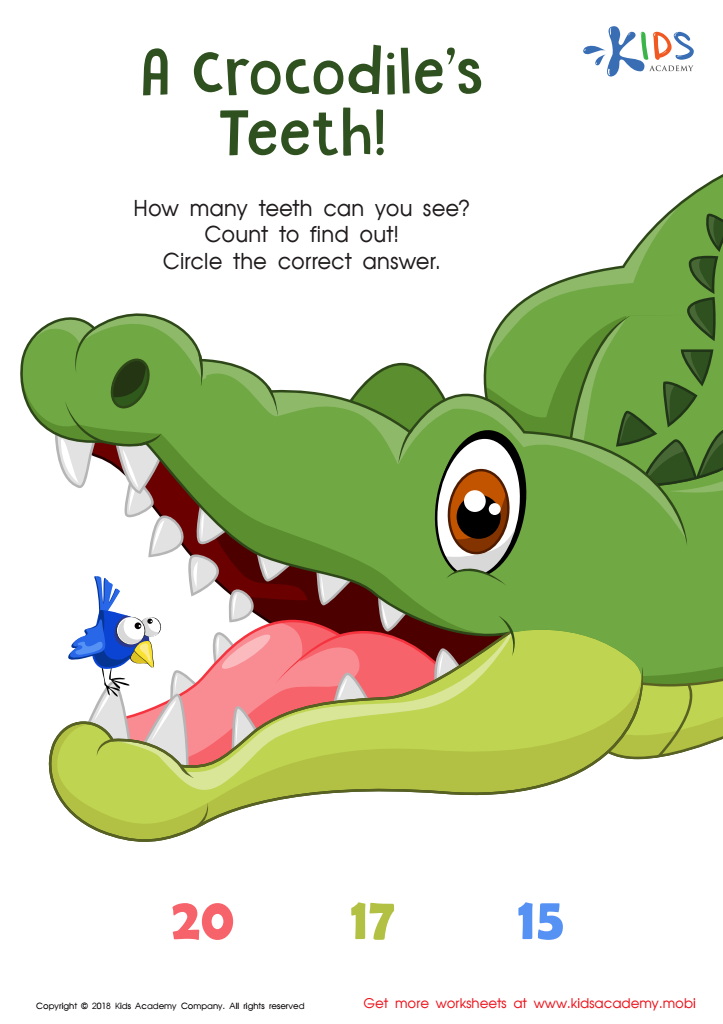
A Crocodile's Teeth Worksheet
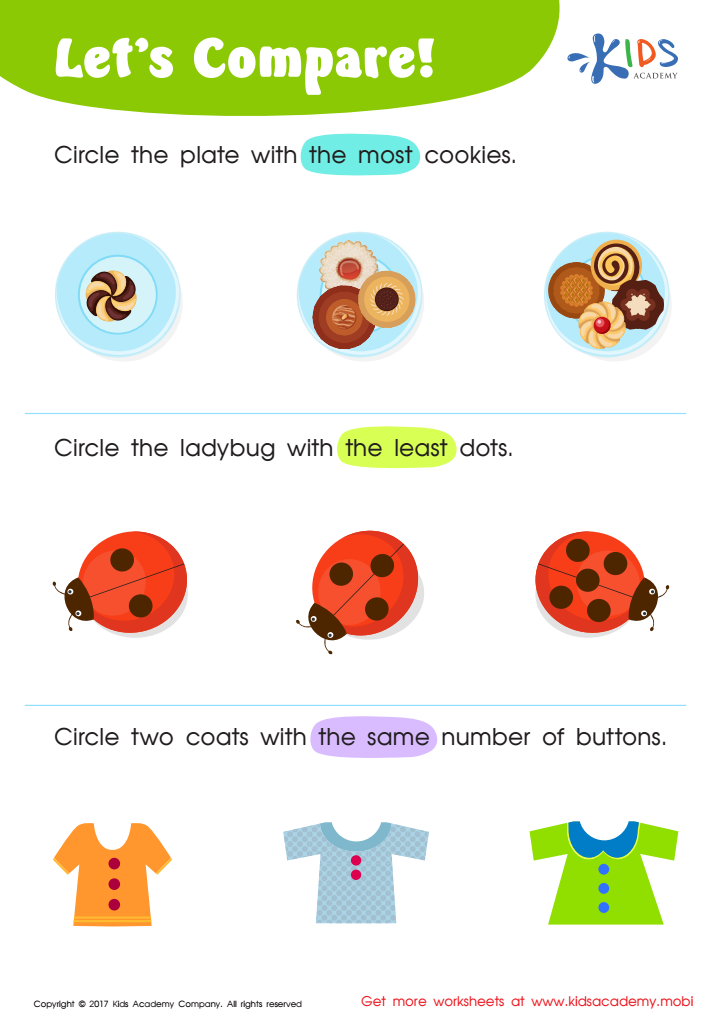
Matching: Classifying Toys by Size Worksheet







Understanding comparisons and numbers is crucial for both parents and teachers as it lays the foundation for a child's mathematical skills and critical thinking abilities. From a young age, children encounter situations that require them to compare quantities, sizes, and values, which help them make sense of the world around them.
First, grasping the concept of numbers and comparisons aids in developing essential skills such as problem-solving and logical reasoning. When children learn to compare groups—identifying which group has more or less—they enhance their ability to analyze information critically. This skill extends beyond math, influencing their decision-making in everyday life.
Second, it supports their academic growth. Mastery of comparisons allows children to tackle more complex mathematical concepts later, like addition, subtraction, and even fractions. This solid foundational skill is also crucial for standardized testing scenarios.
Lastly, fostering an understanding of numbers helps children build confidence in their abilities, promoting a positive attitude toward learning. Engaged parents and educators can create supportive environments that encourage children to explore comparisons through games and interactive activities, making the learning process enjoyable. This holistic approach not only nurtures students academically but also socially and emotionally, preparing them for future challenges.








