Understanding quantity Numbers Worksheets
4 filtered results
-
From - To
Understanding Quantity Numbers Worksheets are designed to help young learners grasp the concept of quantity, enhancing their number sense skills. These engaging worksheets are perfect for children in early grades as they provide a hands-on approach to understanding different quantities. Each activity encourages kids to count, compare, and recognize numbers in various contexts, making foundational math concepts easy and fun to learn. Through colorful illustrations and interactive exercises, children develop critical thinking and problem-solving abilities. Ideal for classroom use or homeschooling, these worksheets ensure foundational math skills are built with confidence and enjoyment.
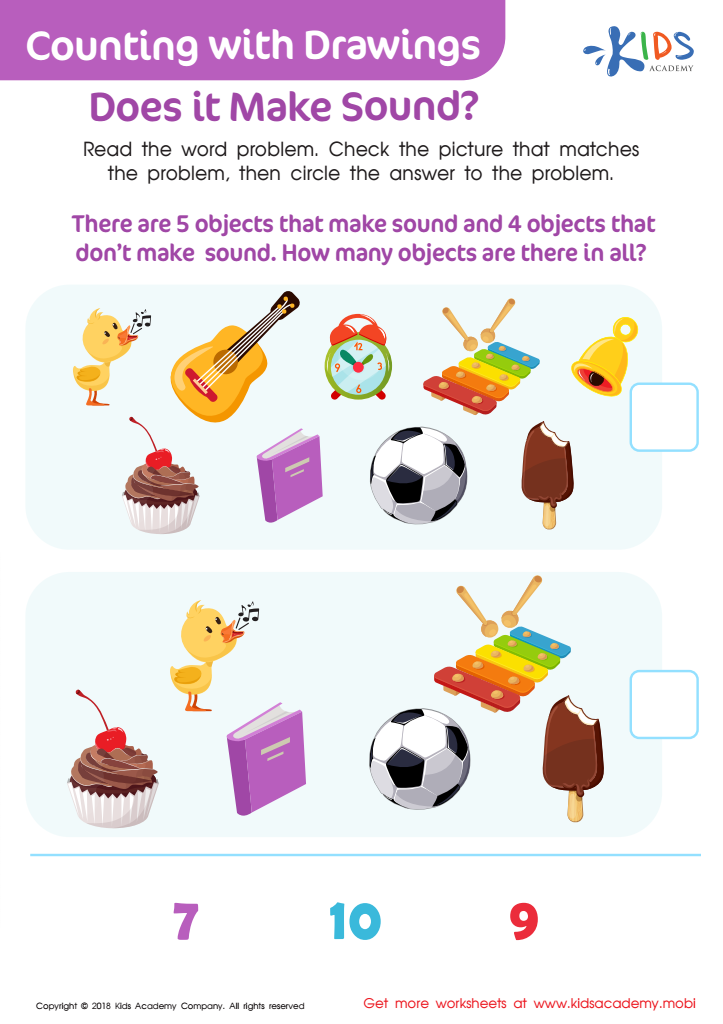
Counting With Drawings. Does It Make Sound? Worksheet
 Assign to My Students
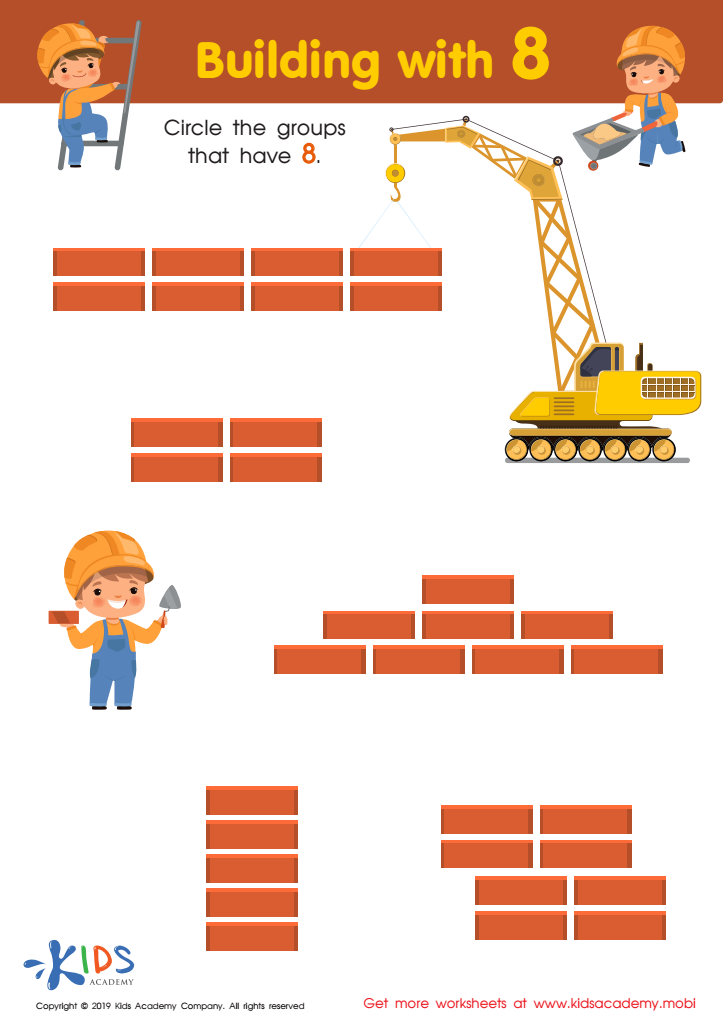
Building with 8 Worksheet
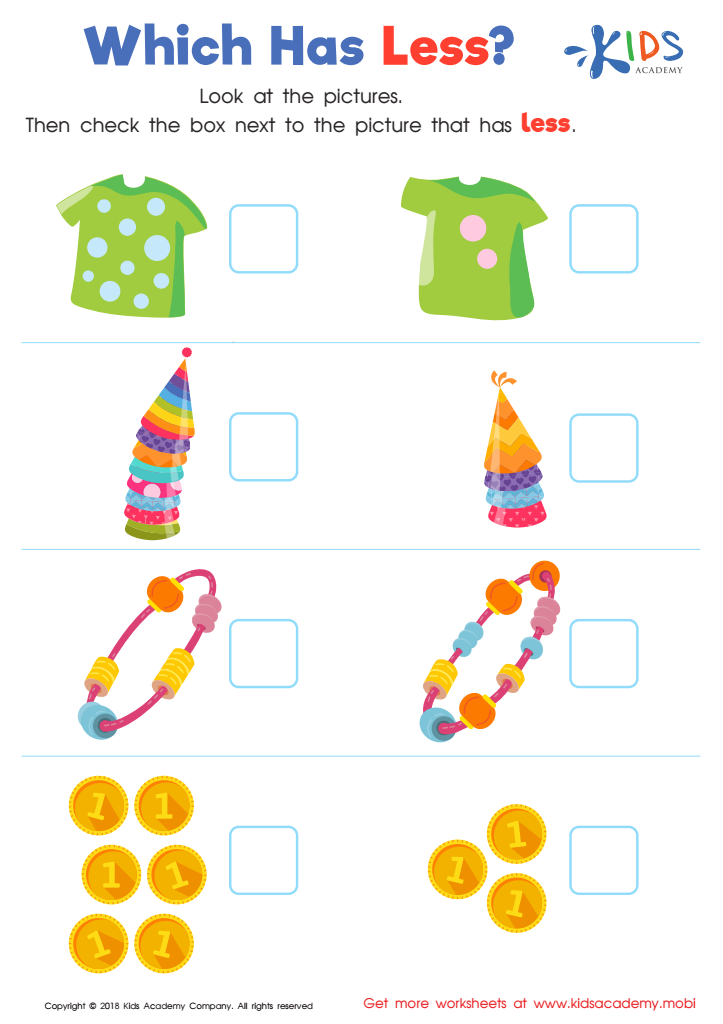
Which Has Less? Worksheet
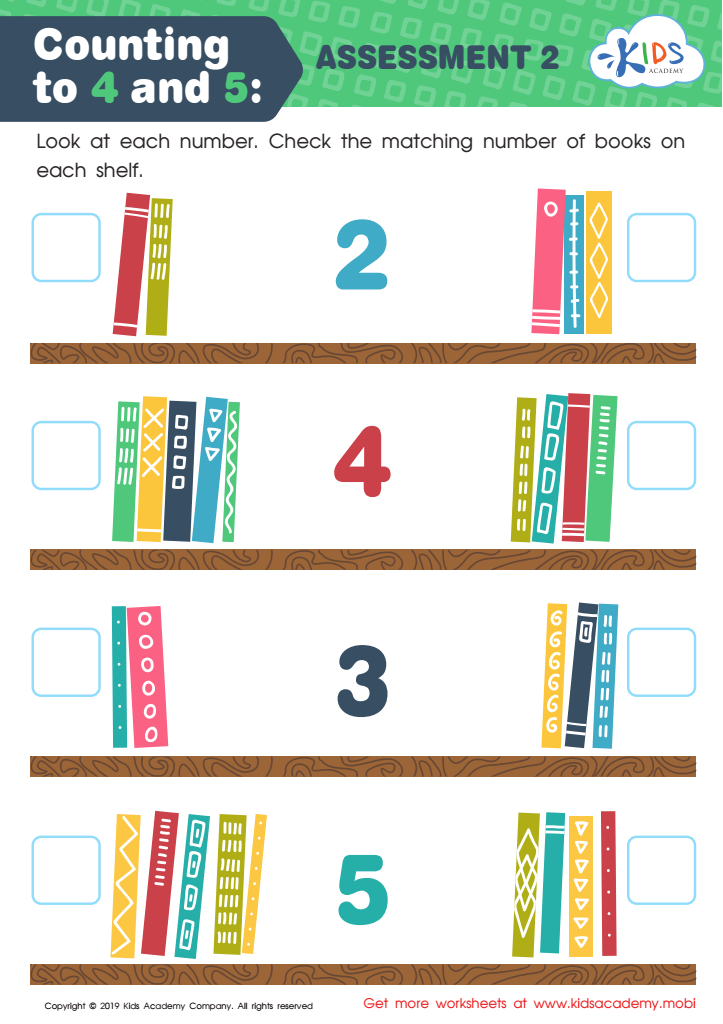
Counting to 4 and 5: Assessment 2 Worksheet








Parents and teachers play a crucial role in shaping a child's foundational skills, and understanding quantity numbers is a critical component of early education. Quantity numbers refer to the ability to grasp numerical values, count, measure, and compare amounts—skills integral to practical and academic success.
Firstly, comprehending quantity numbers strengthens mathematical understanding, which is essential for problem-solving and logical reasoning. Kids who can accurately perceive and manipulate numbers are better equipped to tackle math-related tasks, from simple addition to complex algebra.
Secondly, these skills extend beyond academics into everyday life. Children who understand quantities can make sense of their world, like estimating time, sharing toys, or grasping the concept of money. This boosts their confidence and independence in handling real-life scenarios.
Additionally, early mastery of quantity numbers sets a strong foundation for future learning. Research indicates that early math ability is a strong predictor of later academic achievement. By nurturing these skills, parents and teachers ensure that children develop a positive attitude towards learning, fostering a growth mindset.
Finally, engaging activities involving numbers can enhance parent-child or teacher-student bonding, making learning a joyful and shared experience. By emphasizing the importance of quantity numbers, parents and teachers contribute significantly to a child's holistic development and lifelong success.








