Analog clock reading Math Worksheets
4 filtered results
-
From - To
Enhance your child's understanding of time with our Analog Clock Reading Math Worksheets! Designed for early learners, these engaging and interactive worksheets help kids master the art of telling time. Our resources cover essential skills, such as reading analog clocks, understanding hours and minutes, and calculating elapsed time. Perfect for classroom activities or at-home practice, these worksheets foster a love for math while building confidence in time-telling skills. With colorful illustrations and age-appropriate exercises, your child will enjoy exploring the concept of time in a fun and educational way. Join us in making learning about time exciting and enjoyable!
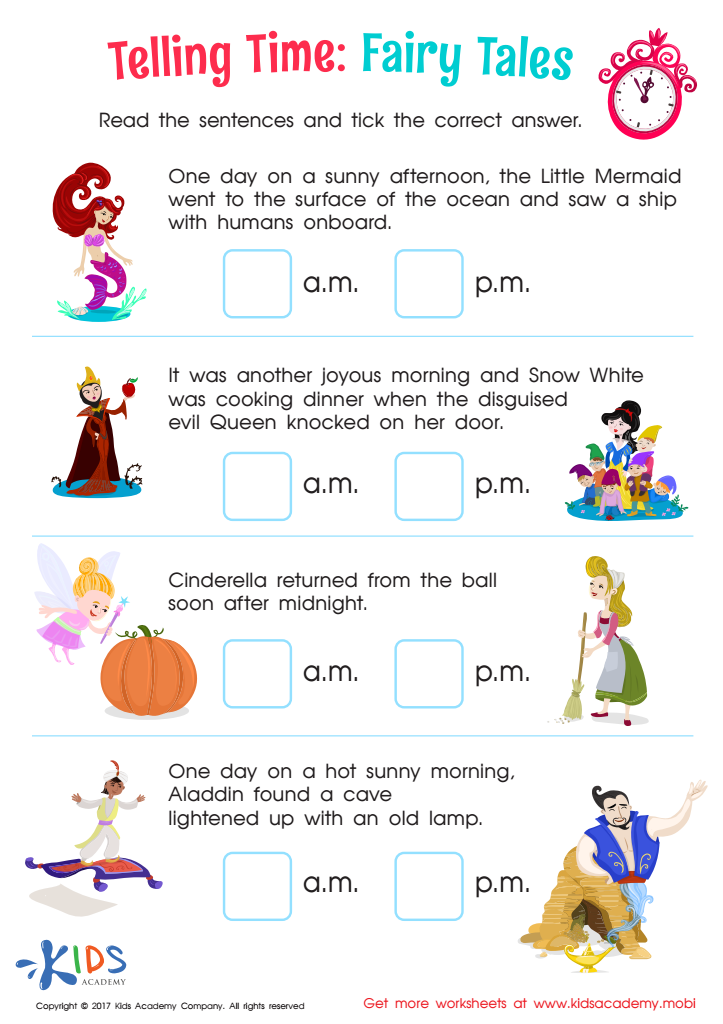
Telling Time: Fairy Tales Worksheet
 Assign to My Students
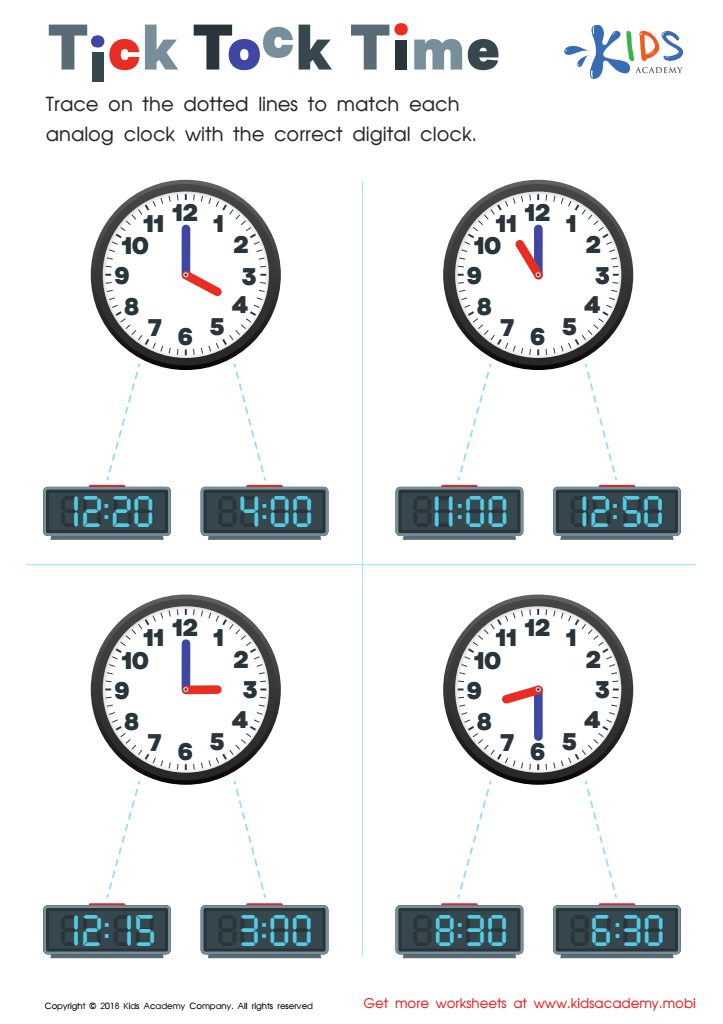
Tick Tock Time Worksheet
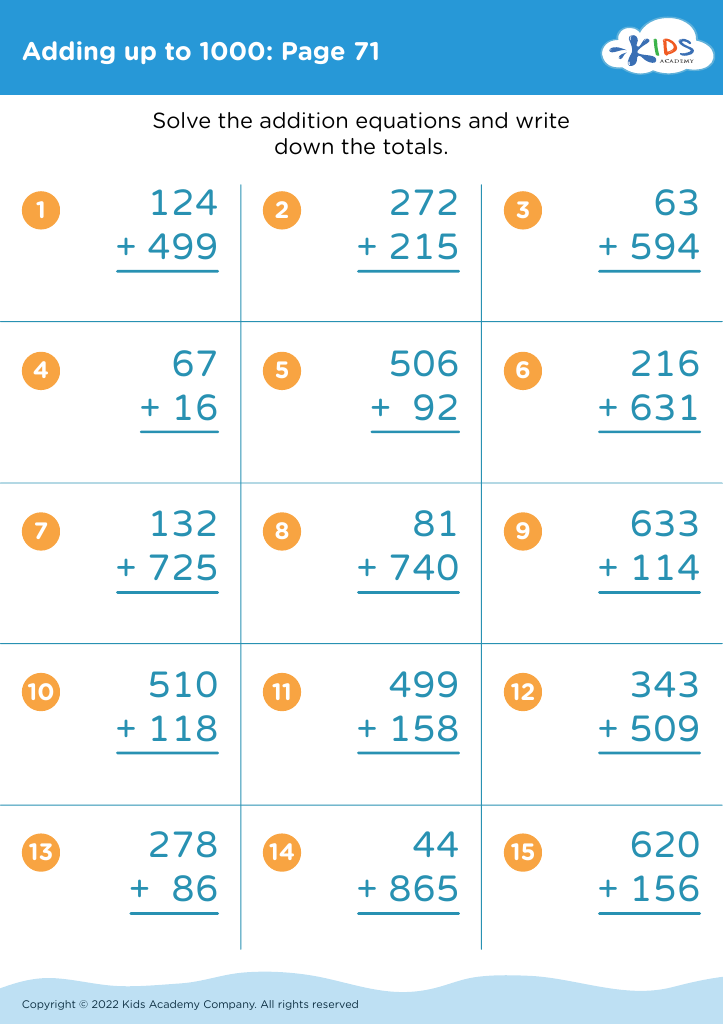
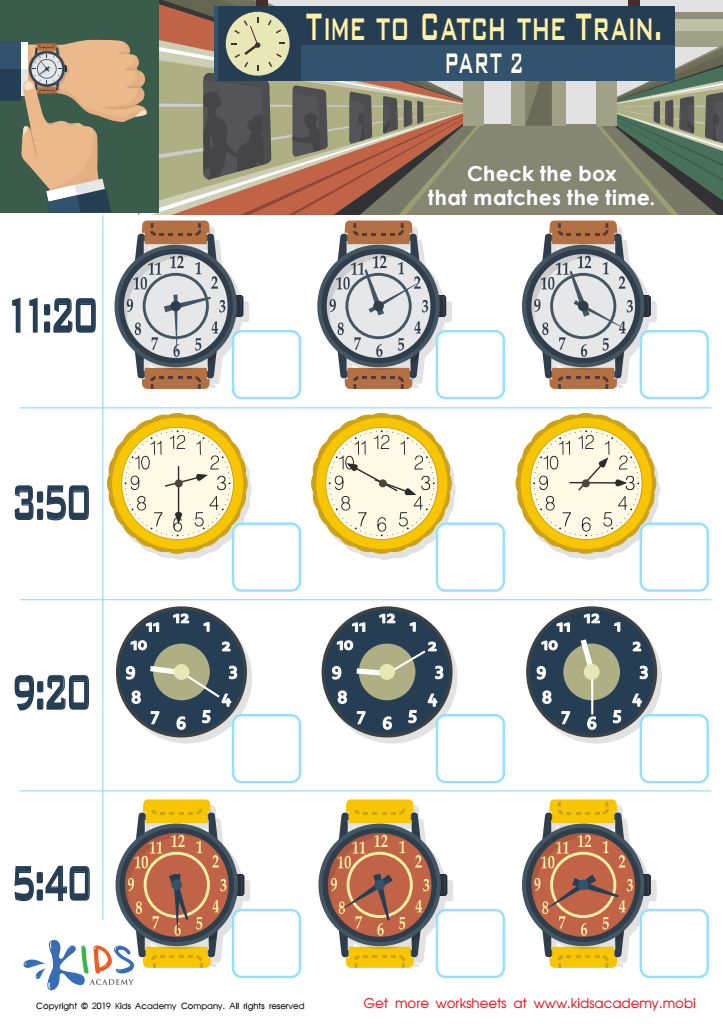
Time to Catch the Train Part 2 Worksheet





Understanding how to read an analog clock is a fundamental skill that extends beyond merely telling time. For parents and teachers, fostering this skill in children is vital for several reasons. Firstly, it enhances spatial awareness and develops critical analytical skills. Reading an analog clock requires children to engage with concepts of geometry and fractions; the clock face is a dynamic representation of both, where each hour and minute equals a division of time.
Furthermore, learning analog time helps children grasp the concept of passing time, which is essential in planning and organizational skills. This understanding can contextualize daily routines, improving their ability to manage time effectively—crucial in an age of increasing structure and busyness.
Moreover, reinforcing skills in analog clock reading encourages intergenerational connections, providing a platform for families to share traditions and values associated with timekeeping. In a technology-driven world where digital clocks dominate, mastering this skill ensures that children do not lose touch with a vital aspect of traditional time-telling, thus enriching their educational journey. Overall, making time for time-telling empowers children with vital life skills that will serve them well throughout their academic careers and beyond.








