
Associative learning Math Worksheets
5 filtered results
Difficulty Level
Grade
Age
-
From - To
Subject
Activity
Standards
Discover the power of Associative Learning Math Worksheets at Kids Academy! Designed to make learning math fun and engaging, these worksheets help children understand critical math concepts through repetition and connection. By associating new information with familiar concepts, students build a strong foundation in mathematical thinking. Ideal for early learners, these worksheets cover a range of topics including addition, subtraction, multiplication, and division. With vibrant visuals and interactive activities, kids stay motivated and excited to learn. Empower your child’s math journey with Kids Academy’s Associative Learning Math Worksheets – the perfect blend of education and fun.
Favorites
With answer key
Interactive
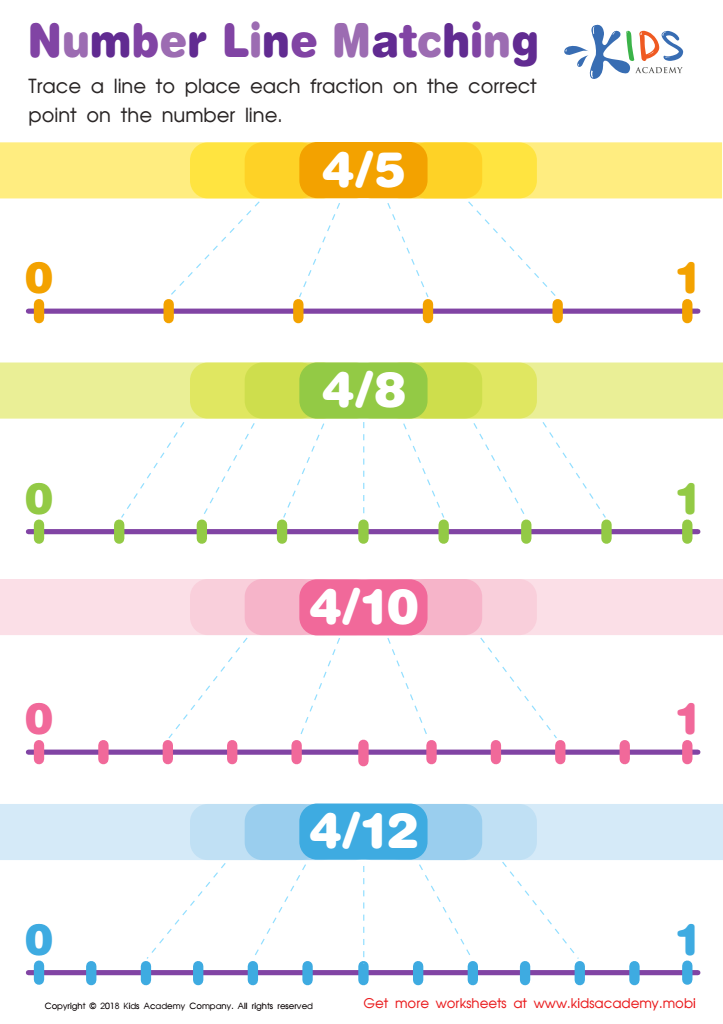
Number Line Matching Worksheet
Math can be fun! Have your child count points on the number line, then identify and trace fractions above it. It's a great way for them to learn and have some fun!
 Assign to My Students
Number Line Matching Worksheet
Worksheet
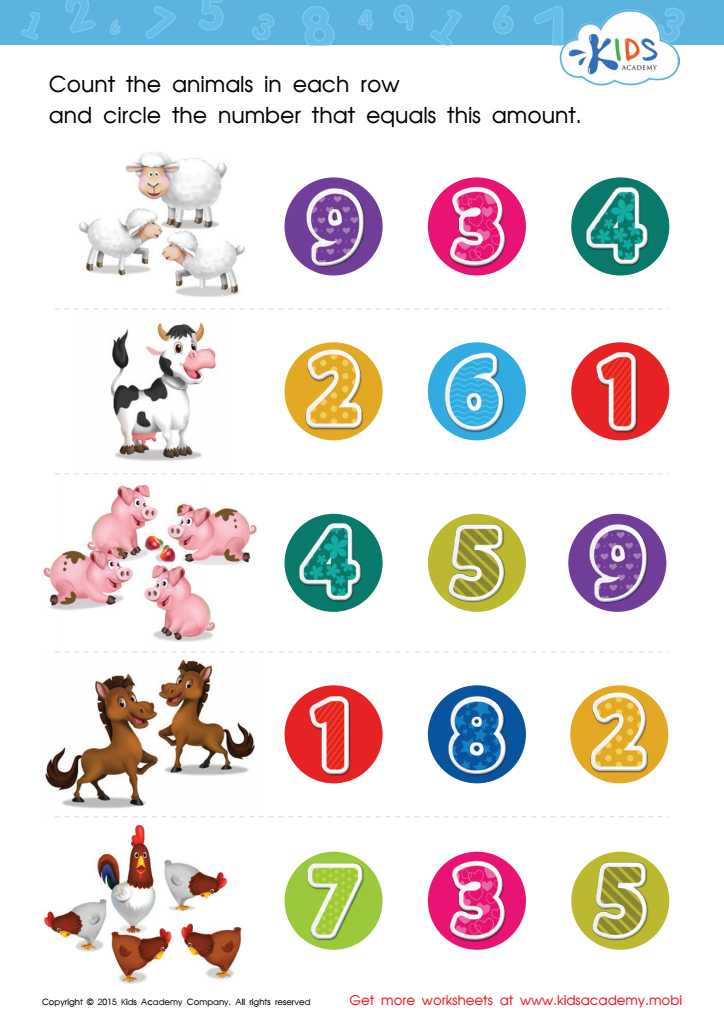
Count and Match 1 – 5 Math Worksheet
Find the colorful worksheet aimed to help your little learner develop their math skills. Count the cute animals and identify the correct numbers based on the Singapore Math method. This worksheet is a fantastic way to start your kid on their mathematical journey.
Count and Match 1 – 5 Math Worksheet
Worksheet
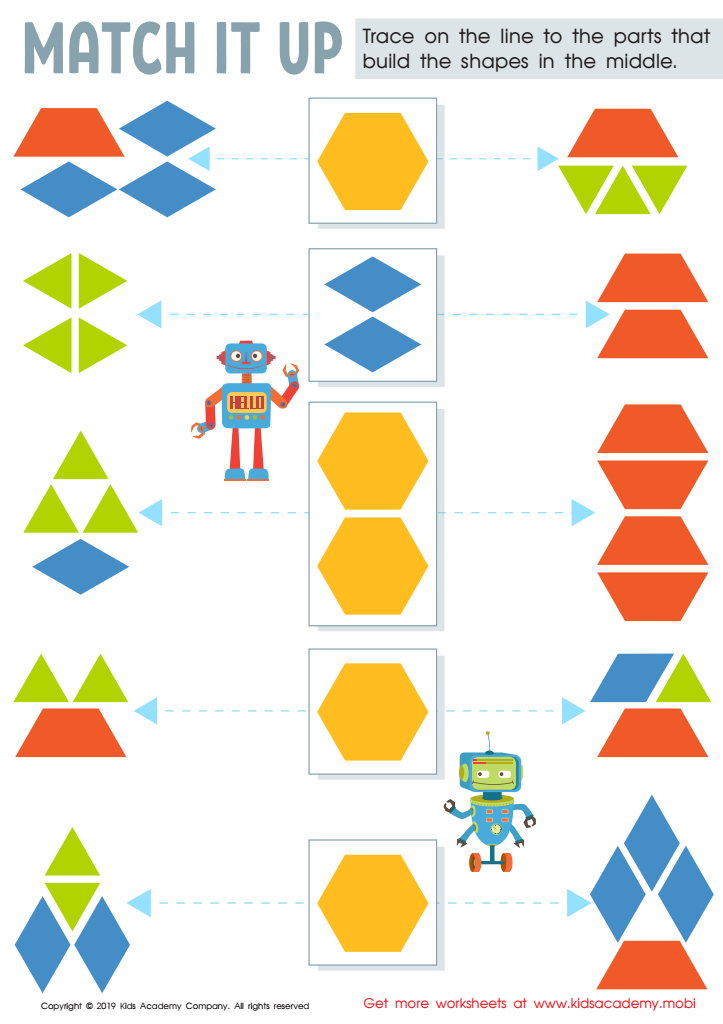
Match It up Worksheet
If your kids are into robots, they'll be thrilled to work on this worksheet. Ask them to name shapes they know, and help them draw and identify these shapes. Look at the shapes in the middle, and the sides. Finally, help your kids trace the lines to build the shapes in the middle.
Match It up Worksheet
Worksheet
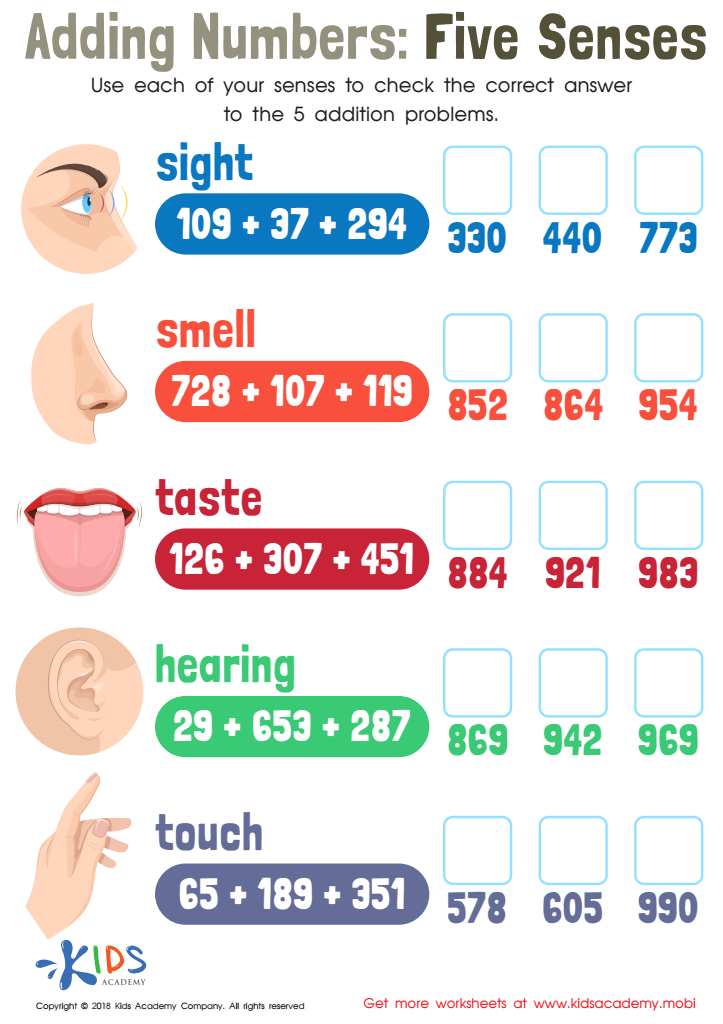
Adding Numbers: Five Senses Worksheet
Help your child identify the five senses on their body: eye, nose, tongue, ear, and skin. Explain that they're used for seeing, smelling, tasting, hearing and touching. Then, have them solve the five addition problems in the worksheet and check the correct answers.
Adding Numbers: Five Senses Worksheet
Worksheet
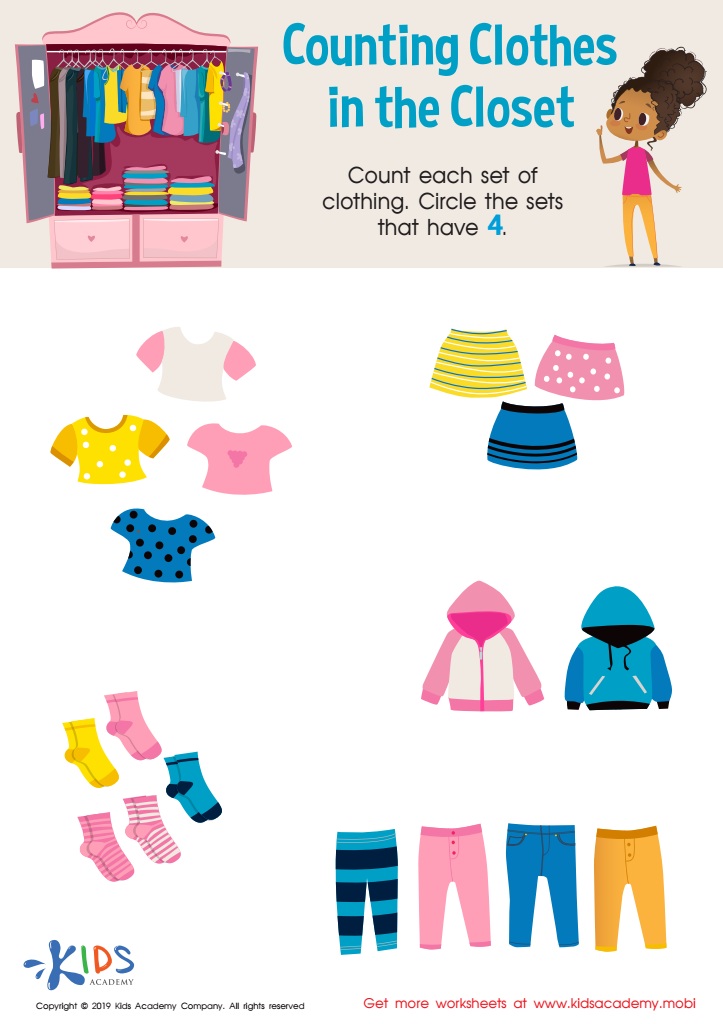
Counting Clothes Worksheet
Help your kids become better counters with fun exercises and objects they can relate to. Print out this worksheet and assist your kid in counting 5 sets of clothing. Have them circle the sets that have 4 so they can master counting small numbers. Strengthen their math skills with your help.
Counting Clothes Worksheet
Worksheet
Join Kids Academy for Free
Who is primarily going to use this learning content?





.jpg)
Associative learning in Math is crucial because it aligns with how children naturally acquire and make connections between concepts. When students learn through associations, they link new mathematical ideas with previously acquired knowledge, enhancing their memory retention and comprehension. For example, understanding the relationship between addition and multiplication can simplify problem-solving and help students approach new mathematical challenges with confidence.
For parents, engaging in associative learning with their child can turn daily routines into learning opportunities. Activities like cooking can involve measuring ingredients, which familiarizes children with fractions and volume. Playing math-related games reinforces concepts in an enjoyable and stress-free manner, developing a positive attitude toward math.
Teachers benefit from fostering an environment that encourages associative learning by integrating math concepts across various subjects. When math lessons are connected to real-world contexts or other academic areas, such as linking geometry to art through the study of shapes, students see the relevance and application of math in everyday life. This integrated learning approach can ignite curiosity and enthusiasm, making math less intimidating and more accessible.
By supporting associative learning in math, parents and teachers help build a strong foundation, ensuring that students develop vital problem-solving skills and a lifelong love for learning and exploration in mathematics.








