Discover our engaging Comparison Skills Math Worksheets, designed to enhance your child's understanding of comparing numbers and objects. These worksheets provide fun, interactive exercises that help young learners master essential comparison concepts such as greater than, less than, and equal to. With a variety of activities, including visual comparisons and number line exercises, students will develop critical thinking skills while honing their math abilities. Perfect for preschool and early elementary grades, our worksheets support educational growth through play-based learning. Equip your child with the skills they need for mathematical success and boost their confidence with our printable comparison worksheets today!

Check out this FREE Trial Lesson on Math!

Match Exactly the Same But..

Favorites
With answer key
Interactive
  • Comparison Skills
  • Math
Which one is different worksheet for preschool

Which One Is Different Worksheet

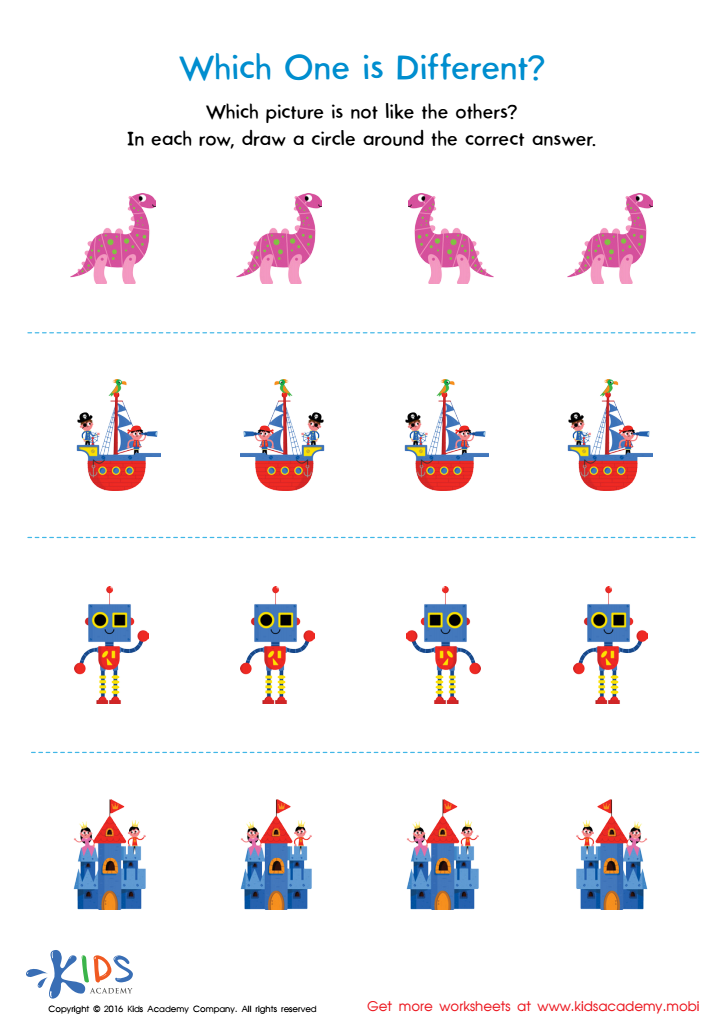
Preschoolers can hone logical reasoning and critical analysis skills with this "Which one is Different?" worksheet. Kids must look closely and pick out unique attributes of objects and images. It's a skill that can serve them throughout their lifetime.
Which One Is Different Worksheet
Worksheet
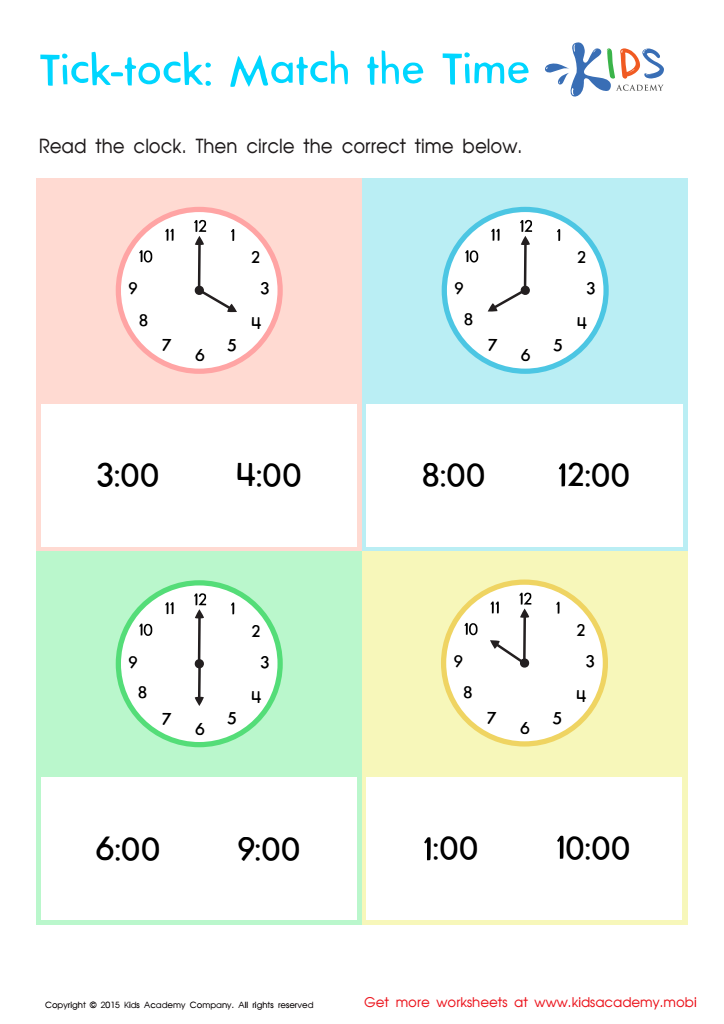
Telling The Time PDF Worksheets, Part 4

Telling The Time Worksheet: Part 4
Test your skills in telling the time! Circle the right time on 4 analog clock faces.
Telling The Time Worksheet: Part 4
Worksheet
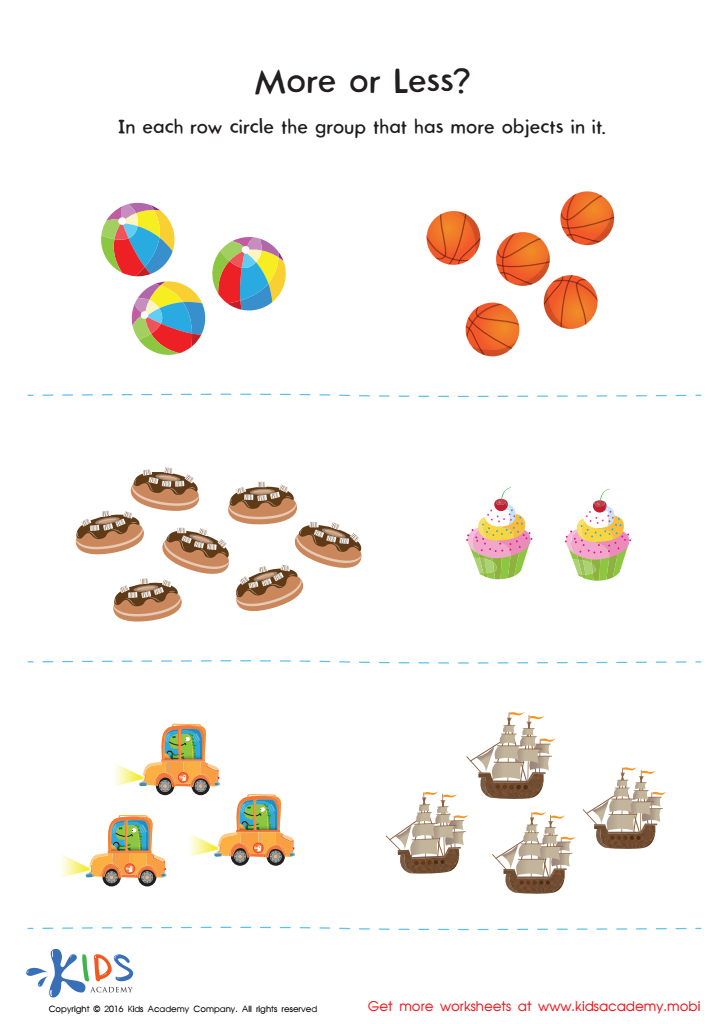
More or Less PDF Printable Worksheet

More or Less Size Worksheet

Try this "More or Less" PDF printable worksheet to help them out!
More or Less Size Worksheet
Worksheet
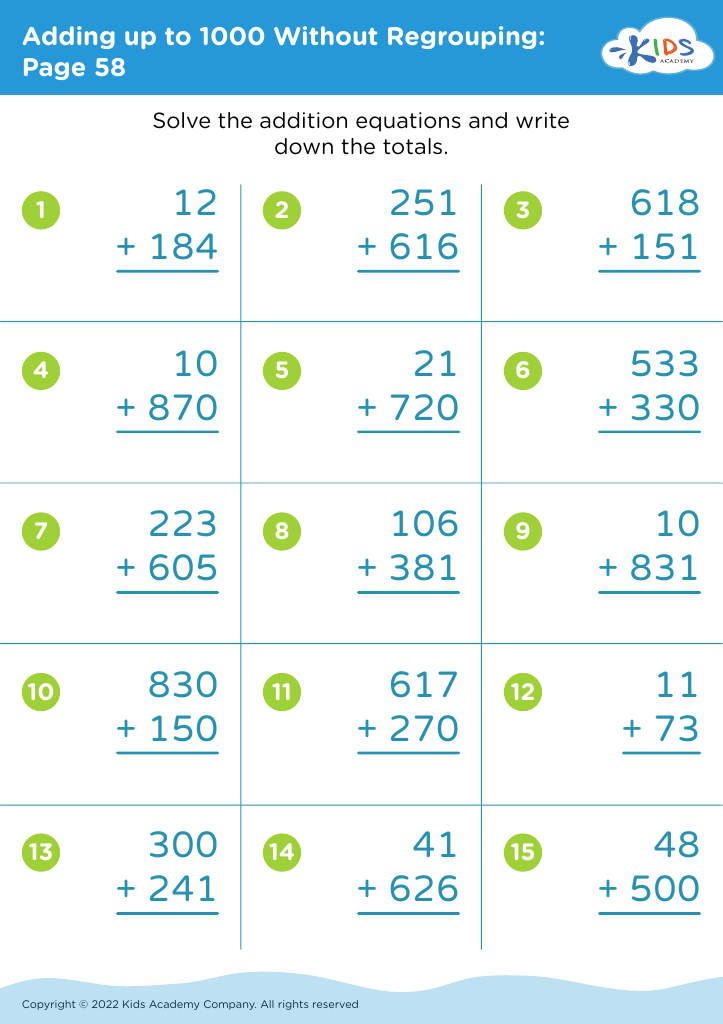
Adding up to 1000 Without Regrouping: Page 58
Worksheet
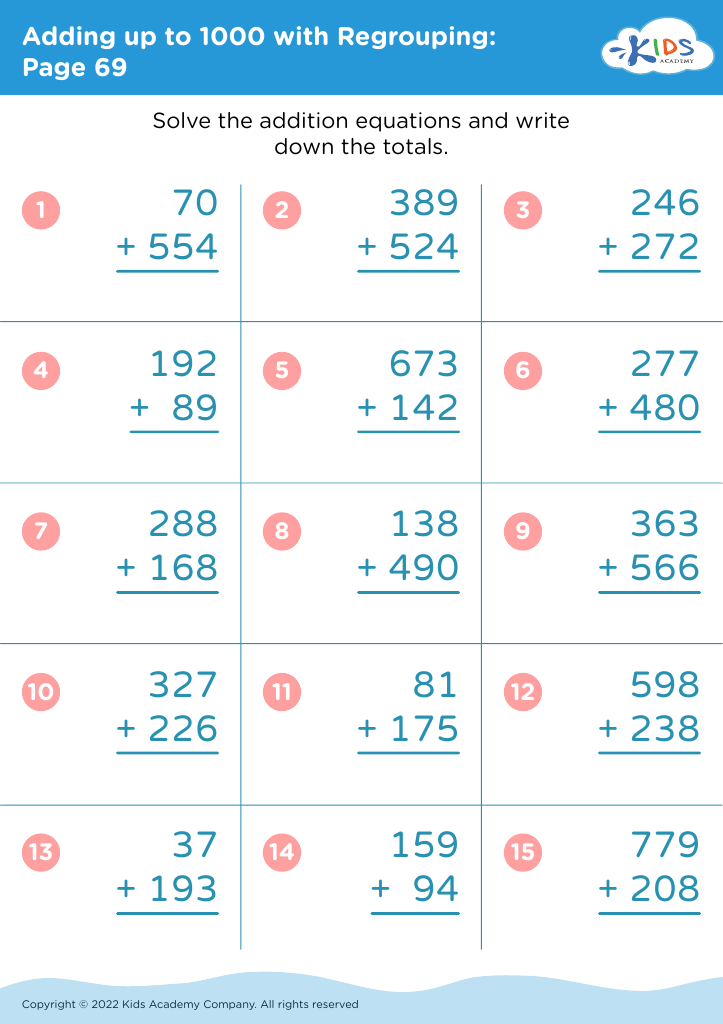
Adding up to 1000 with Regrouping: Page 69
Worksheet
How Many More to Add Worksheet

How Many More to Add Worksheet

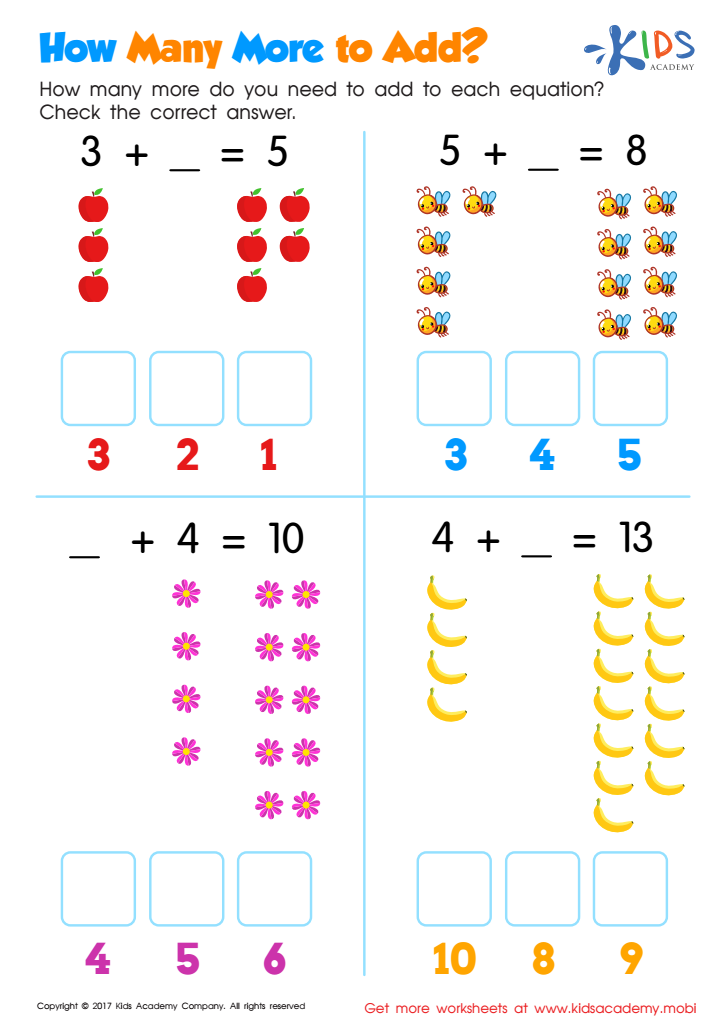
Sharpen your child's math skills with this pdf worksheet. Help them figure out how many apples, bees, flowers and bananas are needed to reach the answer given. The possible answers are provided at the bottom of the boxes. Have some fun doing some addition and subtraction magic together and get those math skills sharpened!
How Many More to Add Worksheet
Worksheet
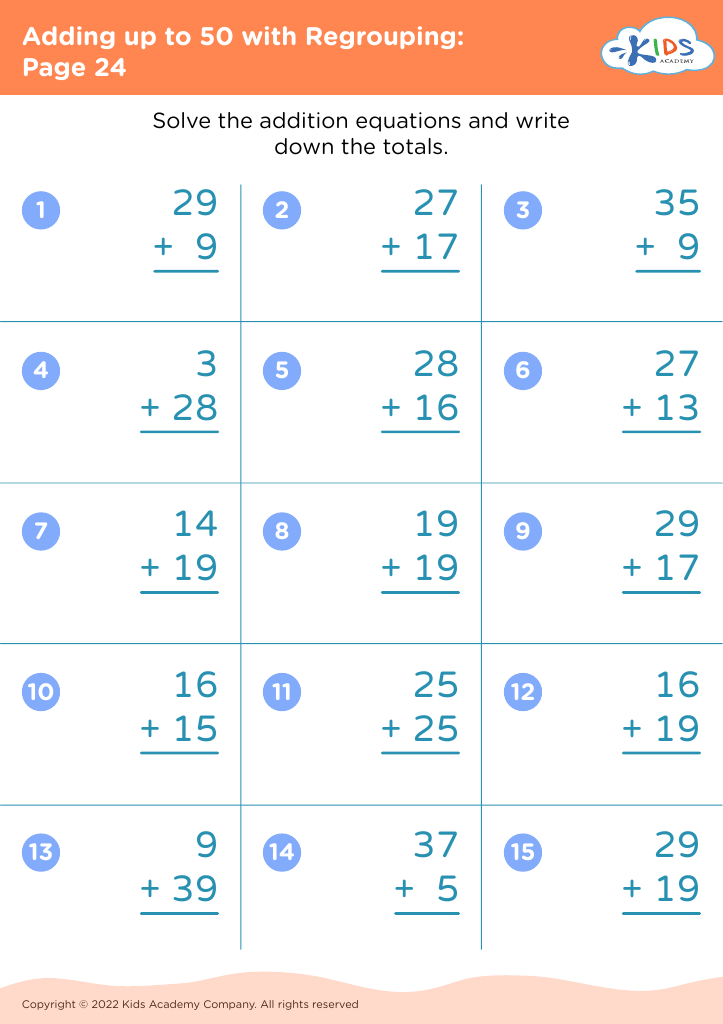
Adding up to 50 with Regrouping: Page 24
Worksheet
Who Has 1 More? Worksheet

Who Has 1 More? Worksheet

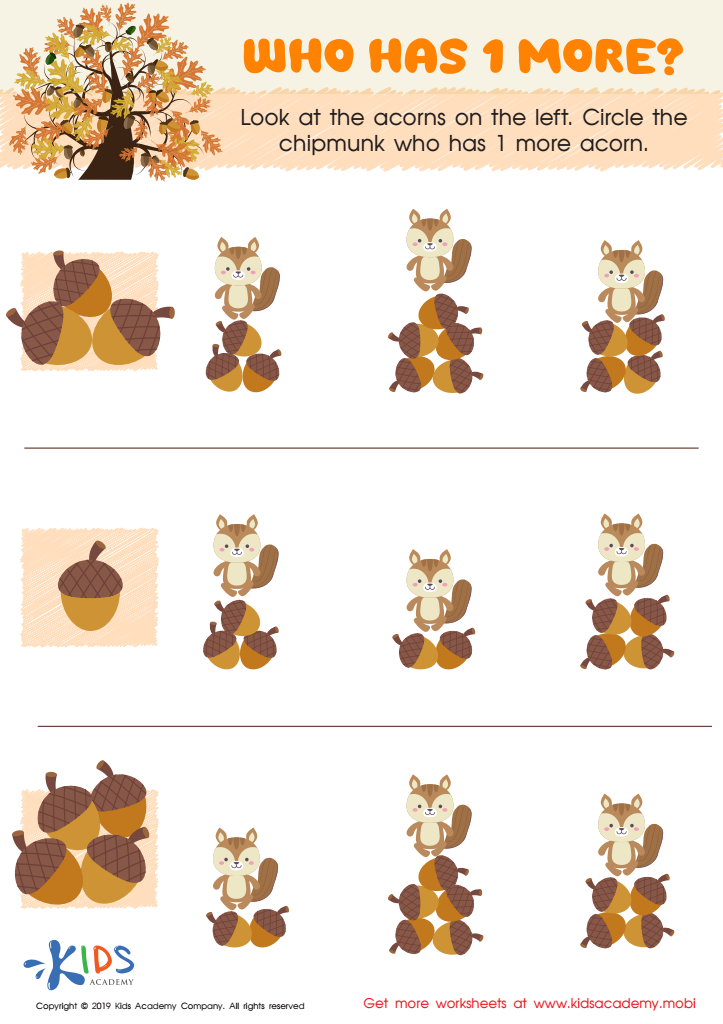
Do your kids know what chipmunks are? They eat acorns, store them for bad weather, and live in trees or on the ground. Count and circle the chipmunk with one more acorn than the others on the printout.
Who Has 1 More? Worksheet
Worksheet
Aircraft Carrier Picture Graphs Worksheet

Aircraft Carrier Picture Graphs Worksheet

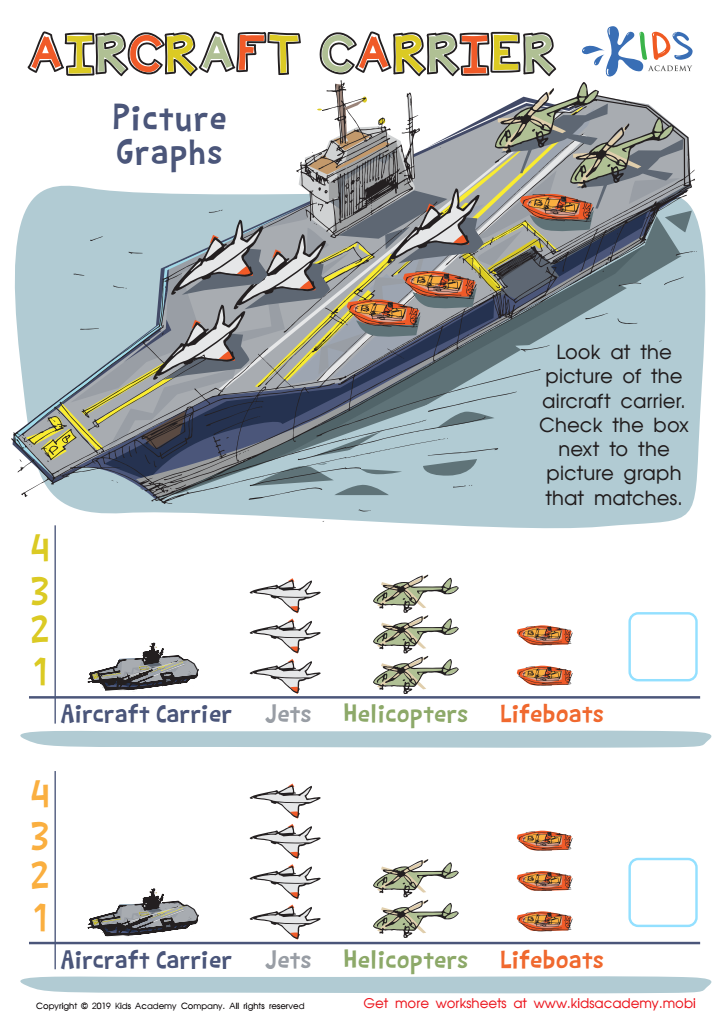
Kids love learning about jets and boats with this awesome worksheet! It's a great way to engage them as they work on picture graphs. Representing numerical values with pictures, this free PDF requires them to choose which picture graph and representation best match the carrier in the picture. It's also great practice for visual discrimination!
Aircraft Carrier Picture Graphs Worksheet
Worksheet
Sorting: Tallest to Shortest Worksheet


Sorting: Tallest to Shortest Worksheet

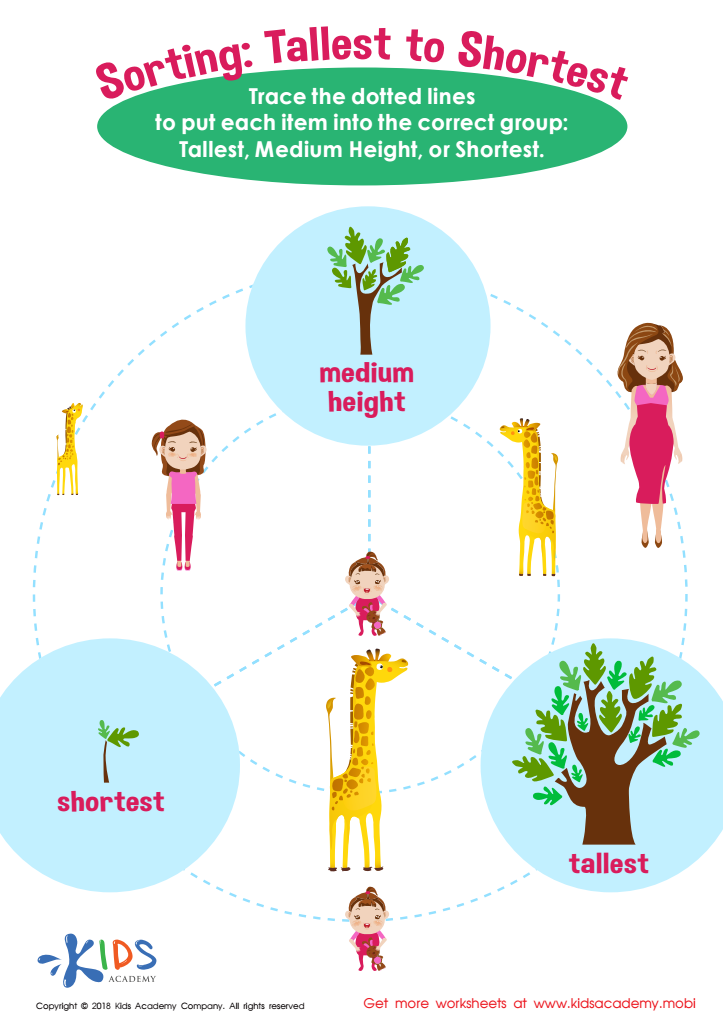
This worksheet is great for preschoolers to practice foundational measurement skills. Traceable lines help them sort pictures into Tallest, Shortest and Medium categories, giving them concrete examples to compare. Fine motor skills and understanding of relationships between sizes are also developed - perfect for preparing them for larger measurement concepts.
Sorting: Tallest to Shortest Worksheet
Worksheet


Comparison skills in math are fundamental for young learners, as they form the foundation for deeper mathematical understanding and critical thinking. Parents and teachers should prioritize fostering these skills because they help children develop the ability to analyze, interpret, and compare numbers and quantities, which is crucial in everyday life.

When students practice comparison skills, they learn to recognize differences and similarities between objects and values, promoting logical reasoning. For instance, understanding that 8 is greater than 5 helps with basic operations such as addition and subtraction, and sets the stage for future concepts in algebra and geometry.

Additionally, comparison skills encourage data interpretation, which is increasingly important in a data-driven world. Young learners gain confidence in making informed decisions based on quantitative comparisons, preparing them for academic challenges ahead. These skills also support literacy development, as their understanding of greater than/less than concepts often translates to the language used in describing relationships in texts.

Lastly, fostering comparison abilities enhances collaboration during cooperative learning, as children share and debate numerical ideas with peers. In summary, comparison skills in math are essential for cognitive and social development, setting the stage for academic success and real-world problem-solving.