Counting skills improvement Math Worksheets
3 filtered results
-
From - To
Enhance your child's counting skills with our engaging Math Worksheets designed specifically for improvement. These expertly crafted resources cater to various learning levels, making math practice both enjoyable and effective. Featuring a wide array of activities, from number recognition to simple addition and subtraction problems, our worksheets promote understanding through repetition and varied formats. Perfect for early learners, each worksheet helps foster a love for math by encouraging hands-on practice and interactive learning. Parents and teachers can use these materials to track progress while ensuring that counting becomes a fun and rewarding experience for young learners. Start building a strong math foundation today!
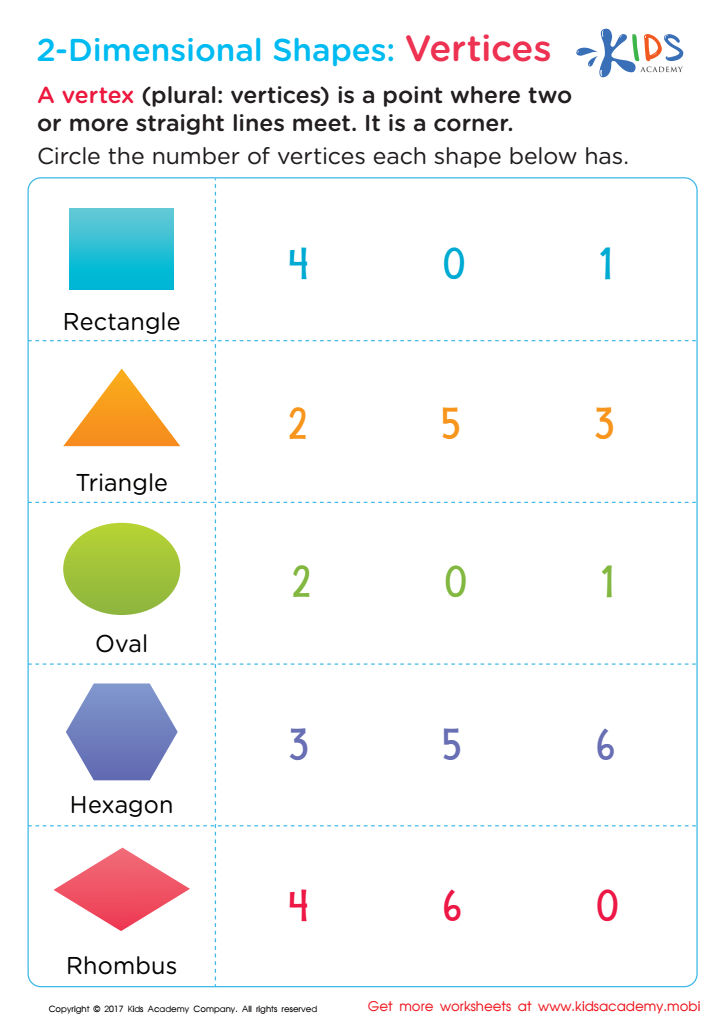
Two–Dimensional Shapes: Vertices Printable
 Assign to My Students
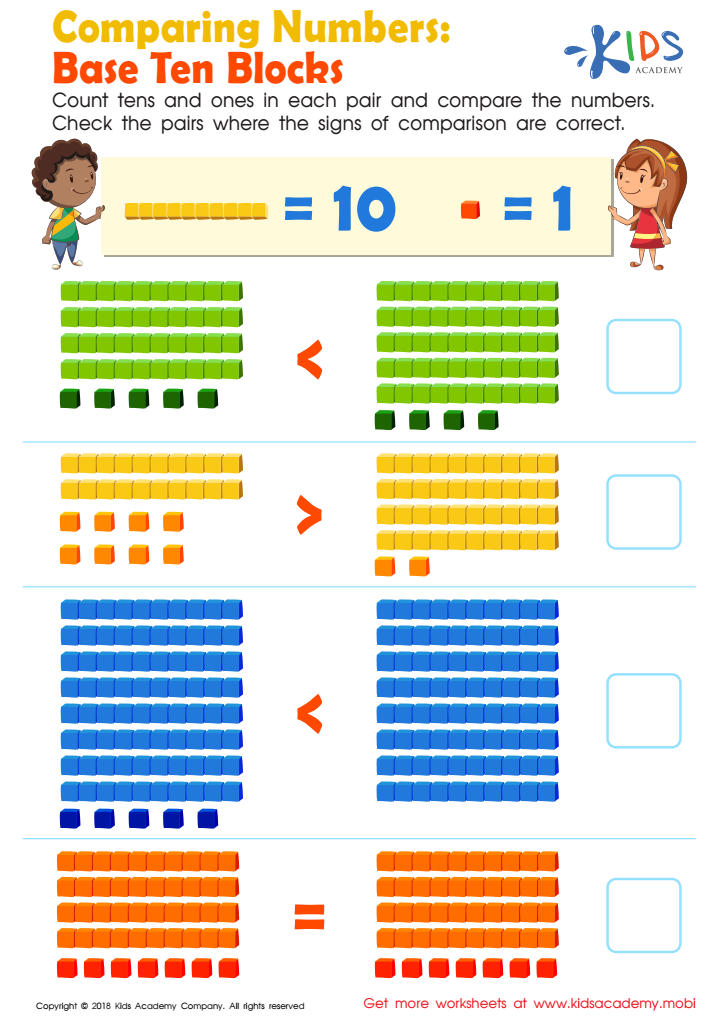
Comparing Numbers: Base Ten Blocks Worksheet
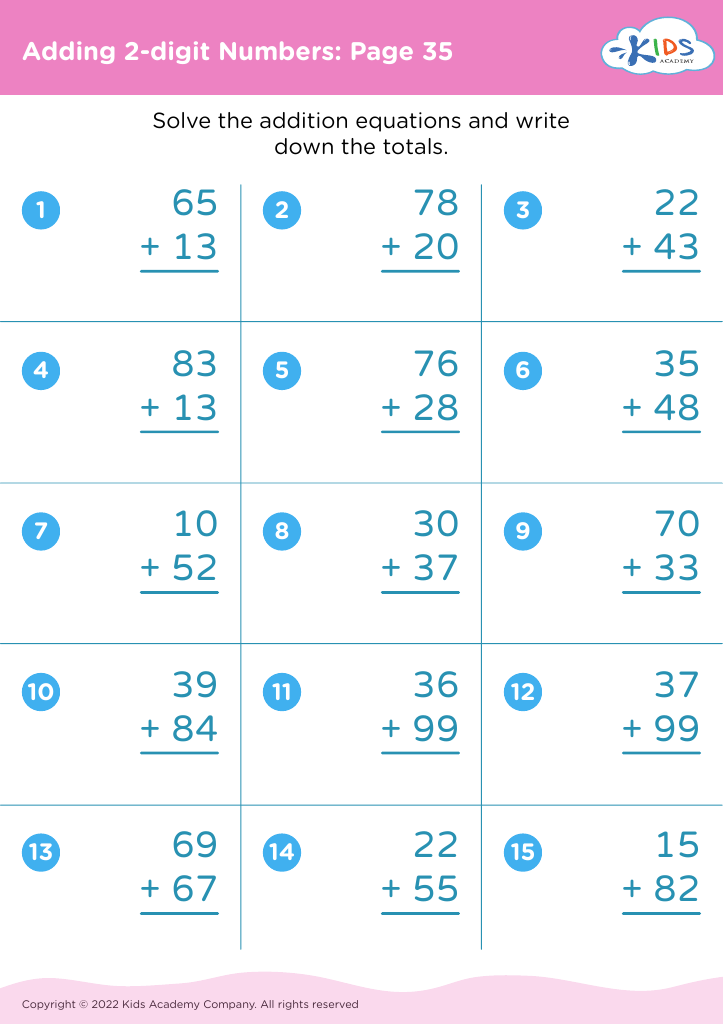






.jpg)

Counting skills are foundational to a child's overall mathematical development and have far-reaching implications for their academic success. For parents and teachers, fostering these skills is crucial because they form the basis for more complex mathematical concepts such as addition, subtraction, and problem-solving. Early mastery of counting promotes numerical understanding, encouraging children to recognize numbers and relate them to quantities, which is essential as they progress in school.
Moreover, counting skills help enhance cognitive abilities, critical thinking, and logical reasoning. A strong foundation in math contributes to improved performance in various subjects and can increase a child's confidence—often leading to a greater willingness to engage in and explore mathematics.
Additionally, counting in a real-world context—through everyday activities like cooking or shopping—shows children the relevance of math in daily life, making the learning process more enjoyable and meaningful. Robust counting skills also benefit children in social interactions, as they learn to share, take turns, and collaborate. Parents and teachers who prioritize counting skills not only support academic growth but also foster essential life skills that help children succeed both inside and outside the classroom. Engaging in counting activities is an investment in a child's future.








