
Data analysis Math Worksheets
4 filtered results
Difficulty Level
Grade
Age
-
From - To
Subject
Activity
Standards
Unlock your child's potential in Math with our extensive collection of Data Analysis Math Worksheets! Designed for early learners, these worksheets help kids understand and interpret data, with fun activities involving charts, graphs, and tables. Each worksheet promotes critical thinking and problem-solving skills while offering engaging visuals to make learning interactive and exciting. Perfect for the classroom or at home, our resources cater to various learning styles and align with educational standards, ensuring your child builds a strong foundation in data analysis. Start exploring today and watch your child's confidence and mathematical abilities soar!
Favorites
With answer key
Interactive
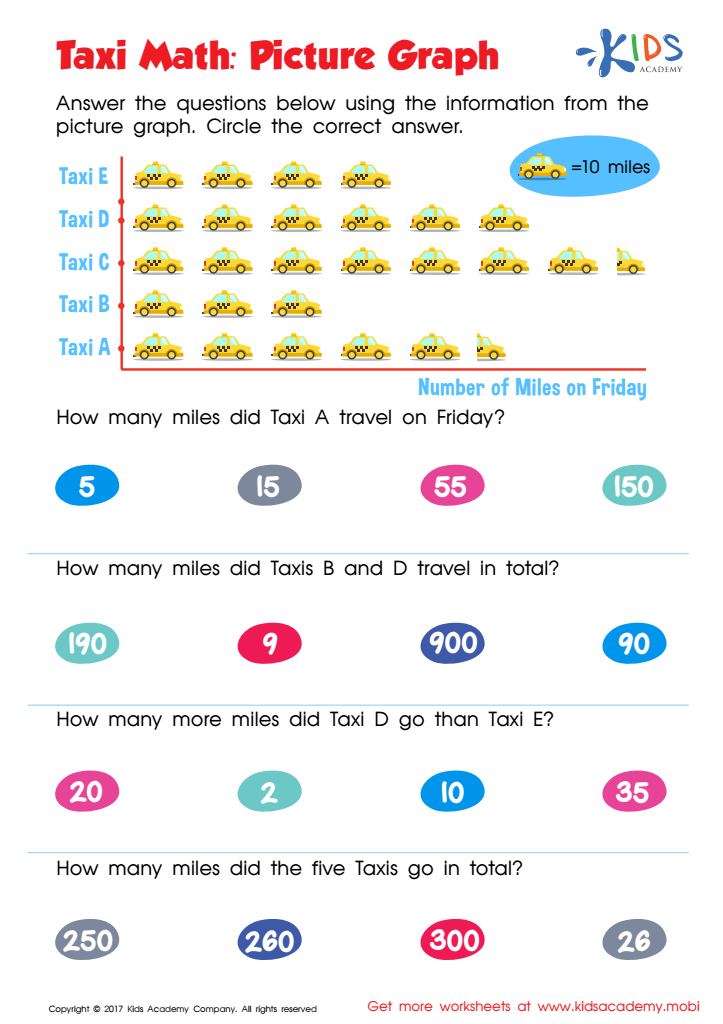
Taxi Math Worksheet
This 3rd grade worksheet helps kids learn data viz with fun taxis and colors to make the graph come alive. Picture graphs are an engaging way to teach data analysis, and this worksheet is the perfect tool!
Kids love picture graphs! This 3rd grade worksheet uses colorful taxis to help them learn to read graphs better. Each image represents a number, teaching data analysis with visuals and fun. An engaging way to learn data viz, this worksheet is perfect for young learners.
 Assign to My Students
Taxi Math Worksheet
Worksheet
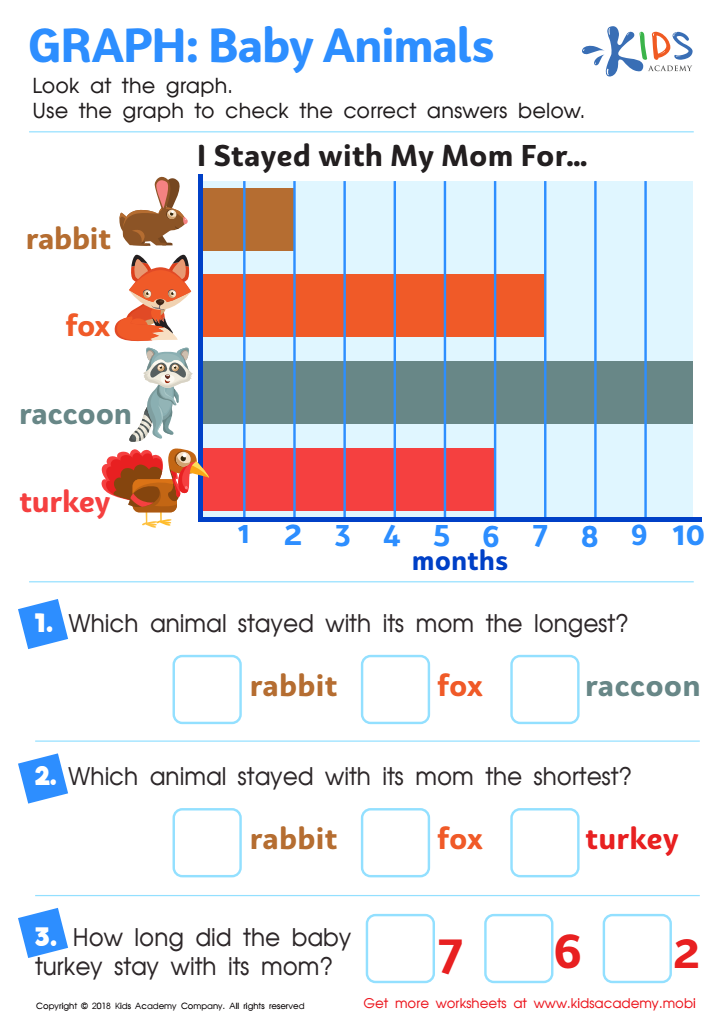
Graph: Baby Animals Worksheet
Graphs are essential for learning in math, science and ELA. This worksheet featuring baby animals is a fun way to practice reading graphs. Look at the graph and answer the questions below it. Check the boxes for the right answers based on the data.
Graph: Baby Animals Worksheet
Worksheet
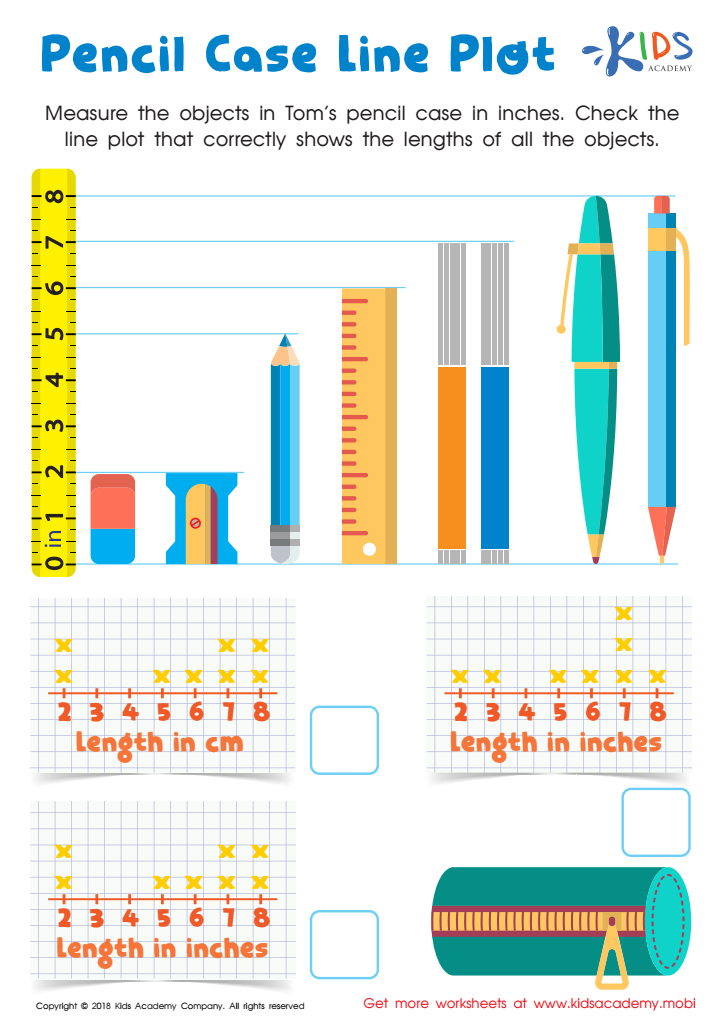
Pencil Case Line Plot Worksheet
Explain to your child that a line plot is a way to organize information. For example, if they need to arrange objects, they should draw a line plot. Now, have them help Tom measure the objects in his pencil case in inches. Then, have them check the line plot that accurately shows the length.
Pencil Case Line Plot Worksheet
Worksheet
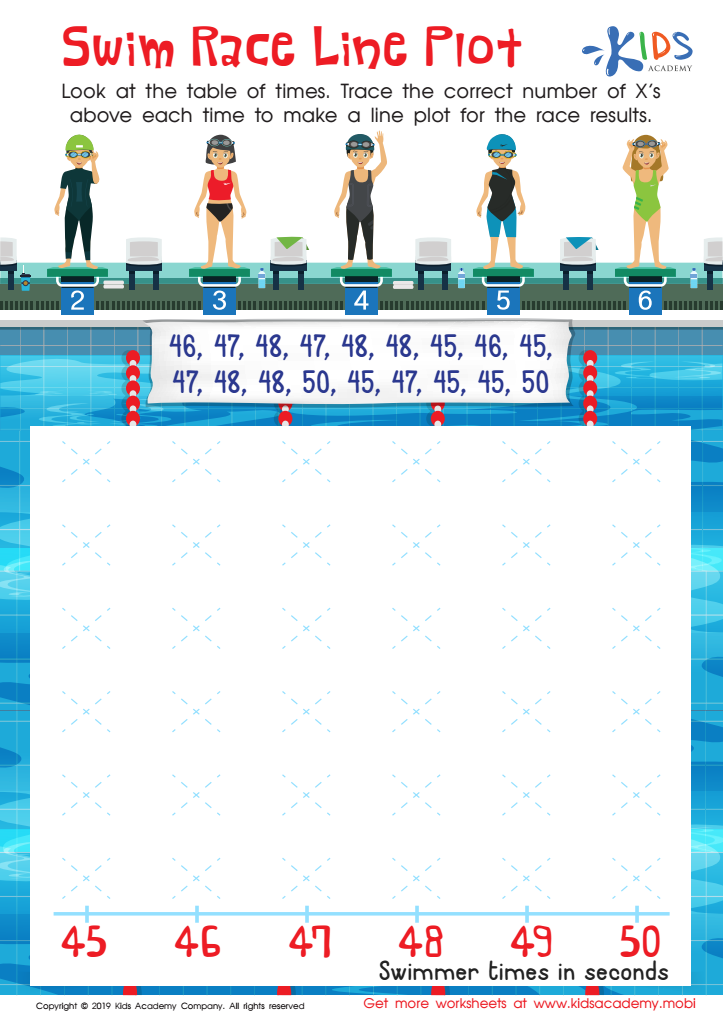
Swim Race Line Plot Worksheet
Kindergartners can benefit from extra help with math, particularly line plots. This worksheet can make the concept easier to understand. Together, study the table of times; then, guide the kids in tracing the correct number of x's above each time to make a line plot for the race result.
Swim Race Line Plot Worksheet
Worksheet
Join Kids Academy for Free
Who is primarily going to use this learning content?


.jpg)


.jpg)
Data analysis math plays a pivotal role in shaping critical thinking and problem-solving skills in children. For parents and teachers, understanding and supporting this subject can provide significant long-term benefits for students.
First, data analysis helps children grasp how to interpret and utilize information effectively. In our data-driven world, the ability to understand charts, graphs, and statistical information is crucial for making informed decisions. This competence extends beyond academic success, fostering smarter decision-making in various aspects such as health, finance, and everyday choices.
Second, early exposure to data analysis develops analytical thinking. Engaging students with activities that involve sorting, categorizing, and interpreting data enhances their logical reasoning and precision, which are essential in numerous fields.
Furthermore, this skill lays a foundation for STEM education. As science, technology, engineering, and mathematics careers grow, proficiency in understanding and managing data becomes indispensable.
Lastly, encouraging curiosity and patience through data analysis practices helps students overcome the fear of complex problems, cultivating a growth mindset. They learn resilience as they hypothesize, test, and revise their interpretations based on evidence.
Overall, incorporating data analysis math in early education ensures children are better equipped with life skills critical for future academic and professional success. Parents and teachers play a crucial role in fostering these skills, aiding students in becoming competent and confident lifelong learners.








