Developing spatial awareness Math Worksheets
3 filtered results
-
From - To
Enhance your child’s math skills with our engaging Developing Spatial Awareness Math Worksheets! Designed for early learners, these worksheets promote a strong understanding of shapes, spatial relationships, and visualization. Each activity encourages hands-on exploration, helping children grasp fundamental math concepts through fun and interactive exercises. By improving their spatial awareness, kids will excel in geometry and problem-solving, laying a solid foundation for future mathematical success. Suitable for classrooms or home learning, our worksheets support differentiated instruction and cater to various learning styles. Download now and watch your child thrive as they navigate the exciting world of shapes and spaces!
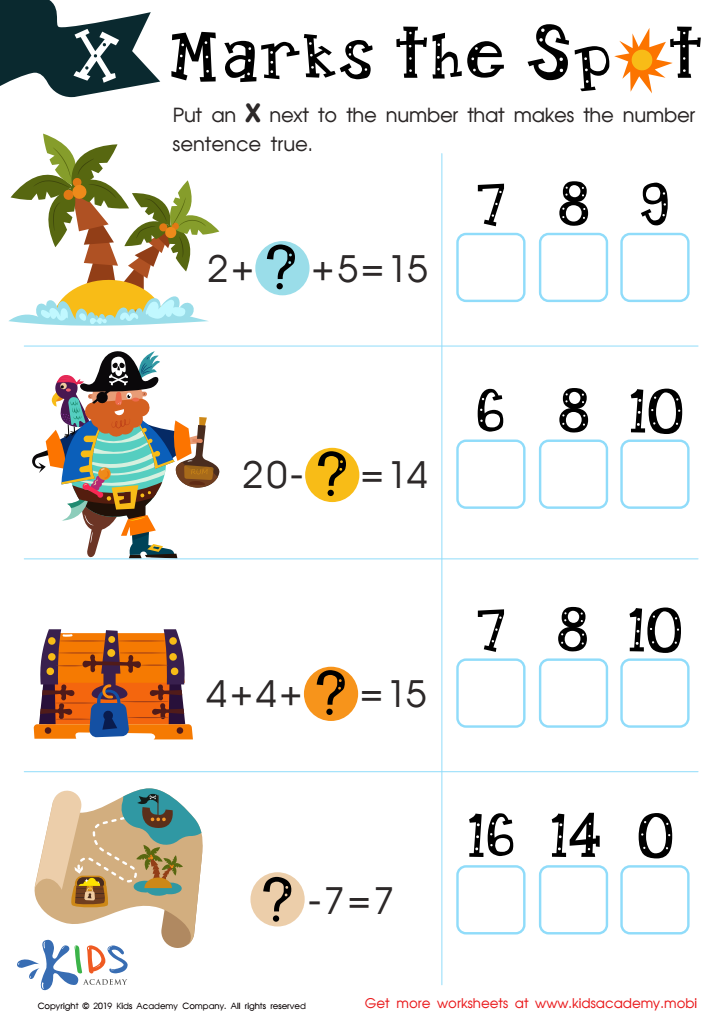
X Marks the Spot Worksheet
 Assign to My Students
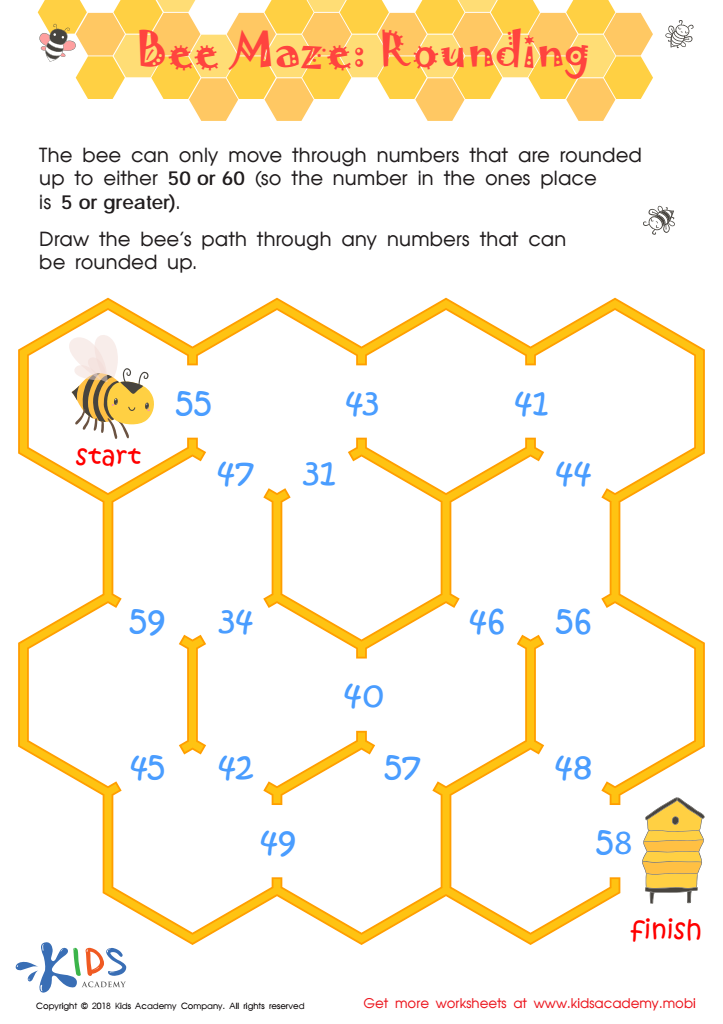
Bee Maze Rounding Worksheet
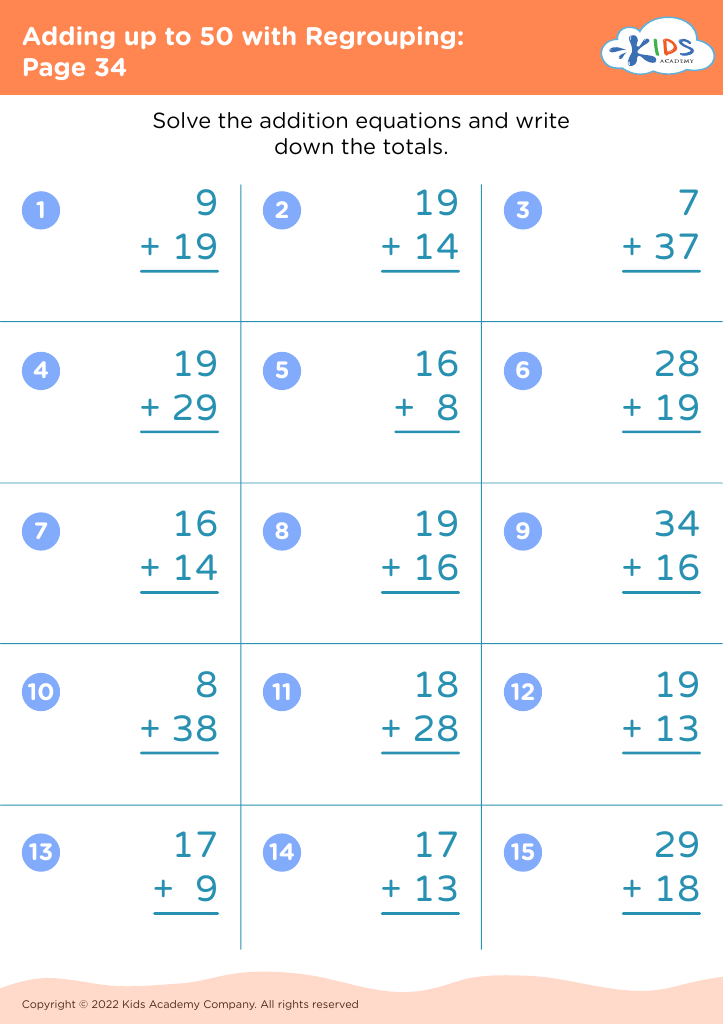


.jpg)





Developing spatial awareness in mathematics is crucial for young learners, as it forms the foundation for various skills they will use throughout their educational journey and daily lives. Spatial awareness helps children understand and manipulate objects in space, fostering essential skills such as visualization, rotation, and orientation. These skills contribute significantly to success in geometry, measurement, and problem-solving.
Parents and teachers should care about enhancing spatial awareness because it has a direct impact on children's academic achievements in math and science. Children with strong spatial skills tend to excel in these subjects, preparing them for future careers in STEM fields (science, technology, engineering, math). Furthermore, spatial awareness contributes to critical thinking and creativity, encouraging students to approach problems from different angles.
In everyday life, spatial awareness is valuable, helping children navigate their surroundings, understand maps, and develop organizational skills. By incorporating activities that boost spatial awareness—such as puzzles, building blocks, and drawing—parents and teachers can create an engaging learning environment that fosters a love of learning. Ultimately, promoting spatial awareness in early education empowers children not only academically but also personally, supporting their growth into well-rounded individuals.








