Drawing skills Math Worksheets
7 filtered results
-
From - To
Enhance your child's mathematical abilities and creativity with our Drawing Skills Math Worksheets! These engaging printables seamlessly blend art and math, transforming learning into a fun experience. Perfect for early learners, the worksheets focus on developing fine motor skills and geometric understanding through drawing activities. Each exercise is designed to boost spatial reasoning, pattern recognition, and problem-solving capabilities. From tracing shapes to creating intricate patterns, these worksheets provide a solid foundation for math proficiency. Ideal for home or classroom use, our Drawing Skills Math Worksheets make learning math enjoyable and accessible. Download now and inspire a love for math and art in your child!
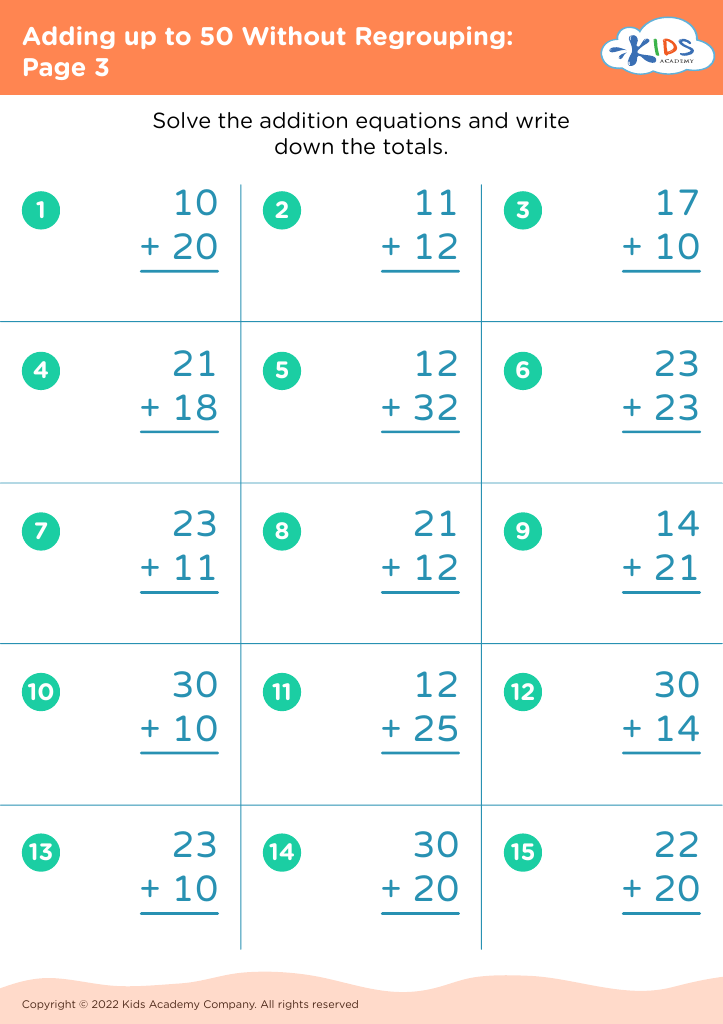
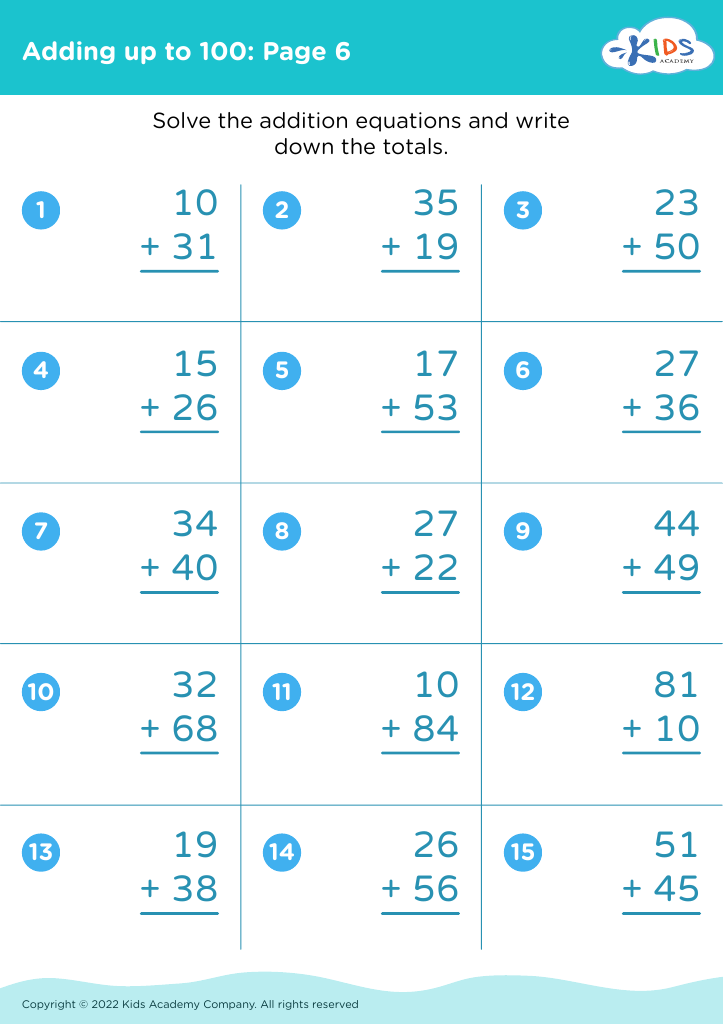
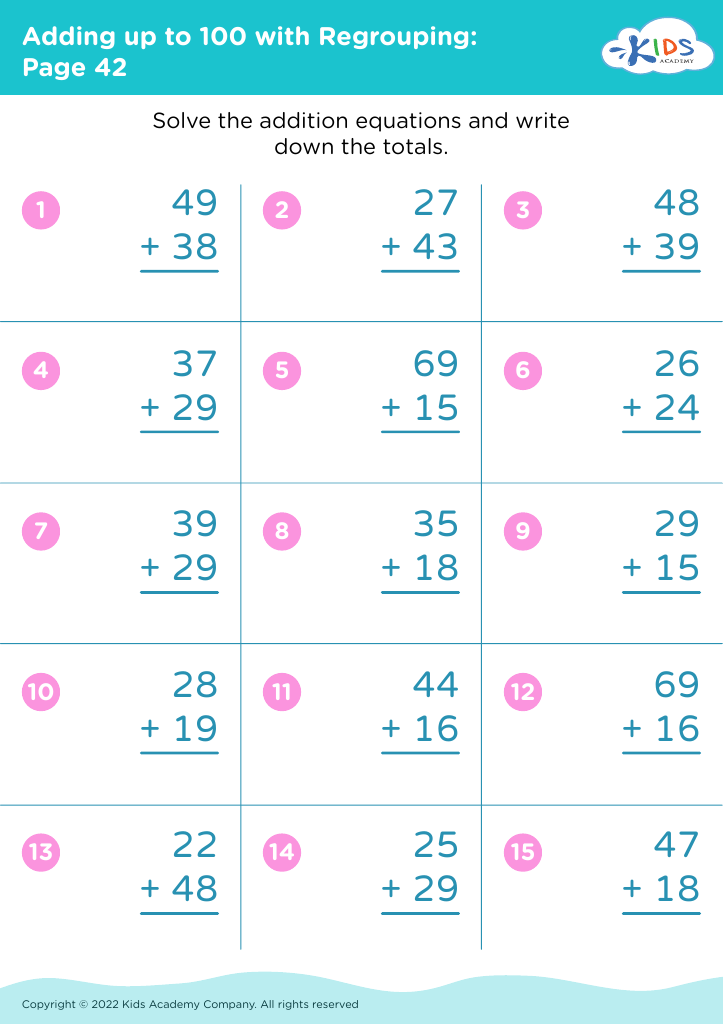
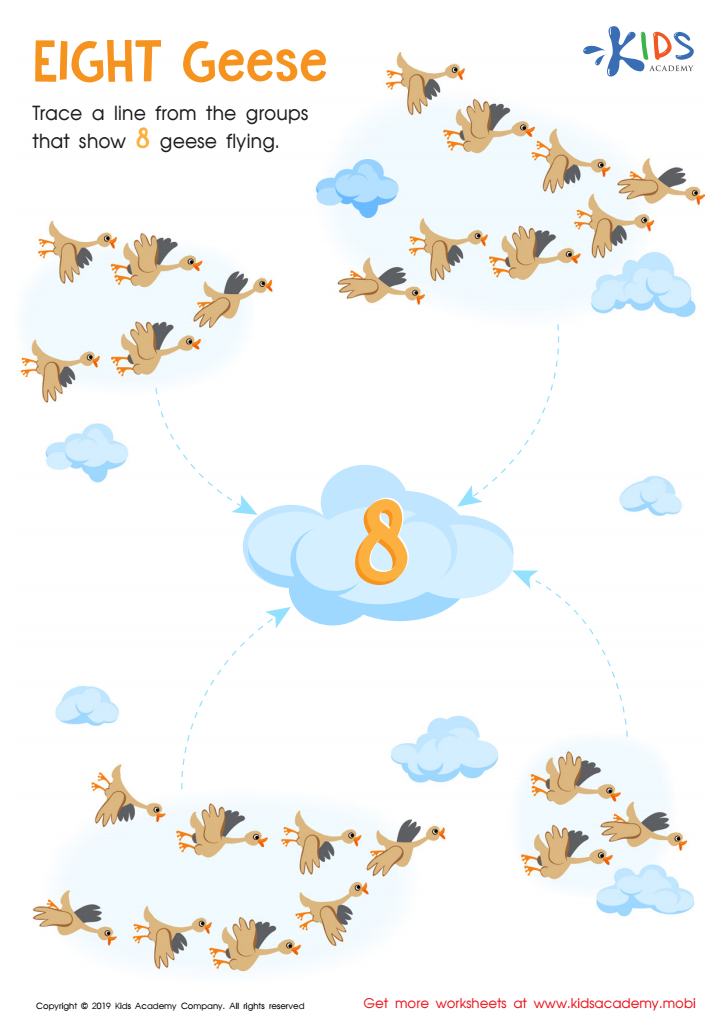
Eight Geese Worksheet
 Assign to My Students








Drawing skills play a significant role in learning and comprehending math, particularly in early education. For parents and teachers, recognizing the value of integrating drawing with math instruction is crucial because it strengthens a child's cognitive development and enhances understanding.
One fundamental reason is that drawing helps visualize abstract concepts. Math can be intimidating because it often deals with numbers and patterns that are not easily graspable. By drawing, children can transform those abstractions into visual representations, simplifying complex ideas like geometry, fractions, and algebraic expressions. It makes learning more accessible and less daunting.
Furthermore, engaging in drawing boosts problem-solving skills. When children draw to solve math problems, they engage in analytical thinking, such as deciding on proportions, shapes, and spatial relationships. This practice hones their ability to approach problems methodically and see multiple solutions.
Additionally, drawing encourages creativity and perseverance. It integrates arts into STEM (Science, Technology, Engineering, and Math) subjects, fostering a well-rounded skill set. This infusion cultivates an enjoyable and dynamic learning environment, promoting intellectual curiosity and resilience.
Lastly, drawing in math supports improved communication. It allows children to express and explain their thinking visually to others, aiding both peer and teacher assessments.
For these reasons, prioritizing drawing skills in math education enriches children's learning experiences and lays a strong foundation for further academic success.








