Identify numbers Math Worksheets
3 filtered results
-
From - To
Discover engaging "Identify Numbers Math Worksheets" at Kids Academy! Designed for early learners, these worksheets help children recognize, name, and practice numbers in a fun, interactive way. Ideal for preschool and kindergarten students, they feature vibrant illustrations and simple activities that enhance basic math skills. Perfect for classroom use or at-home practice, our worksheets build a strong foundation in number recognition, counting, and fine motor skills. Foster your child's mathematical confidence and readiness with our expertly crafted worksheets. Explore a wide variety of printable, free resources and start your child's numerical journey today!
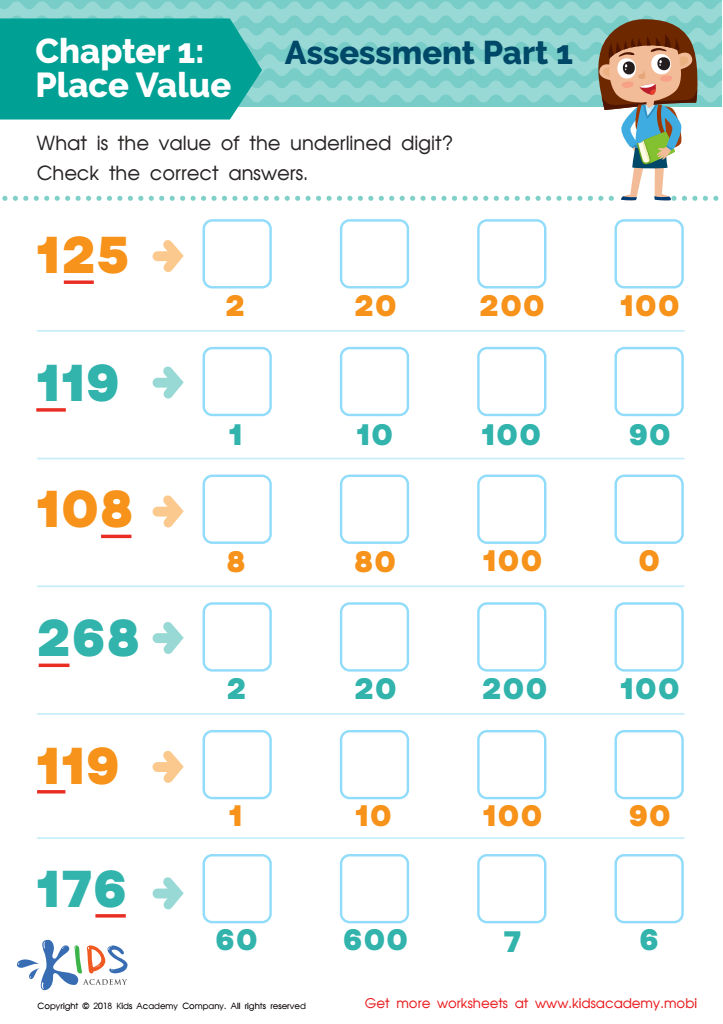
Place Value: Chapter 1 Worksheet
 Assign to My Students
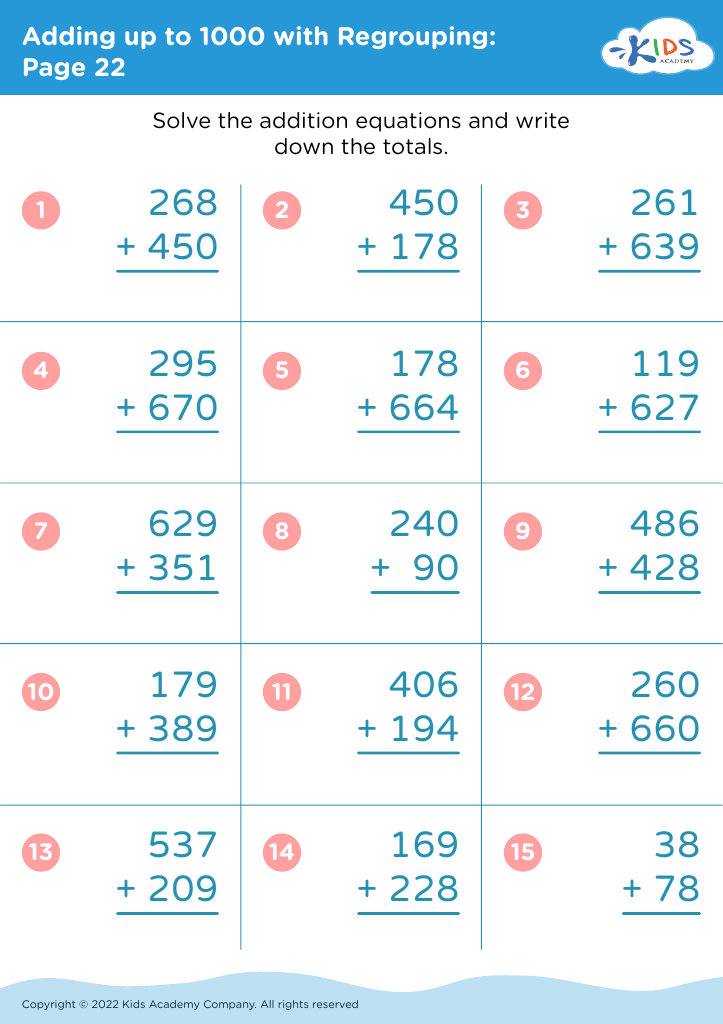
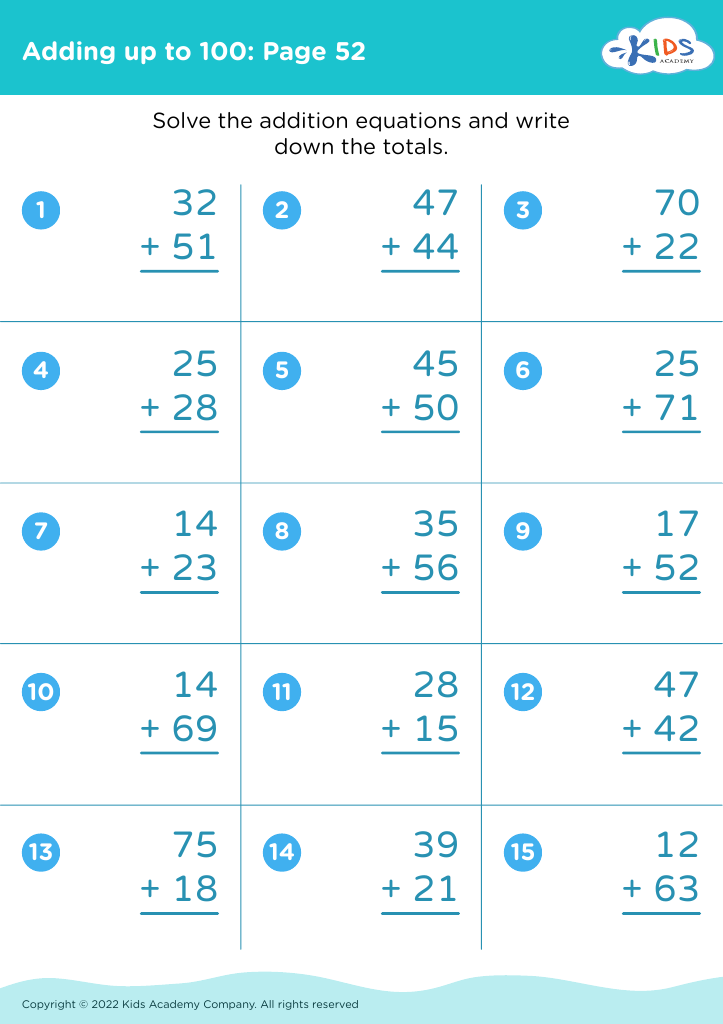








Understanding numbers is foundational to a child's math education and has a profound impact on everyday life. By learning to identify numbers, children develop essential skills that go beyond the classroom. Early number recognition fosters numerical literacy, the ability to make sense of quantities and their relationships, which is crucial for simple tasks like counting and more complex problem-solving in later stages.
For parents, engaging in number-related activities supports their child’s cognitive development and prepares them for academic success. Familial encouragement helps build a positive attitude towards math, reducing anxiety and making learning fun and interactive. Practicing number identification at home, through games or daily activities, reinforces school learning, providing a well-rounded educational experience.
Teachers play a pivotal role in this process; they can present numbers in various contexts to ensure understanding and application. Using multi-sensory approaches—such as visual aids, hands-on materials, and digital tools—helps cater to different learning styles. This early foundation is critical: children who are comfortable with numbers tend to excel better in future mathematical concepts, like addition and subtraction.
Ultimately, investing in early number identification fosters logical thinking, problem-solving abilities, and lays the groundwork for advanced mathematical learning, an essential skill in the 21st-century world.








