Identify shapes Math Worksheets
11 filtered results
-
From - To
Explore our "Identify Shapes Math Worksheets" designed to help young learners recognize and differentiate various geometric shapes! These engaging, printable worksheets feature colorful images and interactive activities that make learning fun while enhancing essential fine motor skills. Perfect for preschool and early grade students, our resources cover common shapes like squares, circles, triangles, and rectangles, encouraging hands-on exploration and creativity. By providing simple exercises that promote shape identification, spatial awareness, and problem-solving, children will build a solid foundation in mathematics. Dive into our comprehensive collection today and watch your students’ confidence in geometry grow as they learn through play!
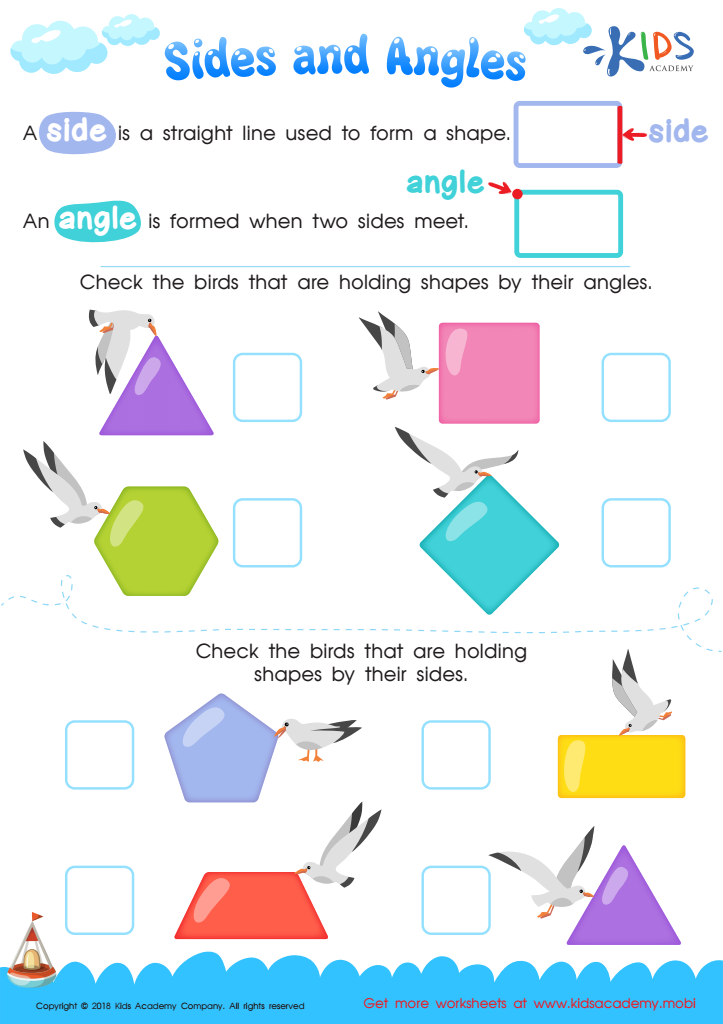
Sides and Angles Worksheet
 Assign to My Students
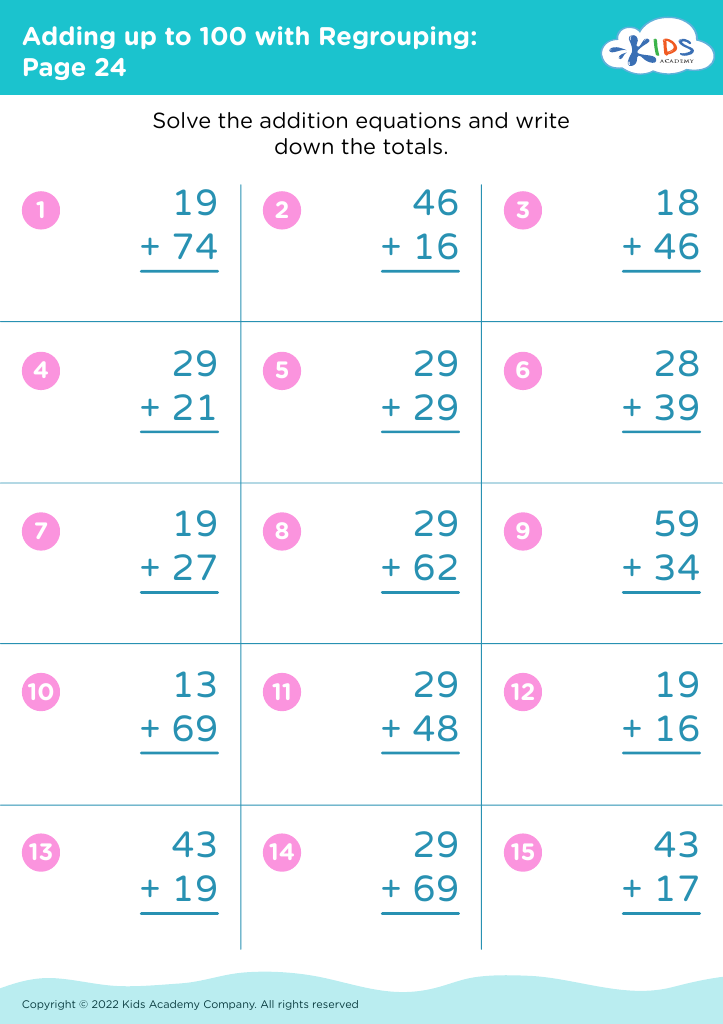
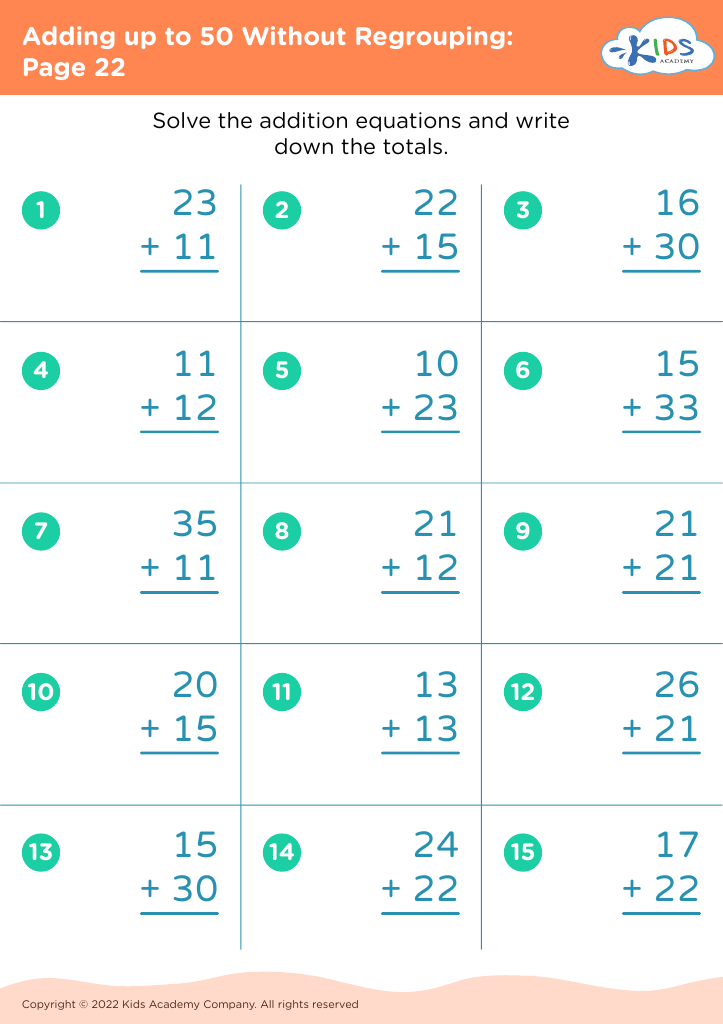
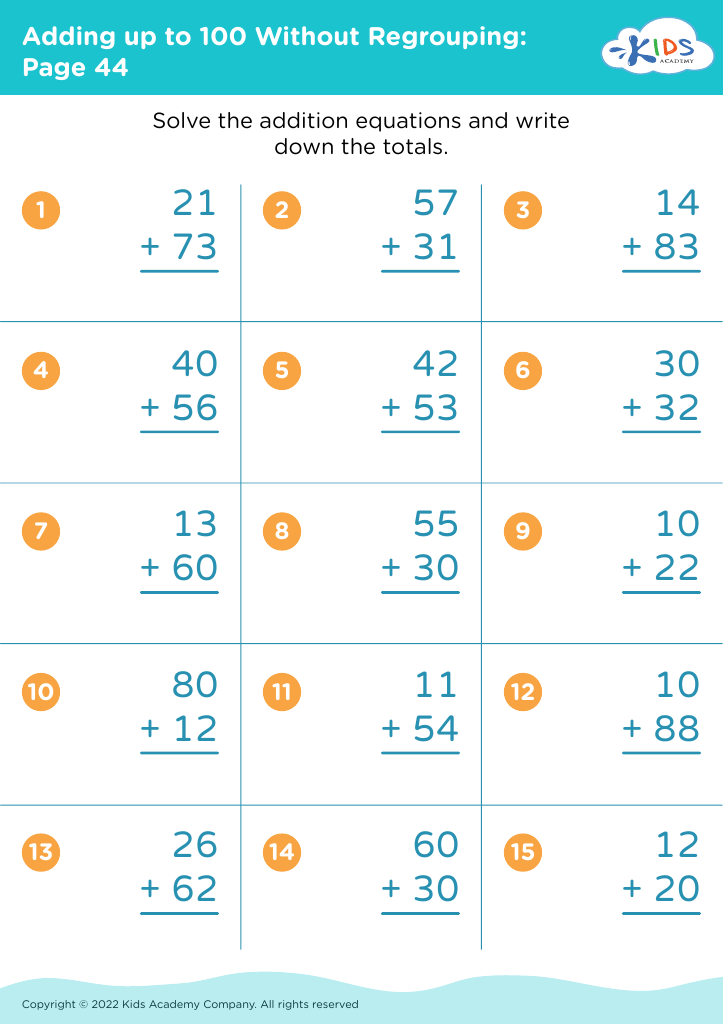








Understanding and identifying shapes is a foundational skill in early education that has profound implications for a child's overall cognitive development. Shapes are crucial for children's spatial awareness, which is directly linked to mathematics and science literacy. When parents and teachers emphasize shape recognition, they cultivate a child's ability to compare, categorize, and understand their environment, therefore enhancing critical thinking and problem-solving skills.
Additionally, identifying shapes forms the basis for later mathematical concepts such as geometry, measurement, and spatial reasoning. Practicing shape identification encourages children to develop vocabulary associated with geometry, which enriches their language skills. This knowledge can also translate into real-life applications, helping children navigate the physical world, understand architectural concepts, and even foster creativity in activities like art.
Moreover, early exposure to shapes lays the groundwork for pattern recognition, which is essential for advancing in mathematics. Engaging in shape-related activities, whether through games or hands-on tasks, strengthens fine motor skills as children manipulate objects to explore different shapes.
In summary, supporting shape identification not only nurtures a child's mathematical abilities but also develops critical cognitive and language skills necessary for their overall academic success. Parents and teachers play a vital role in creating an environment that fosters this essential learning.








