Filters

33 filtered results

Clear all filters
Favorites
With answer key
Interactive

33 filtered results

Difficulty Level

Grade


Check out this FREE Trial Lesson on Math!

Order objects and Describe your Findings

Favorites
With answer key
Interactive
  • Shape identification
  • Math
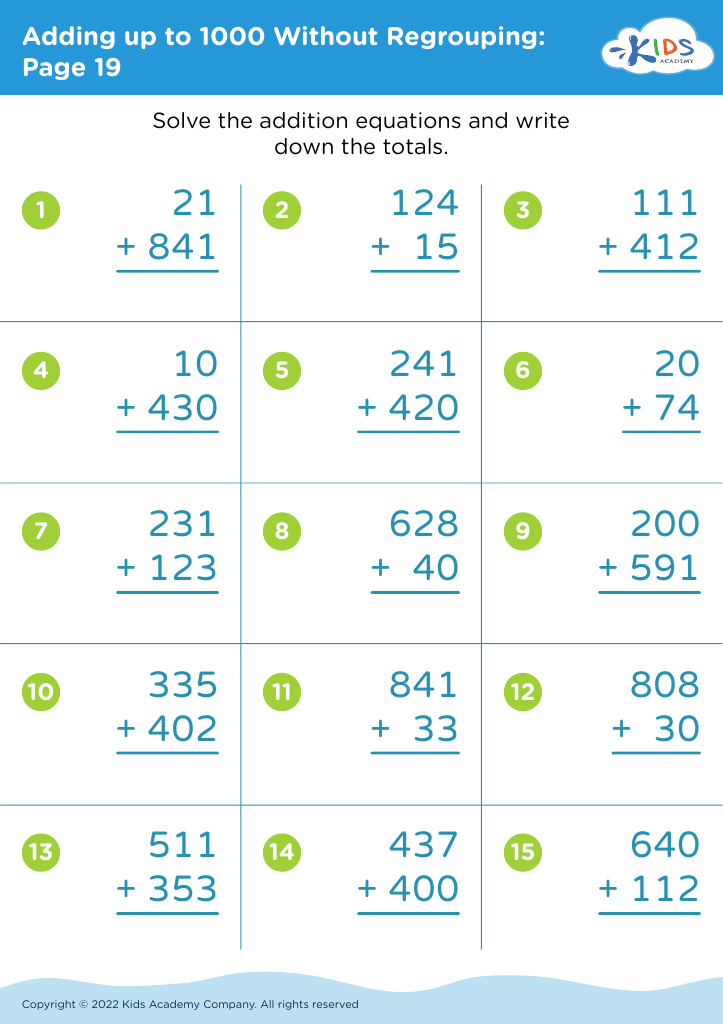
Adding up to 1000 Without Regrouping: Page 19
Worksheet
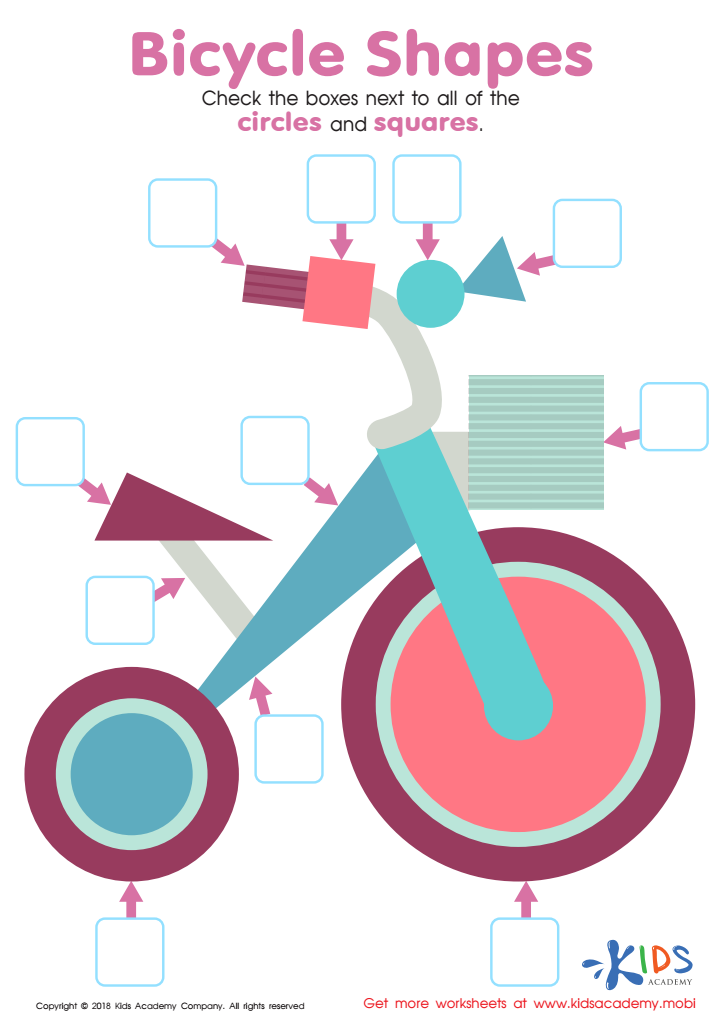
Bicycle Shapes Worksheet Preview

Bicycle Shapes Worksheet

This fun geometry worksheet for preschoolers asks the child to spot hidden shapes (circles, squares) in a colorful bicycle. Each shape varies in size and the child checks the box when it's found. It's a visual way to teach shapes.
Bicycle Shapes Worksheet
Worksheet
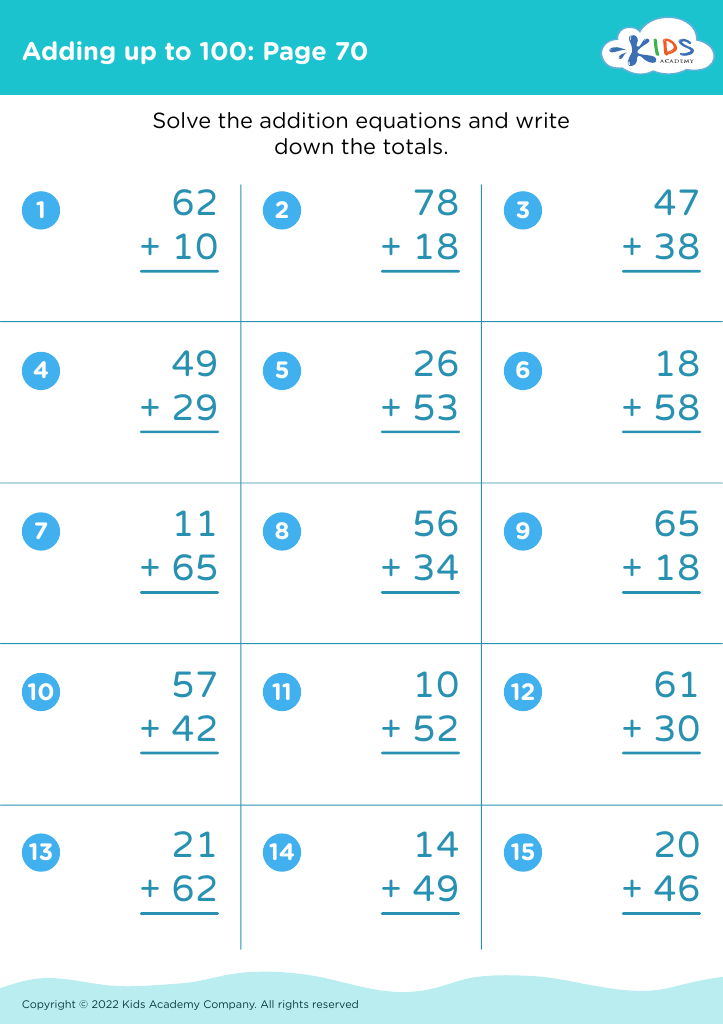
Adding up to 100: Page 70

Adding up to 100: Page 70

Adding up to 100: Page 70
Worksheet
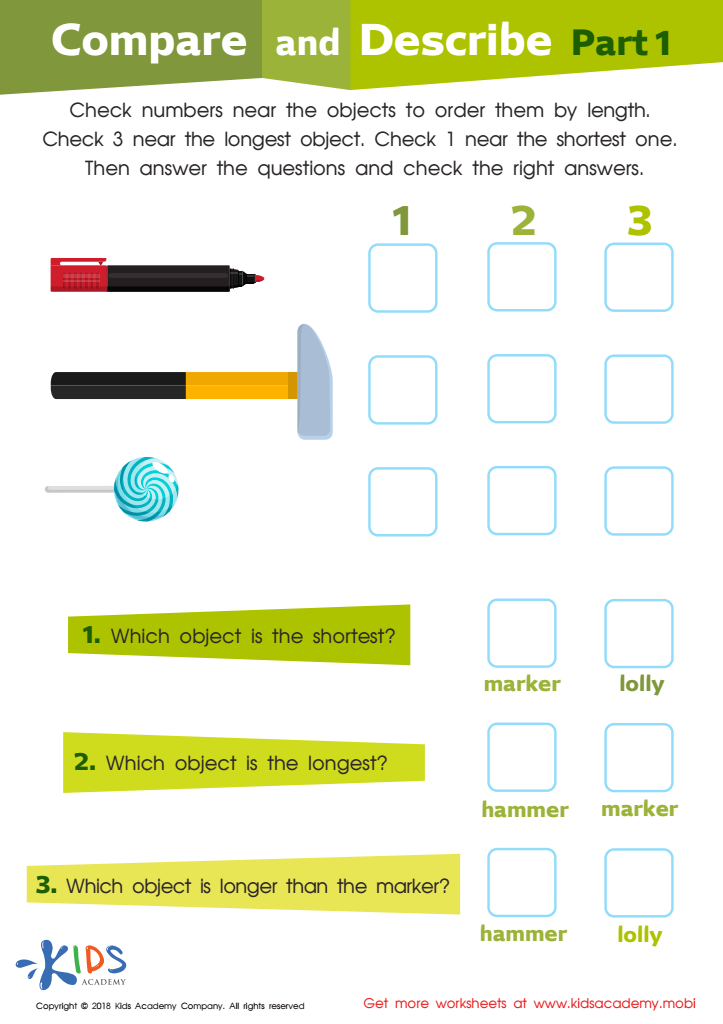
Compare and Describe: Part 1 Worksheet
Compare and Describe: Part 1 Worksheet

In this worksheet from Kids Academy, kids can start learning measurement in stages. Observe the images, then compare their length - which one is shortest? Which one is longest? Answer the questions at the bottom to complete the sheet. It's an easy way to help kids understand measurement basics.
Compare and Describe: Part 1 Worksheet
Worksheet
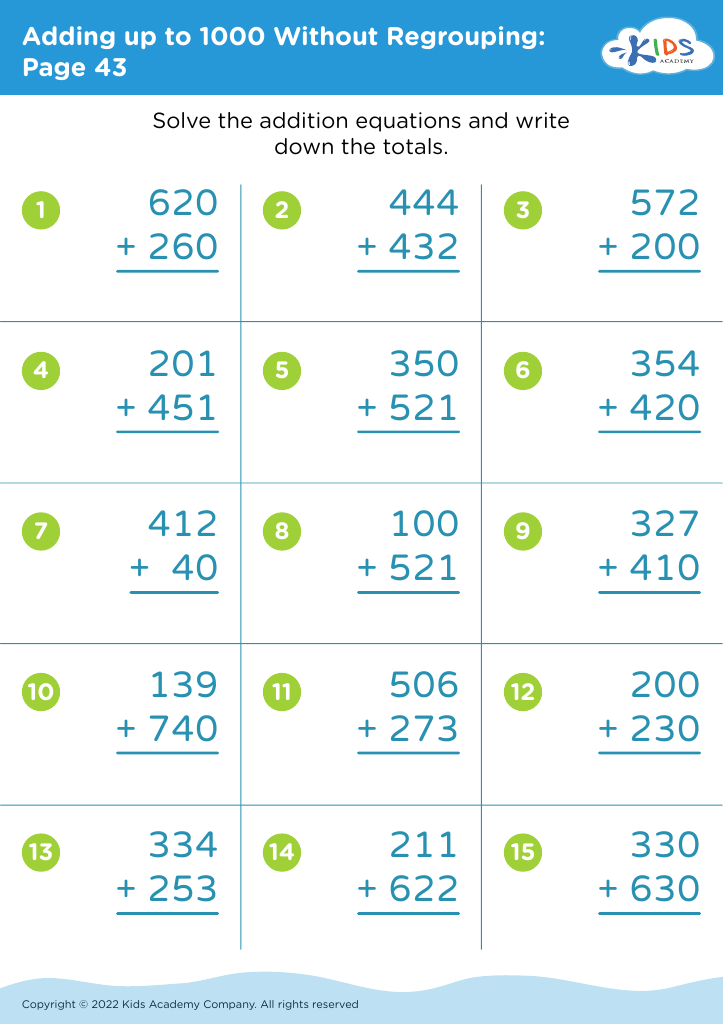
Adding up to 1000 Without Regrouping: Page 43
Worksheet
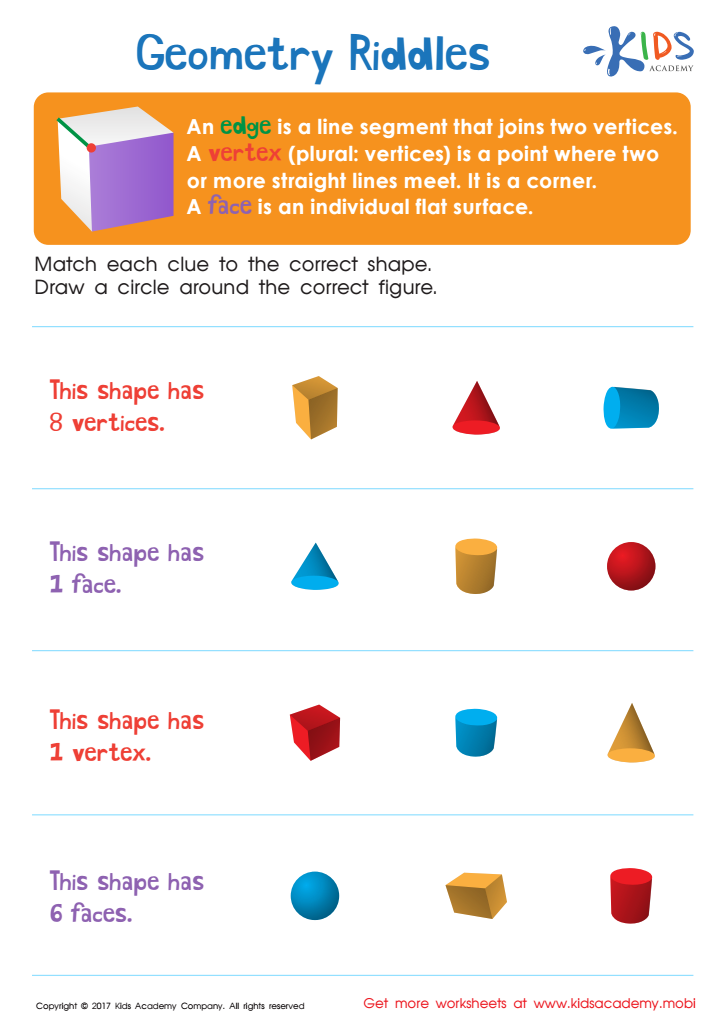
Geometry riddles worksheet

Geometry Riddles Printable

Review geometry terms with your child using this challenging worksheet of tricky riddles. Identifying and counting vertices, edges, and faces of shapes becomes fun as they solve the riddles!
Geometry Riddles Printable
Worksheet
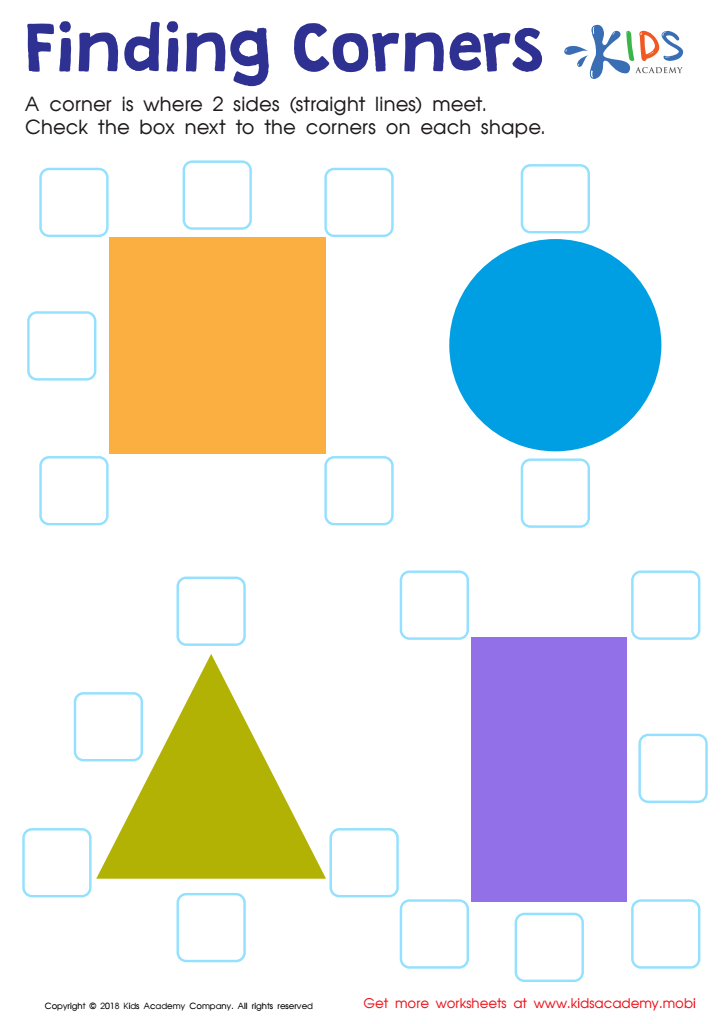
Finding Corners Worksheet

Finding Corners Worksheet

This vibrant worksheet introduces young learners to the fundamentals of geometric shapes. Through the downloadable PDF, they'll develop an understanding of corners - the intersection of two line segments - and how to identify them on different shapes. Fun colors and boxes let them label corners, helping them master this concept for future geometric reasoning.
Finding Corners Worksheet
Worksheet
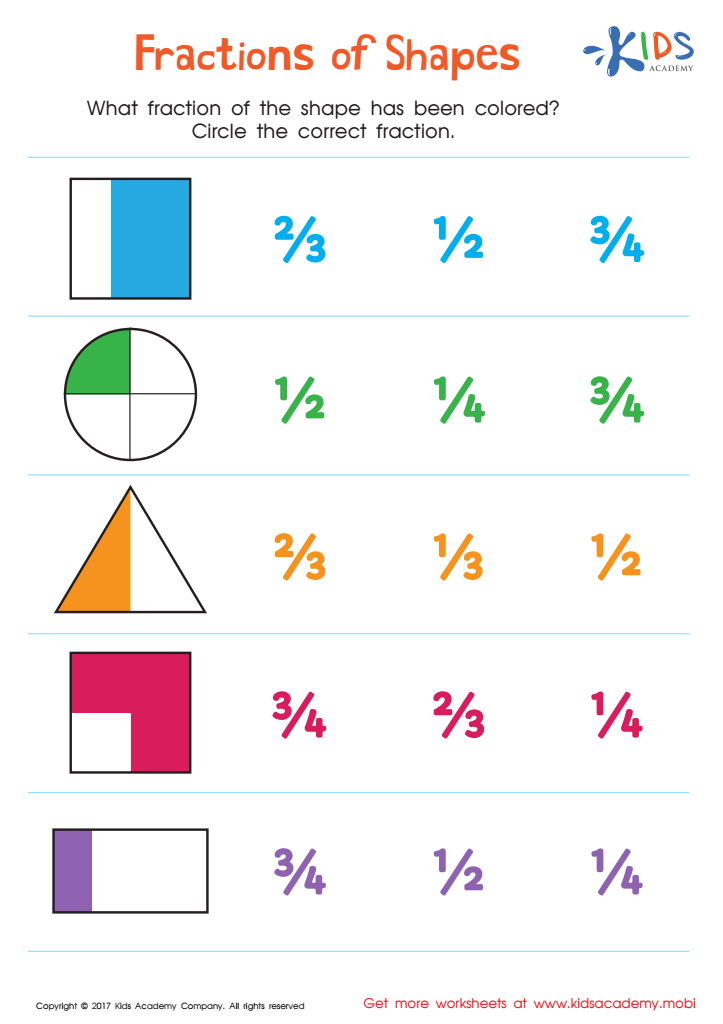
Fractions of shapes worksheet

Fractions of Shapes: Math Concept Worksheet
Fractions can be tricky, but with pictures to illustrate them, they become much easier to understand. Our fractions of shapes worksheet is a great way to help children visualize fractions and gain a better understanding of them.
Fractions of Shapes: Math Concept Worksheet
Worksheet
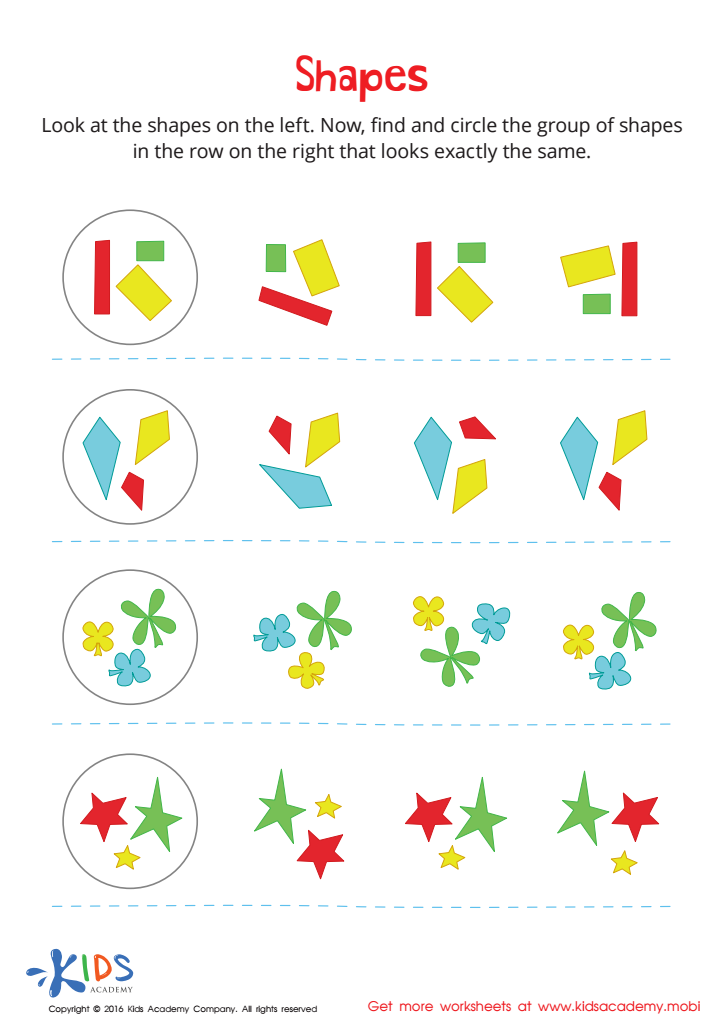
Preschool Matching Worksheet

Shapes Worksheet

This fun worksheet will challenge your child to recognize tricky patterns, sort through similar ones, and create strategies to get the right answer. It'll also help them to strengthen problem-solving skills and build confidence. With more challenging tasks, your child will be ready to tackle higher level math and sequencing skills.
Shapes Worksheet
Worksheet


Shape identification in math is foundational for early childhood development and offers numerous benefits that render it crucial for parents and teachers to emphasize. Firstly, recognizing shapes helps children with problem-solving and analytical skills. It forms the basis for more complex geometric reasoning later on, making higher-level math concepts easier to grasp.

Secondly, shape identification plays a vital role in everyday life. From navigating spaces to comprehending visual information, knowing shapes helps children interact with their environments more effectively and safely. It is also key in developing spatial awareness which is important for tasks ranging from tying shoes to participating in sports.

Shapes are also closely related to literacy and numeracy. Understanding shapes fosters the ability to recognize letters and numbers, as both consist of different shapes and lines. This relationship aids children in acquiring reading and math skills more efficiently.

Another significant benefit is that learning shapes bolsters communication skills. Being able to describe shapes strengthens vocabulary and promotes expressive language. Teaching way can be a collaborative, engaging exercise that fosters stronger relationships between children and adults, improving social skills.

In essence, emphasizing shape identification is about more than just teaching geometric figures; it is a gateway into multi-faceted cognitive development and practical life skills that prepare children for future academic and everyday success.