
Story sequencing Math Worksheets
5 filtered results
Difficulty Level
Grade
Age
-
From - To
Subject
Activity
Standards
Unlock the power of learning with our engaging Story Sequencing Math Worksheets! Designed for early grade students, these worksheets seamlessly combine literacy and mathematics, helping kids develop crucial problem-solving skills. Each worksheet presents fun stories that require learners to analyze sequences and solve related math problems, making math exciting and relatable. By integrating story contexts, children enhance their comprehension abilities while practicing addition, subtraction, and basic arithmetic. Perfect for classroom use or at-home learning, our printable worksheets support educators and parents in fostering critical thinking in young learners. Encourage creativity and analytical skills today with our captivating story sequencing activities!
Favorites
With answer key
Interactive
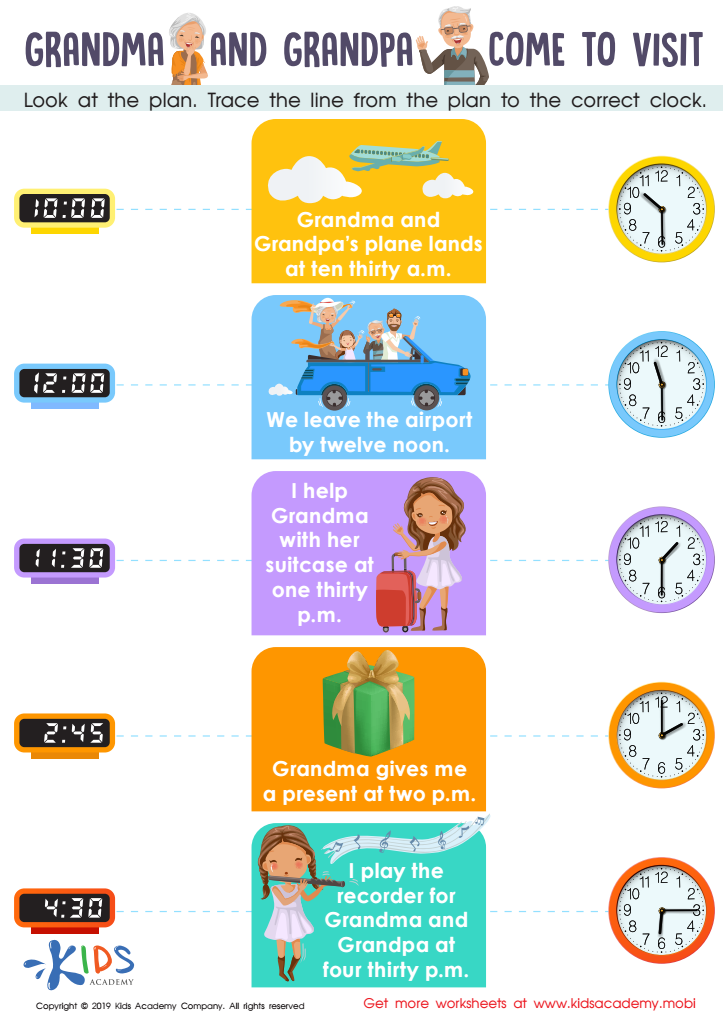
Grandpa and Grandma Come to Visit Worksheet
Have your kids learn about time using this worksheet. It contains pictures, accompanying texts and a clock, which you can use to help them trace the plan. Grandparents' visits and trips to their house are the perfect opportunity to practice this skill. Talk to your kids about the plan and watch them trace it to the correct clock.
 Assign to My Students
Grandpa and Grandma Come to Visit Worksheet
Worksheet
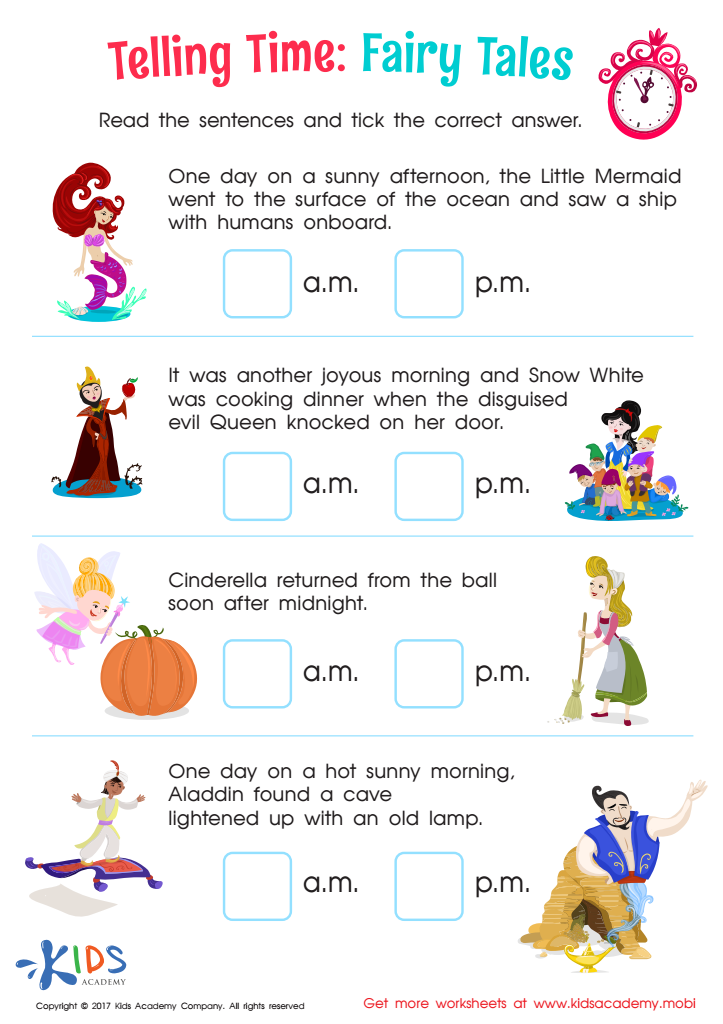
Telling Time: Fairy Tales Worksheet
Bring your child's imagination to life with classic fairy tales! This colorful telling time worksheet has it all: The Little Mermaid, Cinderella, and more! Plus, your child will have fun learning to distinguish a.m. from p.m. with this charming worksheet.
Telling Time: Fairy Tales Worksheet
Worksheet
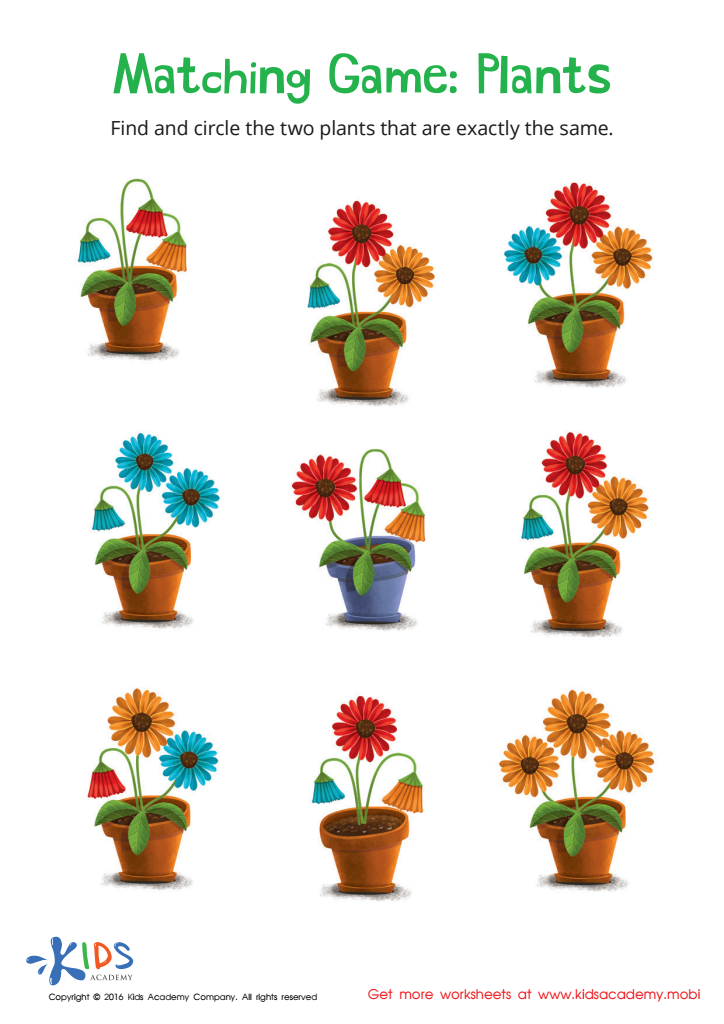
Matching: Plants Worksheet
This worksheet helps your child focus on details to build pattern recognition, problem solving and sorting/matching skills. Your child will enjoy the challenge of searching for similar images that match. Point out how small differences can exist in similar things and excite them with bright pictures and a fun challenge.
Matching: Plants Worksheet
Worksheet
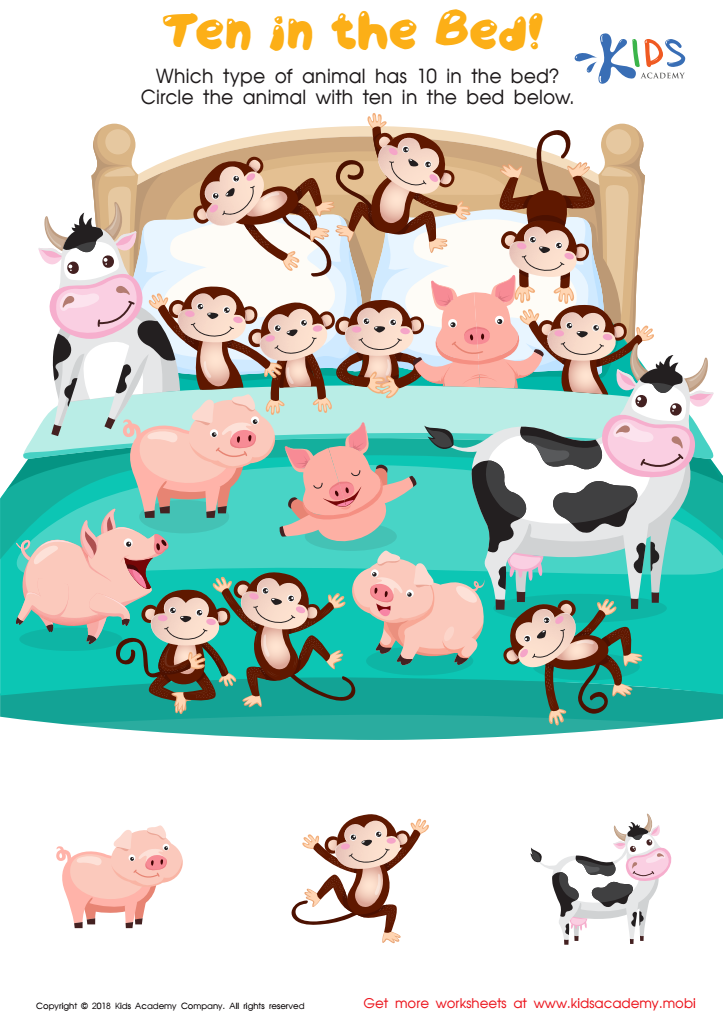
Ten in the Bed Worksheet
This fun worksheet has your kids counting and sorting friendly animal faces in a bed of ten! It's a great way for them to practice their mental math skills, like adding and multiplying more efficiently. Plus, it brings a new meaning to the classic song "Monkeys Jumping on the Bed"!
Ten in the Bed Worksheet
Worksheet
Join Kids Academy for Free
Who is primarily going to use this learning content?








Story sequencing in math engages students in a meaningful way, helping them understand mathematical concepts through narratives. By incorporating stories, teachers and parents can make abstract mathematical ideas more relatable and tangible for young learners.
Firstly, story sequencing fosters critical thinking and problem-solving skills. When children follow a narrative involving mathematical events, they learn to identify the sequence of actions, recognize relationships between numbers, and highlight cause-and-effect relationships. This skill promotes logical reasoning, as they determine what steps are necessary to solve a problem.
Additionally, story sequencing helps improve reading comprehension and literacy skills. When math problems are framed in the context of stories, students must engage with the text, enhancing their ability to decode information and understand context—skills essential in both math and language arts.
Moreover, involving parents in story sequencing math activities strengthens the home-school connection. When parents engage in storytelling with mathematical elements, they reinforce concepts learned in the classroom and help their children see the relevance of math in everyday life.
Overall, story sequencing math proves to be a powerful tool for teaching, nurturing both mathematical understanding and literacy, thus equipping young learners with essential competencies for academic success.








