
Times table familiarity Math Worksheets
3 filtered results
Difficulty Level
Grade
Age
-
From - To
Subject
Activity
Standards
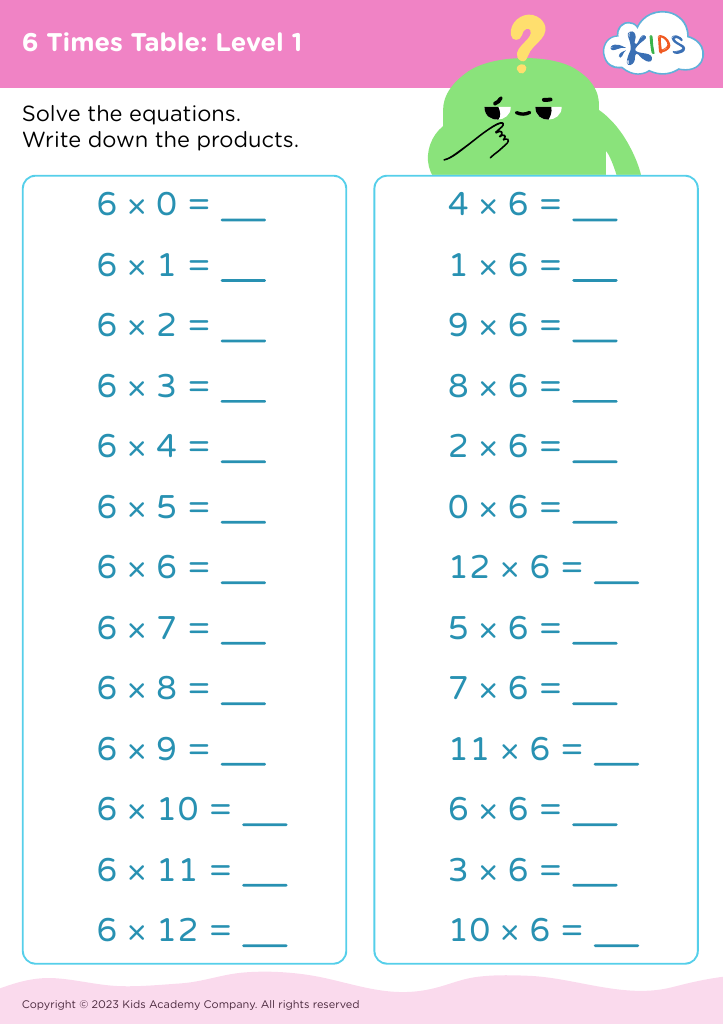
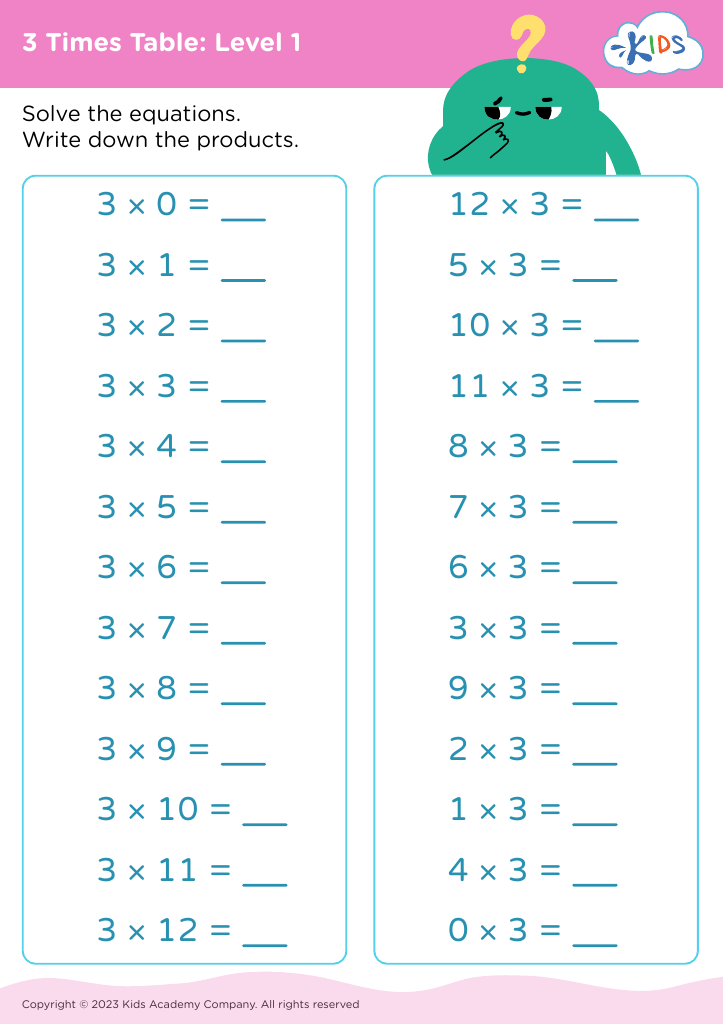
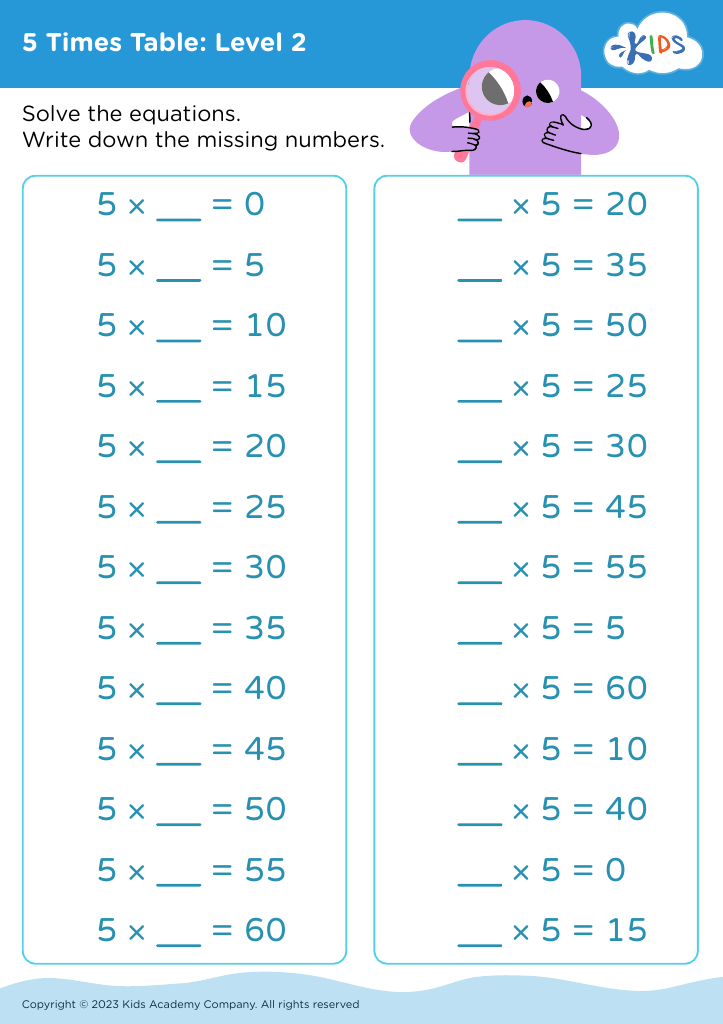
Discover our engaging Times Table Familiarity Math Worksheets, designed to help young learners master multiplication through fun and interactive activities. These worksheets enhance students' confidence and fluency in recalling times tables, making learning both enjoyable and effective. Each worksheet features a variety of exercises, including drills, puzzles, and games, catering to different learning styles. Perfect for classroom use or at-home practice, our resources support early math development and encourage a lifelong love of learning. Explore our collection and watch your child flourish in their math skills while building a strong foundation for future success! Start their multiplication journey today!
Favorites
With answer key
Interactive
Join Kids Academy for Free
Who is primarily going to use this learning content?






Familiarity with times tables is pivotal for students' numerical literacy and overall mathematical proficiency. For parents and teachers, understanding this concept goes beyond rote memorization; it fosters relational reasoning and problem-solving skills vital for higher-level math.
Firstly, mastery of times tables enhances confidence in young learners. When students effortlessly recall their multiplication facts, they can tackle more complex problems, reducing the anxiety often associated with math. This foundational knowledge also supports other mathematical areas such as division, fractions, and even root calculations, showing the interconnectedness of mathematical concepts.
Additionally, times table familiarity cultivates critical thinking and pattern recognition. Encouraging children to understand the rationale behind multiplication—as opposed to just memorizing—helps them apply mathematical principles in real-life situations, improving their decision-making skills.
Moreover, parents and teachers serve as role models; when they engage with math positively, they inspire children to appreciate its importance and utility. Thus, prioritizing times table mastery empowers educators to enhance curriculum design and paves the way for students to become resilient learners, ensuring they are well-equipped for academic challenges ahead. Recognizing these benefits ultimately supports students' lifelong relationships with mathematics and contributes to their overall success.








