Understanding ordinal numbers Math Worksheets
3 filtered results
-
From - To
Enhance your child's mathematical understanding with our engaging ordinal numbers math worksheets! Designed for young learners, these resources focus on helping kids grasp the concept of ordinal numbers, such as first, second, third, and beyond. Our printable worksheets offer a variety of fun activities and illustrations that captivate students' attention while reinforcing their learning. Perfect for use at home or in the classroom, these worksheets support foundational math skills, promoting critical thinking and problem-solving. Easy to use and suitable for various learning styles, our ordinal numbers worksheets make learning math an enjoyable adventure. Start exploring the world of ordinals with us today!
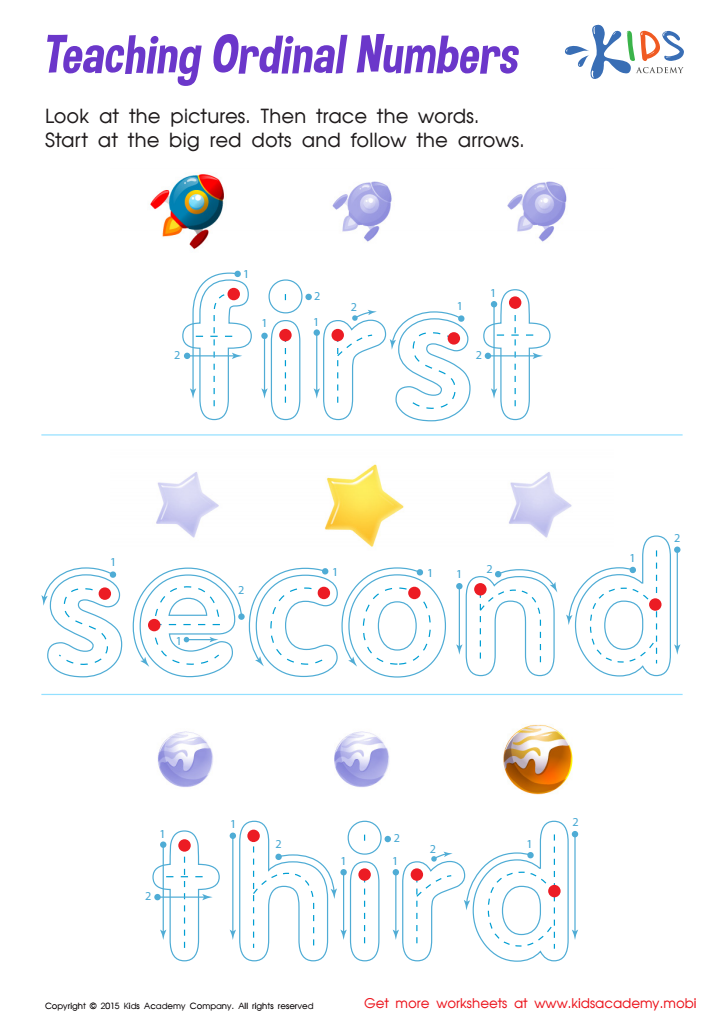
Ordinal Numbers: Teaching Ordinal Numbers Printable
 Assign to My Students
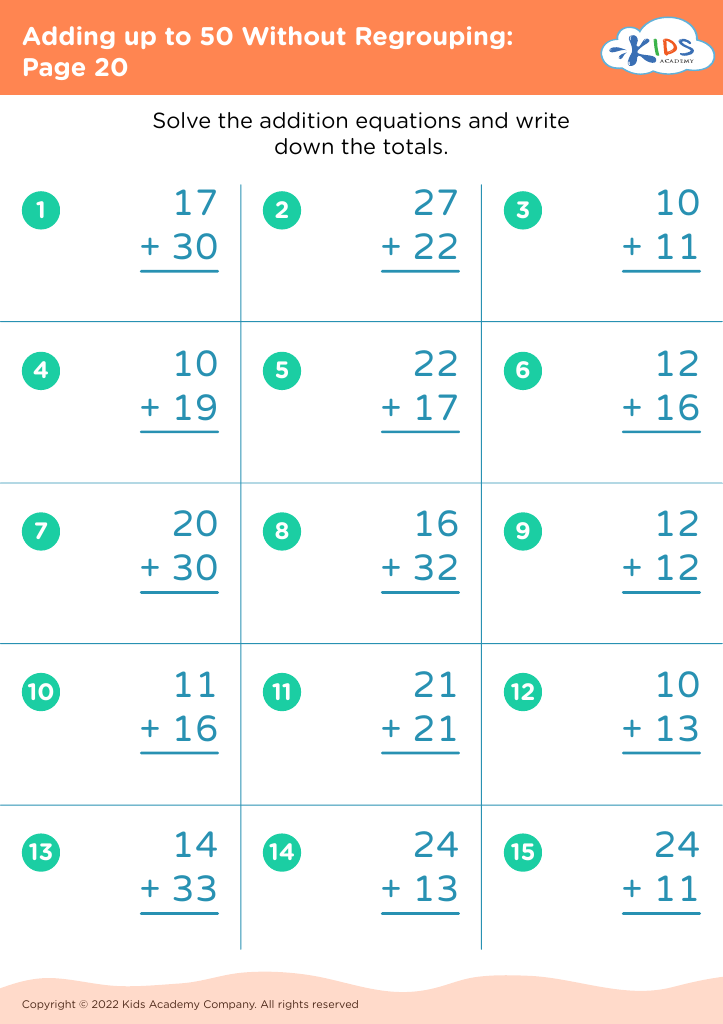
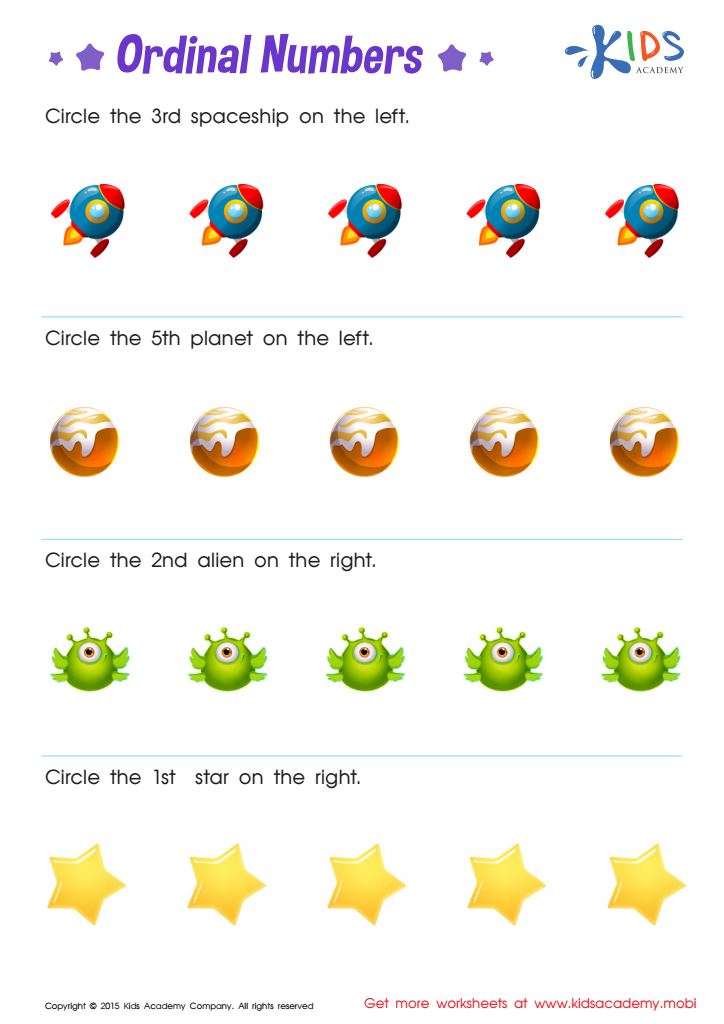
Ordinal Numbers: Space Ordinals Worksheet








Understanding ordinal numbers is essential for parents and teachers because they play a crucial role in early childhood math development and everyday life. Ordinal numbers, such as first, second, and third, help children comprehend sequences and order, which are foundational skills for further mathematical learning. Recognizing order supports children's abilities to navigate everyday situations, like lining up, taking turns, and following instructions, fostering essential social skills.
Moreover, mastery in ordinal numbers enhances logical reasoning and critical thinking. When children grasp concepts of order, they build a framework for understanding more complex mathematical ideas such as patterns, sequences, and even basic fractions down the line.
For teachers, integrating ordinal number concepts into their curriculum encourages an engaging and contextualized learning experience. It promotes vocabulary development and language skills, as students describe their positions in games or class activities.
For parents, reinforcing ordinal numbers at home can strengthen their child's learning experience through playful interactions—like racing toy cars or baking and arranging items. In fostering a sound understanding of ordinal numbers, both parents and teachers equip children with essential skills for academic success, social interaction, and logical reasoning, paving the way for future learning.








