Visual-motor skills Math Worksheets
5 filtered results
-
From - To
Enhance your child's math abilities with our Visual-Motor Skills Math Worksheets! Specifically designed for young learners, these engaging activities blend fun and education to improve coordination, attention to detail, and problem-solving skills. Perfect for early grade students, each worksheet features visual tasks such as tracing, matching, and drawing, which help to strengthen both math and motor skills. These worksheets provide a comprehensive approach to learning that supports your child's development in a playful and interactive way. Give your child a head start in math with our expertly crafted worksheets that make learning an enjoyable adventure!
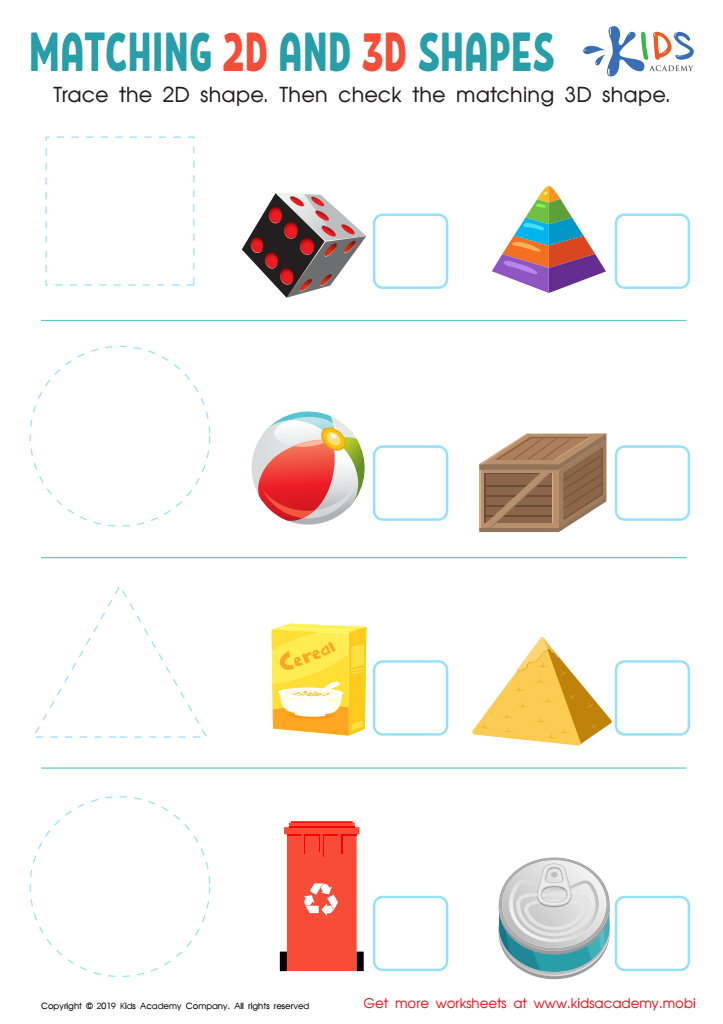
Matching 2D and 3D Shapes Worksheet
 Assign to My Students
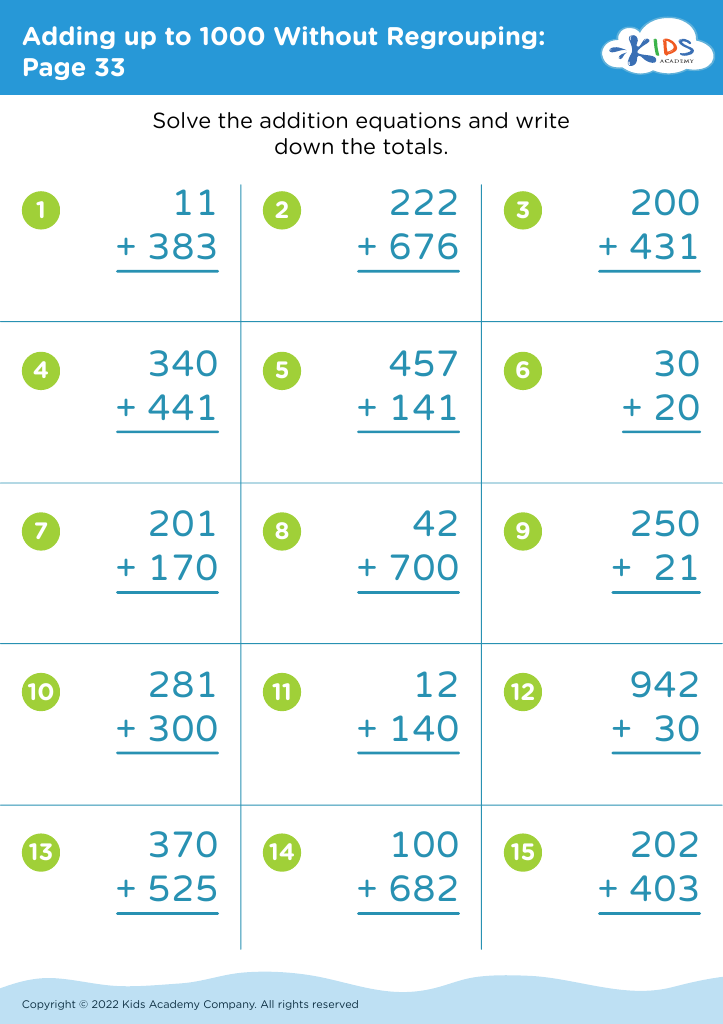








Visual-motor skills are crucial for children's overall development and play a significant role in learning mathematics. These skills involve the coordination of visual perception and motor control, enabling children to interpret and respond to what they see. In math, this translates to abilities like recognizing shapes, understanding spatial relationships, and accurately writing numbers and equations. When parents and teachers focus on nurturing these skills, they help children build a strong foundation for more complex mathematical concepts.
For example, drawing shapes and patterns, connecting dots, and solving puzzles enhance a child's ability to understand geometry and spatial reasoning. These activities sharpen their brain’s ability to process and respond to visual information quickly and accurately. Moreover, good visual-motor coordination aids in other vital academic skills, such as reading and writing, which are interconnected with math proficiency.
If children struggle with visual-motor skills, they may face difficulties aligning numbers in columns, differentiating between numbers and symbols, or visualizing mathematical concepts. By identifying and supporting children who have challenges in this area, parents and teachers can provide targeted interventions, games, and exercises that bolster these skills. In turn, this improves their ability to perform mathematical tasks, boosting their confidence and fostering a more positive attitude towards math overall.








