Basic measurement skills Measurement Worksheets
3 filtered results
-
From - To
Enhance your child's understanding of fundamental measurement skills with our engaging worksheets! Designed for early learners, these printable measurement worksheets focus on key concepts like length, weight, capacity, and more. Through fun activities, your child will practice comparing objects, reading scales, and measuring using standard and non-standard units. Perfect for both classroom and home use, our resources encourage hands-on learning and critical thinking. These worksheets not only foster mathematical reasoning but also build confidence as children explore the world around them through measurement. Dive into this exciting journey of discovery and watch your child's skills flourish!
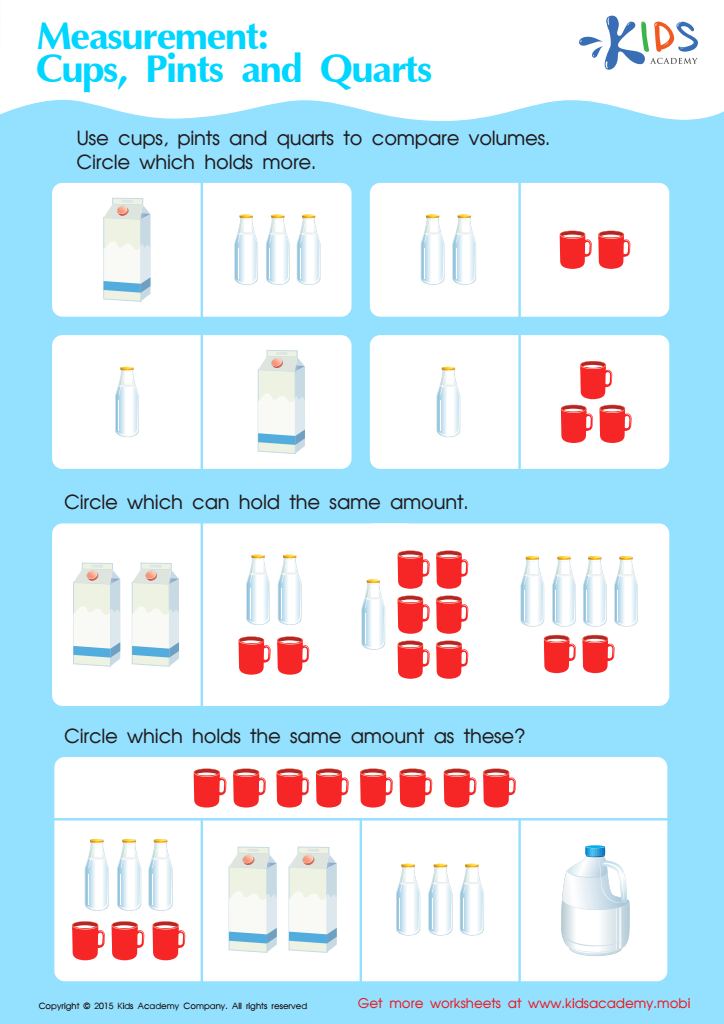
Measurement: Compare Volumes Worksheet
 Assign to My Students
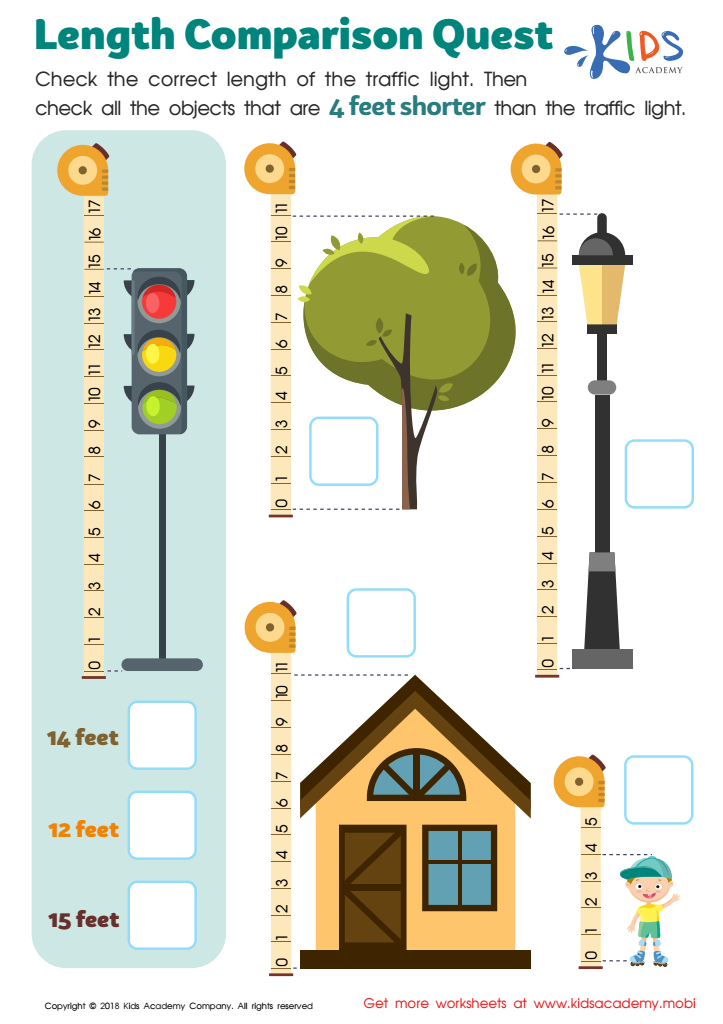
Length Comparison Quest Worksheet
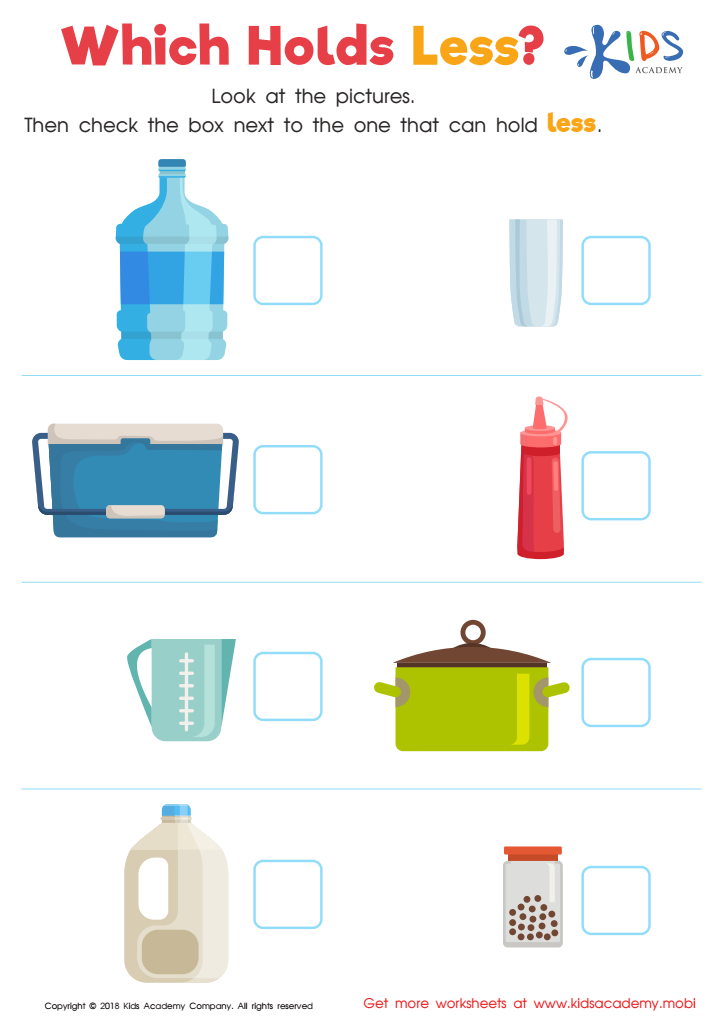
Which Holds Less? Worksheet








Basic measurement skills are essential for children's development, making it crucial for parents and teachers to prioritize them in early education. First, these skills form the foundation for critical thinking and problem-solving. Children learn to quantify, compare, and analyze data, which are integral to both academic success and real-world applications.
Secondly, measurements foster mathematical understanding, as they encompass concepts like size, volume, time, and weight. Mastery of these skills not only aids in mathematics but also enhances scientific literacy, encouraging children to engage in hands-on experiments and investigations.
Furthermore, measurement skills promote confidence and independence. When children learn to measure accurately, it empowers them to complete tasks like cooking recipes, crafting projects, or even planning events, reinforcing their capability and decision-making skills.
Additionally, measurement is woven into everyday experiences. Understanding measurements helps children navigate real-life situations, making informed choices and developing life skills.
Ultimately, when parents and teachers emphasize basic measurement skills, they pave the way for well-rounded, academically prepared individuals who possess the tools necessary for lifelong learning and success. Investing in these foundational skills creates knowledgeable, capable learners ready to tackle the challenges of the future.








