Comparing numbers Measurement Worksheets
3 filtered results
-
From - To
Enhance your child's math skills with our "Comparing Numbers Measurement Worksheets"! Designed for early learners, these engaging worksheets help students grasp essential concepts of measurement and number comparison. Through fun activities and clear examples, kids will explore greater than, less than, and equal to relationships, making math both interactive and enjoyable. Perfect for reinforcing classroom learning, our worksheets encourage critical thinking and problem-solving skills. Whether at home or in the classroom, these resources provide a solid foundation for understanding numbers through real-life measurement scenarios. Download now and watch your child's confidence and competence in math grow!
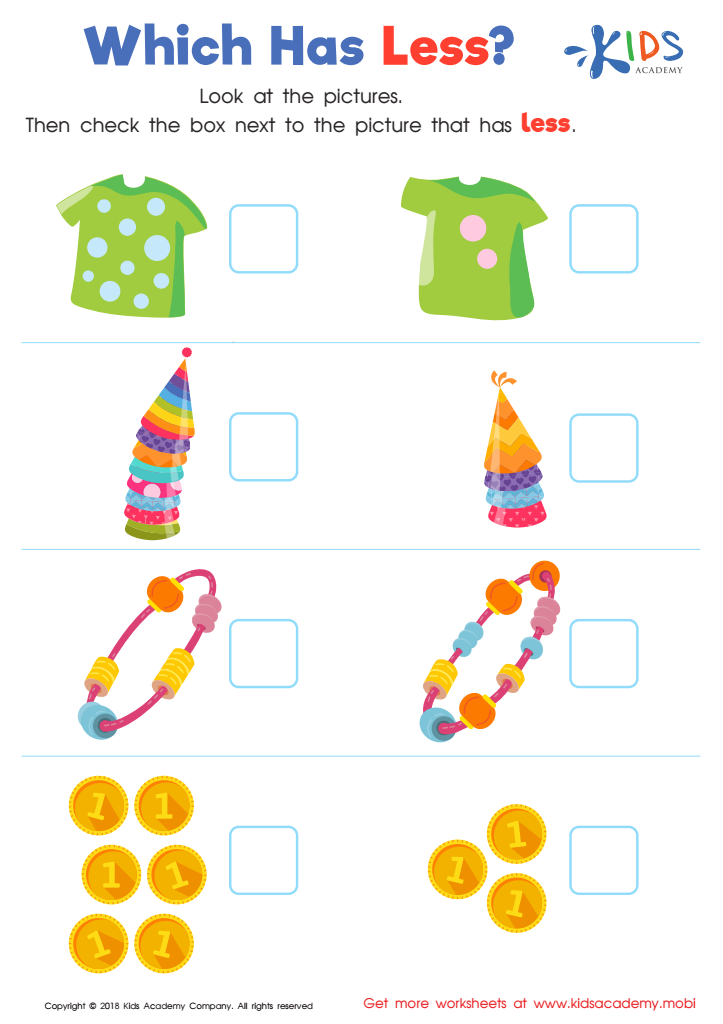
Which Has Less? Worksheet
 Assign to My Students
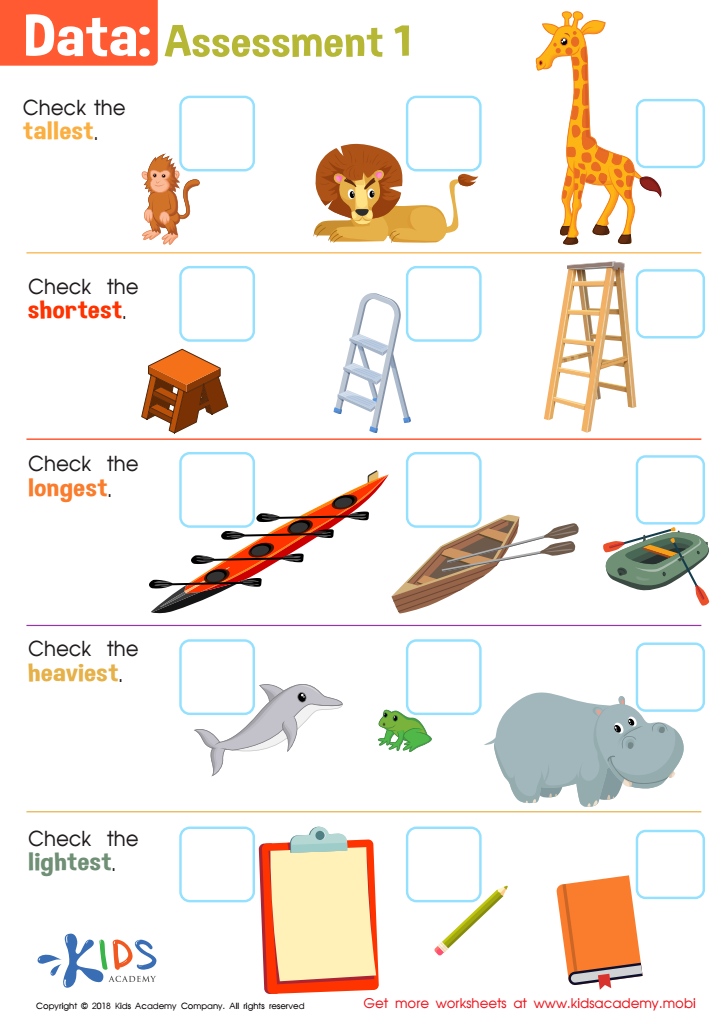
Data: Assessment 1 Worksheet
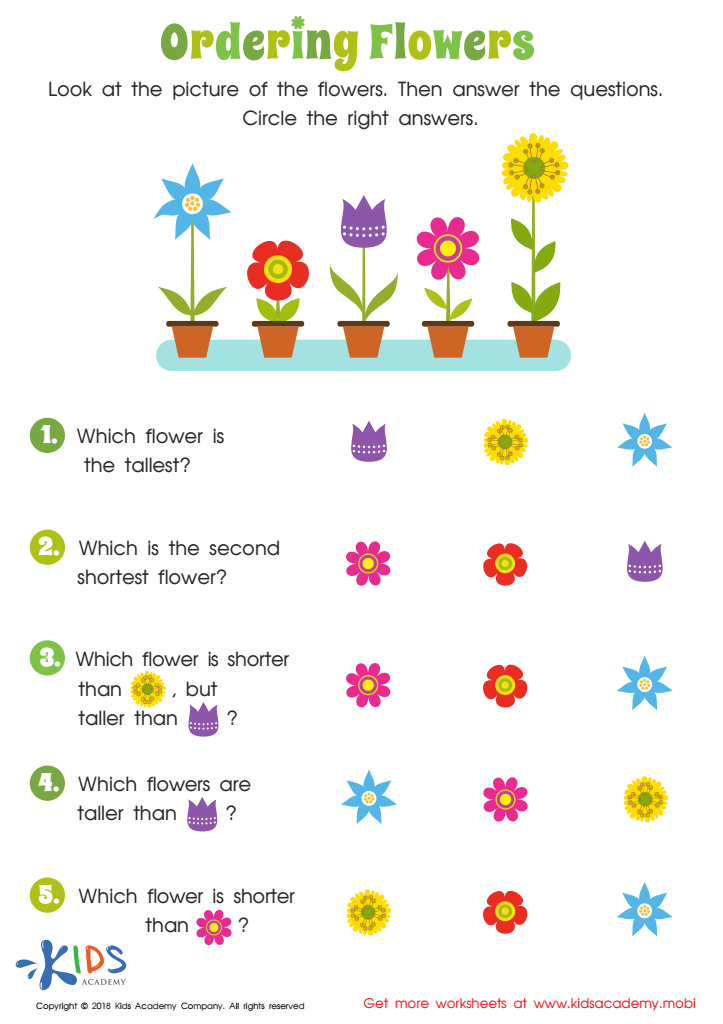
Ordering Flowers Worksheet








Comparing numbers and measurements are foundational skills in early childhood education that significantly influence a child's cognitive development. Parents and teachers should prioritize these skills as they foster critical thinking, problem-solving, and numeric literacy, essential for everyday tasks and future academic success.
Firstly, understanding how to compare numbers helps children grasp the concept of quantity and the relationship between different values. This understanding is crucial as it underpins more complex mathematical concepts encountered later in their education, such as addition, subtraction, and even early algebra.
Secondly, measurement introduces children to practical applications of math in their daily lives, enhancing their ability to understand size, volume, weight, and time. Engaging in activities that involve measuring – like cooking, building, or gardening – allows children to connect academic concepts with real-world experience.
Moreover, these skills encourage children to observe, predict, and analyze, nurturing their scientific inquiry. Parents and teachers can utilize games, stories, and hands-on activities to make learning enjoyable and engaging, reinforcing a positive attitude towards math.
Ultimately, fostering a solid foundation in comparing numbers and measurements equips children with essential tools for both personal and academic development.








