Understanding measurement units Measurement Worksheets
3 filtered results
-
From - To
Welcome to our Understanding Measurement Units Measurement Worksheets page! Here, young learners can explore the fundamental concepts of measurement through engaging and interactive worksheets. Designed for early grades, these resources cover essential units of measurement, including length, weight, and volume. By utilizing fun activities, students will gain hands-on experience and practice converting between different measurement units. These worksheets not only reinforce classroom learning but also make understanding measurement enjoyable and intuitive. Perfect for home or school use, our worksheets aim to build a strong foundation in measurement skills, ensuring students feel confident in their math abilities. Discover the joy of measurement today!
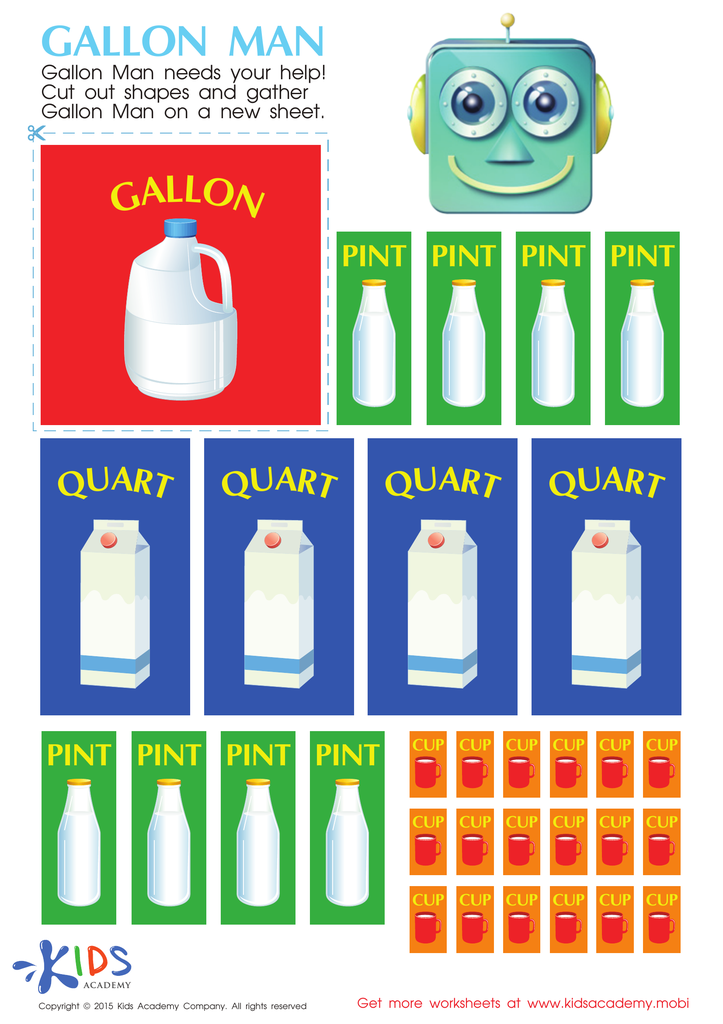
Cups, Pints and Quarts With Gallon Man Worksheet
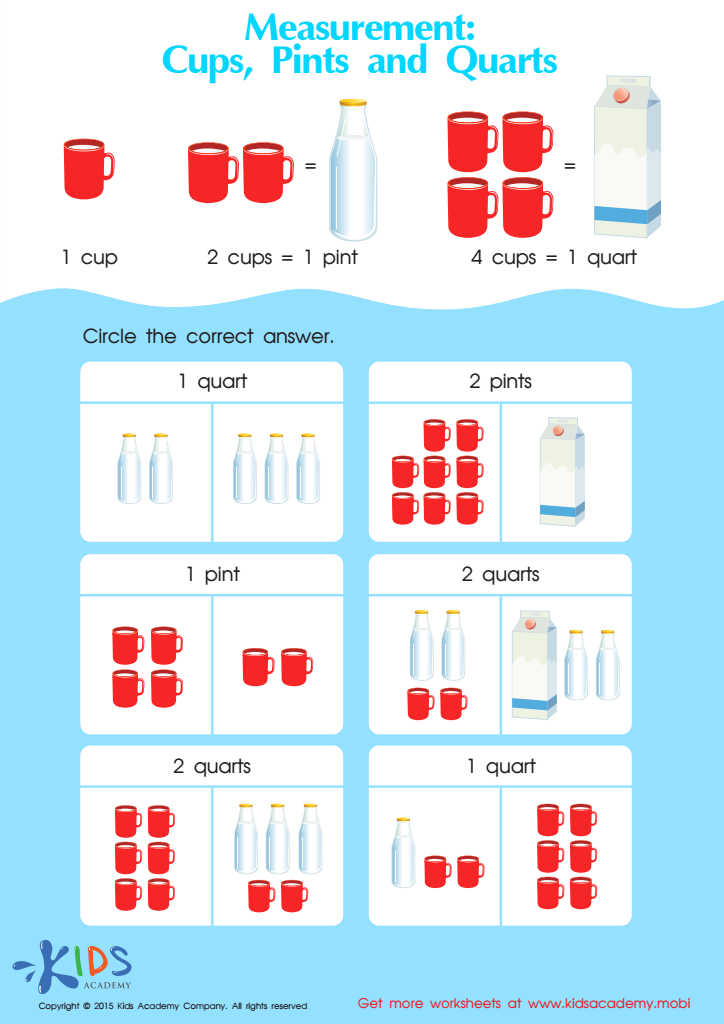
Cups, Pints and Quarts Worksheet
 Assign to My Students
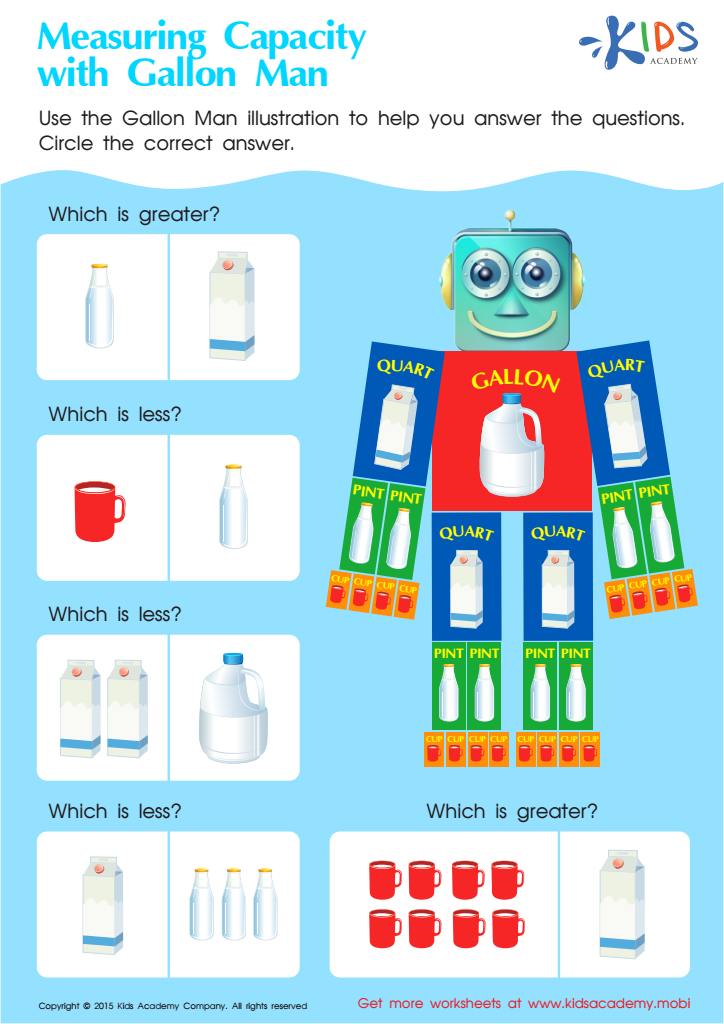
Measurement: Measuring Capacity with Gallon Man Worksheet







Understanding measurement units is crucial for parents and teachers as it serves as a foundational skill in a child's education and daily life. First, measurement is integral to various subjects, especially mathematics and science, promoting critical thinking and problem-solving skills. For instance, grasping concepts like length, weight, volume, and time enables children to solve real-world problems, fostering independence and confidence in their abilities.
Moreover, measurement literacy helps kids develop an appreciation for precision and accuracy, essential for lifelong learning and eventual career success in fields like engineering, technology, healthcare, and the arts. For parents, modeling and discussing measurement in everyday contexts, like cooking or planning a trip, reinforces classroom learning and deepens family connections.
Additionally, understanding measurement equips children with the necessary skills to navigate life’s challenges, from managing their time effectively to budgeting and planning activities. Collaborative learning opportunities in measurement foster teamwork and communication skills, essential for social-emotional development. In conclusion, by prioritizing measurement education, parents and teachers enable children to build vital competencies, prepare for future academic success, and develop into engaged, practical adults ready to tackle the complexities of the world around them.








