Understanding opposites Measurement Worksheets
3 filtered results
-
From - To
Discover our engaging "Understanding Opposites Measurement Worksheets," designed to enhance early math skills through the concept of opposites. These worksheets provide children with fun and interactive activities to explore various dimensions such as big/small, tall/short, and more. Perfect for kindergarten and early grade learners, these resources encourage critical thinking and reinforce measurement concepts in an enjoyable manner. Each worksheet is crafted to support hands-on learning, enabling kids to grasp the idea of opposites while developing their measurement abilities. Start fostering a love for math with these vibrant and educational worksheets that make learning about opposites both exciting and meaningful!
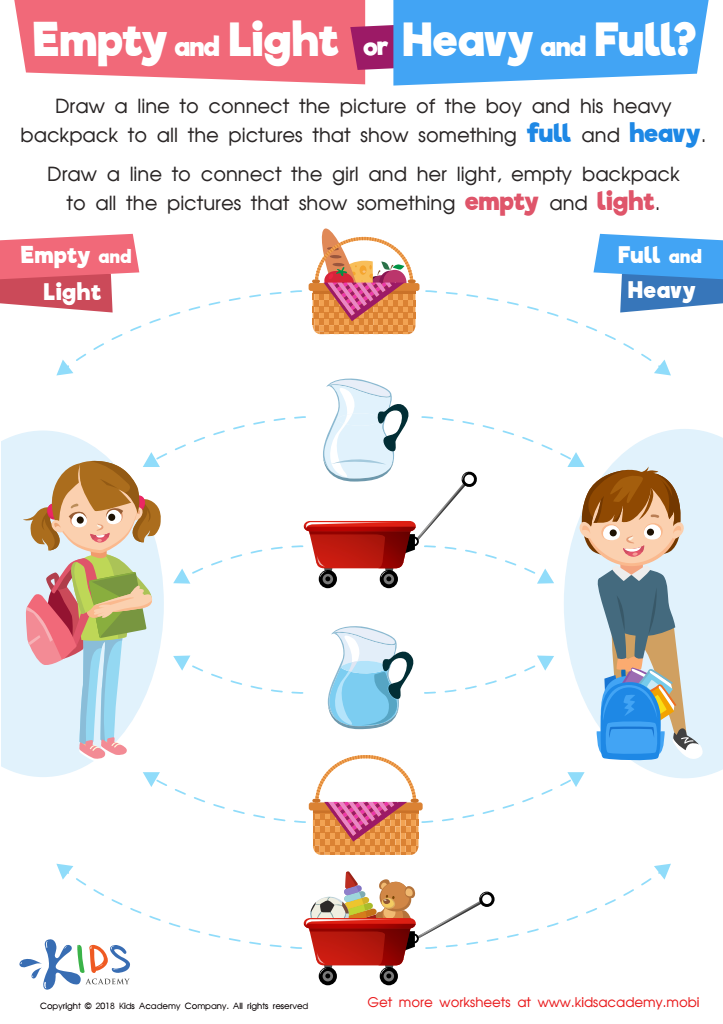
Empty and Light or Heavy and Full? Worksheet
 Assign to My Students
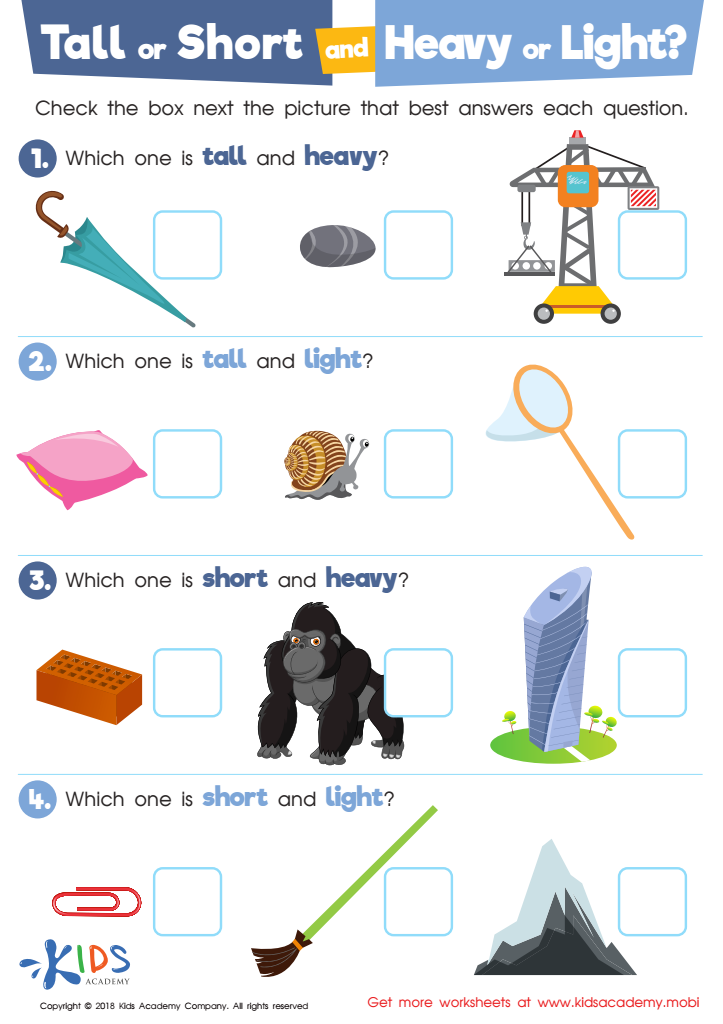
Tall or Short and Heavy or Light? Worksheet
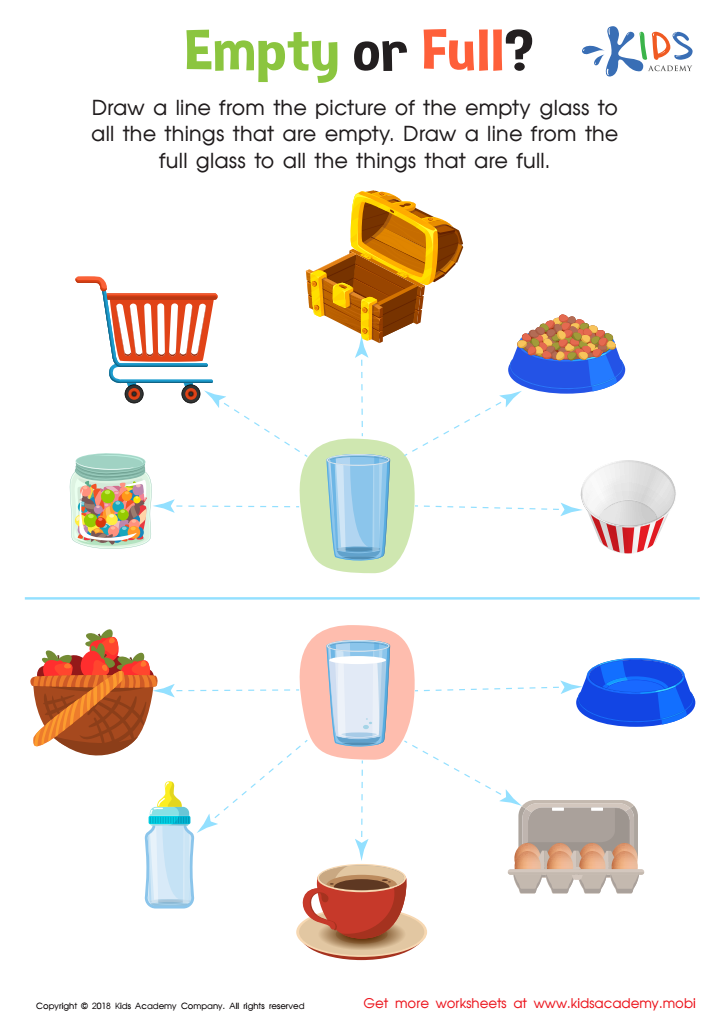
Empty or Full? Worksheet








Understanding opposites and measurement is crucial for early learners as it lays the foundation for critical thinking and problem-solving skills. When children grasp the concept of opposites, such as hot/cold, big/small, and heavy/light, it enhances their cognitive development by encouraging them to categorize and compare different attributes. This skill fosters vocabulary growth and enhances communication, enabling children to articulate their thoughts more effectively.
Measurement, on the other hand, introduces children to quantitative reasoning. It teaches them how to quantify the world around them—measuring lengths, weights, or volumes—and helps them make sense of everyday situations, such as comparing the height of siblings or measuring ingredients for a recipe. These experiences are vital for their mathematical understanding and help build a practical context for numeracy.
For parents and teachers, promoting comprehension in these areas can lead to future academic success. Engaging children in activities that involve opposites and measurement makes learning interactive and relevant. Additionally, this knowledge empowers children to interact confidently with their environment, enhancing their independence. Ultimately, fostering an understanding of opposites and measurement connects to broader educational goals and supports lifelong learning skills.








