Filters

27 filtered results

Clear all filters
Favorites
With answer key
Interactive

27 filtered results

Difficulty Level

Grade


Check out this FREE Trial Lesson on Numbers up to 100!

Counting by 5’s and 10’s

Favorites
With answer key
Interactive
  • Number Recognition
  • Numbers up to 100
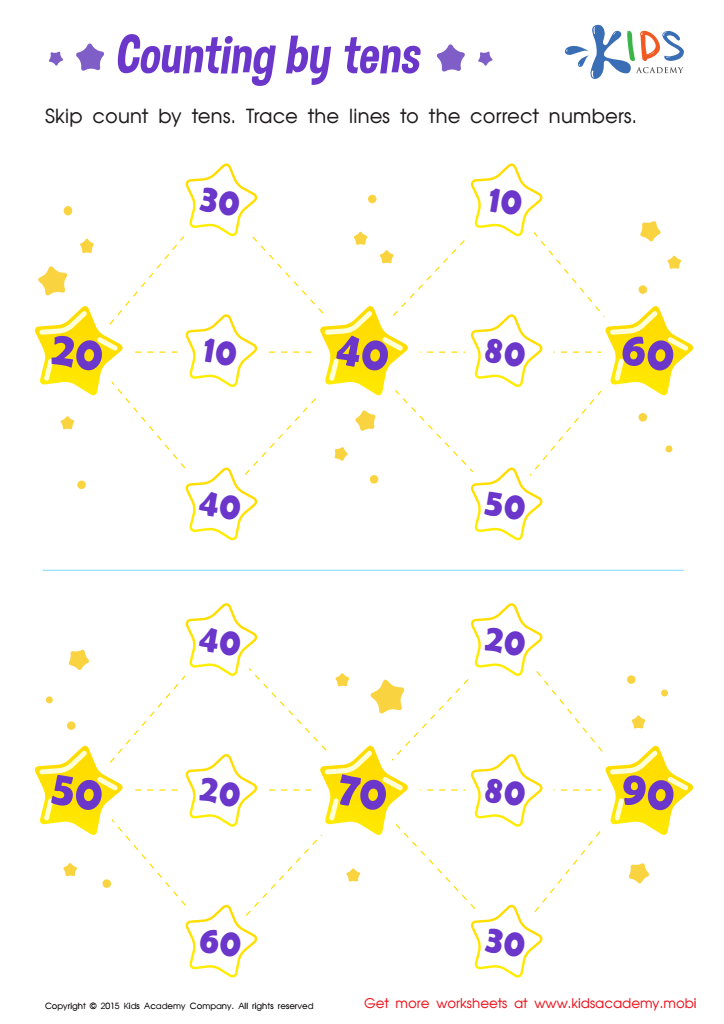
Kindergarten Counting by Tens

Learn Dozens: Counting by Tens Printable

Kindergartners need to learn skip counting - counting in number groups - to increase number sense and be ready for more advanced math. Our kindergarten worksheet featuring a starry trip to outer space will help your child practice this valuable skill. Your child will choose correct answers to trace the lines to the stars, building fluency in skip counting. They'll also strengthen problem solving and see the pattern it creates. Get your little learner to the next level with this skip counting worksheet!
Learn Dozens: Counting by Tens Printable
Worksheet
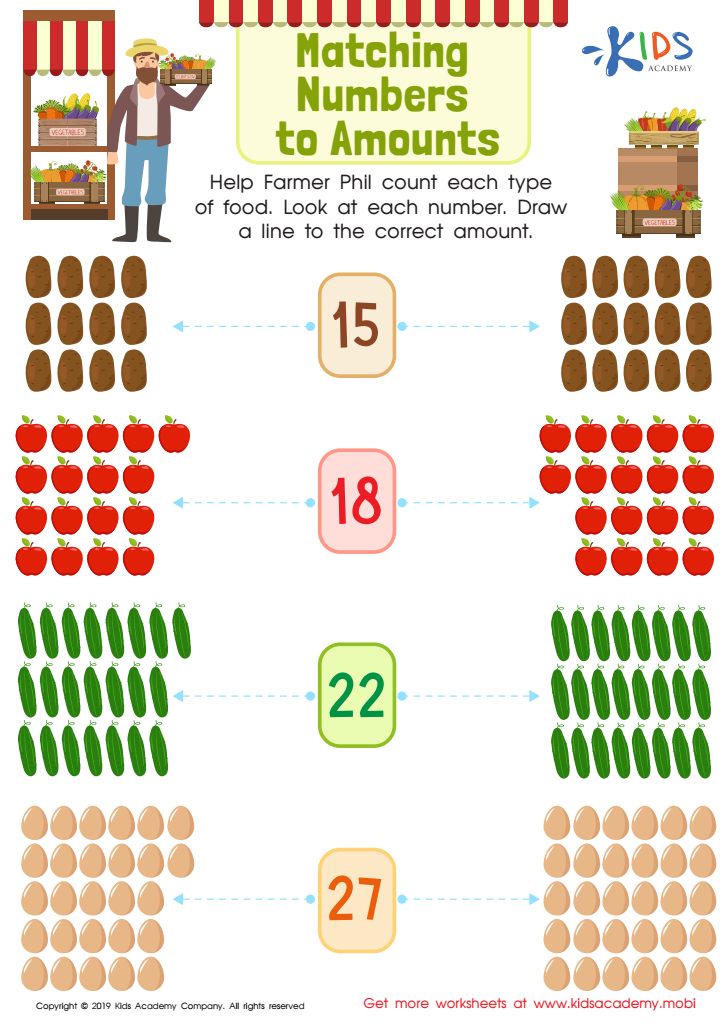
Matching Numbers to Amounts Worksheet


Matching Numbers to Amounts Worksheet

Farmer Phil needs your kid's help! Ensure they know the basics of math such as counting, adding and subtracting. Before beginning, help your child identify and count the different foods in the picture. Then, draw a line to the correct amount.
Matching Numbers to Amounts Worksheet
Worksheet
Counting on the City Skyline: Dot-to-Dot Worksheet


Counting on the City Skyline: Dot-to-Dot Worksheet

Kids will love connecting the dots to make a superhero skyline! They'll reinforce their number line thinking and number sense while building fine-motor skills. Watch them beam with pride as the cityscape reveals itself, all thanks to some math practice.
Counting on the City Skyline: Dot-to-Dot Worksheet

Worksheet


Number recognition is a foundational skill that plays a crucial role in a child’s early mathematical development. When children recognize numbers up to 100, they build the necessary building blocks for more complex math concepts, such as addition, subtraction, and even multiplication. This skill enhances their ability to engage in everyday situations that require numbers, such as counting items, telling time, or understanding money.

For parents and teachers, fostering number recognition helps children develop confidence and fluency in mathematics. It allows them to grasp patterns and sequences, which are essential for developing problem-solving skills. Early proficiency in number recognition can lead to better academic outcomes and a positive attitude towards math.

Moreover, in today’s data-driven world, these skills give children a head start in navigating a range of topics in later grades, impacting their overall academic journey. By focusing on number recognition, parents and teachers can cultivate a math-rich environment that encourages exploration and learning. Ultimately, number recognition up to 100 is not merely an academic milestone; it equips children with essential life skills, setting the stage for future success in education and beyond.