Number Recognition Skip Counting Worksheets
3 filtered results
-
From - To
Explore our engaging Number Recognition Skip Counting Worksheets designed to enhance your child's math skills in a fun and interactive way! These worksheets focus on helping young learners master skip counting while developing their number recognition abilities. With colorful activities that encourage visual learning, children will practice counting by 2s, 3s, 5s, and 10s, building a strong foundation for future math concepts. Ideal for preschool and early elementary kids, our worksheets promote critical thinking and improve numerical fluency through enjoyable exercises. Download now to support your child's learning journey while making math exciting and accessible!
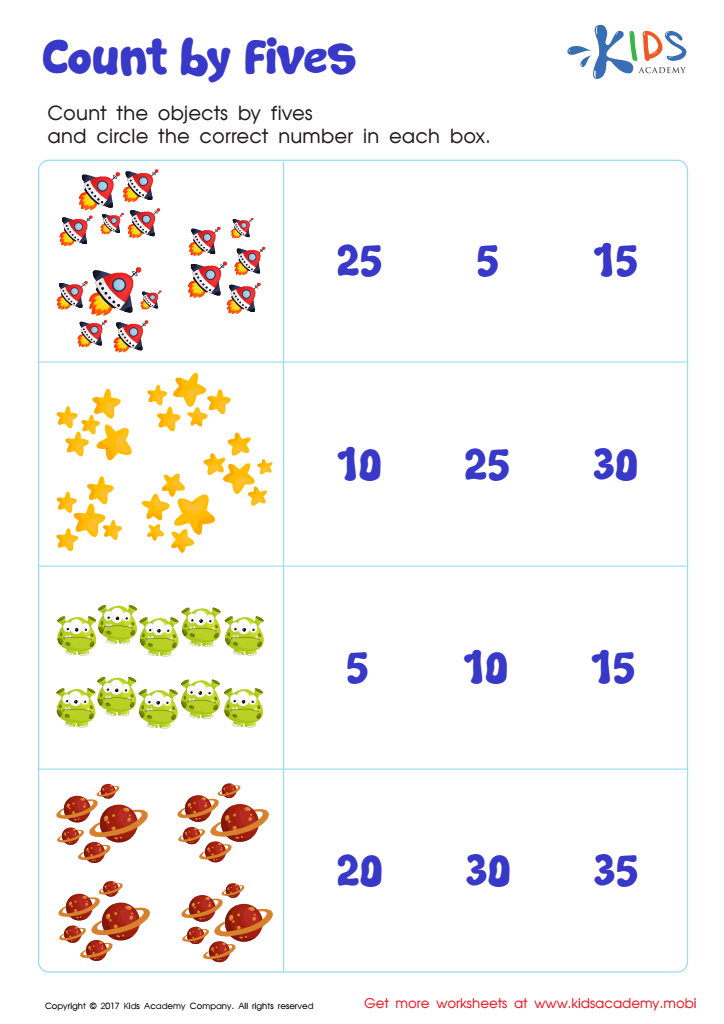
Skip Counting by 5s: Space Math Printable
 Assign to My Students
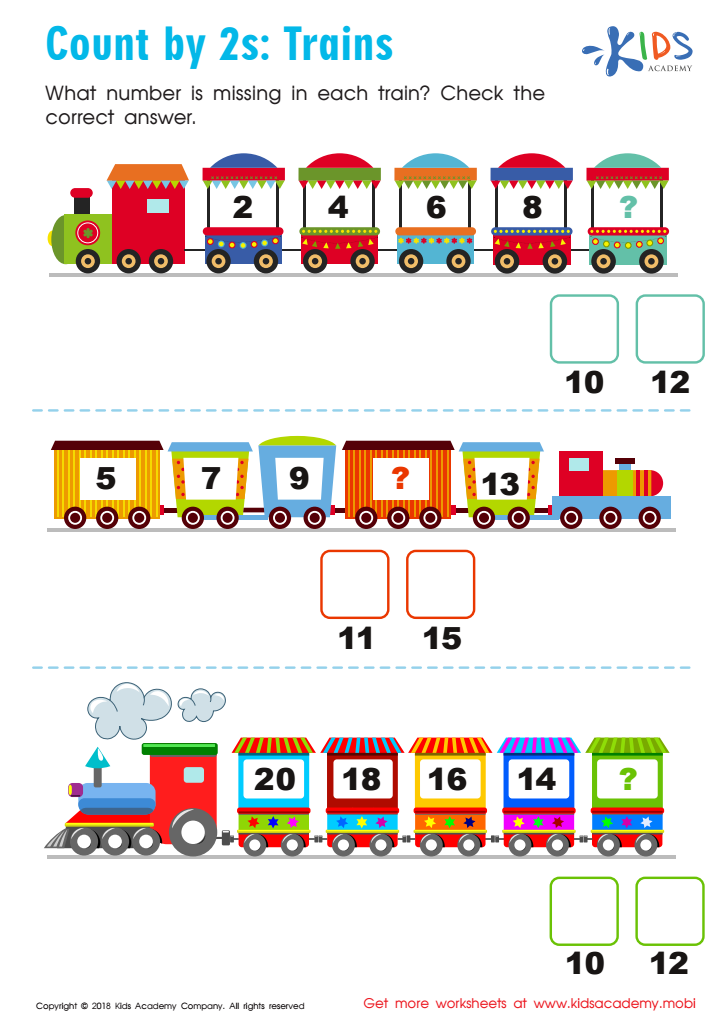
Count by 2's: Trains Worksheet
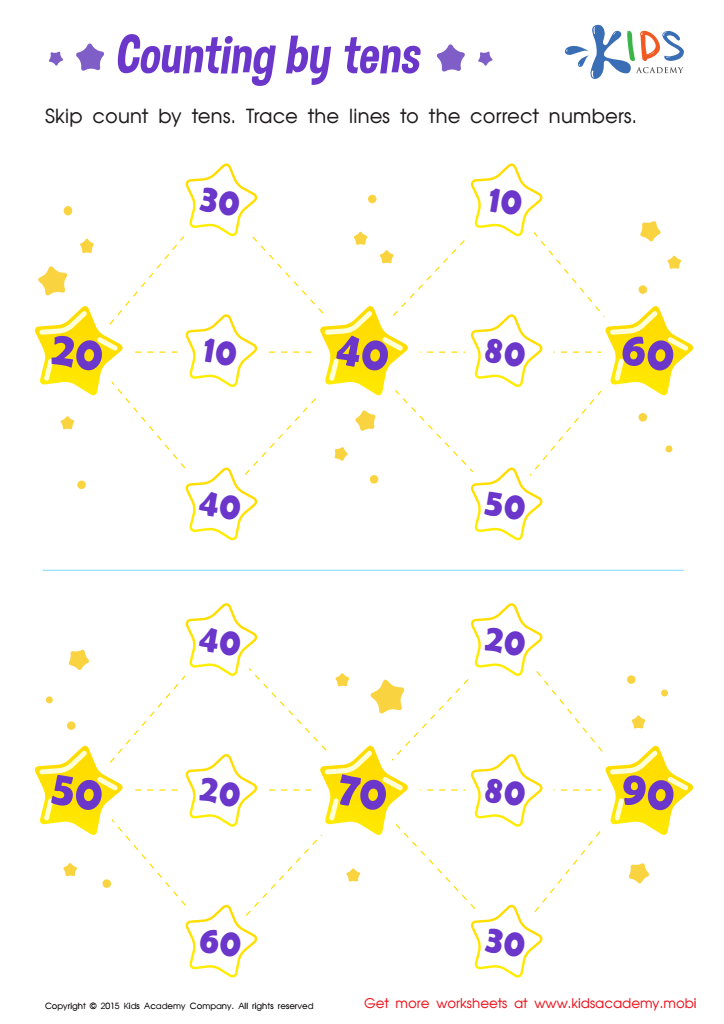
Learn Dozens: Counting by Tens Printable








Number recognition and skip counting are fundamental skills that lay the groundwork for a child's mathematical understanding. Parents and teachers should care about these skills because they form the basis for more complex mathematical concepts.
Number recognition helps children identify and understand numerical symbols, which is essential for basic arithmetic and everyday tasks, such as telling time or counting money. When children can recognize numbers quickly, it builds their confidence and encourages a positive attitude towards math.
Skip counting, which involves counting forwards or backwards in fixed increments (e.g., by twos or fives), is a powerful tool that enhances a child's understanding of number relationships and patterns. This skill supports not only arithmetic operations like addition and multiplication but also improves problem-solving abilities. For instance, skip counting is instrumental in mastering multiplication tables, which are critical for academic success in higher-level math.
Additionally, engaging children in number recognition and skip counting activities can promote parent-child interaction and collaborative learning, making math a fun and engaging subject. By prioritizing these skills, parents and teachers can help children develop a strong mathematical foundation, fostering lifelong learning and critical thinking skills essential for their academic future.








